The heart of this town is a recovery center
Subscribe to Weave’s Newsletter
This story was originally published on Weave’s newsletter. Every week, you’ll get resources on how to weave our communities and restore social trust.
The cafe on Main Street in Johnson, VT, was long cherished as the town’s gathering spot. Over the decades, it closed and reopened under new names, until 15 years ago when it closed for good. It remained unused and slowly fell into disrepair. For many neighbors, the cafe felt like a mirror of what was happening in town. Once a proud and prosperous community, Johnson had lost many of its industries, and economic and social problems were growing.
Dawn and Greg Tatro saw the potential for the cafe to become a different type of mirror: one of resilience and recovery. In 2022, they bought and reopened the cafe and named it Jenna’s Cafe, in honor of their daughter who had passed away in 2019 from an opioid overdose.
The cafe operates on a unique model. It houses and employs folks going through a recovery program from substance abuse disorder. The back serves as a recovery residence, while the front operates as a cafe.
Jenna’s Cafe is part of a larger effort called Jenna’s Promise – a “community-supported recovery village” that aims to address three problems: the stigma surrounding substance use disorder; the social isolation and economic distress common in rural America; and gaps in the existing recovery models that often leave folks feeling disconnected and alone.
“Jenna’s Promise grew out of loss, a desire to build community, and a belief that people heal best when they are woven back into everyday life — work, purpose, neighbors, and dignity,” says Gregory Tatro, Jenna’s brother and the co-founder of the center. “It is not only for people in recovery, it’s for the whole community as a means of stitching ourselves and our towns back together.”
Folks come to Jenna’s Promise from all over Vermont. They come directly from treatment and become part of the recovery village, where they receive housing, clinical services, wellness programming, and jobs. “It’s about rebuilding yourself from the foundation up, strengthening your abilities, and doing it with a team around you, and with the community around you,” says Tatro.
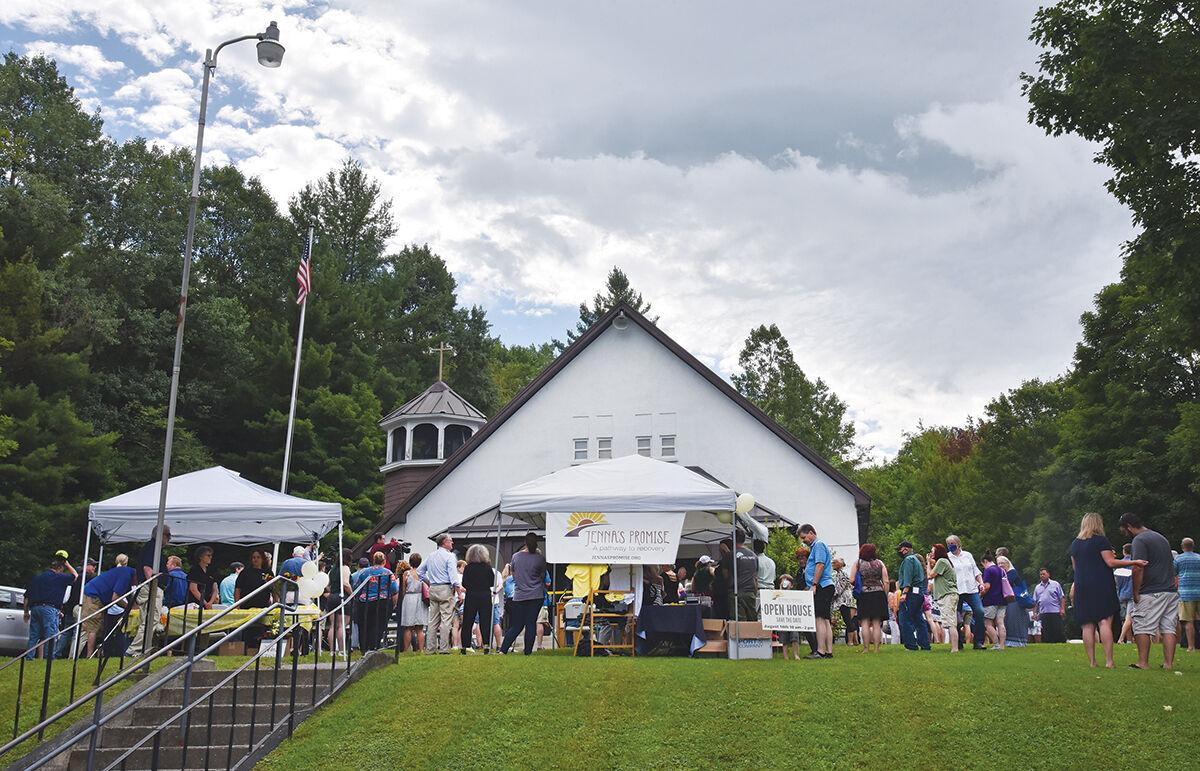
Jenna’s Promise also owns a coffee roastery and a consignment/surplus store. All these businesses hire folks who have gone through the Jenna’s Promise program. But the main work of Jenna’s Promise happens in a building called Jenna’s House, a former Catholic church that now houses the residents and activities.
When Jenna passed away on President’s Day weekend 2019, there was no place in town for the family to host a funeral reception, so the family asked the diocese to open up the building. As Jenna’s parents walked out the door, they saw a sign listing the asking price for the building. It almost exactly matched the money the family had received from Jenna’s life insurance policy. The family used that money to buy the old church and bring it back to life. They called it Jenna’s House “because she truly had paid for it,” Tatro says.
Jenna’s House has now become the “heart of Johnson.” While much of the programming for Jenna’s Promise happens in the building, it has also become a popular space for the community to gather. Jenna’s House hosts movie nights, community conversations, concerts, holiday events, recovery meetings, meditation and yoga. Community groups rent the space out, too — all of which helps knit together the entire community, alongside those going through the program.
“By the simple act of being together as a community at all these different gatherings we’re breaking down the stigma of substance use disorder,” Tatro says. “We stop being ‘those people’ up on the hill at Jenna’s House and start being an integral part of people’s days, their communities, their social lives.”
Tatro says that most of the folks finish the program and about 80 percent stay in town to continue contributing to the community. “Everybody here recovers out loud and the community comes in and lifts up the folks in recovery, and the folks in recovery lift up our community, too.”



AI and the Economy

An Oklahoma Perspective on Growth and Opportunity

How Can We Help the Next Generation Build Wealth?
Does Economic Growth Pass the Kitchen-Table Test?

Modernizing EBT Security Is Long Overdue. Policymakers Can’t Just Mandate It; They Need to Pay for It.