The neighbors hosting politicians in their livingrooms
Subscribe to Weave’s Newsletter
This story was originally published on Weave’s newsletter. Every week, you’ll get resources on how to weave our communities and restore social trust.
When Kristina Anderson moved to Montclair, NJ, 10 years ago, she wanted to have an impact and foster a deeper sense of connection in her new town. But she discovered it was a lot harder than she thought.
As a mother of two elementary school children, she had limited time and energy. She also didn’t understand how decisions were made in her school district and town council. The state of national politics didn’t help either. “I think many of us feel a sense of fatigue,” she says. “I battle the urge to disengage while simultaneously feeling a need to act.”
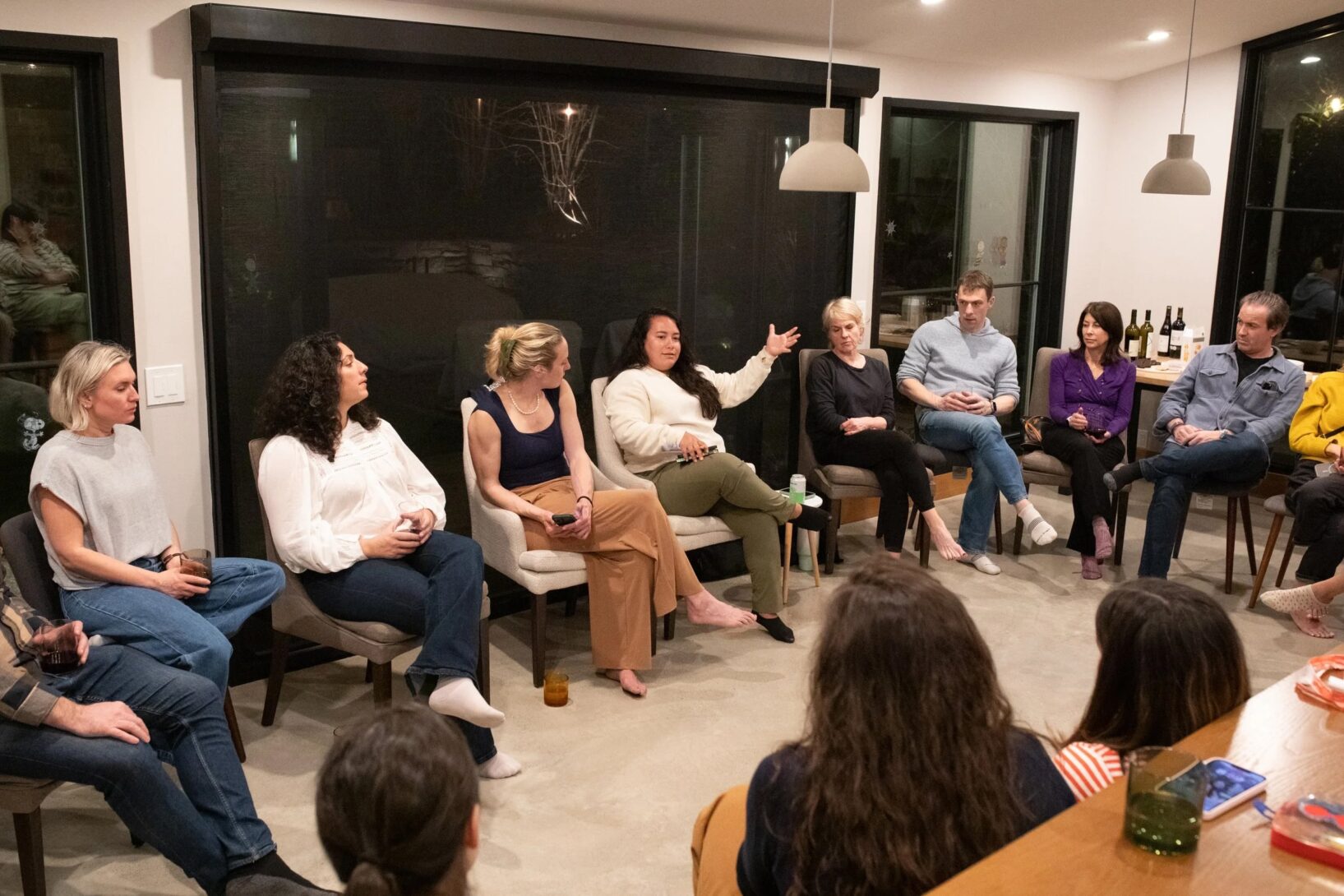
That is when her friend, Anjali Dalal, invited her to a gathering at her home. Dalal had created a new model of conversations called a Salonette — friends gather in someone’s living room and they explore a topic together. The rules are simple: when they explore a topic, there is no judgment of anyone, and no matter how much knowledge or expertise someone has on a topic, they all come to learn. All conversations are off the record.
Dalal says she started Salonette almost by accident a few years ago. Like Anderson, she had small kids, but had little time to do much else. “‘We were just coming out of COVID and my husband and I both commuted to work daily and we hadn’t had the chance to meet a lot of people in town,’” she says. She did, however, have a text chain with other moms from her child’s kindergarten class.
In the group chat, the moms were talking about a hot-button national policy issue that Dalal happened to be tackling in her work as a lawyer. So she invited them to her home to explore it together. “It was just a lovely night,” Dalal says. “We socialized, we talked. It was fun!” So the group began meeting regularly.
They soon discovered a shared concern about local issues that directly affected their families and friends — things like schools, libraries, policing, and city budgets. “That has been the through-line that has worked for us,” Dalal says. “But the key thing for us was always just keeping it social and keeping it regular. We try to meet on a monthly basis.”
For Anderson, the Salonette was an entry point to getting involved in her community. “I wanted to move from being a passive resident to an informed and engaged participant— but do so in a fun, low-pressure way,” she says. “The Salonette has helped solve the question of ‘where do I put my energy?’ I’ve shifted my focus to the attainable impact of local engagement.”
As part of the Salonette, Dalal regularly invites folks to speak, from local public officials to folks directly addressing issues in the community. “Salonette has bridged the gap between residents and local leadership,” Anderson says. “They’re conversations that turn ‘officials’ into neighbors we can engage with.”
Dalal’s Salonette now has 35 regular participants. Others in town have replicated the model and started their own Salonettes. “We have organically grown. We always let people invite other people, so it’s like a friends of friends thing. The only thing we ask is that they make a commitment to coming again, to build those social bonds,” Dalal says. She says after becoming regulars, most folks get involved in their community in a deeper way, such as by participating in local elections or advocating for issues they care about at a school district or town hall meeting.
For Anderson, though, the most valuable thing has been the relationships she has built with other Salonette attendees. “I’ve connected with people I don’t often see socially. Now, I’ll bump into a fellow Salonette member at the grocery store or on the commuter train, and we can have a meaningful conversation. That experience—recognizing friendly faces outside my immediate bubble—is the kind of community environment I was searching for.”
If you are interested in learning more about Salonettes and what you need to start your own, we’ll be hosting an hour-long Let’s Talk: Salonette with Anjali Dalal on Tuesday, Feb. 3, 2026 at 12pm ET / 9am PT
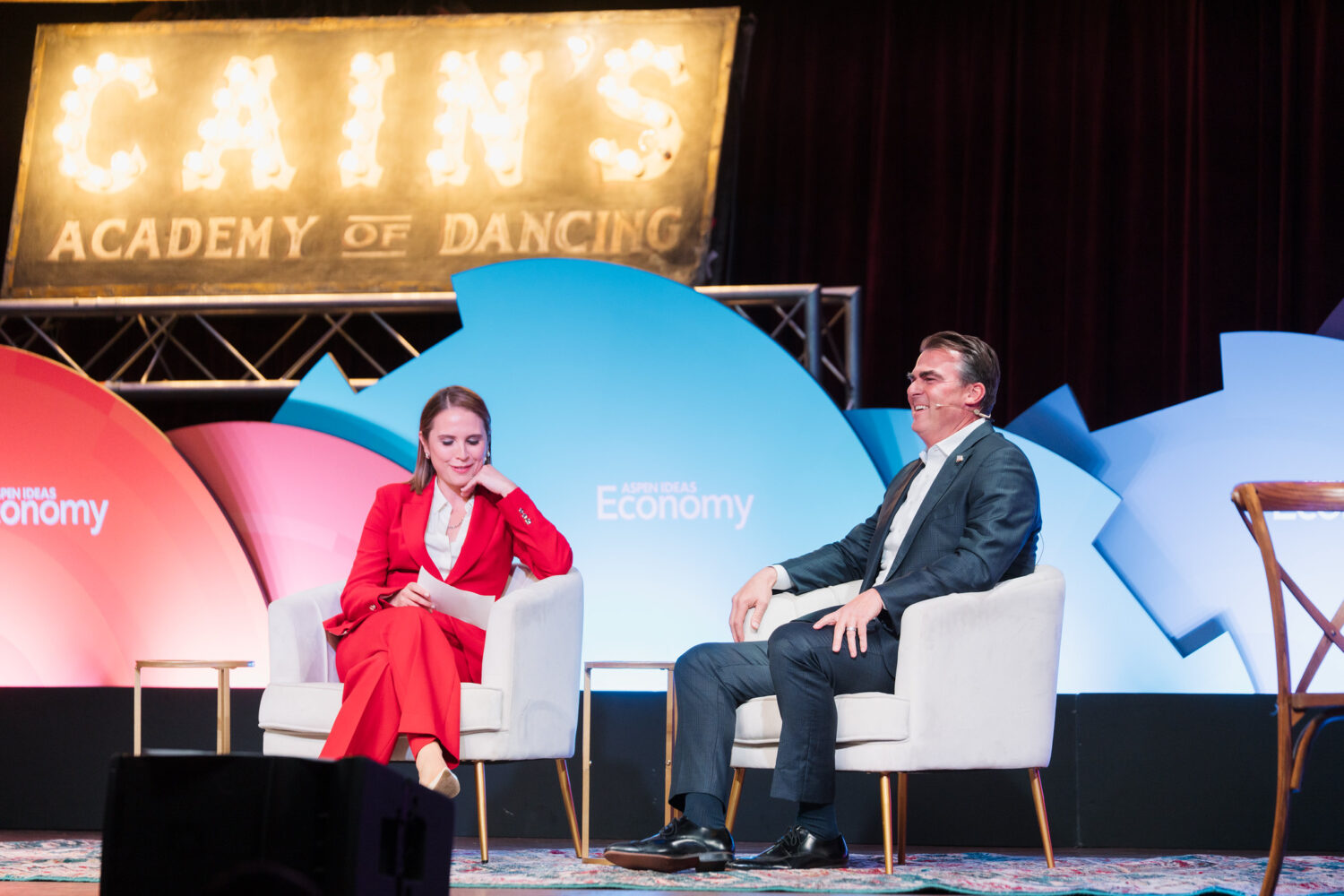
An Oklahoma Perspective on Growth and Opportunity

How Can We Help the Next Generation Build Wealth?
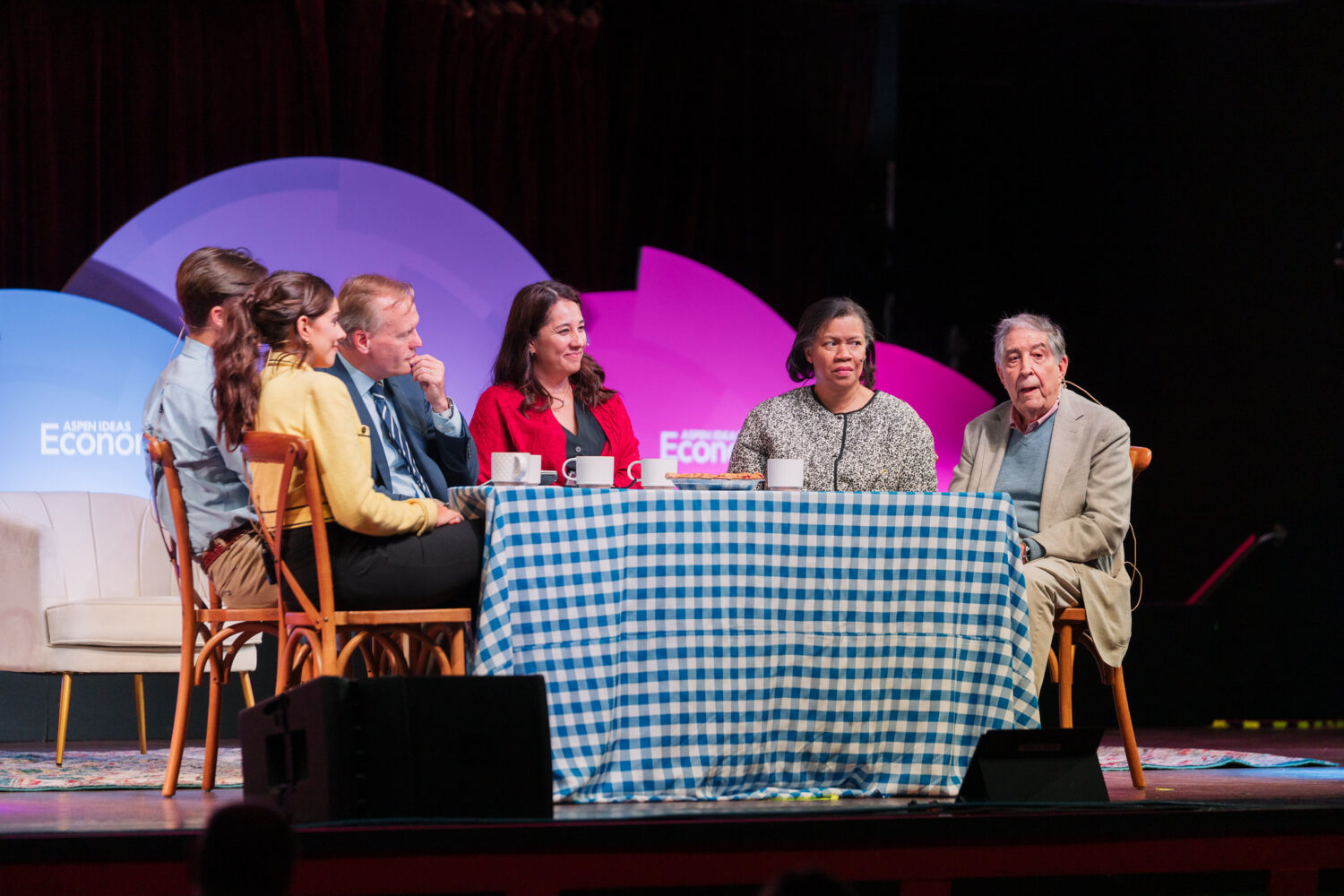
Does Economic Growth Pass the Kitchen-Table Test?

Modernizing EBT Security Is Long Overdue. Policymakers Can’t Just Mandate It; They Need to Pay for It.

Whose Belief Counts as Religion
Could Sovereign Wealth Funds Improve U.S. Households’ Financial Security?

Economic Opportunity is a Human Challenge, Even in the Age of AI
<strong><strong>In rural Missouri, a student-run coffee shop brews belonging across generations</strong></strong>