Weaving is helping to bring crime down in one of Birmingham’s toughest communities
Subscribe to Weave’s Newsletter
This story was originally published on Weave’s newsletter. Every week, you’ll get resources on how to weave our communities and restore social trust.
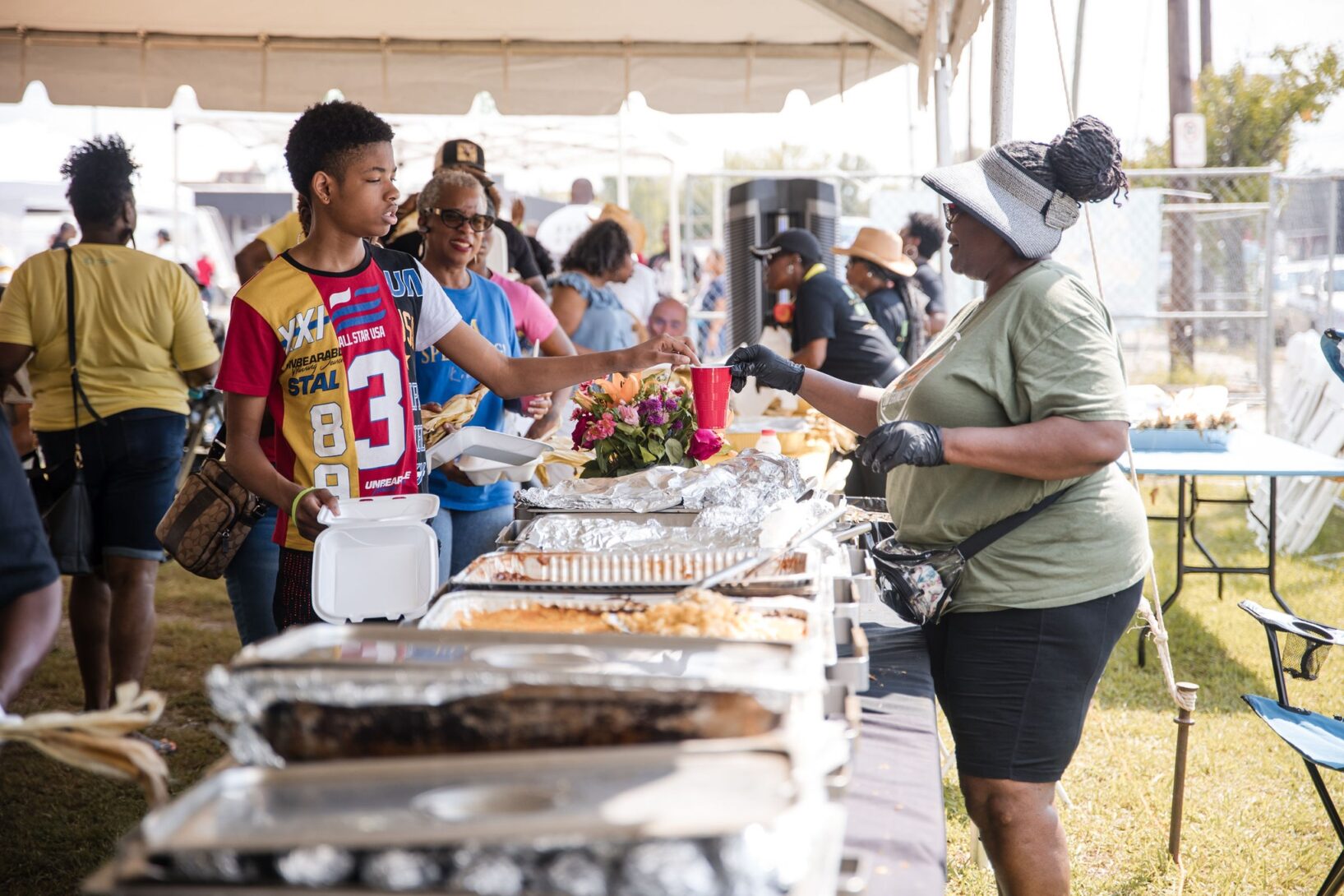
If you walk through the Ensley neighborhood of Birmingham, Alabama, you might see a small group of folks knocking on doors and checking on neighbors. Another group might be cleaning a vacant lot, repairing an abandoned property, or doing gardening and yard work in public spaces or neighbors’ yards. In the evening or on weekends, neighbors gather to eat and talk, sharing ideas for how to make the neighborhood healthier and safer. It wasn’t always like this, though.
For decades, Ensley had one of the highest crime rates in the city, especially when it came to homicide and robbery. Many former shops and homes were boarded up, abandoned, and graffitied. People stuck to themselves. That’s what Gerrel Jones found when he returned to Ensley after 20 years in prison for homicide.
Jones discovered the power and meaning of community, even in a harsh environment, while serving time. He learned relationship skills when he took part in an innovative rehabilitation program that led him and other inmates to form a tight group bound by trust and a desire to show up for each other day after day. He found purpose and a model for fostering belonging among people who had lived isolated and distrustful lives.
So when he got out, he brought what he learned to his hometown. He walked the neighborhood, knocked on doors, introduced himself, and handed out his card. He and his wife invited people over to their home and hosted yard parties, neighborhood gatherings, and fish fries.
Some neighbors were distrustful of his intentions. “People thought it was weird,” Jones says. “That’s how isolated we all are. But when you knock on a door, you open up an opportunity for a relationship. And people in relationships tend to want to do better for each other.”
Over several years, folks started opening up and addressing local problems together, from welcoming new neighbors to fixing up neglected community green spaces. As participation grew, Jones earned the support of local activists and funders.
In 2022, he founded Renew Birmingham as a nonprofit to bring in more resources and “put the neighbor back in the neighborhood.” The organization is led by community members and operates on a “collective impact” model that involves neighbors, nonprofits, funders, and even local legislators.
Today, the group offers those in Ensley and three other neighborhoods programs that help with housing, workforce development, education, youth services, new neighbor integration, jobs, transportation, and community wellness. To participate in the programs, neighbors have to contribute themselves by investing time and “sweat equity” in bettering their neighborhood.
Jones calls it “resident reciprocity” and says, ”You cannot give people resources without responsibility and accountability, and without an emphasis on building community.”
Renew Birmingham seems to be restoring pride and safety to neighborhoods. While homicide rates have increased throughout Birmingham, they have come down in Ensley. Neighbors annually canvass over 3800 homes and businesses. At the local Jackson-Olin High School, every senior participates in Renew Birmingham’s Life & Leadership program. The organization hosts financial literacy classes for all ages. Jones says Ensley’s streets are cleaner, homes are better kept, and neighbors feel more connected.
“When I came out of prison, I knew that it was a miracle. And my job, my whole life for the last 8 years, has been to pay it forward,” he says. Now he dreams that other communities hurt by crime can follow their example of success to bring together neighborhoods.

Elections & Religion Q&A


AI and the Economy
An Oklahoma Perspective on Growth and Opportunity
How Can We Help the Next Generation Build Wealth?
Does Economic Growth Pass the Kitchen-Table Test?