
I am the only person who can tell my story. The way I think and show up in different spaces is all a direct reflection of my many spheres of influence—family, work, academics, and everything in between. I’m shaped by growing up in the suburbs of Washington, D.C., forming my political consciousness in a post-9/11 world marked by the Black Lives Matter movement, voting in my first presidential election in the fall of 2016, and experiencing all of this as a Black woman. Everyone has their own concentric circles that shape their unique positionality, perspectives, and expertise.
This philosophy is central to our mission at the Aspen Institute Financial Security Program (Aspen FSP): To achieve financial security for all, we need to center the power of the individuals and communities who are directly impacted by the policies we aim to improve. Aspen FSP does this through our person-centered approach, a cross-cutting practice that prioritizes and incorporates lived experience in order to create more effective, responsive systems and help advance financial security at scale. One of the most integral tools we’ve developed to advance this work—and one I’ve had the honor of leading—is our Community Advisory Group, or CAG.

Origins of the Aspen FSP Community Advisory Group
As convenors, Aspen FSP curates what our Co-Executive Director Joanna Smith-Ramani calls a funky Thanksgiving table of multi-sector leaders to help us ensure all Americans can lead financially secure, dignified lives that go beyond meeting basic needs and enable people to thrive. In turn, the CAG helps us ensure that our funky tables include not just researchers, funders, technologists, financial services leaders, and policy wonks, but also leaders with lived experiences of the complex issues we’re trying to tackle together. More than that, we recruited CAG members to help us set our tables—not just as participants but as active collaborators from ideation to execution to iteration.
Since Aspen FSP launched in 2015, we’ve centered people’s experiences in our convenings and qualitative research through interviews, surveys, and focus groups with lived experts, frontline workers, and intermediary organizations who work directly with community leaders. In December 2021, we established the CAG to move beyond incorporating the insights of people with lived experience in one-time convenings or research projects and toward a model of deep and ongoing engagement with lived experts themselves to inform our work as well as our overall person-centered approach.
Discussing your most vulnerable moment of financial insecurity is deeply personal—especially with a stranger. What makes a community advisory model different from traditional methods of engaging lived expertise is we treat our CAG members not as research subjects, but as people and partners, centering human dignity.
When we decided to establish this group, we relied on Aspen FSP’s existing relationships, established trust, and previous work done with community organizations working closely with local leaders. Through these existing connections, we conducted a process of targeted outreach and nominations to find our leaders. For example, our partner Alabama Appleseed Center for Law and Justice nominated CAG members Callie Greer and Eboni Worsley, who had established relationships with their team by previously working with them as community leaders and navigators.
We started the CAG with six leaders and, earlier in 2025, added three new members to include the incredibly important perspectives of young adult leaders. Now, our group is composed of nine leaders from eight states, ranging in age from 20 to 65, who all possess a wealth of knowledge as community and professional experts.
Fundamental to this work is providing compensation to our lived experts for their time and insights. We provide each CAG member with an annual honoraria and actively seek out development opportunities and ways we can pour into the leadership of our members. Through monthly virtual meetings, members share personal updates, discuss their own work, provide invaluable insights and feedback across Aspen FSP’s portfolio of work, and prepare for engagements in Aspen FSP’s public-facing events. We also host an annual in-person convening to reflect on the group’s impact to date and plan for the next phase of engagement and programming. Through it all, we build everything in partnership with our CAG members, from the format of our monthly virtual meetings to tailored engagement opportunities, and we’re always ready to pivot in ways that allow us to be as responsive as possible to our CAG leaders.
We’re not the first organization to develop a model of deep and ongoing engagement with lived experts. We’ve learned from other organizations further ahead in their person-centered journeys, such as Ascend at the Aspen Institute, ATD Fourth World, and The Center for Law and Social Policy. To build on this peer learning, we launched the Person-Centered Community of Practice earlier this year. Co-led by Victor “Inuk” Gavilanes, one of our founding CAG members, this group is composed of staff and community leaders from seven organizations with long-standing advisory models. The Community of Practice aims to formalize the vast network of national organizations advancing financial security initiatives through person-centered approaches and provide resources and guidance to other organizations looking to implement these approaches.

What We’ve Built Together
Throughout the last four years of engagement with our CAG, they have informed, influenced, and shaped the direction of our work across portfolios. Examples of their impact include:
- Research Analysis and Agenda Setting. CAG members provided direct feedback and analysis of Aspen FSP’s qualitative interviews, contributed direct quotes, and offered ideas that shaped our foundational benefits research, the Financial Security at the Core publication, and our first annual Benefits Leadership Forum in 2022.
- Credibility and Grounding in Community Voice. CAG member Alana Gracey participated in the 2024 Financial Resilience Summit, co-hosted by Aspen FSP and the federal Office of Management and Budget, highlighting the importance of incorporating community expertise to improve and scale public benefits delivery innovations. This set the stage for a wider narrative shift to center human dignity and trust not just in our benefit systems but across Aspen FSP’s portfolio. Since then, CAG members have participated in the 2025 Aspen Leadership Forum on Inclusive Finance and the Convening on Measuring U.S. Household Essential Wealth.
- Strategic Direction. CAG members participated in a closed-door listening session with the U.S. Department of the Treasury to inform the development of the country’s first-ever National Strategy for Financial Inclusion, ensuring community voice was reflected in the final publication strategy and throughout Aspen FSP’s strategic direction.
Beyond what shows up in our reports, blogs, and convenings, our CAG grounds us in the fact that people’s lives don’t operate in siloes, and it’s harmful to treat our work as such. For example, if we aim to achieve increased wages in isolation, we’ll fail to recognize how increased earnings can introduce work and savings penalties that negatively impact a person’s ability to financially thrive. The CAG also advises us on how we can think more ambitiously as a program and has opened the door for collaboration opportunities across our team that wouldn’t have happened otherwise.

What the CAG Has Taught Me
As we embark on our fifth year of engagement with our CAG and our second year of engagement with members of our Person-Centered Community of Practice, we’ve only begun to scratch the surface. We haven’t always gotten it right, but this work is a journey that takes real time, intention, and humility.
While approaches may look different across organizations, I truly believe that every organization focused on financial security has an essential role to play in the development and sustainability of person-centered work. One of the first projects we worked on with the CAG was to establish a blueprint for building a future of inclusive wealth. Through several conversations with our CAG leaders on this foundational work, they reminded us that before we can begin to talk about strategies to build wealth, we need to have a shared definition of “wealth.” And for them, wealth means legacy.
Our CAG members have taught me that legacy means leaving behind not just money, but other meaningful assets for your children, grandchildren, and community like land, seeds, recipes, and memories. What’s more, legacy can look like dedicating your life or career to moving the needle ever-so-slightly on a major policy or system change for future generations, even if you never see the impact of your work.
I see my role in this work as a champion for our leaders and for the importance of this approach, driving not only the work itself but also boldly shifting Aspen FSP’s processes and mindsets and helping other leaders and organizations in the field do the same. I am eager to think creatively and ambitiously alongside our CAG and Community of Practice members to co-create the next phase of our work and how Aspen FSP can continue to invest in and honor the leadership of lived experts in all we do. So, when I think about the legacy I hope to leave on Aspen and the world, it’s squarely through the work I get to do alongside our CAG.
To learn more about Aspen FSP’s Person-Centered Approach, the Community Advisory Group, or our Person-Centered Community of Practice, reach out to Riani Carr at [email protected].
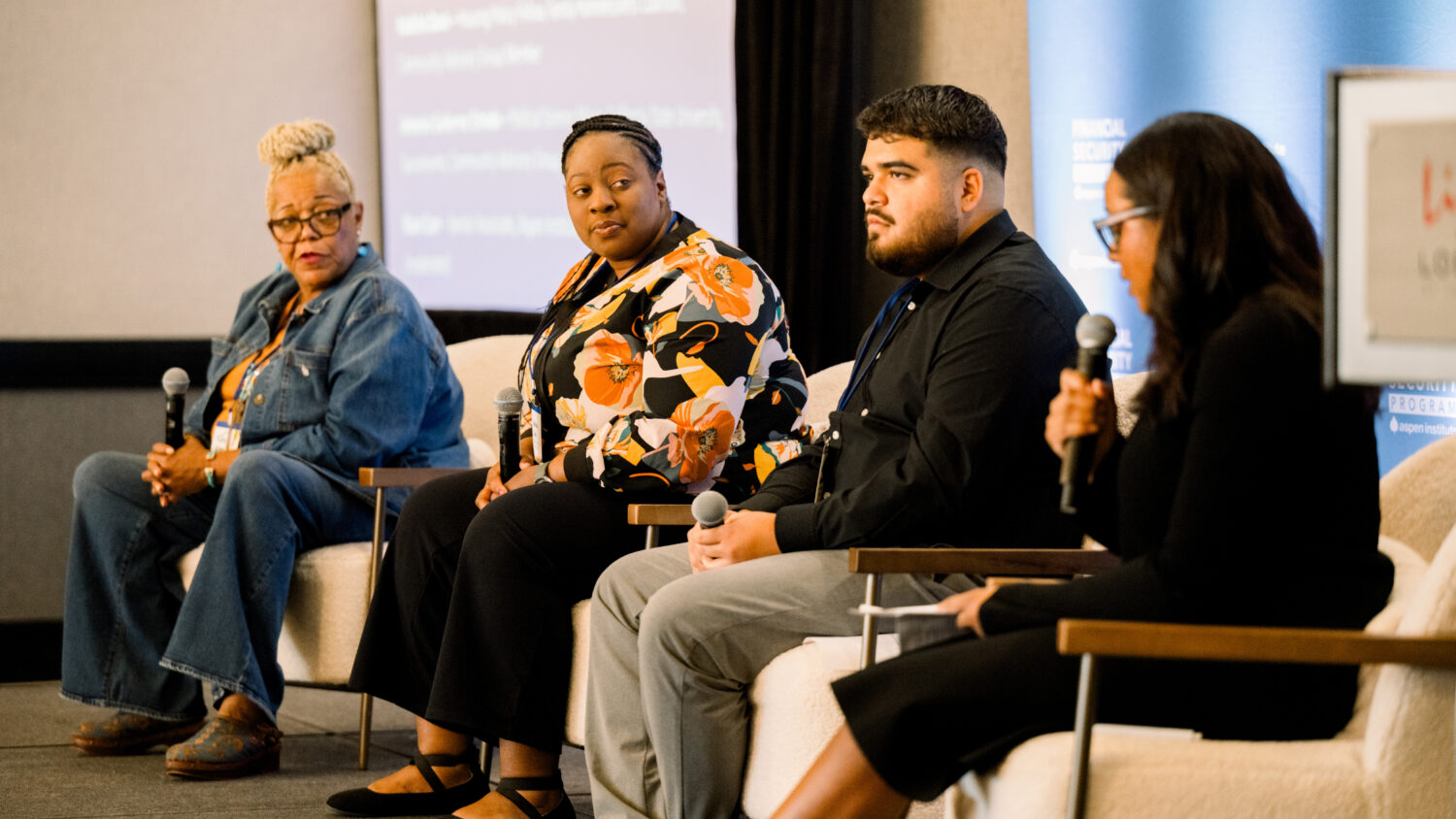
Why Current Solutions Fail Our Most Painful Financial Shocks: Insights from our Community Advisory Group

Beyond Income: Worker Financial Security and the Role of Benefits Inside and Outside of the Workplace

Aspen FSP Welcomes Three New Members to Its Community Advisory Group

Learning from Young Adults to Improve Public Benefits for All
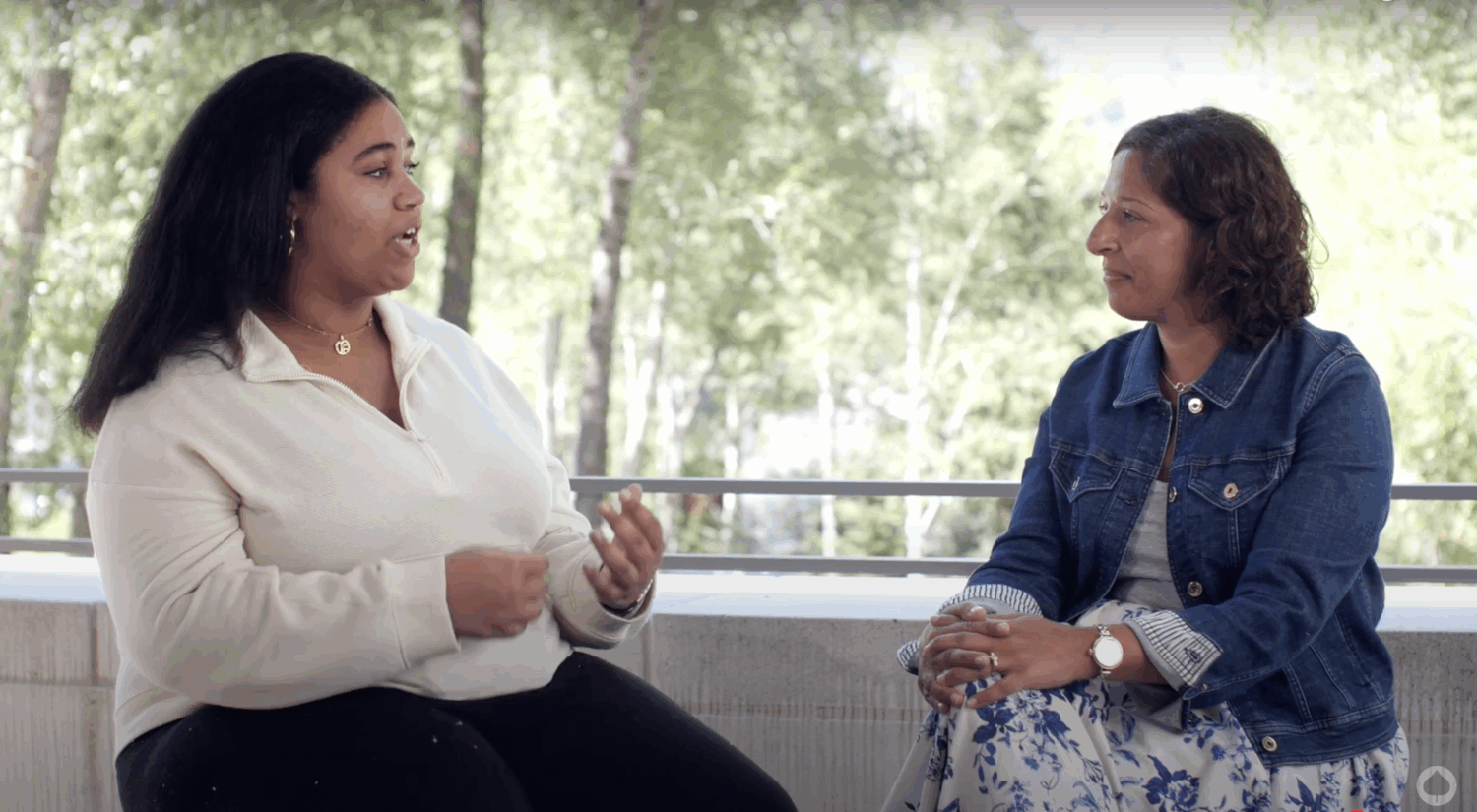
From Challenges to Change: Young Voices on Financial Equity

What Expanding Native American Representation in the Legal Field Can Teach Us About Building a More Diverse Financial Services Industry

Beyond Bootstraps: Lifting Up Young Women’s Voices About How to Build an Economy That Works for Them

“Find People Where They Are”: Four Experts on the Value of Person-Centered Practices in Benefits Design and Delivery
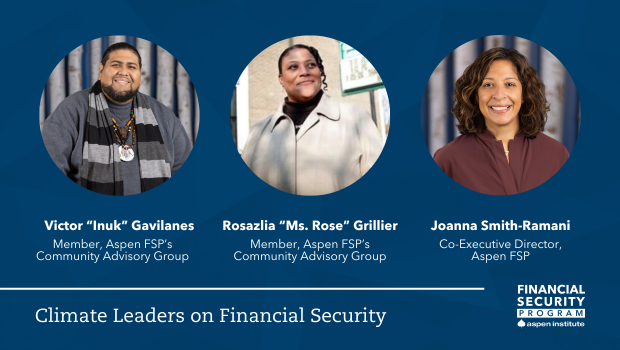
Climate Leaders on Financial Security-Victor Inuk Gavilanes and Rosazlia Grillier