Research and evaluation conducted by the Economic Opportunities Program’s Workforce Strategies Initiative explore strategies that help workers attain stability and mobility, including through training, education, and broader systems change.

In the years since the end of the Great Recession, the unemployment rate has declined much faster than the poverty rate, and more and more Americans are struggling to find work that allows them to support themselves and their families. WSI’s current research explores “raise the floor and build ladders” strategies, which improve the quality of low-wage jobs and promote mobility for low-wage workers.

Investing in Workforce Program Innovation
Publications

Investing in Workforce Program Innovation

This report offers insights into the complex work of developing and maintaining relationships that cross institutions.

Communities that Work Partnership Playbook
Publications

Communities that Work Partnership Playbook

This playbook presents the work of seven regional partnerships engaged in the Communities that Work Partnership.

Working Together to Strengthen America’s Immigrant Workforce: Partnerships Between Community Colleges and Immigrant-Serving Organizations
Publications

Working Together to Strengthen America’s Immigrant Workforce: Partnerships Between Community Colleges and Immigrant-Serving Organizations

Immigrant workers are a key segment of our workforce, and expanding opportunities for this group benefits our economy as a whole. How can immigrant-serving organizations and community colleges unite to achieve this?

Prince George’s County, Maryland: Investing in Infrastructure, Local Businesses, and Jobs
Publications

Prince George’s County, Maryland: Investing in Infrastructure, Local Businesses, and Jobs

Complying with a federal mandate to clean up the Chesapeake Bay is expected to spur $10 billion in public investment across the DC metro area over the next decade. Leaders in Prince George’s County, Maryland, are determined to make sure that this investment will not only achieve its environmental goals, but also spur local business development and create jobs for county residents. To strengthen this effort, representatives from the public, private, and nonprofit sectors applied to the CTWP to learn from and share with peers nationally, and to further develop their strategies to maximize the social benefits of this large public investment.

Northwest Georgia: Partnering to Connect Workers to Jobs in the Floor Covering Industry
Publications

Northwest Georgia: Partnering to Connect Workers to Jobs in the Floor Covering Industry

The Northwest Georgia Regional Workforce Partnership is developing a new talent pipeline for employment in local advanced manufacturing industries, with an initial focus on the floor covering industry. The new education and training pipeline builds on the local public school system’s college and career academy infrastructure and will connect high school students and graduates to advanced manufacturing jobs that business leaders indicate are difficult to fill.

Houston, Texas: Developing Prototypes for Workforce Development Strategies
Publications

Houston, Texas: Developing Prototypes for Workforce Development Strategies

Greater Houston is the nation’s fourth largest metro economy and has enjoyed four years of extraordinary growth, creating more than 480,000 jobs since the bottom of the recession—three jobs for every one lost. But this growth has also intensified employers’ struggle to fill key occupations, particularly in middle-skill careers and professions. UpSkill Houston, and the local leaders involved in the Communities that Work Partnership (CTWP), have adopted a series of innovative prototypes to speed workforce innovation and to scale what works to meet the demand for these middle-skill jobs.

Arizona: Understanding Skill Needs of Technology Occupations
Publications

Arizona: Understanding Skill Needs of Technology Occupations

Despite a positive growth outlook for IT in Arizona, there is local concern that the state lacks qualified workers to support the future of IT and that talent is leaving the area for professional opportunities elsewhere. As a result, in 2014 the IT Sector Partnership was launched with the intention of engaging a wide range of stakeholders to address the state’s workforce gap. The partnership aimed to define the challenges facing employers—both within the IT industry and in other sectors employing IT workers—and then develop and implement strategies to meet those needs.

The Freelance Economy and Workforce System Meet in the Bay Area
Publications

The Freelance Economy and Workforce System Meet in the Bay Area

The “on-demand” or “1099” economy is reengineering how millions of Americans work, and California’s San Francisco Bay Area is at the forefront of these changes. Four members of the Bay Area team participating in the Communities that Work Partnership (CTWP) set out to understand this challenge and explore how the public workforce development system—the one-stop job centers, community colleges, and publicly funded community-based training programs—could meet the skills needs of freelancers, and the businesses that hire them, in the region’s 1099 economy.

New York City: Partnering to Improve Domestic Workers’ Job Quality
Publications

New York City: Partnering to Improve Domestic Workers’ Job Quality

The New York City Communities that Work Partnership is built on a long-standing collaboration among organizations that worked together to pass the New York State Domestic Workers Bill of Rights (BOR). The New York City partners are aware of how challenging it will be—given the uniquely private nature of domestic work—to enforce new labor regulations. Thus their work has expanded to consider how they can address challenges that affect both workers and their employers through workforce development strategies.

Optimizing Talent: The Promise and the Perils of Adapting Sectoral Strategies for Young Workers
Publications

Optimizing Talent: The Promise and the Perils of Adapting Sectoral Strategies for Young Workers

This report looks at sector programs and the experience of a network of young adult and sector practitioners.

Placeholder
Publications

Flipping the Classroom

Seeking to boost student success in health sciences, Austin Community College’s (ACC) Biology Department set out to fundamentally change how students learn and master prerequisite course material.

Placeholder
Publications

The Power of Pell

In response to declining public funding for noncredit workforce programs, Mott Community College took the unusual step of awarding Pell “Clock Hour” grants to students in two noncredit health care certificate programs.

About the Workforce Strategies Initiative

The Workforce Strategies Initiative, part of the Economic Opportunities Program, uses research and evaluation to explore strategies that help workers attain stability and mobility, including through training, education, and broader systems change.

About the Economic Opportunities Program

The Aspen Institute Economic Opportunities Program advances strategies, policies, and ideas to help low- and moderate-income people thrive in a changing economy.

Join Our Mailing List

To receive occasional emails about our work — including new publications, commentary, events, fellowships, and more — join our mailing list.

Connect on Social Media

For news and updates every day, connect with us on the social media platform of your choice.

More from the Workforce Strategies Initiative

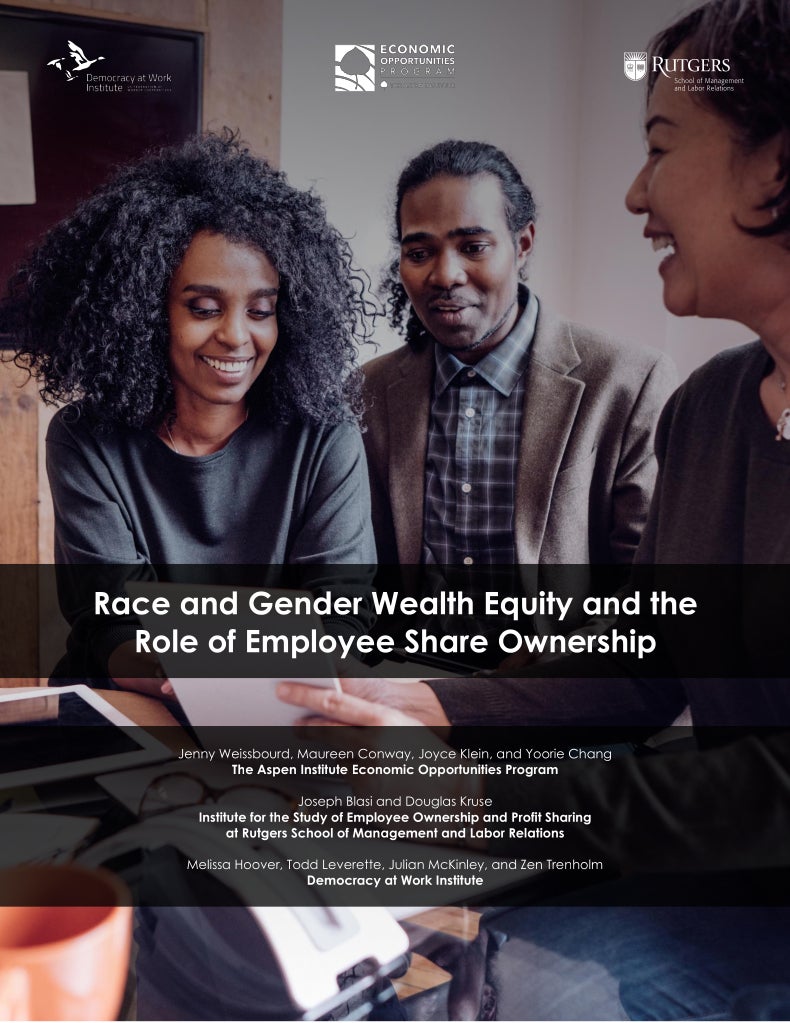
Cover Page for the publication "Race and Gender Wealth Equity and the Role of Employee Share Ownership"
Publications

Race and Gender Wealth Equity and the Role of Employee Share Ownership

Employee ownership can promote equity, improve job quality, and boost business performance.

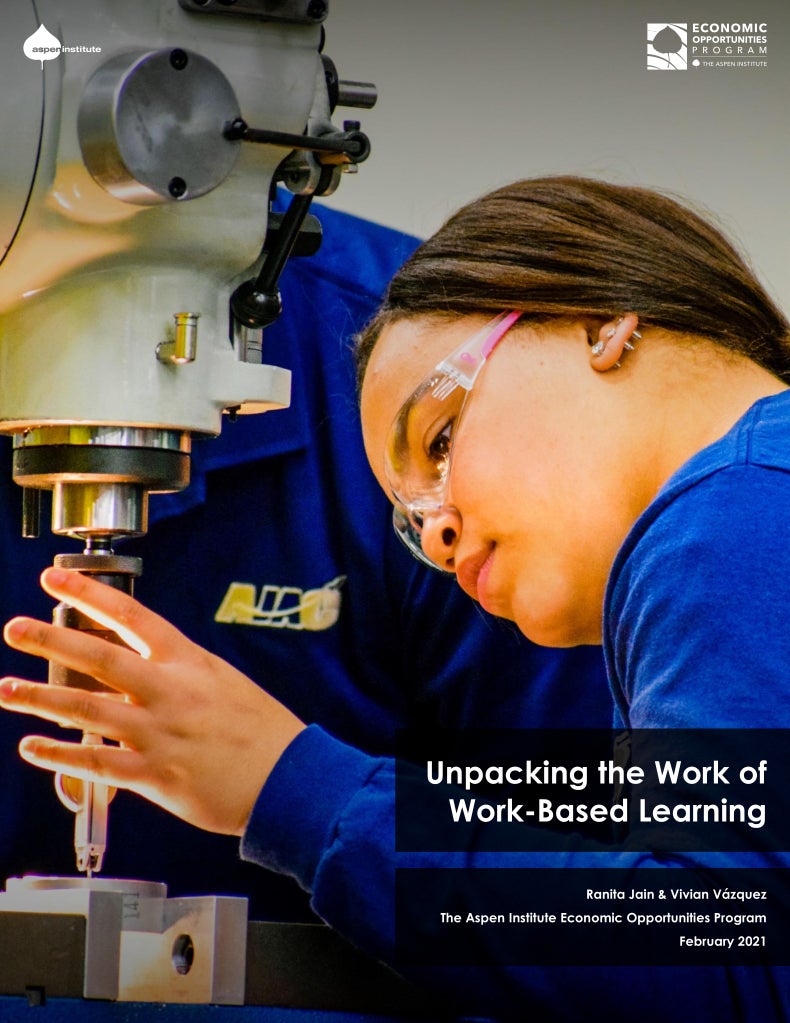
Cover page for the report "Unpacking the Work of Work-Based Learning"
Publications

Unpacking the Work of Work-Based Learning

Enhancing Conversations Between Employers and Workforce Professionals
Blog Posts

Enhancing Conversations Between Employers and Workforce Professionals

Many young people need job and training opportunities. How do workforce professionals talk about these issues with employers?

Voices from the Field: Engaging Employers to Connect Young Adults to Good Fit Employment
Publications

Voices from the Field: Engaging Employers to Connect Young Adults to Good Fit Employment

Young workers are facing dire employment prospects. But asking employers the right questions can help identify opportunities.

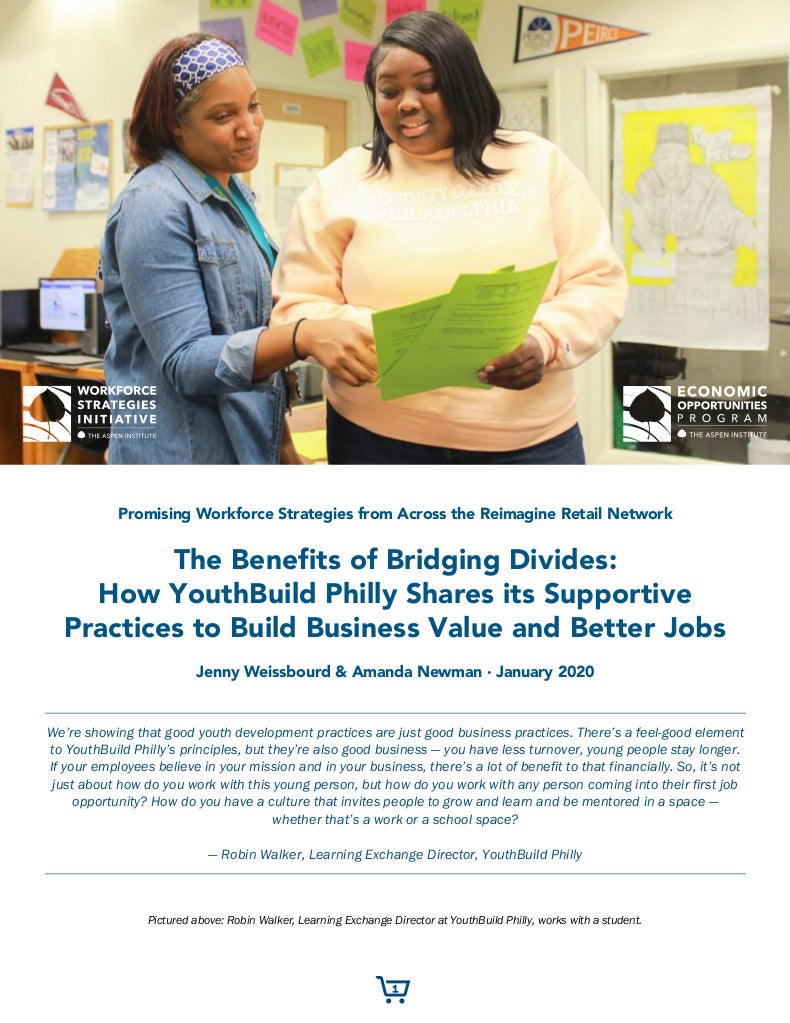
Cover page: "The Benefits of Bridging Divides: How YouthBuild Philly Shares its Supportive Practices to Build Business Value and Better Jobs"
Publications

The Benefits of Bridging Divides: How YouthBuild Philly Shares its Supportive Practices to Build Business Value and Better Jobs

YouthBuild Philly shows how businesses can develop supportive practices to help young people succeed at work.

Cover Page: "Genesis at Work: Evaluating the Effects of Manufacturing Extension on Business Success and Job Quality"
Publications

Genesis at Work: Evaluating the Effects of Manufacturing Extension on Business Success and Job Quality

Workforce practices are central to a firm’s success. What happens when companies focus on people and process equally?

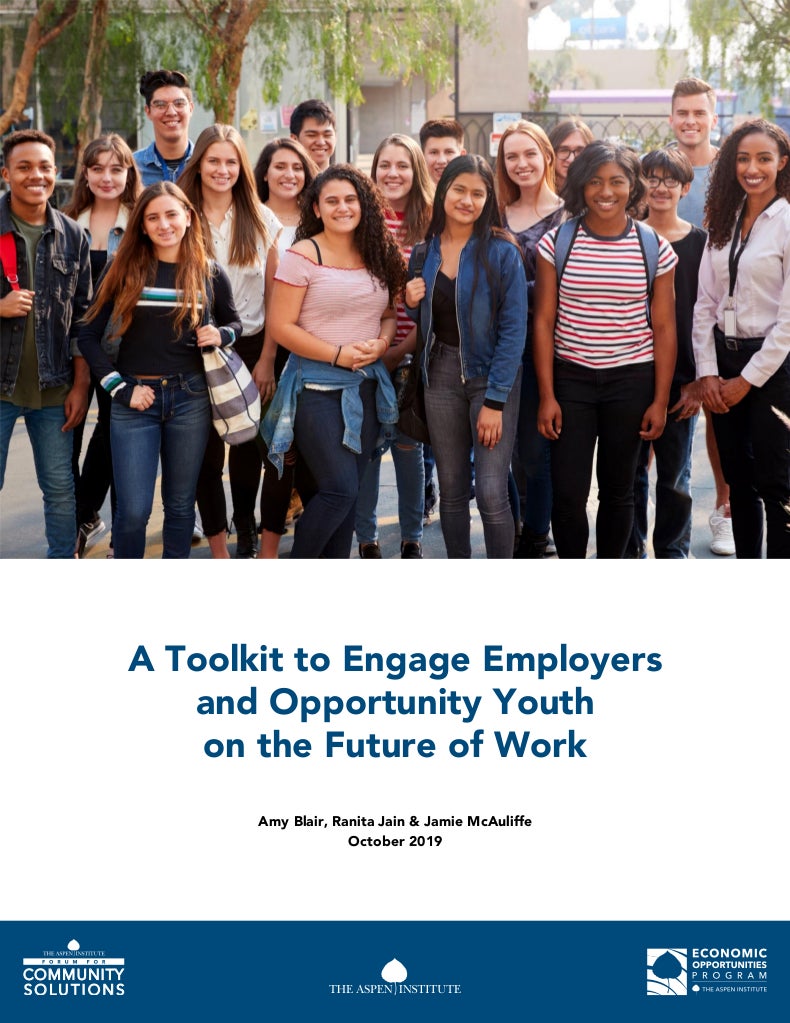
A Toolkit to Engage Employers and Opportunity Youth on the Future of Work
Publications

A Toolkit to Engage Employers and Opportunity Youth on the Future of Work

How can we ensure Opportunity Youth are positioned to succeed in the future of work?

Cost of Turnover Tool: Make the business case to improve retention through upskilling and stability
Publications

Cost of Turnover Tool

Estimate how much your business spends each year replacing staff in one occupation.