From Crisis to Continuity: Optimizing CDFI Capital and Partnerships for Natural Disaster Response

Joyce Klein
Senior Director
Overview
When natural disasters strike, small businesses face an immediate liquidity crisis. With half of small businesses having less than a month of cash reserves, many face permanent closure simply due to “stranded” costs like rent, payroll, and spoiled inventory if they must wait weeks or months for relief.
This brief, authored by Business Ownership Initiative Senior Director Joyce Klein, draws directly on decades of disaster relief experience and insights from the Microfinance Impact Collaborative and key CDFI partners. It provides a roadmap for funders, investors, and policymakers to structure effective, rapid, and sustainable financial interventions that protect small businesses and the communities that rely on them.
Key Takeaways
The Liquidity Gap
Traditional emergency aid through SBA or FEMA takes time, and lower-income communities often face significant approval hurdles. Speed is essential to business survival.
Four Core Financial Interventions
The brief highlights four specific products deployed by CDFIs:
- Payment Support for Existing Borrowers (subsidized payment relief).
- Small Rapid Response Grants ($5k–$20k for immediate stranded and cleanup costs).
- Small Rapid Response Loans (fast, cash-flow underwritten working capital).
- Larger, Longer-Term Rebuilding Loans (patient capital for real estate & equipment).
The “Hub and Spoke” Model
To manage large-scale regional disasters, the most effective approach is to pair local CDFIs that provide trust, outreach, and ground-truth verification with larger regional/national CDFIs that provide the digital infrastructure, tech tools, and surge staffing needed for rapid disbursement and fraud detection.
Protecting CDFI Financial Strength and Solvency
Responding to disasters without properly structured capital puts CDFIs at financial risk. Funders must deploy a comprehensive capital mix that includes direct capital, operational surge grants, interest rate buydown subsidies, and augmented loan loss reserves.
Built on Field Experience
This brief synthesizes insights from deep design sessions hosted by the Business Ownership Initiative with the six members of the Microfinance Impact Collaborative — Accion Opportunity Fund, Allies for Community Business, Ascendus, DreamSpring, Justine PETERSEN, and LiftFund — along with Four Bands Community Fund and Scale Link.
Download the Full Brief
Learn how strategic capital deployment and pre-disaster operational preparation can transform natural disaster response and preserve local economic continuity.
About the Business Ownership Initiative
The Business Ownership Initiative, an initiative of the Economic Opportunities Program, works to build understanding and strengthen the role of business ownership as an economic opportunity strategy.
About the Economic Opportunities Program
The Aspen Institute Economic Opportunities Program advances strategies, policies, and ideas to help low- and moderate-income people thrive in a changing economy.
Join Our Mailing List
To receive occasional emails about our work — including new publications, commentary, events, fellowships, and more — join our mailing list.
Connect on Social Media
For news and updates every day, connect with us on the social media platform of your choice.

Metrics that Matter: Improving Financial Analysis of CDFI Small Business Lenders
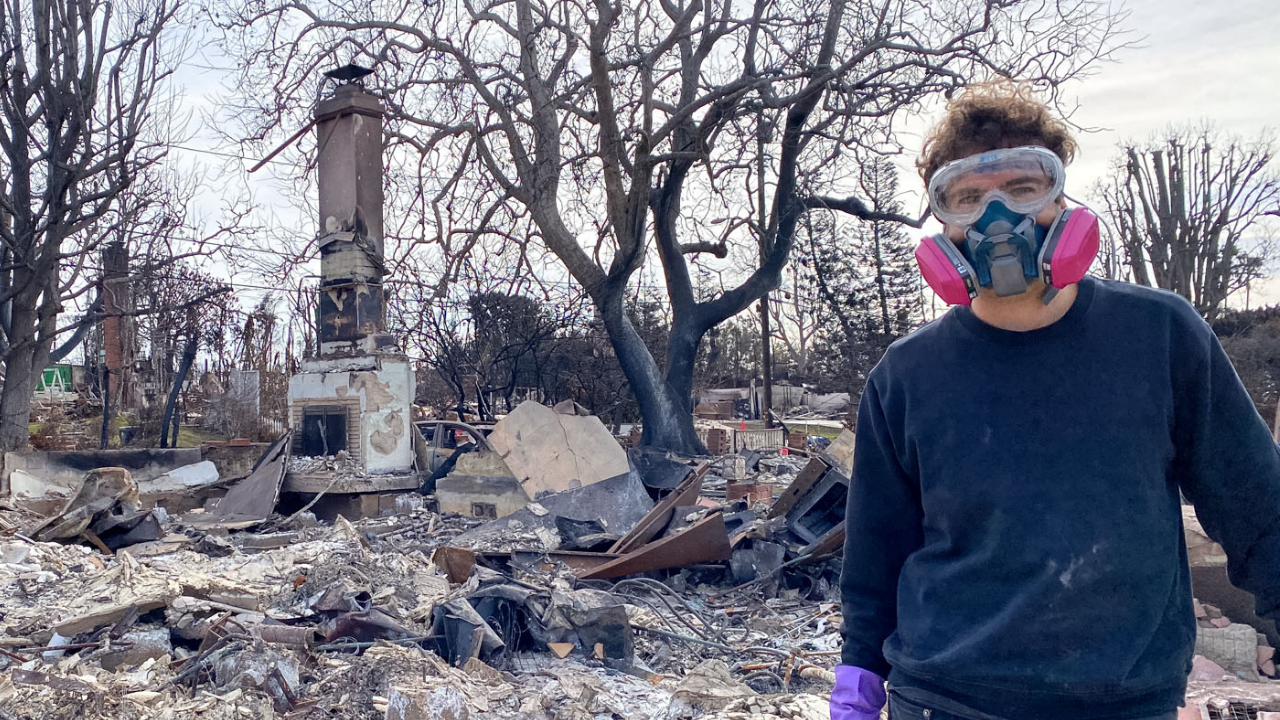
From Crisis to Continuity: Optimizing CDFI Capital and Partnerships for Natural Disaster Response
The New Era of Small Business Finance: Access, AI, and Accountability (Highlight reel)

The Changing Role of Small Business Ownership
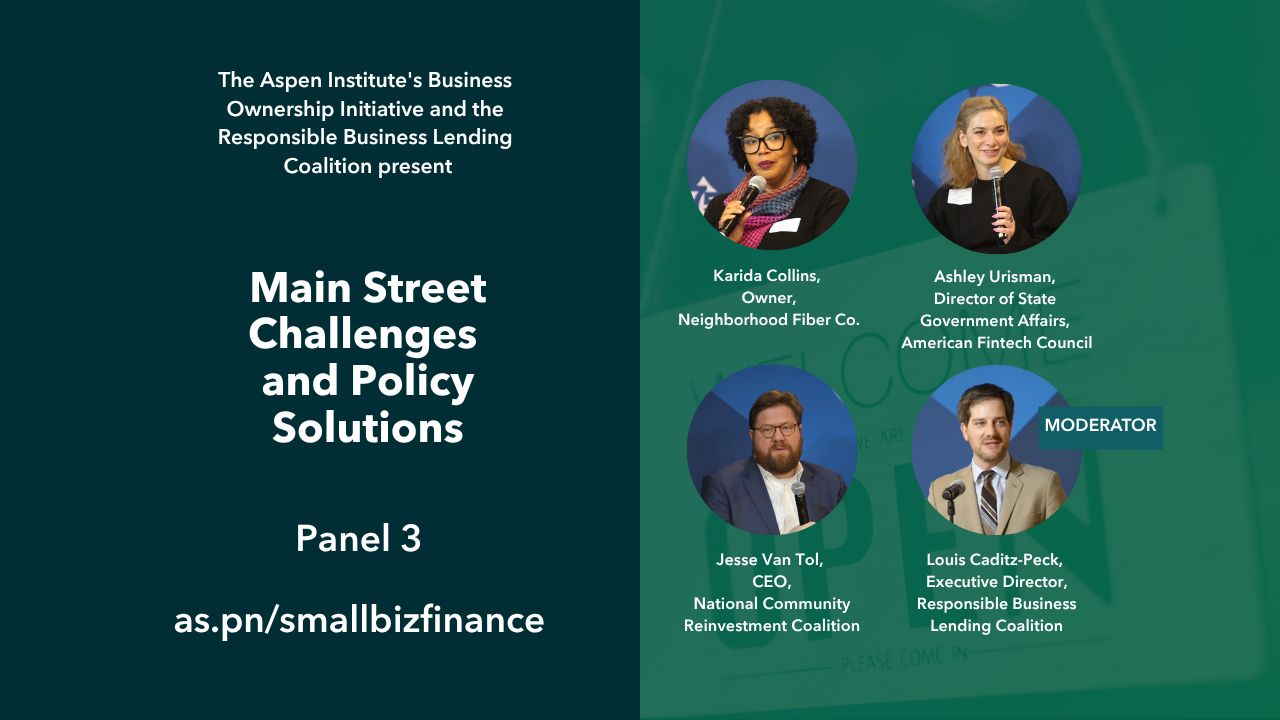
Main Street Challenges and Policy Solutions

Innovations Driving Small Business Lending Forward: It’s Not All About AI

To Help Small Businesses Recover From the L.A. Fires, Invest in Community Lenders