Seeing Talent Differently: How Education and Career Mobility Fellows are Reshaping Opportunity for Workers Everywhere

Chelsea Miller
Associate Director
The fall of each year brings with it leaves changing, cooler temperatures, and “conference season” — the time of year where individuals gather from all over to share ideas, catch up, and make change for the better.
Over the last few months, our Education and Career Mobility Fellows have coordinated, attended, and spoken at a variety of conferences, including the many education- and workforce-focused events that take place in the fall. At each event, they shared their perspective and organizational priorities with others in compelling ways.
One of these conferences is hosted by our partner on the Education and Career Mobility Fellowship program, Guild. At the Guild Opportunity Summit, the theme was “Seeing Talent Differently”. Two fellows, Joanna Muscolino (Cohort 1), director of talent management for USAA, and Lauren Allen (Cohort 2), director of talent acquisition for OSF HealthCare, both spoke on why investing in skills acquisition matters and how it enables their organizations to see talent differently.
Joanna spoke during a retrospective on skills-based hiring that allowed her to share how USAA approached breaking down their roles to the task level. She supported leading an activity where participants worked together to pull skills out of a job description and address how AI could augment or eliminate the need for that skill.
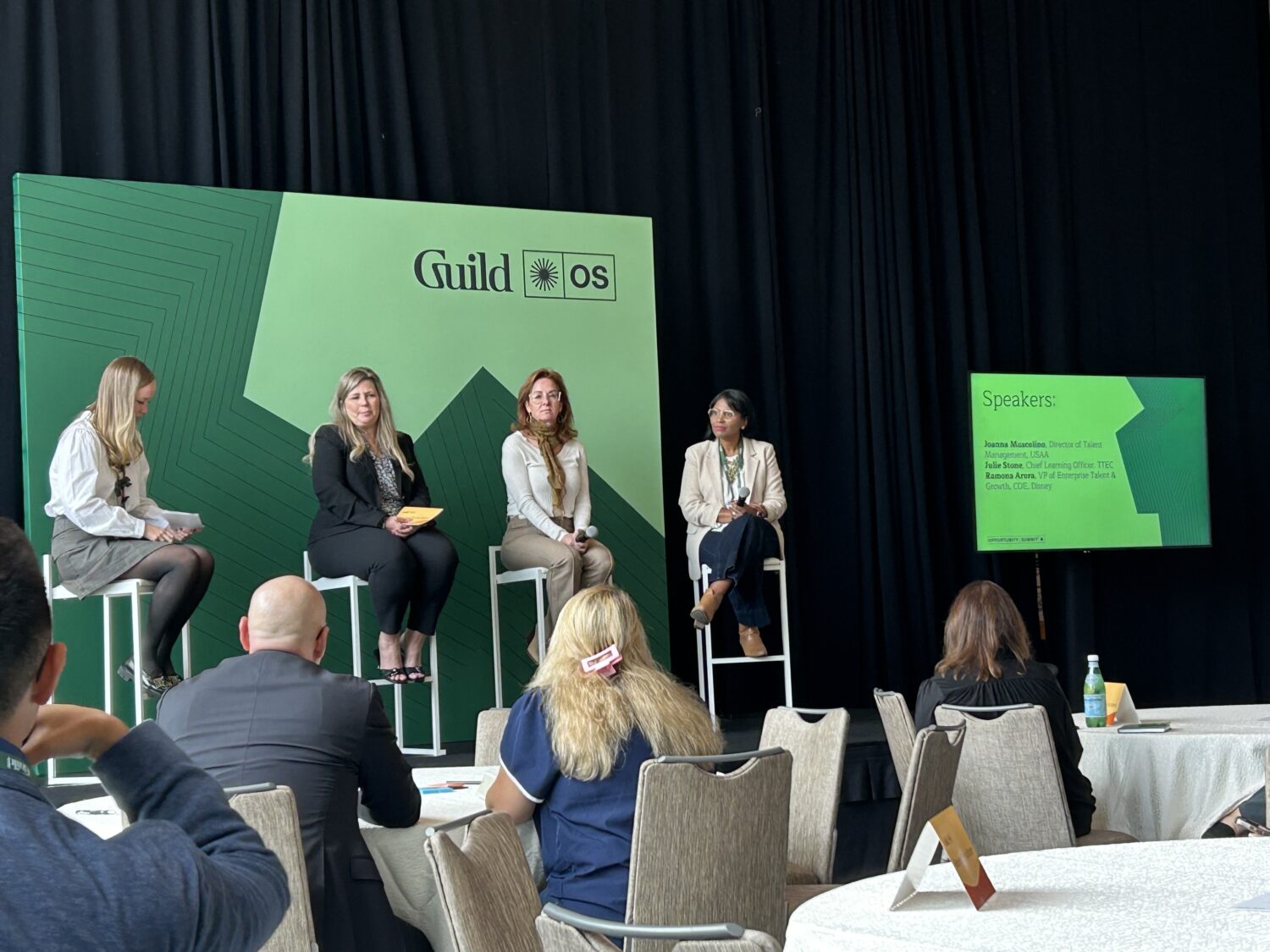
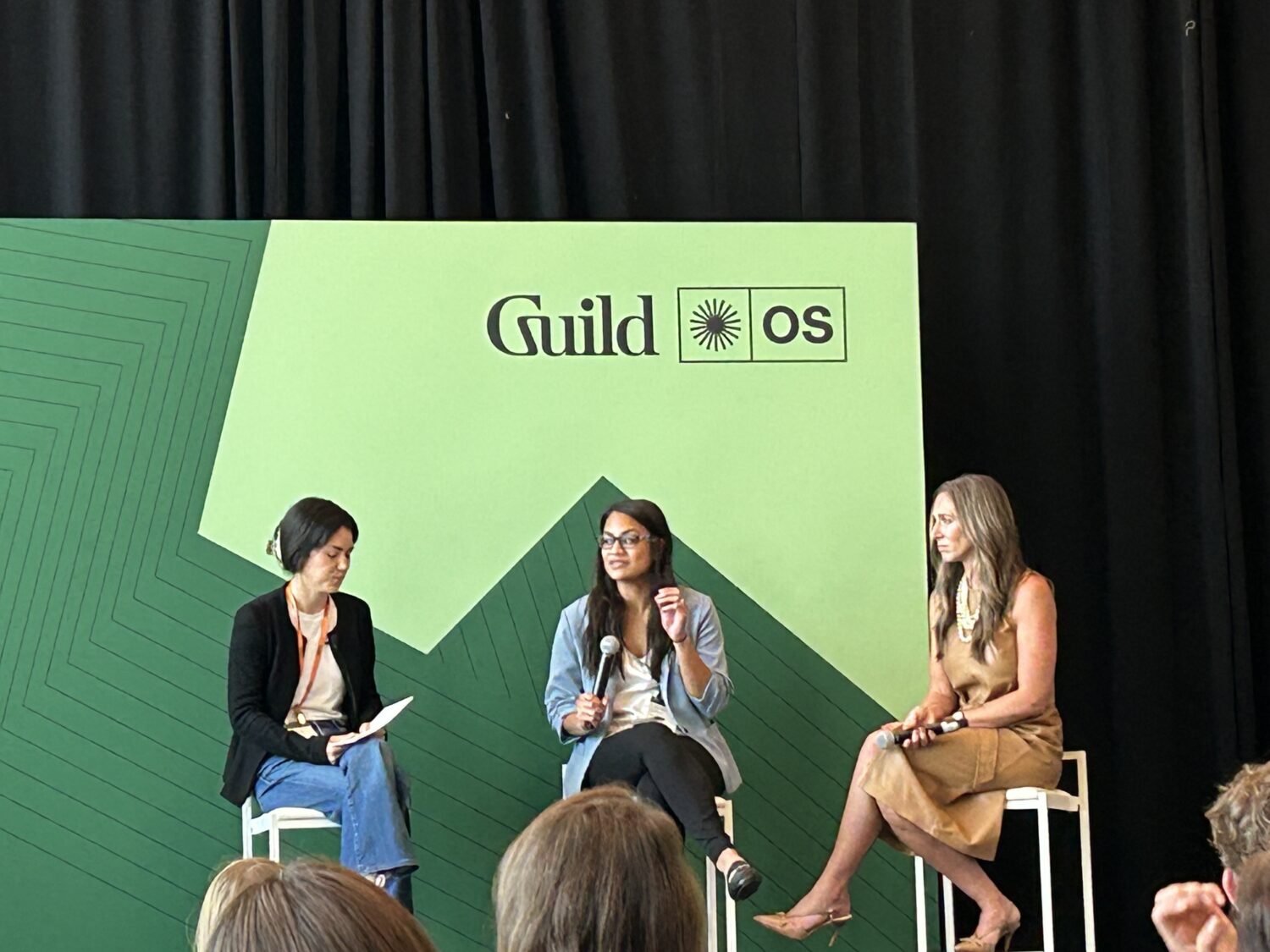
Lauren spoke on a panel about the importance of being able to track learner performance in licensed and certified programs. During the panel, she said, “If you are investing in people, you maximize them.” This insight is a fantastic example of how the organizations participating in the fellowship are taking unique approaches to talent development for their workforce.
The first two cohorts of the Education and Career Mobility Fellowship continue to lead the way in pushing for better opportunities for the workforces they serve. UpSkill America is accepting applications for Cohort 3 of the fellowship until October 31. If you know a mid-career professional in the talent development space, please encourage them to apply. If you have any questions, you can reach out to [email protected]
About UpSkill America
UpSkill America, an initiative of the Economic Opportunities Program, supports employers and workforce organizations to expand and improve high-quality educational and career advancement opportunities for America’s front-line workers.
About the Economic Opportunities Program
The Aspen Institute Economic Opportunities Program advances strategies, policies, and ideas to help low- and moderate-income people thrive in a changing economy.
Join Our Mailing List
To receive occasional emails about our work — including new publications, commentary, events, fellowships, and more — join our mailing list.
Connect on Social Media
For news and updates every day, connect with us on the social media platform of your choice.
MillerKnoll: Developing Operations Leaders from Within and Beyond — A Case Study in Structured Talent Development

A Typology of State-Supported Work-Connected Learning Programs

The Workforce of the Future Starts with Adult Basic Education

Foundational Skills: Early Insights from Employers and Providers
How Tax Policy Can Help Employers Expand Access to Learning

Adult Working Learners Vote With Their Feet: What Employers Are Learning About Foundational Skills

The Impact of Foundational Skills on Workforce Success