Education is Everywhere, Opportunity is Not: Insights from a week in Washington, DC
Chelsea Miller
Associate Director
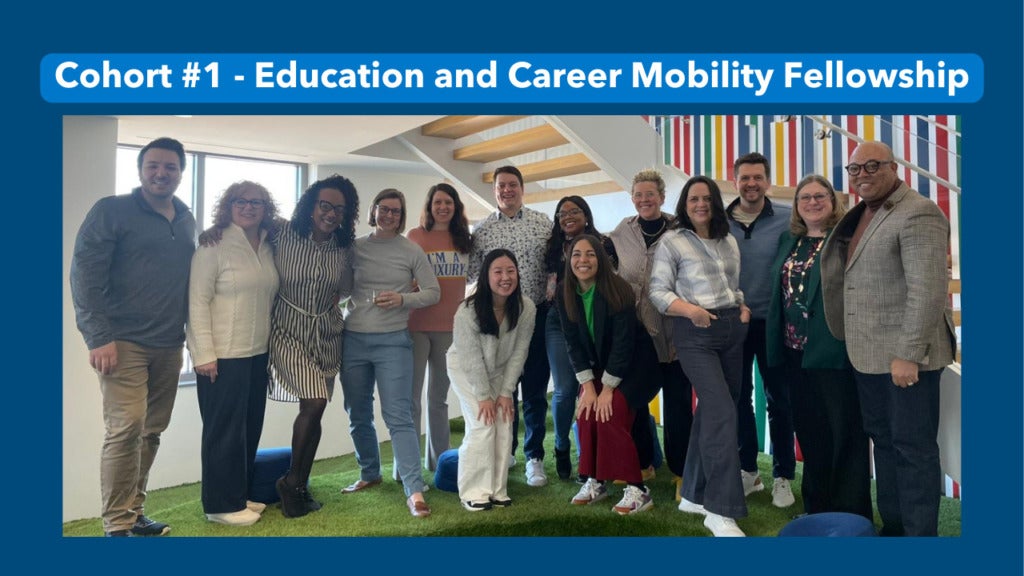
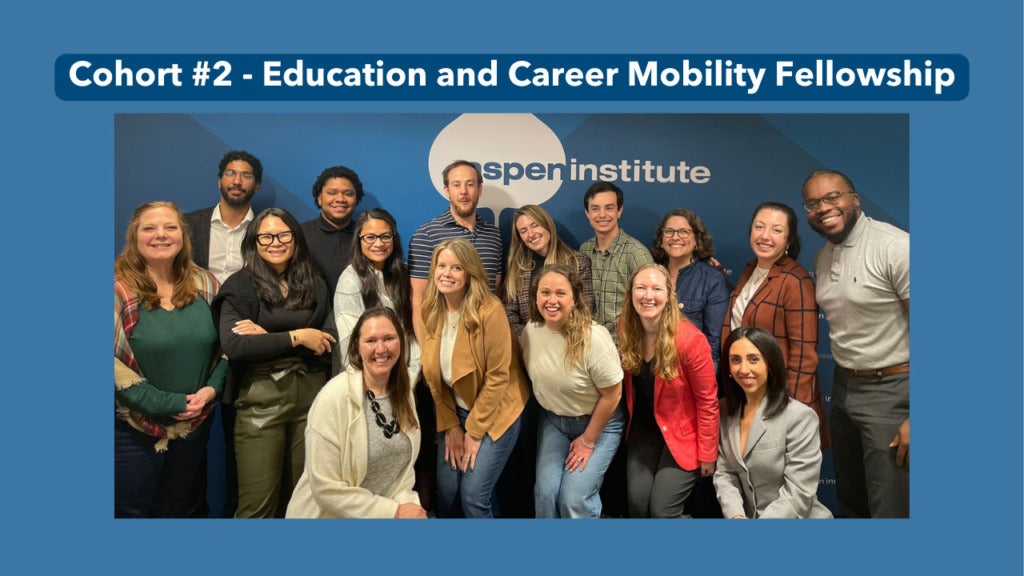
Last week, we had the incredible opportunity to gather with Cohort 2 of the Education and Career Mobility Fellowship at the Aspen Institute’s headquarters in Washington, DC. Just days later, we reunited with Cohort 1, bringing together changemakers across industries to reflect, learn, and push forward in their shared mission. Through these conversations, a powerful theme emerged: Education is everywhere, but opportunity is not. Additionally, we discussed how, in this time of uncertainty, navigating risk and change is more important than ever.
The Unseen Effort: “A Consummate Duck”
A phrase that resonated deeply with Cohort 2 was, “I must always be a consummate duck—paddling fiercely under the surface while appearing calm and serene above water.” This analogy speaks to the balancing act that so many professionals face today. As our fellows strive to advance skills-first approaches within their organizations, they are simultaneously navigating immense workloads, shifting business priorities, and systemic barriers. The ability to manage this dual reality—staying composed while working tirelessly—was a shared experience that strengthened the cohort’s bond.
The Vulnerability of Work
One of the most striking insights came from a discussion on implementing skills-first strategies: “Work feels vulnerable right now.” The uncertainty within organizations—whether due to market shifts, changing talent demands, or economic pressures—can make conversations about workforce development and equitable hiring practices feel like walking on eggshells. However, our fellows embraced this vulnerability, recognizing that by acknowledging it, they could better support their teams and drive meaningful change.
Navigating Risk in Complex Times
This theme of risk was echoed throughout our reunion with Cohort 1. As companies grapple with rapidly evolving business landscapes, HR leaders face a growing challenge: balancing risk mitigation with the need for innovation. A powerful statement from a Burning Glass Institute leader summed up this tension: “The degree requirement has been removed, but the risk associated with hiring someone without a degree has not.”
Whether discussing the components of a good job, strategies for work-based learning, or ways to create interoperable talent pools, the issue of risk came up time and time again. The reality is that while organizations recognize the need for change, fear of the unknown often hinders progress. Our fellows, however, are committed to tackling these challenges head-on—leveraging collaboration and shared learning to chart new paths forward.
The Power of Community
Despite the barriers they face, our fellows continuously remind us that change is not an individual endeavor. Both cohorts underscored the importance of peer support and collective problem-solving. By working together—within their organizations and across industries—they are creating momentum that makes progress not just possible, but inevitable.
As Cohort 2 moves forward with monthly plenaries leading up to their final seminar in Indianapolis this July, and as Cohort 1 continues to engage in virtual learning and cross-cohort collaboration, one thing is clear: This community is not just talking about change; they are making it happen. With leaders like these at the forefront, we can create a future where both education and opportunity are truly everywhere.
About UpSkill America
UpSkill America, an initiative of the Economic Opportunities Program, supports employers and workforce organizations to expand and improve high-quality educational and career advancement opportunities for America’s front-line workers.
About the Economic Opportunities Program
The Aspen Institute Economic Opportunities Program advances strategies, policies, and ideas to help low- and moderate-income people thrive in a changing economy.
Join Our Mailing List
To receive occasional emails about our work — including new publications, commentary, events, fellowships, and more — join our mailing list.
Connect on Social Media
For news and updates every day, connect with us on the social media platform of your choice.
MillerKnoll: Developing Operations Leaders from Within and Beyond — A Case Study in Structured Talent Development

A Typology of State-Supported Work-Connected Learning Programs

The Workforce of the Future Starts with Adult Basic Education

Foundational Skills: Early Insights from Employers and Providers
How Tax Policy Can Help Employers Expand Access to Learning

Adult Working Learners Vote With Their Feet: What Employers Are Learning About Foundational Skills

The Impact of Foundational Skills on Workforce Success