You Can’t Change the System Alone
Chelsea Miller
Associate Director
In June, I wrote about a Fellow who told us, “I don’t play the game to win. I play to not lose,” describing how individuals have to navigate the corporate environment to reach their goals. That idea shaped our seminar in Chicago: How do you understand a system well enough to stay in the game and keep doing the work that matters, without losing too much of yourself?
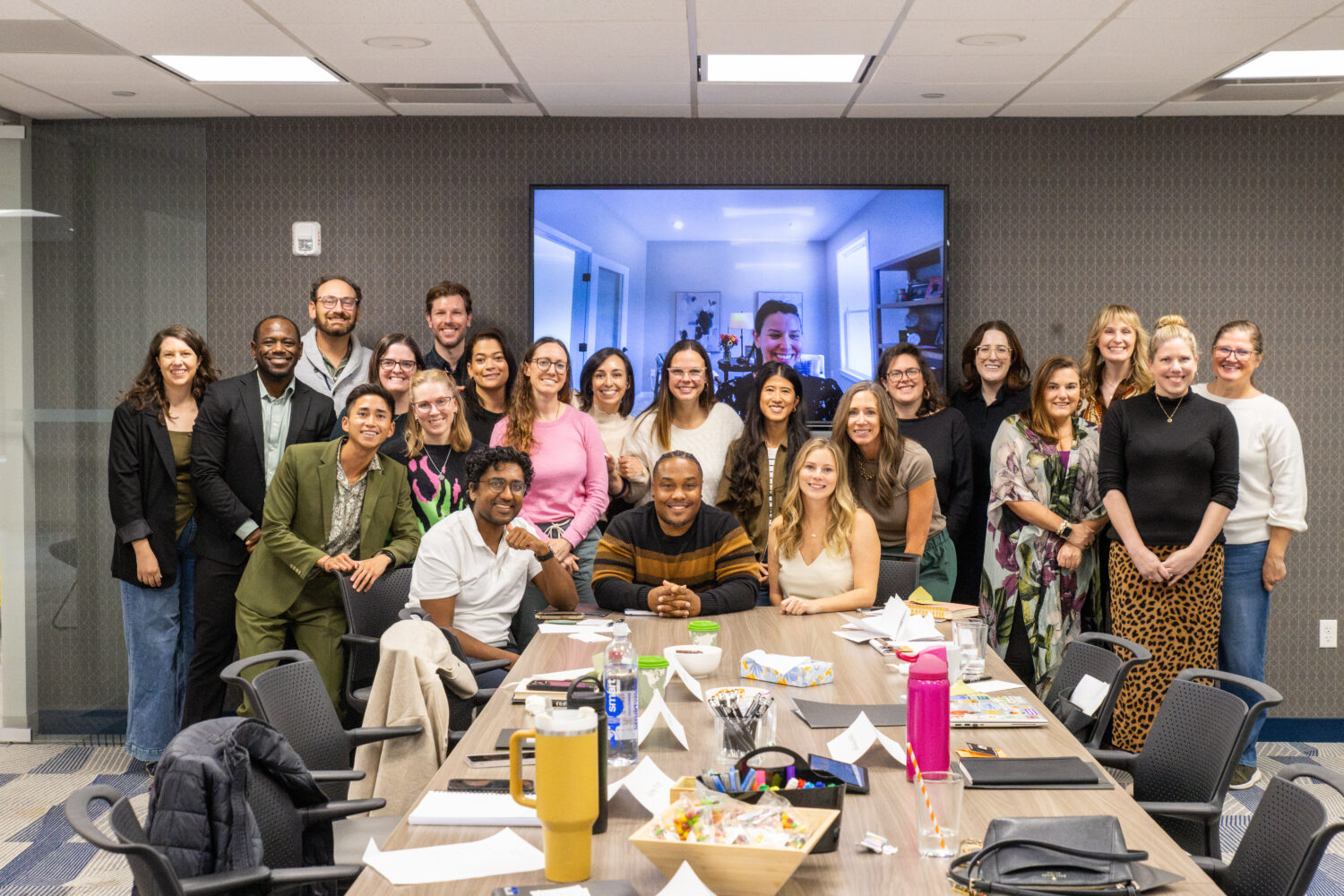
At our final convening of Cohort 3 last month in Denver, hosted at Guild’s headquarters, that idea grew into something bigger.
Fellows come to the Fellowship as individuals. Each brings their own goals, their own organization, and their own set of problems to solve. What excites me about each cohort is how that changes over the course of the experience. Somewhere during the nine months, a group of people who came to chart their own paths becomes a team working on each other’s problems.
One of the clearest examples was how Fellows supported one another when a hard decision was needed. As one leader shared during a fireside chat, it is about “knowing when a moment needs collaboration or when it needs consensus.” That is the skill of operating inside a system. It isn’t only about knowing the rules, but also about knowing which moments call for more input and which call for action. And it’s far easier to learn with people who help hold you accountable for how you’re showing up.
At the close of our final session, one Fellow summed up the need to act inside the system: “You can’t roll up your sleeves and wring your hands at the same time.” This cohort created a network that will help them in moments when they feel stuck between the two.
The Fellows understand the unique advantage of this Fellowship. As one put it, “[The Education and Career Mobility Fellowship] really challenged me to think differently about how we create opportunities, remove barriers, and help people build meaningful careers. It gave me the chance to learn from others, hear different perspectives, and rethink what’s possible when it comes to career and economic mobility.”
Another described what the cohort became: “Outside of the presentations, speakers, and data, I was given a community that supports me, encourages me, and challenges me when needed. I’m so grateful to have been a part of Cohort 3 and look forward to how we continue to grow together.”
That community is the part of the Fellowship I’m proudest of, and it doesn’t end when the seminars do. Cohort 3 now joins the alumni of Cohorts 1 and 2 as people who can call on each other in moments of success and struggle.
Interested in Joining this Fellowship?
Applications for Cohort 4 of the Education and Career Mobility Fellowship are open through December 18. It’s a nine-month fellowship that kicks off in February 2027. Designed for midcareer talent development professionals, the Fellowship supports both professional and personal growth.
As one Fellow told us: “If you’re looking to find ‘your people’ who care about doing good work that has the potential to change lives, then you should apply for this program. I didn’t know there were so many other individuals out there who were doing similar work, and now I have a community to call on in times of success and struggle that I never had before.”
About UpSkill America
UpSkill America, an initiative of the Economic Opportunities Program, supports employers and workforce organizations to expand and improve high-quality educational and career advancement opportunities for America’s front-line workers.
About the Economic Opportunities Program
The Aspen Institute Economic Opportunities Program advances strategies, policies, and ideas to help low- and moderate-income people thrive in a changing economy.
Join Our Mailing List
To receive occasional emails about our work — including new publications, commentary, events, fellowships, and more — join our mailing list.
Connect on Social Media
For news and updates every day, connect with us on the social media platform of your choice.
You Can’t Change the System Alone

Visualizing the Skills Ecosystem

Foundational Skills: National Survey Findings

Room for Growth: A Survey of Upskilling Approaches — 2026 Analysis

Employer-Friendly Practices: A Guide for Higher Education
MillerKnoll: Developing Operations Leaders from Within and Beyond — A Case Study in Structured Talent Development

A Typology of State-Supported Work-Connected Learning Programs