No One Thrives Alone
Human flourishing is not an individual endeavor. It emerges from and is nurtured by ecosystems.
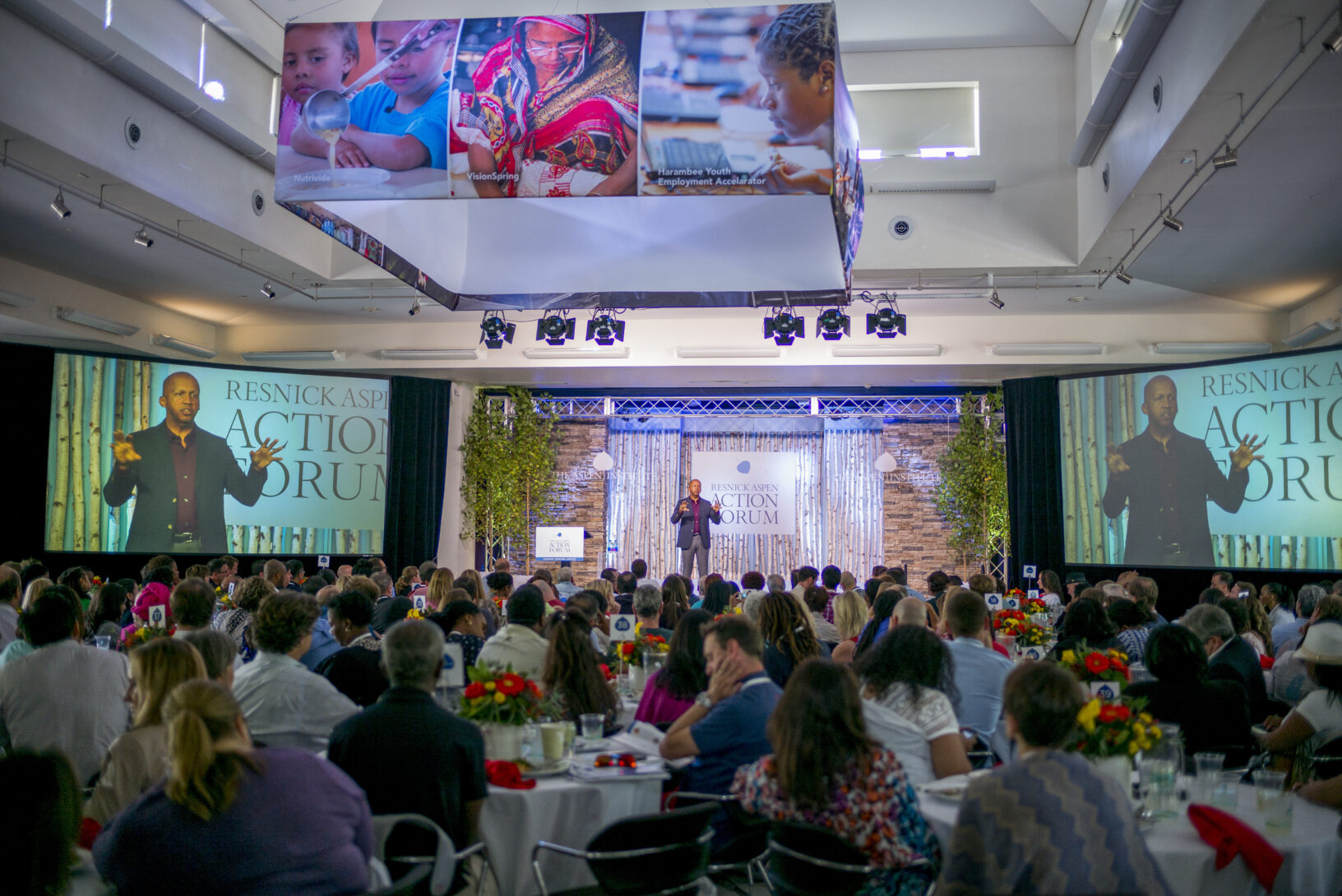

Tommy Loper
Vice President, Network Strategy & Enterprise Development
As I prepare to be a speaker for the 2026 Aspen Ideas Festival session “Aspen’s Visionaries for a Better World: From Weave to Kyiv and Beyond”, I’ve been reflecting on a question that feels increasingly urgent: What does human flourishing require in the twenty-first century?
I have worked at the Aspen Institute for eighteen years. And for the last three years I have had the privilege of working closely with CEO Dan Porterfield and many extraordinary colleagues across the Aspen Institute to explore a simple but ambitious question: What would it take for Aspen to become the thriving interconnected global community of leaders across geographies, generations, and viewpoints envisioned in our strategic plan? The answer, we have come to believe, lies in investing in the human infrastructure that helps people connect, learn, trust, and grow together. At Aspen, we increasingly think about this work through an ecosystem lens. Aspen’s ecosystem is more than a collection of people and programs; it is a network of relationships that creates value through connection and learning. Dan Porterfield often describes this as our opportunity to “link and leverage” – strengthening connections so that people, resources, and ideas can flow more freely across our networks.
For decades, many of us have focused on developing leaders, strengthening institutions, and scaling solutions. Those efforts remain essential. But, the challenges we face today – from polarization and loneliness to democratic erosion, conflicts, and rapid technological change– share something important in common. They are all networked challenges – challenges with causes, consequences, and solutions that are interconnected across people, institutions, and systems. And, because they are networked, our responses — and leadership approaches — must be networked too. Climate change does not respect national borders. Distrust does not stay confined to a single community. Wars, migration, tech disruptions, and civic fragmentation ripple across society. Today’s realities require leaders who can connect across differences, sectors, disciplines, and worldviews. They require communities of trust. They require networks that help people learn from one another and act together. And that requires relationships.
One of the most important lessons I’ve learned through my work with leaders around the world — supporting Aspen Fellows often in senior organizational positions, Weavers in positions of trust strengthening communities, youth participants and Moonshotters, and systems leaders driving impactful work — is that human potential doesn’t develop in isolation. We often celebrate extraordinary individuals. We tell stories about visionary founders, courageous actors, transformative CEOs, and inspiring public leaders. Yet flourishing – developing one’s full potential through lifelong learning, meaningful relationships, and contributions to a more just and vibrant society – is rarely the result of individual efforts alone. Aristotle understood that human flourishing emerges through participation in communities that cultivate purpose and virtue. Alexis de Tocqueville observed that democracy depends on associations and relationships that connect citizens to each other. Robert Putnam later documented what happens when those ties fray. David Brooks amplifies the ways and ethos of community weavers. While more recently adrienne maree brown’s work on emergence, James Rahn on the “necessity of networks”, and Dr. Linda Hill’s work on collective genius highlight the importance of the quality of connections. Flourishing, in many ways, emerges from and is nurtured by the depth and quality of relationships in an ecosystem.
We often ask the important question, “How do we develop more leaders?” Today we live and work in an era when we must also ask, “How do we create the conditions where leadership can emerge, flourish, and endure?” When people hear the word infrastructure, we often think about roads, bridges, airports, and technologies. But societies depend on another kind of infrastructure as well. Social infrastructure. Trust. Belonging. Shared purpose. Relationships. Information. When this infrastructure is strong, communities become more resilient. Institutions become more adaptive. And when our social infrastructure weakens, everything else becomes harder.
This reflection brings me back to Walter Paepcke and the concept of the “Aspen Idea” which was in itself a vision for human flourishing. Offering people spaces where they could step back from noise, encounter different perspectives, and reflect on what it means to live a good life. Papecke understood that societies are strengthened when people come together in pursuit of human potential. That insight feels ever more relevant today than it did when he first articulated the “Aspen Idea”. Paepcke’s call, at its heart, was about creating the conditions for human beings to encounter one another more fully. And, in a world that is ever more connected, that work is unfinished and perhaps only now becoming possible in ways he could not have foreseen.
The shared opportunity before us is to strengthen the connective tissue that helps people learn from and with one another, trust one another, and act together.
And in our fragmented world, connection itself is becoming a critical leadership skill. Human flourishing begins when people move from isolation to connection, and connection to trust. Perhaps this is what the Aspen Idea has always been about.
If human flourishing emerges from ecosystems, then institutions have a responsibility to invest in the conditions that make flourishing possible. Within the Aspen Institute, that work is taking many forms. We are strengthening connections across our 600+ employees, who work on more than 60 teams spanning Aspen’s policy, leadership, rising generations, public, international, and enterprise efforts. We are creating more opportunities for staff to come together through communities of practice, in-person retreats, and intra-Aspen seminar cohorts. To catalyze internal collaboration, we are also embracing a “team of teams” approach — inspired by Dee Hock’s chaordic principles and Peter Senge’s learning organizations — bringing colleagues together across programs and functions to experiment, learn, and pilot new ideas while maintaining an agile and sustainable staffing model. By investing in relationships, supporting the time and resources needed for cross-team work, and cultivating a culture of belonging, we are building a stronger, more interconnected Aspen community.
As a result of this internal work, we can offer greater value to people, programs, and partners in our network. We are deepening opportunities for intergenerational exchange and lifelong accompaniment so that people can continue learning from one another throughout their lives. Through Aspen Network Intelligence, led by Dr. Andreas Hoffbauer, we are making invisible relationships visible and gaining a clearer understanding of how trust, ideas, and collaboration move across our networks. And we will soon launch the Aspen Passport, a more personalized online tool that will help participants and Aspen Fellows discover opportunities and journeys across the Institute.
These efforts are not simply about improving the excellence of programs or creating a new technical capability. They are about creating the conditions and culture where people can flourish together. They are rooted in a belief that feels increasingly important in our time: no one thrives alone. The challenge before us is not merely to connect people, but to deepen relationships and strengthen human infrastructure that helps trust take root, leadership emerge, and communities flourish. In a century defined by interconnected challenges, that may be some of the most important work we can do together. And building that ecosystem is work that belongs to all of us.
The Solutions Bringing Us Closer to a Whole-of-Ecosystem Response to Scams
Design of Business Takes on Radical Collaboration, Recorded Live in Aspen: A Guide to the DB|BD Season
What Are You Teaching Me Today?
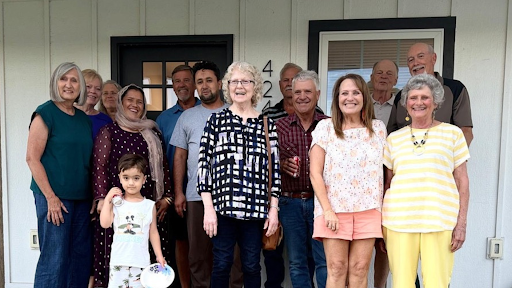
Helping Afghan women gain freedom in Arkansas
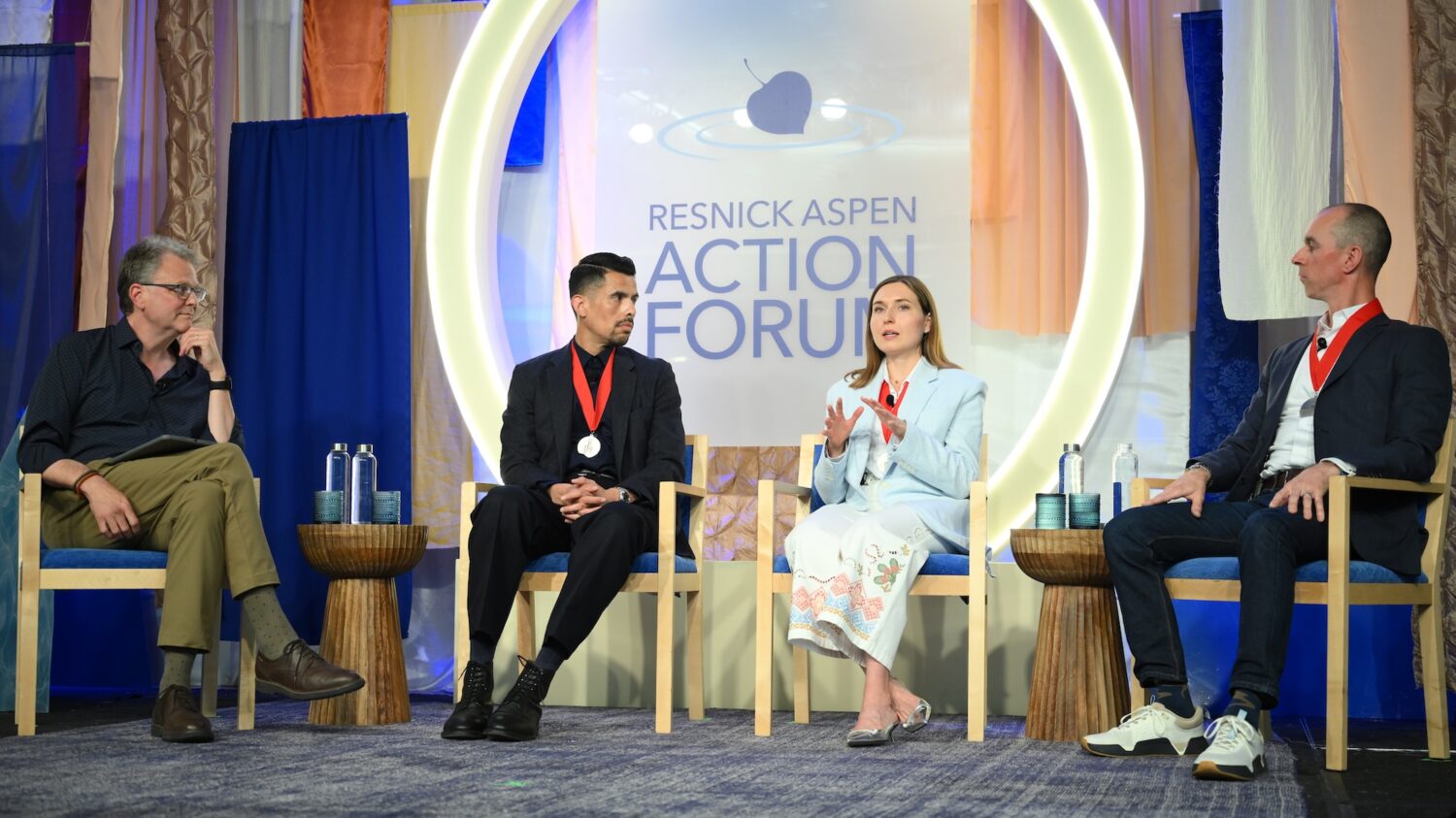
Know a Courageous Leader Taking On a Critical Issue? Nominate Them for the McNulty Prize & Catalyst Fund
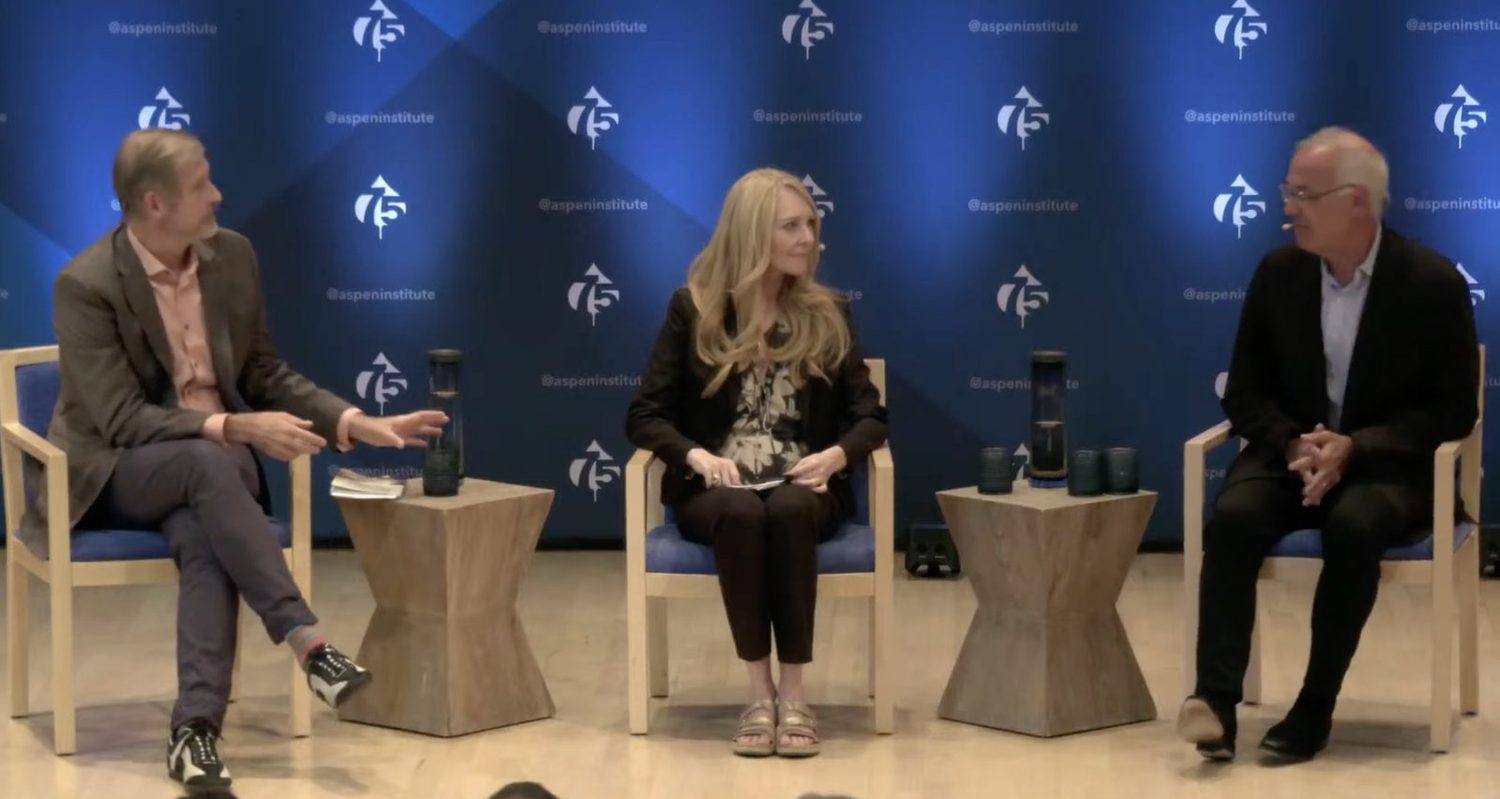

Mapping the Religion & Media Space