Reclaiming the Playbook: What Happens When Young People Get to Write Their Own Story

Discover Sports & Society
The Aspen Sports & Society Newsletter provides regular updates about our work. Every month we share the latest headlines from the program, plus Ideas, Insights, Invitations and one Inspiration from across the sports industry.
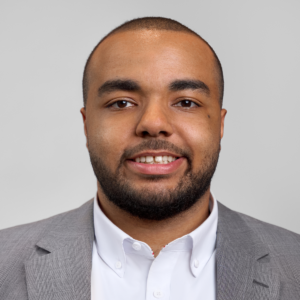
Jaden Bailey
Center for Rising Generations Associate
When I was a sophomore in high school, I unexpectedly became the sole author of my future.
My mother became incarcerated, leaving my younger brother and me homeless. During that time I worked three jobs and filled every other available hour with extracurriculars. Trust me, it was not purely out of ambition, but because I needed an excuse to stay at the school until my shift started at 4:00 p.m. Student council meetings, a full AP courseload, football practice, volunteering or working wherever I could find a shift. All of it at once, every day, alongside the quieter logistics no one sees: opening a bank account, figuring out where I’d be sleeping, arranging transportation to school and practices, and in whatever margins of time I had left, applying to colleges.
It was a period defined by survival. But more importantly, though I wouldn’t recognize this until much later, it was also an example of what can happen when you give young people the chance to author their own journey.
During that time, I am grateful for all of the extended family, friends’ parents, coaches, and mentors stepped in to help. They cared and at that time, that’s all I could really hope for. But because of the awkward distance in these relationships, none of them quite felt they had the authority to direct my path. So instead of decisions and demands, they offered suggestions. Fragments of wisdom I could pick up and carry, or set down, as I chose. A little bit from this person, something useful from another, all woven together into a plan that was ultimately mine.
At the time, I was fatigued by the constant decisions I had to make and very envious of my friends. They had built-in support structures, people who showed up and handled things for them. I thought I was the one missing out, and I prayed for someone to just tell me what to do so I wouldn’t have to figure it out by myself. What I couldn’t see then was that those people providing structure, as loving and well-intentioned as they were, tended to carry a predetermined destination with their suggestions. Out of very real fear of what the statistics said about a kid in my position, the adults doing the supporting had already drawn a finish line for me, and their advice pointed toward it. That finish line was stability. Graduating high school or college. A comfortable life. Something reachable.
And I get it. I genuinely do. That kind of protectiveness comes from genuine love. But what happened for me in that dark season, almost by accident, was that nobody handed me a finish line. I got to conjure my own. And the one I dreamed up turned out to be bigger than anything the adults around me would have imagined for me.
I’m thankful to say that I ended up with scholarship offers from multiple Ivy League schools and my eventual alma mater, Notre Dame. I don’t think this had anything to do with talent, passion or drive, but frankly I’ve come to understand that without a ceiling I just kept going. I had never thought of myself as someone meant for survival the way other adults saw me. I knew and held firmly to the belief that I was a person whose talents were meant to be shared with the world, a person with a responsibility to do something with what I had been given. The belief that more was possible is what allowed me to transcend my circumstances. I’m proud to say that that belief is becoming a reality today because I was allowed to write my own ending.
“Nobody handed me a finish line. I got to conjure my own. And the one I dreamed up turned out to be bigger than anything the adults around me would have imagined for me.”
What 12 Senior Athletes Taught Me About Ceilings We Don’t Know We’re Building
This experience became a lens I carried into every room after it.
After undergrad, I became a high school teacher in Indianapolis and taught an elective called Sports History and Culture to twelve second-semester seniors, all high-level athletes being recruited to play at the next level. To the outside world, these were “great kids” and “great students”, and the other teachers frequently told me that as I prepared to teach their class. I learned pretty quickly that those labels mostly described how well they presented themselves to adults and how neatly they fit the adults’ idea of who they should be. Rarely did it actually reflect who they wanted to be for themselves.
In other words, they were comfortable in structure. In sport, there is a clear path to victory, a defined finish line you just have to race toward. As high performing athletes, that clarity was easy for them. For years, their parents and coaches had established a clear goal: get good grades and work hard enough to earn a D1 athletic scholarship. Kudos to them, many of these seniors had already accomplished this goal and were ready to coast into their next chapter. What I wanted for them was more difficult: I wanted them to define a new finish line themselves.
In this class, we started by asking what sport had taught them about life, then cracked open the idea that sport could be a vehicle for something beyond a scholarship or a highlight reel. We studied Jesse Owens and Jackie Robinson, Caitlin Clark and LeBron James, and explored what it looks like when athletes use their platform to shift something real in the world. Then I challenged each of them to do the same: take everything your sport gave you, and show how you carry it somewhere that matters.
They hated the open-endedness at first. Being handed a field with no yard lines is disorienting when you’ve spent your whole athletic life knowing exactly where the end zone is. But over time, something unlocked. They created programs that expanded access to school supplies for younger kids in their city. They launched initiatives to bring more visibility and resources to the sports they loved. They designed community projects rooted in the specific things their athletic experience had taught them. And in doing so, they cracked right through the ceiling of what anyone expected a “jock” to care about or be capable of.
What moved me most was watching their self-concept shift. They walked in seeing sport as a scholarship vehicle. They walked out understanding that everything it had built in them, the discipline, the trust, the capacity to take a hit and come back, was civic preparation. It was life. Nobody had told them that before, and once they saw it they couldn’t unsee it. More importantly, I saw my own theory confirmed: when you push a young person into the deep end and trust them to swim, they will figure out how. And then they will amaze you.
They walked in seeing sport as a scholarship vehicle. They walked out understanding that everything it had built in them – the discipline, the trust, the capacity to take a hit and come back – was civic preparation.
Jaden Bailey
Why Student-Athletes Know Their Stats But Not Themselves – And What Changes When You Finally Ask
A few years later I found myself at Indiana University working in student-athlete development, and I expected college to be different. The parental structures were mostly gone. These were adults now, in theory.
What I found instead was that a different set of voices had stepped in to fill the space. Coaches, fans, media, and the full machinery of big-time collegiate athletics all made very clear what a student-athlete was there to do. In today’s NIL era especially, the pressure to perform and brand that performance is relentless. I sat across from student after student in career readiness conversations who could tell me exactly what their stats were but had never really been asked what they cared about outside of sport. What lit them up. What they imagined for themselves when competing was behind them.
Most of them had no idea. Not because they were incurious or shallow, but because for most of their athletic lives, the adults around them had been so focused on the next performance goal that nobody had thought to ask.
One student I worked with last year showed me what happens when you finally do ask, and then get out of the way.
She was a track and field athlete and a strong one, the kind of student-athlete the D1 system is built around: competitive times, academic eligibility, lifting schedules, the full rhythm of a life organized around performance. But she was more than that, and she knew it, even if the adults around her had never quite put those pieces together. She was also a clinical psychology student, a consistent volunteer since high school, and an active voice in the Student-Athlete Advisory Committee. She had always been all of these things simultaneously. She just kept them in separate compartments, because that was the only way the adults in each lane had ever asked her to show up. Her coach wanted an athlete. Her professors wanted a scholar. Her SAAC advisor wanted a community servant. Nobody had ever asked what it looked like when she was all three at once.
Last year, she was given a leadership role over an existing program that brought community members with developmental disabilities onto campus to play adaptive sports with student-athletes. When we handed it to her, our ask was simple: coordinate two events for the year. That was the finish line we drew for her and the program.
She politely ignored it.
By the end of the year she had scaled the program from two sessions to eight, made it fully student-led, and built a collaborative community for families with children with developmental disabilities. But the part that stayed with me was what she said about what the year had meant for her personally. For the first time, she wasn’t segmenting herself into the version her coach needed, the version her professors wanted, the version her SAAC advisor had in mind. She was operating as one whole person, and she finally got to see what that looked like. Her clinical psychology training informed how she engaged participants. Her platform as an athlete gave her credibility and the passion for sport. Her years of quiet community service gave her the instincts to build something sustainable. None of those things were separate anymore. They were all just her.
She won the Jackie Robinson Community Impact Award for female athletes at IU that year. More impressive than that trophy or any other recognition she received, she left with a clear sense of her next chapter, working at the intersection of sports and community engagement, in professional sports, in the NCAA, in whatever room will let her keep expanding the platform of what sports can do for a society and what athletes can be. A story nobody else could have written for her, because nobody else knew all of her the way she knew herself.
“For the first time, she wasn’t segmenting herself into the version her coach needed, the version her professors wanted, the version her SAAC advisory had in mind. She was operating as one whole person.”
Let Them Write The Ending
These stories aren’t just about youth ownership of sports. They are about the reclamation of the entire youth narrative.
The naivete, the craziness, the outrageousness of young people’s most outlandish dreams. The ones that don’t make sense on paper. The ones that get quietly drowned out by the adult version of the story, which tends to organize itself around a bottom line: just finish high school, just get the D1 scholarship, just win the conference medal. All of those are real achievements and I would never diminish them. But they are also ceilings. The ceiling of what the adults doing the framing could imagine, and not the grand dream that exists in every kid’s heart.
When we allow young people to be the narrators and authors of their own lives rather than the subjects of a story written for them, we make room for fresh eyes to lead the vision. And in my experience, what those fresh eyes see is always bigger, always bolder, always more expansive than what the rest of us would have dreamed up on their behalf.
Instead of just being a character in the story that is written for them.
Jaden Bailey joined the Aspen Institute in April 2026 as part of the Center for Rising Generations Associates program. Prior to joining the Institute, Jaden has worked as a high school teacher and assistant football coach and as a student-athlete development specialist in the Indiana University athletic department. He completed a Masters in Education at the University of Notre Dame in 2025.
Design of Business Takes on Radical Collaboration, Recorded Live in Aspen: A Guide to the DB|BD Season
What Are You Teaching Me Today?
Helping Afghan women gain freedom in Arkansas
Know a Courageous Leader Taking On a Critical Issue? Nominate Them for the McNulty Prize & Catalyst Fund

Mapping the Religion & Media Space

Aspen Business & Society Dispatches from Climate Week