What School Is For
Subscribe to Our Newsletter
Sign up to receive expert insights, program updates, and event invitations.

Janice K. Jackson
Executive Director, Aspen Education & Society Program
Every year, Chicago Public Schools graduated roughly 19,000 students. About 11,000 went off to college. Of those, nearly half came back within two years, with no degree, no credential, no clear next step. Which means that in one city, in one year, somewhere close to 14,000 young people crossed a stage, shook hands, and walked into a future the system had not actually prepared them for.
I was the superintendent. I knew the numbers. I stood in front of parents and told them we were working on it.
The honest truth is we said “college and career” in our strategic plans and on our banners. We focused on one part of the problem, and one solution, the college part, without addressing the need for multiple pathways to careers. If a hundred of those 19,000 graduates had walked up to me on the day they received their diplomas and asked for a real job, not career counseling, not a referral, but an actual job, it simply did not exist. Because the programs we offered didn’t match the economy. Didn’t match the industries. Didn’t match what Chicago actually needed from its young people.
We built that mismatch. And then, year after year, we shook our heads when it produced the outcomes it was always going to produce.
I tell this story not to indict Chicago, which is no worse than most and better than many, but because it clarifies what we are actually talking about when we talk about the crisis in American education. We are not talking about a school that failed. We are talking about a system that was never designed for the world young people are actually inheriting.
That is the argument I want to make here, and it is the reason the Rising Generations Strategy Group exists.
In recent years, four issues have converged on American education simultaneously. Artificial intelligence, career-connected learning, school choice, and state governance. In the policy world, these tend to be treated as separate tracks, each with its own advocates, its own research base, its own political valence, its own funding stream. AI is a technology issue. Career pathways are a workforce issue. School choice is a governance and civil rights issue. State governance is a structural issue.
This compartmentalization is a mistake. These four things are not separate problems. They are four pressures landing on the same worn-out design. The system we have was built for a different economy and an earlier century, and we have kept it standing through patches, each reform laid over the last without ever rebuilding the thing underneath. Artificial intelligence, the demand for career-connected learning, the surge toward school choice, and the redrawing of state governance are the loads those patches can no longer carry. The strain was always there. What has changed is that we can no longer ignore it.
Start with technology. Artificial intelligence is the newest and loudest example, but it arrived on top of something larger. Since the pandemic, schools have absorbed an enormous wave of ed-tech, platforms, apps, devices, and dashboards adopted fast and under pressure, with no shared way to tell which ones actually help children learn. We have benchmarks for the quality of a textbook. We crash-test cars and inspect kitchens. We have built almost nothing equivalent for the software a child sits in front of for hours of the school day. The problem was never the tools. It is that no one ever agreed on what good looks like, and so quality became whatever a vendor could sell.
This is also why the screen-time debate has gone sideways. The loudest pieces treat the device as the enemy and the ban as the cure, and in doing so, they throw out the real value of these tools along with their misuse. The useful questions are quality, balance, and strategic use, and those are instructional questions before they are anything else. They belong to the people who run classrooms. Yet the frameworks, the products, and the decisions about what these tools should do with and for children are largely being made without educators in the room. Educators are not leading this transformation. They are being handed outcomes.
This is not a technology problem. It is a governance problem. It is a symptom of a system built to deliver instruction, not to help design the world its graduates will enter.
The same failure shows up in career-connected learning. A system that cannot design the world its graduates are entering cannot prepare them to enter it. Eighty-four percent of employers say the people they are hiring are not prepared. More than four million young people are neither working nor in school. These statistics are not new. They have been trending this way for a long time, and they will not improve by adding a career fair or an internship elective to an otherwise unchanged system. The problem is structural. We built an education system organized around the college pathway at a time when college was the surest route to economic security. That time has passed. Even the students who do everything right and graduate on time are no longer guaranteed a job. The ways to learn, to earn a credential, and to enter meaningful work have multiplied. Families and young people know this. The system does not yet know how to respond.
And the averages hide who carries this. Black young men are disconnected from both school and work at more than twice the rate of their white peers, roughly one in five against fewer than one in ten. It is the widest gap between young men and young women of any racial group in the country. Latino young people are disconnected as well above the white rate as well. These are not the margins of the problem. They are its center. A system that was not built for these young people was not built at all.
This is not a technology problem. It is a governance problem. It is a symptom of a system built to deliver instruction, not to help design the world its graduates will enter.
Dr. Janice K. Jackson
When the system will not respond, families respond on their own. Nowhere is that more visible than in school choice, which has become one of the most politically charged debates in education even as the underlying dynamic stays simpler than the debate suggests. Families are not rejecting education. They are expressing a demand that education keep pace with the world their children are actually entering. Post-pandemic, that demand accelerated. The question is not whether families want choice. They do, and they are taking it, with or without policy design. The question is whether we build choice systems with the quality standards, equity guardrails, and accountability structures to serve all families, not just the ones with the information and access to navigate them. That, again, is a governance problem.
And then there is state governance itself, which is where all of these failures ultimately live. This country knows how to invest in what it cannot yet prove. We spend billions on space exploration for discoveries that may never come, because we believe the promise is worth the risk. We funded the basic research behind the internet and modern medicine the same way, paying for possibility long before there was proof. We have never extended that belief to education. We treat how children learn, what prepares them for meaningful work, and what governance produces durable results as questions to settle cheaply, not as research worth funding. Instead we ask the children and the schools that depend on the system to prove they are worthy before we invest. That is not how progress works in any other field, and it is why education keeps repeating what it knows instead of building what it needs.
States are now being handed the responsibility for answering these questions at a moment when most lack the capacity and resources to do so. The federal role in education is contracting. State education agencies that previously relied on federal guidance are being asked to lead without the infrastructure, the data systems, or the research capacity to lead well. The structures that are supposed to hold all of this together are being redefined right now, and that redefinition is happening faster than most states are prepared for.
Here is what I have come to believe after decades in this work. The reason these four crises feel so intractable is not that we lack solutions. It is that we keep treating them as separate problems, funding them through separate silos, and expecting each one to improve while the others stay the same.
AI tools only reach students equitably if governance creates access. Career-connected learning only scales if accountability systems measure real outcomes. School choice only improves outcomes when paired with quality standards and transparent data. And none of these reforms succeed without a teaching workforce that is prepared, supported, and treated as a professional asset rather than an operational input.
These four things are four expressions of one unanswered question. What is the American education system actually for, and who is it designed to serve?
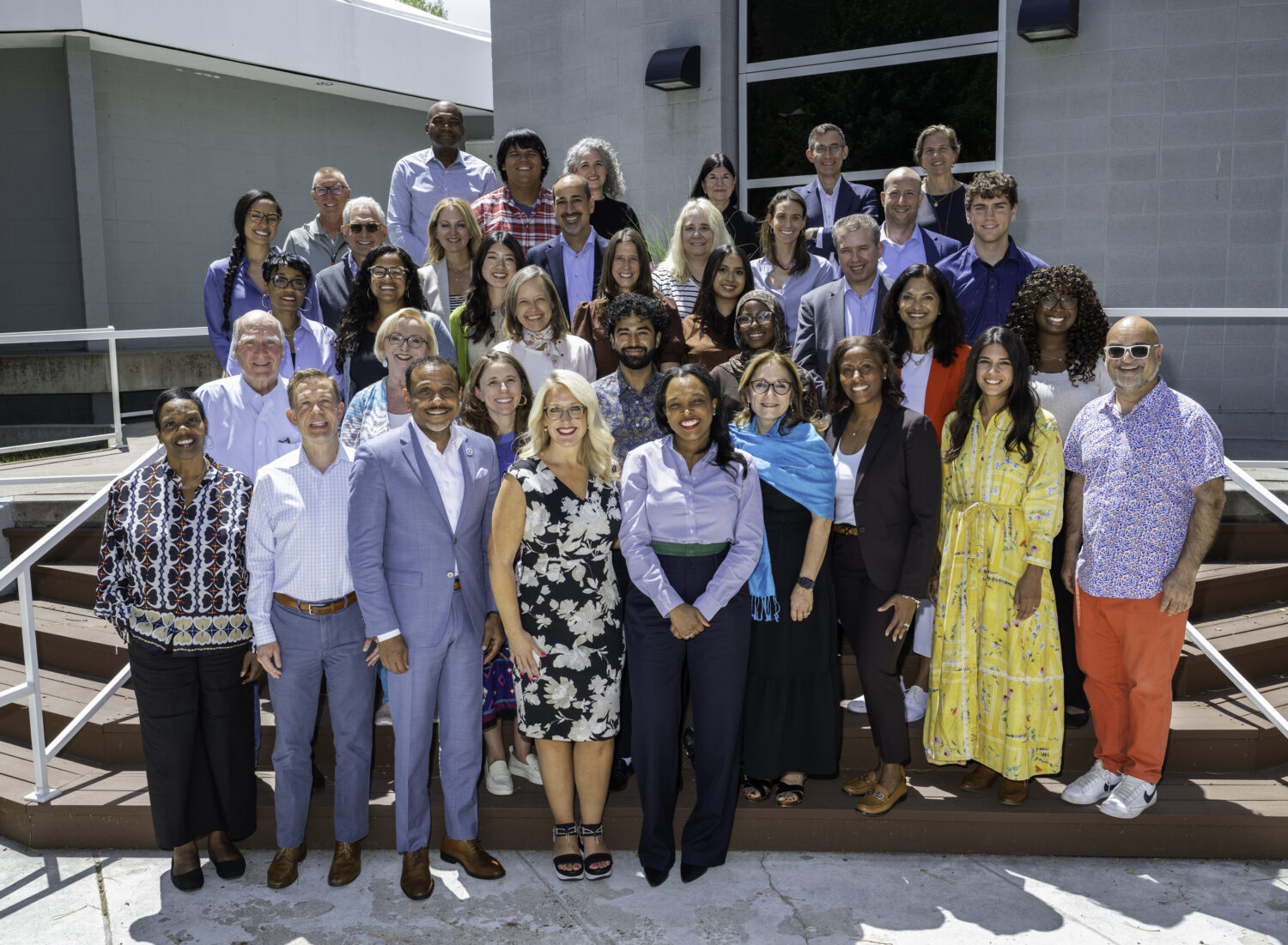
The Rising Generations Strategy Group was assembled to sit with that question seriously, not to produce another report that describes the problem in new language, but to develop a shared framework that is actionable across the political and institutional differences that have prevented progress for a generation. The group is cross-sector and cross-partisan because this problem does not belong to one political coalition and the solution cannot either. It is intergenerational because the young people who have just finished the system we built are the ones who understand most clearly what it did and did not prepare them for. Their voices are not symbolic additions to this work. They are necessary inputs.
The stakes are not abstract. We are at a moment of choosing. The forces reshaping education (AI, economic transformation, the diversification of learning, the restructuring of governance) are not waiting for the policy world to catch up. They are happening now. The question is whether they happen coherently, through deliberate strategy that holds equity and outcomes at the center, or chaotically, through fragmented responses that serve the families with the most access and leave everyone else behind.
I have stood in front of enough families to know what the chaotic version looks like. I have seen what it means for a young person to cross a stage without a real answer to the question of what comes next.
The young people crossing those stages cannot wait for us to sort out our categories. We can do better. But only if we stop pretending these are four separate problems.
Design of Business Takes on Radical Collaboration, Recorded Live in Aspen: A Guide to the DB|BD Season
What Are You Teaching Me Today?
Helping Afghan women gain freedom in Arkansas

Know a Courageous Leader Taking On a Critical Issue? Nominate Them for the McNulty Prize & Catalyst Fund


Mapping the Religion & Media Space

Aspen Business & Society Dispatches from Climate Week