Apis & Heritage’s Phil Reeves Keynotes the 2026 Employee Ownership Ideas Forum
Description
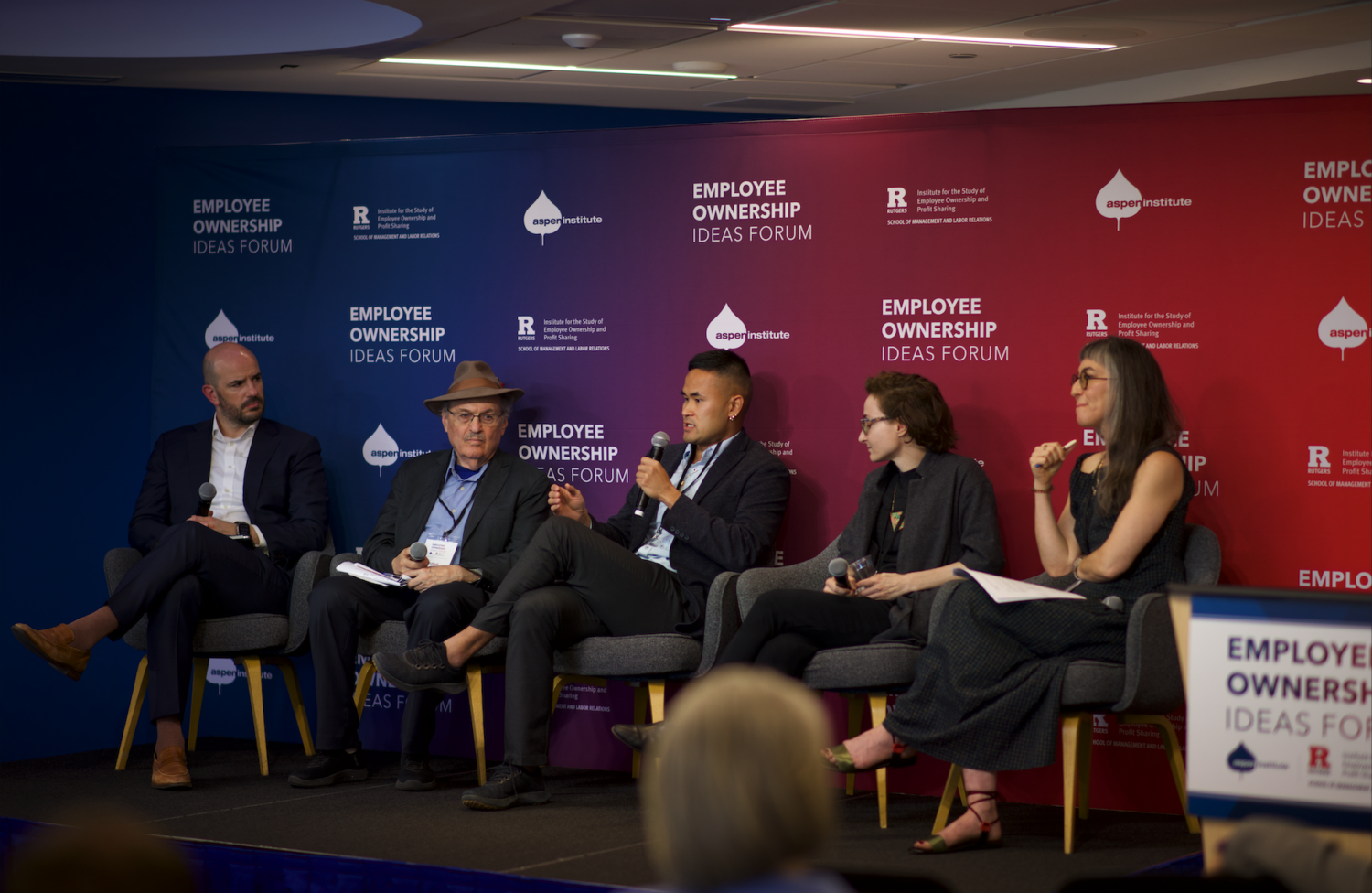
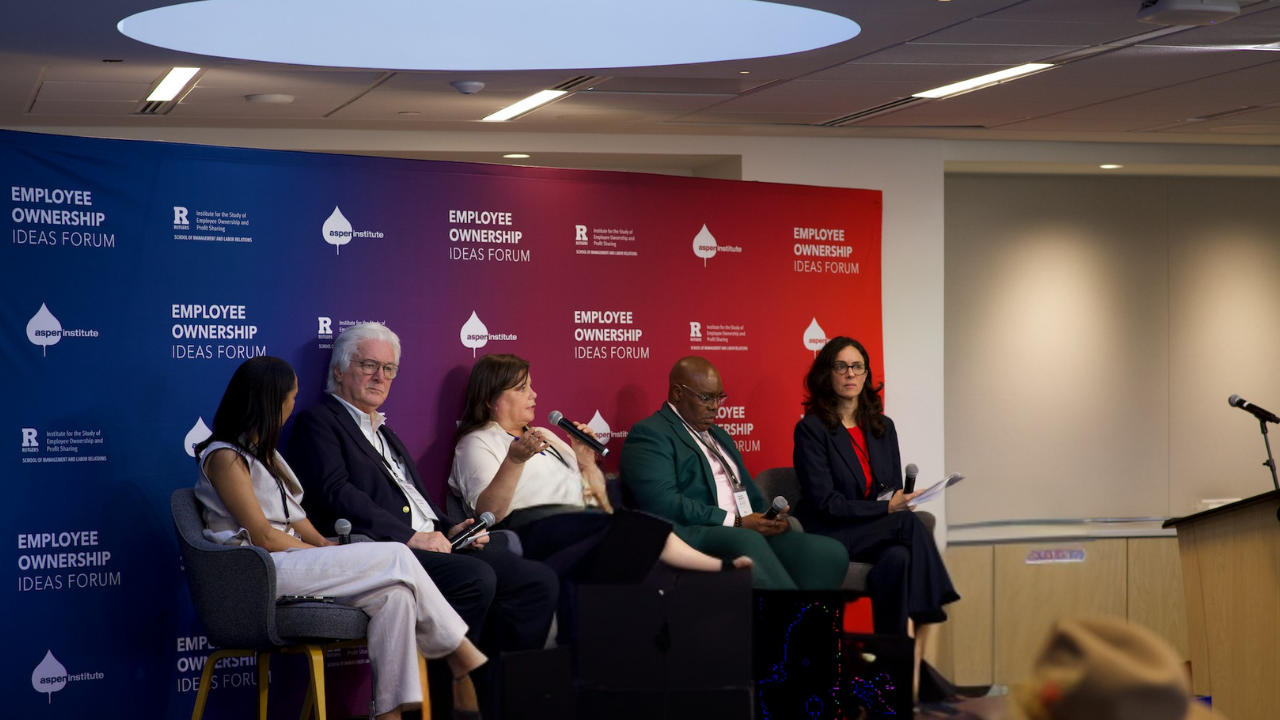
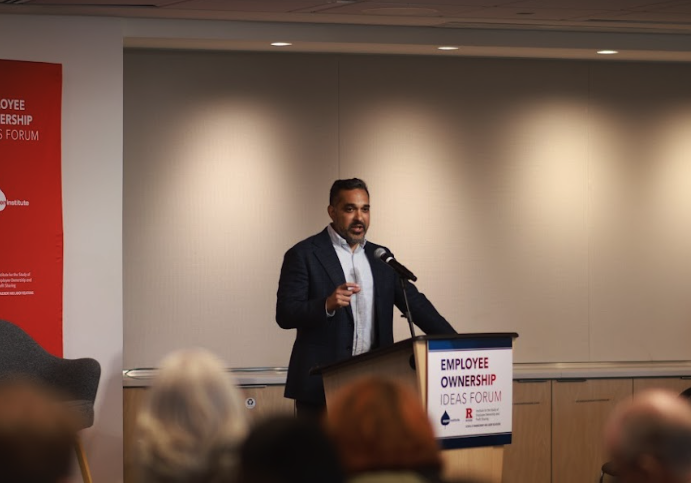
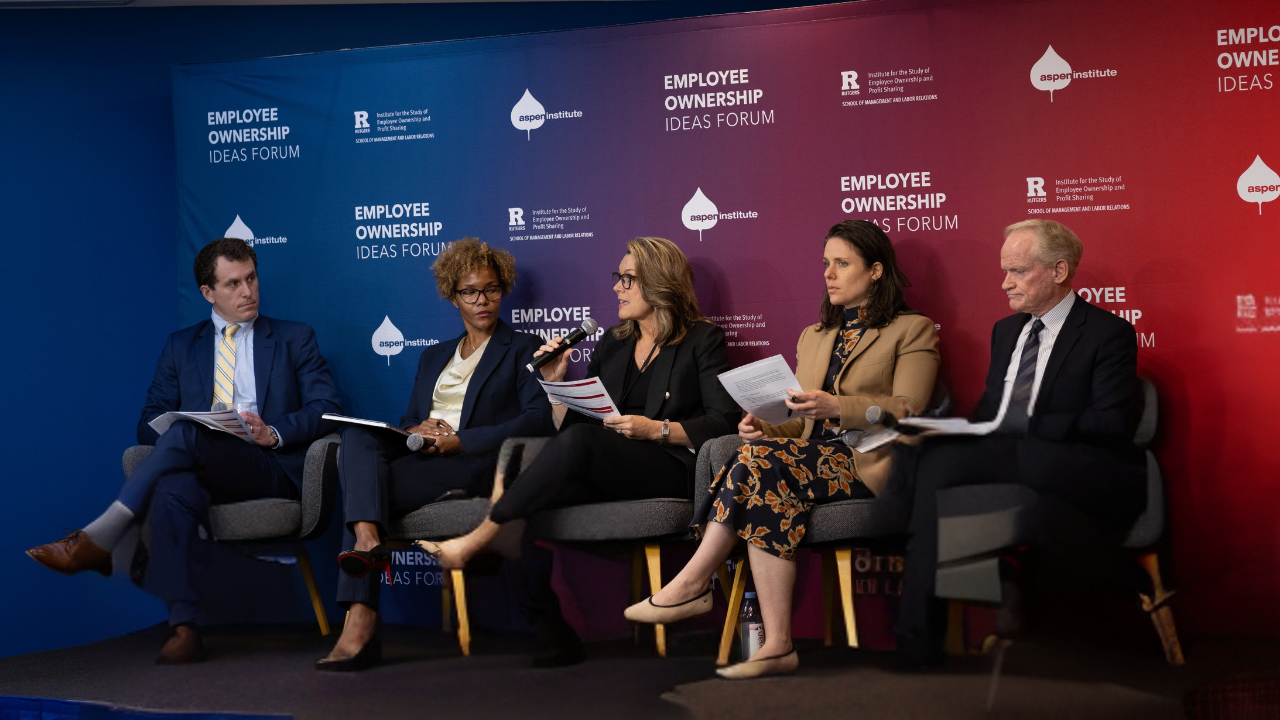
In this video, Phil Reeves — founder and managing partner of Apis & Heritage — speaks at the 2026 Employee Ownership Ideas Forum, which took place on June 2-3, 2026, in Washington DC and online.
For more videos from the Forum, visit our event page or subscribe to our YouTube channel.
And subscribe to our podcast to listen on the go.
Resources
- Website: Apis & Heritage Capital Partners
[silence]
[00:00:05] Adria Scharf: Our next speaker is founding partner of Apis & Heritage Capital Partners, the innovative credit fund that seeks to deliver impact and preserve business sellers’ legacies and share wealth with workers through employee ownership. He oversees all, your bio says all, all of the firm’s activities, and is responsible for their innovative, successful investment processes and strategies. I will add that he’s also a deeply respected leader and even a visionary voice in the employee ownership field. Please welcome Phil Reeves.
[applause]
[00:00:54] Phil Reeves: It’s great to be here. I normally don’t get to talk on the policy day. I’m really excited about it. As was mentioned, we work at the intersection of capital, business building, and economic mobility. That looks like, for those that don’t know A&H, it’s finding great lower middle market small businesses and converting them from founder or family owned to the people that work there through an ESOP. The investment thesis is super clear for everyone that’s been paying attention today. Employee ownership has known benefits for productivity, retention, et cetera, et cetera. The value creation is apparent, but the outcome of our work is putting real people on a path to significant wealth.
I’m really proud to announce, actually publicly for the first time, that in our work, we’ve produced over $1.25 million of ESOP account value for working people across our portfolio. Shout out to Melissa. We expect the number to compound really over a generation. I say all that for two reasons. The first is that I always want to remind rooms like this that employee ownership, the outcome for the worker, the wealth for the worker, has to stay at the center. We can have the greatest policy environment. We can deliver phenomenal returns for our investors, and we will, but if a decade from now, if meaningful wealth hasn’t been created for working people and they’ve been given more agency, then I don’t know if this movement lived up to everything that it’s meant to be.
The second reason I bring this up is because we at A&H, we’re very proximate to this idea of bringing employee ownership out into the world to the companies and the employees that need it most. We understand deeply what it takes to organize these transactions, to finance these transactions, and to steward these companies into a sustainable ESOP. When we get into a room like this around policy, it’s absolutely about budgets, and it’s about appropriations, and it’s about statutes and regulations, but we also have to think about an idea that’s better known to me, which is supply and demand. To date, a lot of the conversation that we’ve been having has been what I’ll call the supply side.
We’ve been looking at ways to reduce regulatory friction, to provide clarity, to increase capital, and those are absolutely all critical. I’ll talk about capital briefly. Make no mistake, part of what makes A&H compelling out there in the marketplace is that we have a different kind of capital and the right kind of capital so that we can go to a business owner and have them transact on terms that are equivalent and equal. Why that’s so important is because for a lot of business owners, when they’re faced with selling to private equity or selling to their competitors, if we as a field can come to them and say, “Hey, look, we can also get your employees to be buyers,” for a lot of owners, that’s powerful.
That’s meaningful, and it gives the employees a real chance at owning a quality business, which I think is the ultimate goal. I think the supply side has been talked about a lot, policy and regulation, capital, if you will, but the demand side is where I think we may need to put in more effort because I think a lot of people say that the friction of employee ownership is on the capital side or it’s on the policy front, but I would posit to you that the first friction point is not when someone’s trying to finance a transaction. The first friction point is, in fact, when they need to hear about employee ownership and take action to move towards it. I said earlier that the center of employee ownership has to be the worker, and that’s absolutely true, but before we get to the worker, we have to touch the business owner.
The challenge of employee ownership, the quiet part out loud, is that it doesn’t scale very well. Every single business is unique. Every single owner has their own psychology. Every single transaction has nuance with a bunch of stakeholders, whether it’s a valuation firm or a trustee. Our job as a field, if we want to see this take root, particularly in the lower middle market, is we have to find a way to do a very high-touch thing broadly, quickly. The thing that I think that gives us hope is that we’ve used policy to do just that before. If you think about manufacturing, manufacturing is custom to each business, how you use technology to become more productive, very unique.
When the federal government wanted to have small businesses become more productive, they put in place the Manufacturing Extension Partnership. It was this network of companies that would work one-on-one with small businesses to get them to do this hard thing. We saw the same thing in procurement. The government wants companies to do federal contracting, but it’s complex, it’s hard, it’s bespoke. They have Procurement Technical Assistance Centers, they have Small Business Development Centers, all of these things aimed at coming to where business owners are and teaching them how to onboard into this system.
The same thing in innovation. I used to work in the Small Business Innovation Research program, a very high-touch R&D program aimed at small businesses. When the federal government realized that people weren’t taking advantage of the program, they actually gave money to the states so that they could go out and do outreach one-on-one and teach firms how to get to the capital. That, I think, is the model we need to look to. These are all frameworks, but they’re also a foundation. We can use these existing trusted infrastructure to touch more business owners and introduce them to the entire idea of employee ownership. We can also add to that with the infrastructure that we have in this room and in this community.
We already have employee ownership centers scattered around the country. We have TEA chapters, we have NCEO chapters. All of those things are infrastructure that we can use to get the small business owners to show them the power of employee ownership and get them onboarded into this movement. We also have to look at ways that we can encourage the public sector in ways that don’t require an appropriation or an act. What would it look like to have a national dialogue around succession planning? How might DOD engage their entire supply chain in the idea of resilience through employee ownership? Could the Export-Import Bank or Commerce, these agencies that deal with middle market firms, could they do a convening around employee ownership?
What if a legislator went to go visit their home district and they went to go see employee-owned firms, but brought non-employee-owned business owners to those businesses to show them the art of the possible? What if a cabinet official gave a major speech and said the phrase “employee ownership”? Again, it doesn’t have to be some massive act. It doesn’t have to be some big budget bill. Those things show America what could happen, show business owners what could happen, and normalize this idea. As someone who’s on the front lines dealing with employee owners or owners every day, that’s the friction point.
This demand side has to be done. What I’ll leave you with is what happens when these two ideas come together. Last week, we got a literal cold email into info@apis&heritage. It was from a business owner that has 900 employees across 3 states, a major supplier to the auto sector. Apparently, the owner had been thinking about employee ownership for 10 years, couldn’t figure out how to get the transaction done, heard about our work, heard about the work of all these people in this room, and now that company is in play for employee ownership. The other week, I was on the phone face-to-face with the CEO of a private equity-backed firm.
This firm is a portfolio company of a private equity firm, and the CEO’s like, “Hey, look, the private equity firm wants to exit. We think employee ownership might be an option.” He kept saying the same thing over again. He kept stopping the conversation. He’s like, “I didn’t know this was possible.” That’s the friction. “I didn’t know this was possible.” That first example, that’s the classic silver tsunami that we talk about all the time in the field. I won’t go into it, but the private equity space, there are thousands of businesses that need to figure out how they’re going to transact.
It’s been a great phenomenon for private equity, but could their permanent home be employee ownership? Because of the supply side, because of the demand side, those companies are now in play. That’s never happened before. I think employee ownership is one of the ideas that, when you see it, you can’t unsee it. Our job is to help make these things come to happen. I don’t want to get crisscrossed around whether it’s supply side or regulation or capital, whether it’s the demand side or getting awareness out there. It’s not an either-or. It’s both and all of the above, plus a bunch of things I didn’t say today. I think everyone’s been saying this. This is a real moment for this field, for this system. I think if we can get this right, we can reimagine democratic capitalism for the next 250 years. Thank you.
[applause]
[00:11:53] [END OF AUDIO]
About the Employee Ownership Ideas Forum
The Employee Ownership Ideas Forum brings together leading policymakers, practitioners, experts, and the media for a robust discussion on how we can grow employee ownership for the shared benefit of American workers and businesses. It is hosted by the Aspen Institute Economic Opportunities Program and Rutgers Institute for the Study of Employee Ownership and Profit Sharing.
About the Rutgers Institute for the Study of Employee Ownership and Profit Sharing
The purpose of the Institute for the Study of Employee Ownership and Profit Sharing is to study the various models that have emerged and will emerge of employee ownership shares and profit shares in the corporation and society of the United States and around the world.
About the Economic Opportunities Program
The Aspen Institute Economic Opportunities Program advances strategies, policies, and ideas to help low- and moderate-income people thrive in a changing economy.
Join Our Mailing List
To receive occasional emails about our work — including new publications, commentary, events, fellowships, and more — join our mailing list.
Connect on Social Media
For news and updates every day, connect with us on the social media platform of your choice.