Prudential Financial’s Paula D’Ambrosa Opens Day Two of the 2026 Employee Ownership Ideas Forum
Description
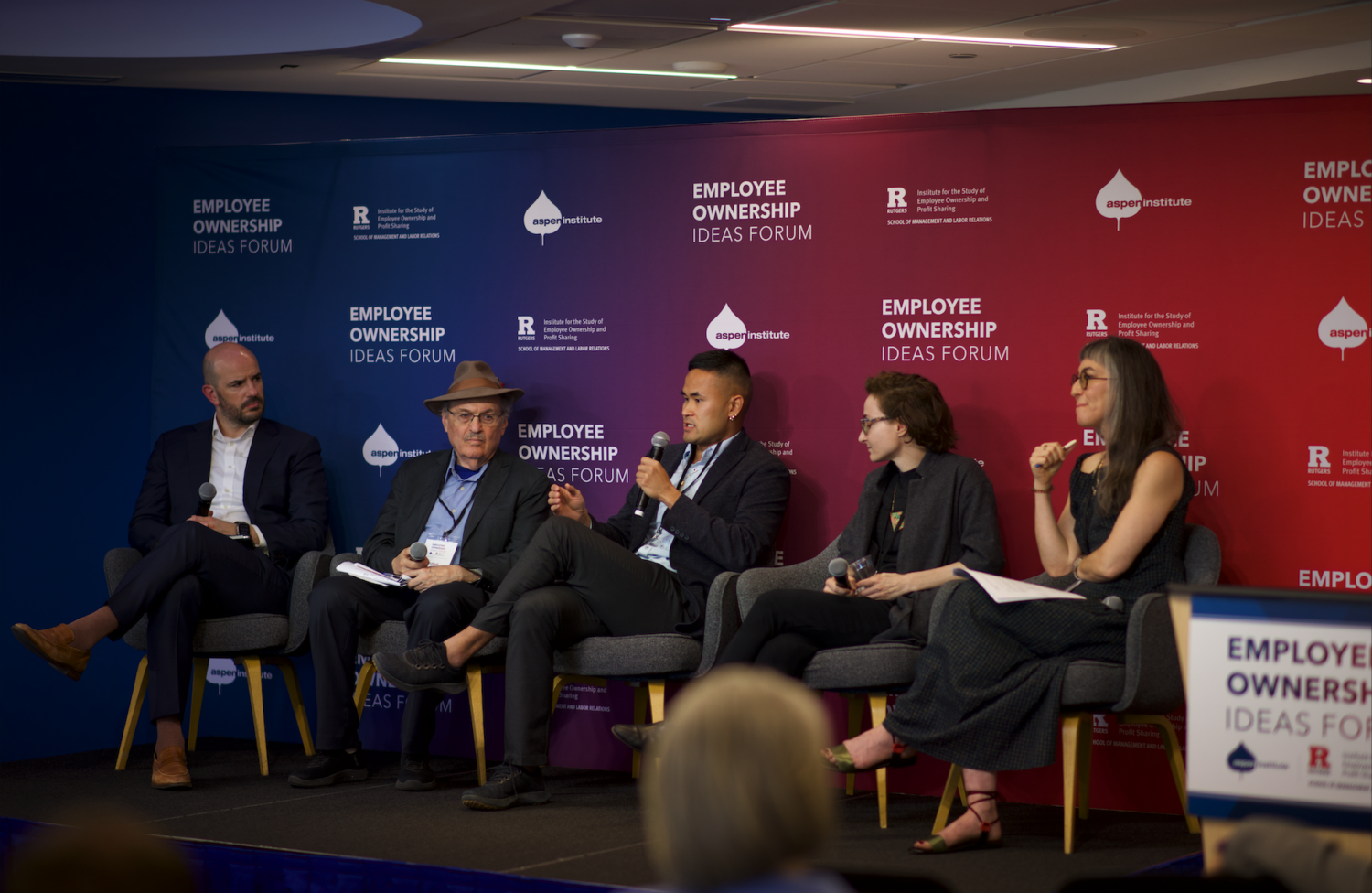
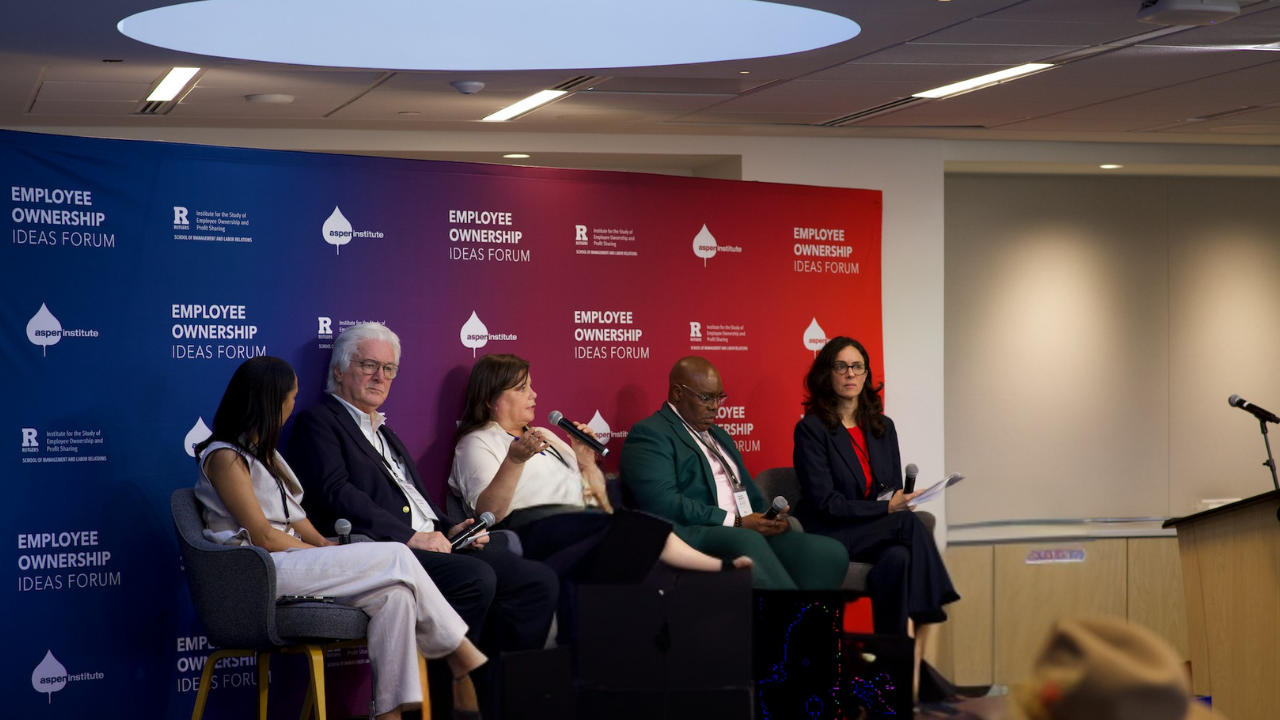
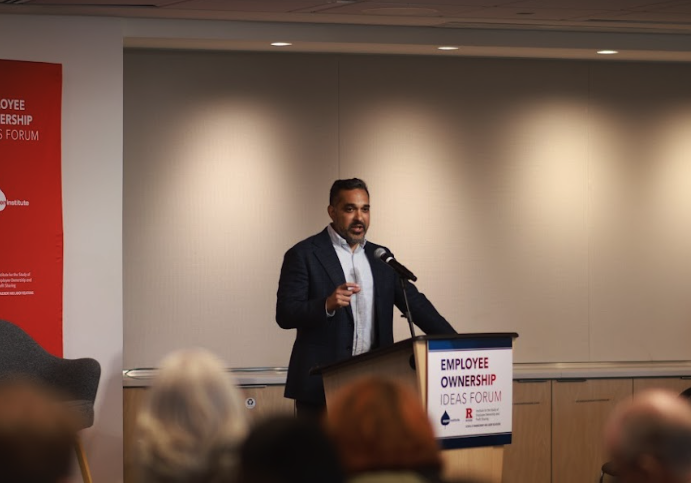
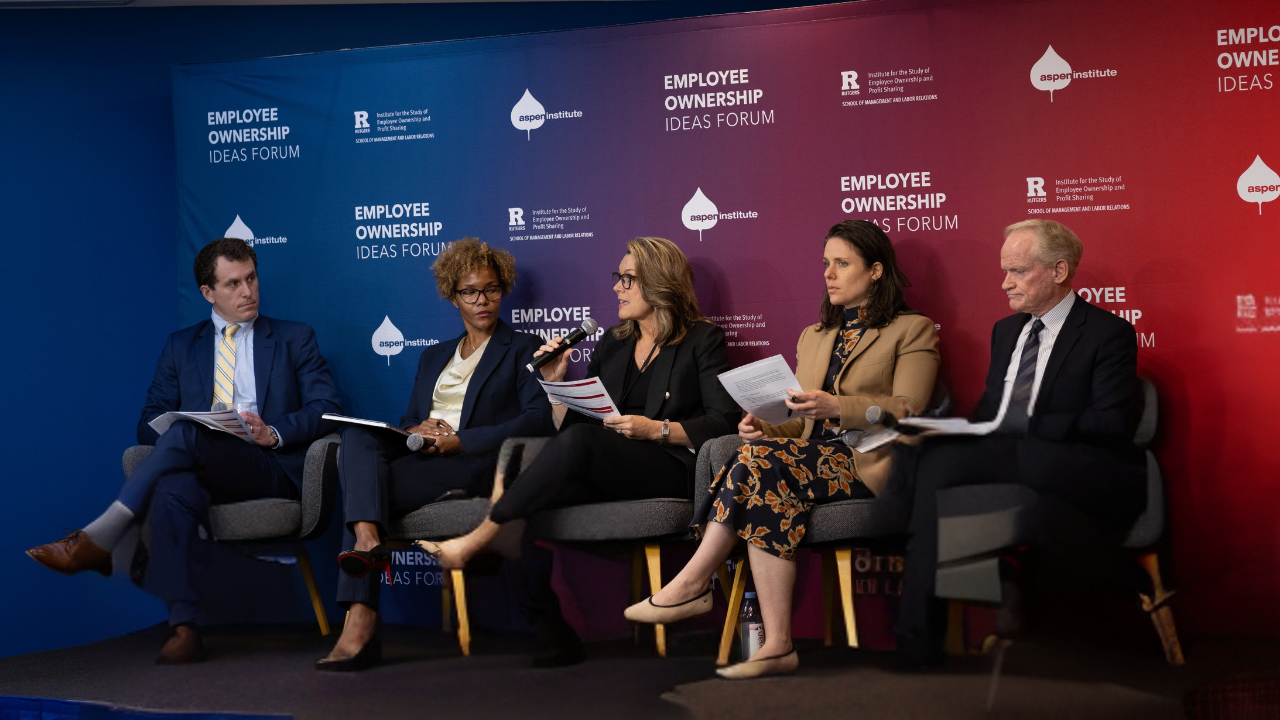
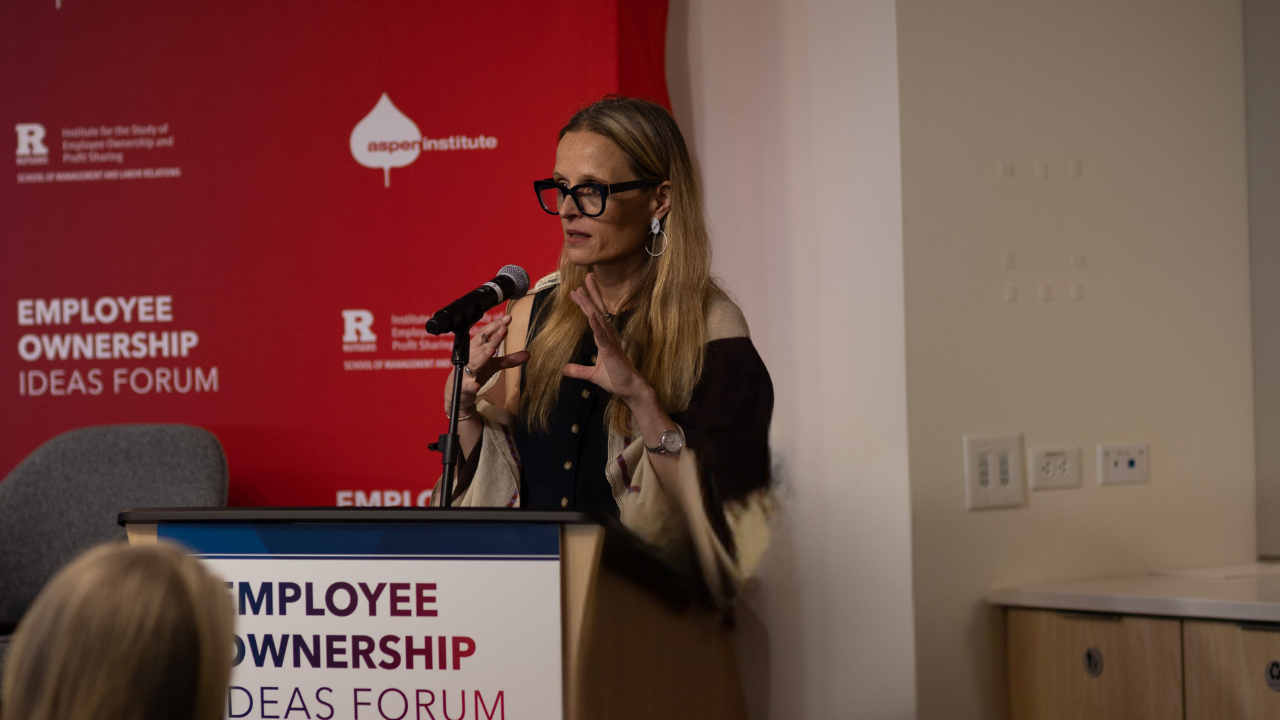
In this video, Paula D’Ambrosa — director of inclusive wealth-building at Prudential Financial — delivers opening remarks at day two of the 2026 Employee Ownership Ideas Forum, which took place on June 2-3, 2026, in Washington DC and online.
For more videos from the Forum, visit our event page or subscribe to our YouTube channel.
And subscribe to our podcast to listen on the go.
[00:00:05] Maureen Conway: Welcome. I am Maureen Conway. I’m a vice president at the Aspen Institute, Executive Director of the Economic Opportunities Program. I am so thrilled to welcome you all to Day 2 of the Employee Ownership Ideas Forum and to welcome you to the Aspen Institute. Thank you all so much for joining us today. Before we begin, I’d like to also thank our principal supporters, the Ford Foundation, Prudential Financial, Sorenson Impact Foundation, JPMorgan Chase, and EO Equals for their generous support of this event. We’d also like to thank McKinsey & Company for their support. This gathering wouldn’t be possible without everybody’s support, so we really appreciate their generosity.
Yesterday was just an extraordinary day. We heard from political leaders, from worker owners, from business founders, from advocates and researchers, and practitioners. We explored not just the mechanics and the how-to’s of employee ownership, but probably spent more time on some of the larger questions that bring us together. How do we build an economy that creates real opportunity? How do we ensure that prosperity is broadly shared? How do we create workplaces where people can contribute, belong, and thrive? We spent some time thinking about that belonging question and our challenges of loneliness in the economy today.
These kinds of questions are questions that have long been at the heart of the Aspen Institute. When the Institute was founded more than 75 years ago, it was created as a place where leaders could come together to wrestle with some of society’s most enduring questions. How do we balance economic progress with human flourishing? We were actually founded as the Aspen Institute for Humanistic Studies, so I appreciated, in particular, Tim Kaine’s comment about putting the human on top. We are humanists, maybe more than capitalists. Anyway, what responsibilities do we have to one another as citizens? How do we build institutions that support both individual opportunity and a good society or the common good?
Those questions are very relevant today, just like they were 75 years ago. As we discussed yesterday in our conversation about Louis Kelso, ideas about ownership, participation, and economic opportunities have deep roots in American history and American thought. They have profound relevance for our future. At a time of rapid technological change and growing concerns about economic inequality, employee ownership offers a practical way to connect business success with shared prosperity. That’s one reason I’m so delighted we are gathered here today. The conversations we are having are not just about ownership structures or business models. They’re about how we build an economy in which more people have a meaningful stake in success. Thank you all so much for being part of these conversations, for being part of this work, and for bringing your energy, ideas, and commitment to this work.
Now it is my great pleasure to invite my colleague, Bill Castellano, Executive Director of the Rutgers Institute for the Study of Employee Ownership and Profit Sharing, to the stage. Thank you, Bill.
[applause]
[00:03:35] Bill Castellano: Thank you, Maureen. Again, welcome, everyone. We’re very proud of the relationship we have with the Aspen Institute at Rutgers. We do quite a bit of research in this space. I think we had a really meaningful and eventful first day. We’re really excited about continuing hearing from many thought leaders that are going to be presenting their ideas and their solutions to help expand employee ownership, something that we believe is very much needed. I think we’re all familiar with all of the exponential advances of technology, AI, robotics, demographic trends, and the impact that it’s having on the workplace and the economy.
We firmly believe that employee ownership is one viable solution. We’re pretty excited about today. I’m very pleased to welcome our first speaker, Paula D’Ambrosa. Paula is a leader with deep expertise in inclusive wealth building and shared prosperity. As Director of Inclusive Wealth Building at Prudential Financial, she leads a philanthropic portfolio focused on advancing economic mobility through ownership of homes, businesses, and investments. Her work supports models like employee ownership, shared equity housing, and community investment structures that help people build wealth and foster agency and belonging.
She also serves on the board of the Asset Funders Network, helping shape the field’s approach to asset and wealth building. We’re very grateful of the relationship and partnership we have with Paula and the fantastic support that we do receive from the Prudential Foundation. They’ve been major supporters of the Employee Ownership Ideas Forum, actually beginning with the inaugural forum in 2023. I don’t think the Ideas Forum would be in the position it is today with the traction and impact it has without that early and consistent support from Prudential Foundation. Again, it’s my pleasure to introduce and welcome Paula D’Ambrosa.
[applause]
[00:06:06] Paula D’Ambrosa: Good morning, everyone. Thank you, Bill. Thank you for being here. Welcome back to those of you that joined us yesterday. I want to start this morning with a story. It comes to us actually from our friends here at Rutgers, Professors Blasi and Cruz, along with Professor Freeman from Harvard, in their influential book, The Citizen’s Share, which, shout out, is coming out with an updated version soon. Everyone, look for that. I’m plugging someone else’s book here. I’m really excited for it.
[00:06:47] Speaker 1: Thank you.
[00:06:51] Paula D’Ambrosa: Some of you will know the story really well. For those of you, particularly, who are newcomers to this space, I think this story might be new. It’s the 1790s. America is just a few years old. One of its most critical industries, the cod fishing industry, is in really big trouble. It was totally decimated by the British during the Revolutionary War. Congress has to do something to bring this industry back. They decide to pass a subsidy. Interestingly enough, they decide to attach some really critical strings to the subsidy.
They basically say that to be eligible for this subsidy, a ship owner must codify a profit-sharing agreement with the crew. If the ship owner only pays a flat wage, if you will, they will not get the subsidy. This law was signed in by Washington. It was also championed, supported, if you will, by Jefferson and Hamilton, which, if you know history, they didn’t really agree on a lot of stuff. From the very start of this country, the idea that workers should gain from the value that they are helping to create was just a really broadly popular idea.
Yesterday, Steven Hill, I really appreciated it when he was talking about the work of Kelso and the history of community and citizen, and employee stock ownership plans. He reminded us, as Maureen also mentioned, that from the Founding Fathers to Abraham Lincoln and beyond, this idea of broad-based ownership was intrinsically linked. Two ideas about citizenship and ideas about really our democracy and republic itself. That is one reason I love that story. I love that book the citizens share. It’s a reminder that this, in some ways, can feel a little distant, having taken place in a totally different economic environment. In many ways, it’s also incredibly relevant to the moment we are at. Here we are, more than around 200 years later, standing on the edge of another huge economic shift. We are in the middle of a huge economic shift.
As we know, macroeconomic picture is changing daily. AI is coming up. We are facing fundamentally really the same question that Congress was faced with back in the 1790s. The question is, how do we drive economic growth and economic dynamism while also making sure that everyday people get to share in what is being created, in what they are helping to create? That’s why I believe employee ownership is both an idea, old and new, and ultimately an idea whose time has come. A lot of people have said that for a long time.
In this case, I mean it to say that the idea has actually been here from the beginning. Its time is now because it’s always been its time. As Bill mentioned, my name is Paula D’Ambrosa. I lead our work at Prudential, our philanthropic work around building an ownership economy. Another reason I started with that story is it really sits right at the heart of what we are trying to do, which is helping to reimagine ownership so that more people have a real stake, as I mentioned, in the economy that they are building.
Today’s agenda builds on yesterday’s. We’ll hear about big ideas for scaling employee ownership, ways to move some serious institutional capital into the space, and how to grow a genuine ownership culture inside these companies. Of course, we will dig into something that I personally have been thinking a great deal about, which is whether the wealth that AI creates flows primarily to those who already own capital or whether workers and everyday people get a real stake in it.
Before we get into the great conversations today, I want to leave you with one more idea, a mantra, if you will, which is that employee ownership is not a niche idea. I loved yesterday when Jason Kelly, who’s the CEO of Ginkgo Bioworks, he talked about this idea of myths. He talked about how we often fall victim, really group victim, to these narratives, these myths that actually hold very little reality. There are a lot of people out there, maybe not in this room, but definitely out in the ether, if you will, who think of employee ownership as a niche.
While many of us know in our bones it’s not, I think it’s important that we constantly hammer away at that narrative, but also that we make sure when we talk about employee ownership, we do not talk about it in the context of a niche idea. Going back to this history lesson, this is like a real American apple pie idea. That is how we should be talking about it. Lastly, this brings us to the need for continued fields and ecosystem building, really movement building here. That’s what we’re talking about.
Loren Rogers, also want to give a shout-out to him because yesterday he gave us some super concrete and actionable ways that we can continue to really build this field and actually achieve the things that we say we want to achieve. I loved some of his ideas, like a shared website, shared information portals, field-wide responses to AI or other types of things. I know he listed out several other ideas. Everyone, go talk to him at some point and pick his brain.
I will add also the continued need for a coordinated story, one that positions EO not as a possibility, not as an option, but as an inevitability. Going back to this idea of myths, we can just as easily create another narrative, another myth that would fuel. It won’t be a myth. It’ll be reality. The point that I’m making is story, in many ways, is everything. I want us to make sure that EO is not just in conversations about the silver tsunami. Of course, that’s important. Yes, we need to be in those conversations. EO is much bigger than that, and it needs to be talked about much bigger than that.
It needs to be in the conversations happening about building a society that works for people and conversations about whether people feel like the American dream works for them, whether they feel like they have a stake in our country’s story, in the economic story. Those are the conversations that EO needs to be a part of. Ultimately, again, that’s why I started where I did. Thank you all so much for being here. I’m really excited for the conversations today. Mostly, thank you for our great hosts, Rutgers and Aspen.
[applause]
[00:14:44] [END OF AUDIO]
About the Employee Ownership Ideas Forum
The Employee Ownership Ideas Forum brings together leading policymakers, practitioners, experts, and the media for a robust discussion on how we can grow employee ownership for the shared benefit of American workers and businesses. It is hosted by the Aspen Institute Economic Opportunities Program and Rutgers Institute for the Study of Employee Ownership and Profit Sharing.
About the Rutgers Institute for the Study of Employee Ownership and Profit Sharing
The purpose of the Institute for the Study of Employee Ownership and Profit Sharing is to study the various models that have emerged and will emerge of employee ownership shares and profit shares in the corporation and society of the United States and around the world.
About the Economic Opportunities Program
The Aspen Institute Economic Opportunities Program advances strategies, policies, and ideas to help low- and moderate-income people thrive in a changing economy.
Join Our Mailing List
To receive occasional emails about our work — including new publications, commentary, events, fellowships, and more — join our mailing list.
Connect on Social Media
For news and updates every day, connect with us on the social media platform of your choice.