Five Big Ideas for Employee Ownership (2026)
Description
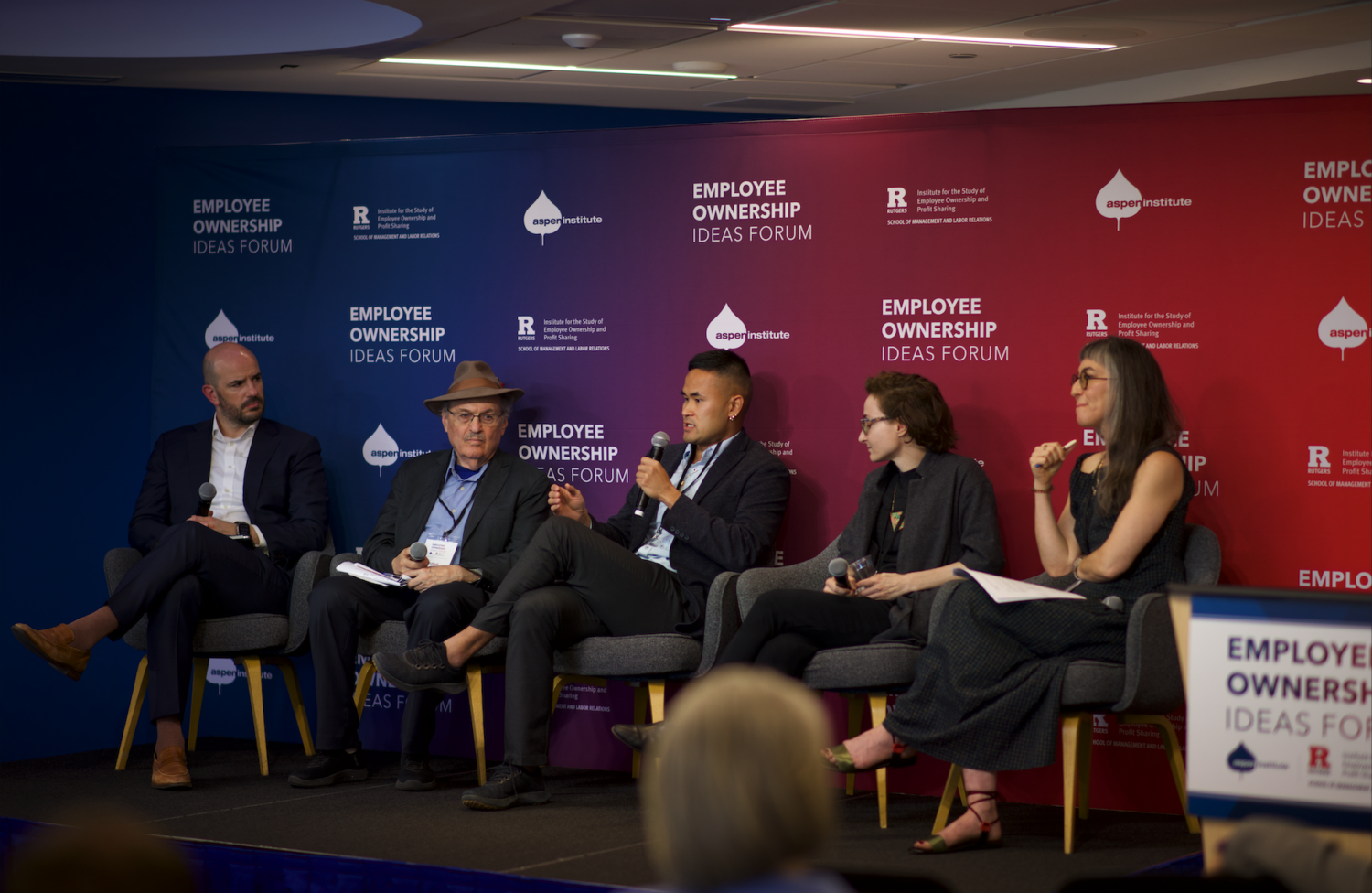
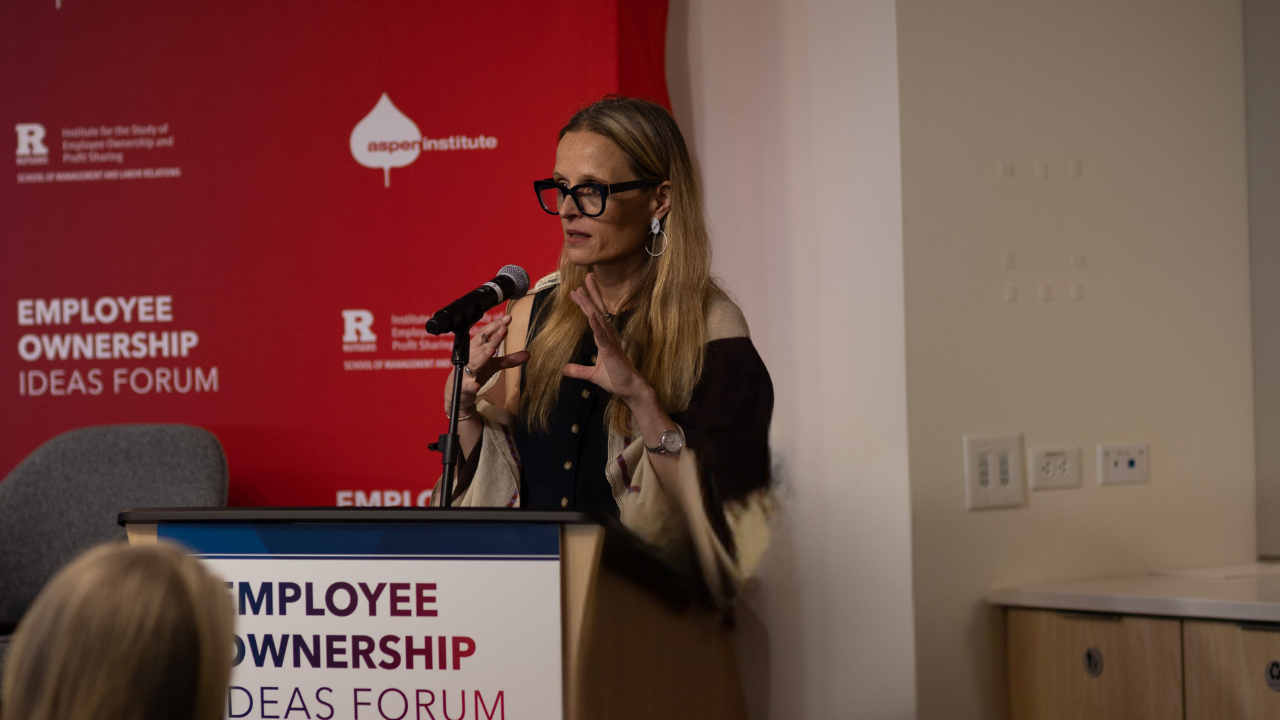
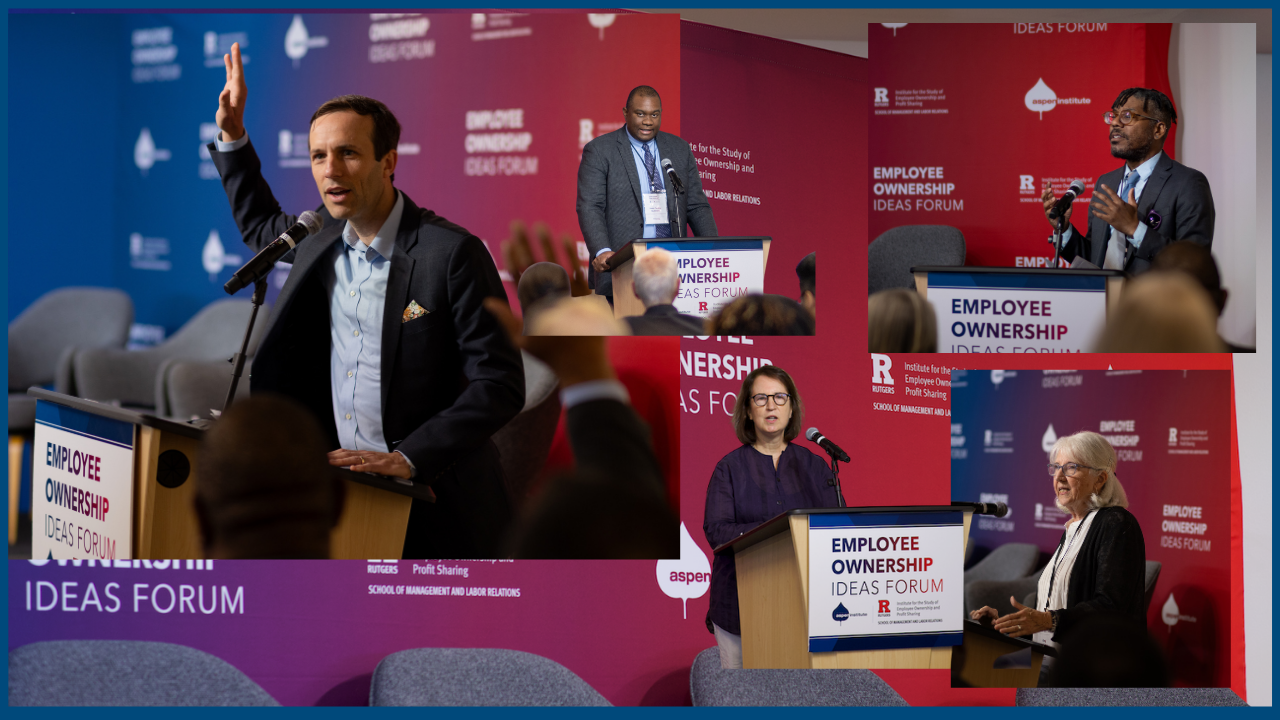
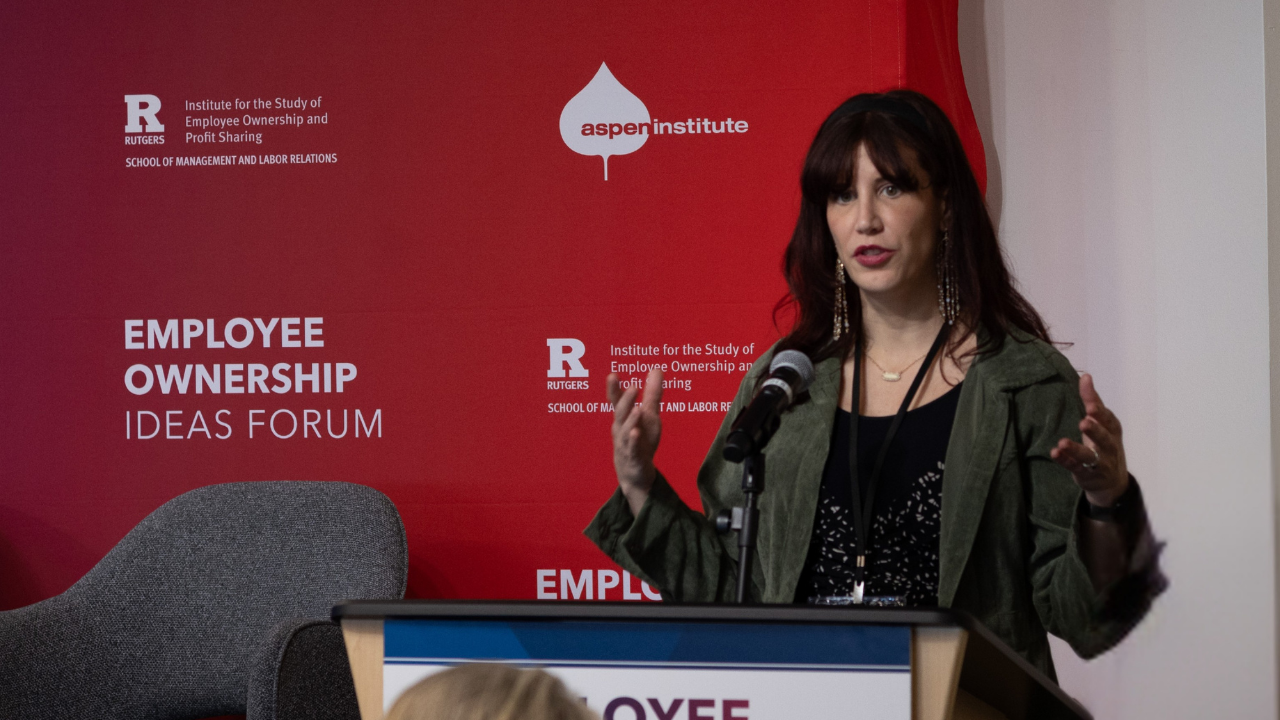
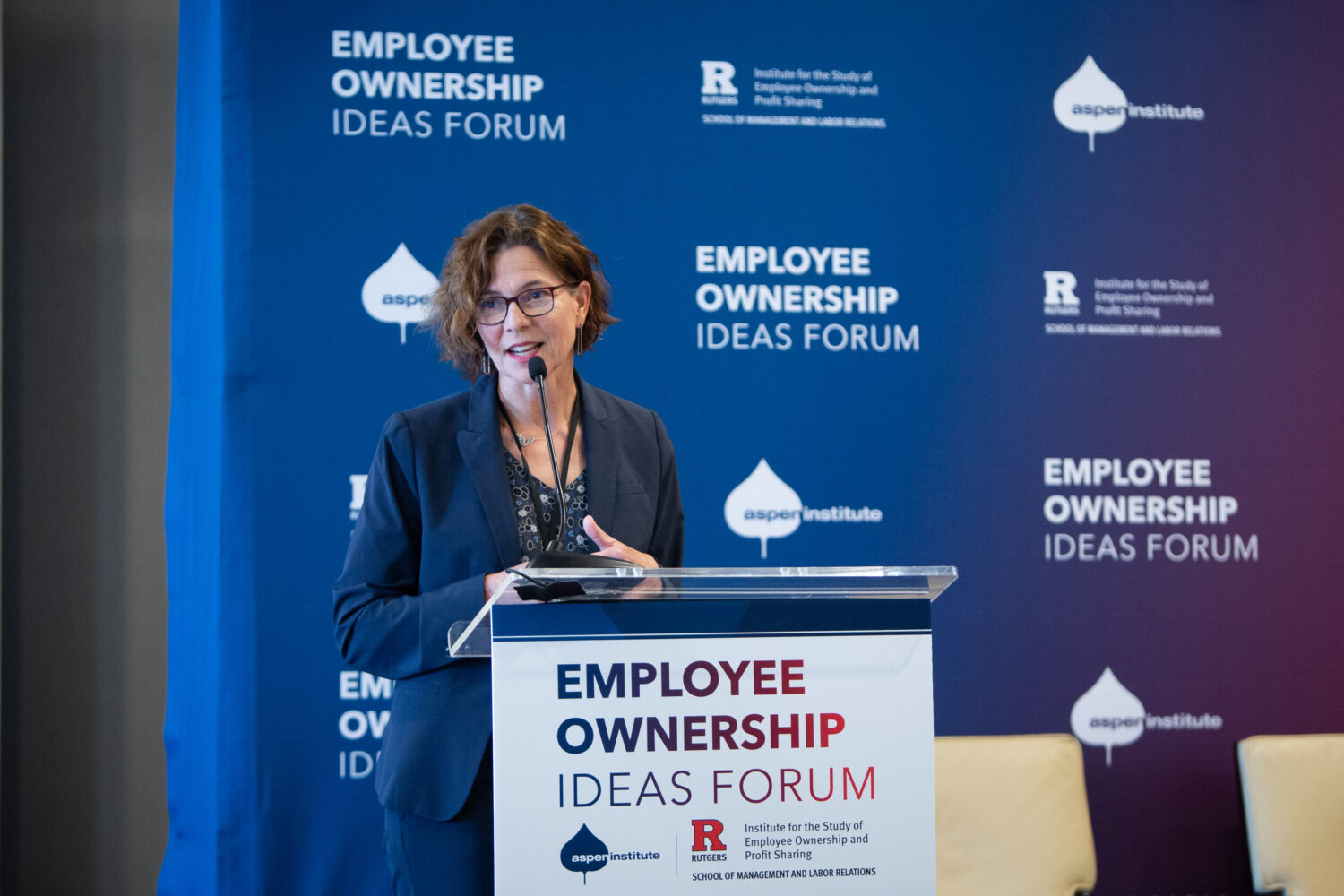
This video comes from the 2026 Employee Ownership Ideas Forum, which took place on June 2-3, 2026, in Washington DC and online.
For more videos from the Forum, visit our event page or subscribe to our YouTube channel.
And subscribe to our podcast to listen on the go.
Speakers
- Sara Horowitz, Founder of the Mutualist Society, Founder of the Freelancers Union
- Esteban Kelly, Executive Director, The US Federation of Worker Cooperatives
- Ginny Vanderslice, Principal Emeritus, Praxis Consulting Group
- Felipe Witchger, Executive Director, Francesco Collaborative and the Livable Future Impact
- Sean-Tamba Matthew, Shareholder, Stevens & Lee and SES ESOP Strategies
Resources
- Article :How “Entrepreneurship Through Acquisition” Can Deliver Benefits to Workers, Too
- Book: Mutualism: Building the Next Economy from the Ground Up
- Website: Catholic Impact Investing Collaborative
- Website: Freelancers Union
- Website: Mutualist Society
- Website: US Federation of Worker Cooperatives
- Website: Praxis Consulting Group — How we support employee-owned companies
- Website: SES ESOP Strategies
- Website: Stevens & Lee — ESOPs – Employee Stock Ownership Plans
[00:00:05] Merrit Stüven: I’m really excited to share our five big idea speakers with you and for them to share their ideas. First, we will hear from Sara Horowitz, founder of the Mutualist Society and founder of the Freelancers Union. Then from Esteban Kelly, executive director of the US Federation of Worker Cooperatives, from Sean Tamba-Matthew, shareholder at Stevens & Lee, from Ginny Vanderslice, principal emeritus at Praxis Consulting Group, and lastly, from Felipe Witchger, executive director of Francesco Collaborative and managing principal of Livable Future Impact. I’ll hand it to Sara. Thank you.
[00:00:56] Sara Horowitz: Hi, everybody. It’s very nice to be, I think it’s the third speaker, but the first in the big ideas. I hope this is a big idea, and I worried when I started that somebody else might have told this story yesterday. You have to be kind to me, and if I start a story and you’re like, “That was yesterday,” that would be helpful. On April 10th, 2026, about two months ago, NASA’s Artemis project sent four astronauts around the moon. Did anybody else tell that story yesterday? Okay.
In the press conference after, Astronaut Christina Koch said the following. “In the last 10 days, I’ve realized what a crew is. It’s people who make up a group that is in it all the time, no matter what, that is stroking,” as in rowing together, “every minute with the same purpose, that is willing to sacrifice silently for each other, that gives grace, that holds accountable. A crew has the same cares, the same needs, and a crew is inexplicably, beautifully, dutifully linked.” She said, “There’s one lesson right now. Planet Earth, you are a crew.” So moving.
Here we are at Aspen on Earth. The strategic policy question is this, how many of us feel that in our day-to-day lives, we have a crew? We might think that’s a social question, like, oh, I have friends, that’s my crew, but a crew is very much part of a bigger idea. I want to talk to you about that idea, and it’s called mutualism. Mutualism is how people have been building crews for several hundred years. You might think of these crews as workers organizing together, communities building cooperatives, workers joining to own a company together in an ESOP or a worker cooperative.
Every immigrant group everywhere, creating a lending circle because banks are irrelevant to their own investment strategies. People of faith creating and maintaining their own religious institutions. Communities coming together in mutual aid after a natural disaster. This all seems like these are wonderful groups, but what do they have in common? It turns out they share three critical principles, which are the three principles of mutualism. They have a crew, or to put it another way, a solidaristic group that joins together. That group builds an economic mechanism that’s peer-to-peer. It can be dues, it can be services, it can be barter, it can be alternative currency, it can be contributions of time.
This group has a long-term time horizon. It functions multi-generationally. We here in this room realize we got here because there was a past generation, and we have to hold ourselves accountable for the debt we owe the future. Those are the three principles, but we’re at a crossroads right now. Our private markets and our governments are failing us, but worse, I would argue, is the lack of imagination of how to build the core of democracy across the ideological spectrum. Both left and right have lost sight of mutuality, or as Astronaut Koch might say, our crew strategy.
Here’s how we should think about this. Be precise when coming up with a strategy for who is I and who is we. By that, I mean, are you a foundation hiring experts, no offense to McKinsey, to figure out the solution to the problem and then imposing it on a lot of eyes? Or, are you identifying people who are actually building crews and supporting them and listening to them when they tell you what they need? Pay attention to the universal versus the particular. You will be surprised, maybe, when I say we are having a critical shortage of the particular. What do I mean? I will explain literally in 30 seconds.
Foundations, think tanks, government, social investors need to create pools to fund small grant experiments that build a crew. Local, neighborhood, or virtual, with human connection in small groups, whatever form, build a crew with solidarity. This is what particular means. A strategy on the particular asks, who is in this crew and who is not? In a unionized company, it’s clear who’s in. It’s the unionized workers, not somebody who just lives nearby. A food co-op where members can shop, not just anyone, but those who have skin in the game because they’ve paid dues or they’ve contributed time. Faith communities with practices and ways of entry that are designed to, well, keep the faith.
Foundations and think tanks start with the opposite premise right now. The universal, everything must be open to everyone, and if it’s free, even better. Being for everyone sounds nice, but this alone builds no crews that can sustain themselves. It builds no new unions. It builds no new ESOPs, no new cooperatives, no new decentralized web groups, no new neighborhood or community associations, no new mutual aid. Why? Because you need solidarity. Solidarity is about the particular, the particular ties that bind, and this failure matters. The universal versus the particular is where we need to focus to decide how to build the future ownership strategy.
Mutualism in Italy, South Korea, Quebec, and Spain, to name a few, have amongst the most dense regions of mutualism, and as a result, they have the most equal distribution of income. They are the sustainable economic base of their regions. Their citizens are the happiest by those funny happy metrics, and they lead more convivial lives, and they live in the blue zones that they created and engineered. The future is building up our muscle for the mutualist impulse that will build our crew.
NASA knows that when you send up four people around the moon, they need to be in a crew, so maybe this is our moonshot. We can rebuild our own society from the ground up, one crew at a time. These crews are stitched together and will be the next infrastructure for democracy, the democracy we need. This is about the particular, and with this focus, we will build crews and let them navigate where they know they need to go. Thank you.
[applause]
[00:08:58] Esteban Kelly: Thank you, Sara. Esteban Kelly. Again, we did all the names in the beginning. I’m just going to jump right in. I’ve been running the US Federation of Worker Co-ops for about 10 years now, but I think a lot of what I’m about to share is informed additionally by the fact that I spent about 15 years as a worker-owner in a co-op that I created that does a lot of consulting and organizational development and business development, including for some of the internal structures, governance, conflict, all of that stuff.
It occurs to me that if we’re trying to center the question of scale, if we start with the question of scaling, and I’m mostly actually going to focus on worker co-ops, there’s some things that are applicable to other forms of employee ownership, that if we start with the question of scale, we risk taking some of our flaws and just amplifying them. I think we need to first talk about worker co-ops and what they are versus the stories we tell ourselves and the stories we tell our clients, for those of us who work as technical assistance supporters, people who finance and are invested in the ecosystem in different ways, that there are different stories we tell, and sometimes it’s for shortcuts or reasons of convenience.
Sometimes those things get baked into the orientation and the understanding within our field of what co-ops actually are. Thinking about scale as the goal, I think it really helps us to simplify and remember that worker co-ops are a lot less funky and idiosyncratic than we tell ourselves they are. Then we advise a lot of clients, “Oh, we can customize this to anything that you want.” Just to back up to first principles, we’re just talking about businesses that happen to be 100% owned by the people who work there. They’re owned on an equal basis, exactly equitable, and they’re also controlled on an exactly equitable basis. That’s about it.
I was thinking about this from– there were a couple of conversations yesterday that had me thinking about questions of workplace democracy, questions of how we structure the elements of control and ownership. I was mapping it out in my mind as those are two buckets, and each of them exists along an axis of how intense or how concentrated or diffuse some of that control is. If we think about democratic management on the one hand and democratic ownership on the other hand, there actually is a full spectrum of what that means. I think sometimes we tell an oversimplified story that it’s all collapsed and conflated into one thing.
In other words, on the side of more concentrated, you could have democratic management that looks like the workers voting on a CEO or general manager, and that’s the management structure, all the way down to– people are maybe more familiar with this out on the West Coast. California has a lot of cooperatives that use structures like sociocracy, where the workers themselves are the managers.
It’s different than committees from a governance perspective, but ways of organizing each department maybe is self-autonomous. Everything along that spectrum, from having a fully command and control military-style thing, which is still not hierarchy because that person is actually accountable to all of the workers, all the way up to this emergent sociocratic model of everyday management distributed among the people working there, including when it’s a smaller workplace and it’s completely flat, which is very common given how small so many worker co-ops are in this country.
Then on the other side for democratic ownership, I think the same thing is true, that on the one hand you can have, and it’s very common, workers vote on the board, all the way up to workers actually directly serving on and participating in a lot of different committees and structures, long-term planning, finance committee, governance, whatever. There’s all different kinds of HR committees, places that workers could directly participate in, or sometimes they form the entirety of those committees depending on the size of the workplace.
I think it’s important for us to really understand how simple and how complex those things can be. Also, in other words, how familiar some of those things can be, when we’re trying to overcome this gap of how strange and foreign the concept of worker ownership seems to so many of the people who are the audience, that we’re trying to convince that it’s a good model for all the reasons we talked about yesterday and in some of these forms in the past.
In other words, if we insist that it has to be so quirky and bespoke and participatory, that creates an additional barrier that literally doesn’t even need to be there when ultimately all we’re talking about is an opportunity for a workplace on one day to be traditionally structured and on another day, there’s just the difference of maybe they vote for their board once a year and keep their manager and have some mechanism for evaluation or review of a CEO or general manager, or even to hire someone in from externally.
What we choose and how we design these workplaces don’t really have any bearing, in other words, on how cooperative a workplace is, like all of those things along the spectrum, and it’s part of my job to defend the broadest understanding of what worker co-ops are in all their forms. At the same time, I’m very capable of getting inside of the details and advising people about what makes sense for the business or the industry that they’re in, the size of their workplace, and the culture of their workplace.
I think about that in contrast to a lot of parts of the world, and Sara was just talking about this a moment ago, where worker co-ops and the social solidarity economy are much stronger, have much more traction, and are much more embedded in their institutions. This is a place where we are on the weaker side, and a lot of the challenge here of thinking about scale is a lot of it’s just catching up. When I think about, well, beyond being in second to last place, or whatever, what sets us apart? A lot of it is our diversity. I think one of the ways that we can scale worker co-ops in this country is by turning that diversity, that weakness, into a strength.
Why is it a weakness? Because in a lot of other parts of the world, worker co-ops are concentrated in certain industries, depending on their country. It’s not always the same. You mentioned Mondragon. They’re very concentrated in industrial manufacturing industries. Obviously, they’ve diversified to grocery stores and other things. There’s a lot of service sector-based economies and ecosystems in different parts of the world. In Quebec, almost all the EMTs are run by worker co-ops. You call the ambulance, it’s a worker co-op that comes to get you. That’s particular to the cities. I don’t know about the rural.
There’s concentration, which means they understand advocacy, what kind of policies they need. They have industry expertise. It’s the combination of understanding that industry alongside what worker ownership means. When someone wants to either expand or develop a new worker co-op, they usually have some of that expertise informing what it is they’re doing.
Last month, a few of us got to go on a tour organized by the Baltimore Roundtable for Economic Development. They really have, in some ways, one of the fastest trend lines of co-op development in the country, and it’s because they’re not trying to serve every type of project. They really found a way to focus in on the cafes, bars, restaurants industry based on an anchor co-op in their community that people are aware of and they reach out to.
I think one of the things that we can do to turn that weakness into a strength is by figuring out ways of finding specific businesses across the diversity of industries that are capable of doing either acquisitions or mergers. I think figuring out the M&A space for worker co-ops is something that’s underexplored. I think there’s a lot of possibility there. Obviously, we’ve figured it out for employee ownership in other ways.
The problem right now is that all kinds of co-op development, whether it’s a startup or a conversion, it requires a lot of quarterbacking. You’re given a choose-your-own-adventure manual and you flip through. If you make this choice, turn to page 17. We have all kinds of curriculum. We have support for that. It doesn’t really allow for the kind of scale that I think we’re talking about and that we need.
If we’re, however, able to identify a couple key businesses across different industries that are well-positioned, and if they don’t exist, I think then we have a little more focus for what kind of businesses we’re trying to create. The childcare co-op that is capable of franchising and scaling, of acquiring other childcare businesses, et cetera. We heard about hardware stores yesterday. Really thinking across industry.
Then I want to close with a call to action, similar to what Lauren was saying yesterday from NCEO, if we spent maybe a year and a half just focusing on a consortium, a concerted effort to say how do we figure out mergers and acquisitions for worker co-ops, there’s some research that’s involved, business planning, what kind of partnerships with unions on workforce development, what kind of analysis do we need to do about the specific regulations in different industries to figure out what is a way of really scaling mergers and acquisitions.
I think it gets us on the other side of some of the limitations where in conversions, for example, there’s a lot of struggles with culture once the business has been converted. If you already have a business, a cooperative that exists, and then they just acquire another company, those workers get onboarded into the new culture and systems and processes. It makes it a lot easier to go from one scale to something that’s an order of magnitude bigger.
I’m interested in thinking about how we can explore that a little more. We’ve only done a tiny bit of experimentation with this just by organizing some of the groups inside of the federation into peer networks. I think the next iteration of that, when we can think about the technology that specific cooperatives in certain industries need, we talk about these as industry federations, I think that’s the next evolution and figuring out an M&A strategy could be a big part of that. Thanks.
[applause]
[00:20:17] Sean Tamba-Matthew: Good morning, everyone. Before I begin, I do want to just take a quick moment to thank the Aspen Institute and my colleagues at the Rutgers Institute for the Study of Employee Ownership and Profit Sharing for the incredible work that they’ve done in putting together another great forum. I’m very grateful to be here for the past few years to hear these stories and be inspired by so many of the innovators and great thinkers around employee ownership to get wealth in the hands of workers throughout the world, but especially here in the United States.
Over the past several years, obviously, this event’s highlighted some of the incredible progress that’s been made, in particular with addressing two issues that have inhibited the growth of employee ownership through ESOPs in the United States. Those issues, for me, are tied to two gaps, the awareness gap and the exit gap. The awareness gap is basically a lack of understanding among many business owners and their trusted advisors about what kinds of companies are ESOPable and the benefits of ESOP transitions for those business owners when compared to their older alternatives.
Through recent efforts from policymakers and nonprofits and civic organizations, one example being the work that Rutgers is doing with the NJEDA in launching their pilot program for transaction assistance and feasibility study assistance for New Jersey-based businesses, we’ve seen a real impact, intangible impact in addressing the awareness gap. That’s actually been born out in the numbers. NCEO just published recently that there were over 300 new ESOPs established in 2023, which is the last year for which we have information in. That’s really important because I can’t tell you how many times I’ve said that, “Hey, there’s about 250 new ESOPs every year for the past, oh, I don’t know, decade or so.”
In addition to that, the number of employee-owned companies that are privately held are at its highest level since 2015. In tandem with addressing this awareness gap with those incredible efforts that have been done out there, there’s also a corresponding acknowledgment that for most of the thousands of retiring business owners who put their businesses up for sale each year in the United States, the traditional ESOP transition process does not align with their desire for an immediate exit with cash in hand, and only short-term transitional management responsibilities.
Historically, this exit gap has led to workers being excluded from the opportunity to gain ownership in the companies being offered for sale throughout the United States on an annual basis. Fortunately, there is a solution for this. Julie Menter of Transform Finance and I highlighted in our Impact Alpha op-ed how entrepreneurship through acquisition can deliver benefits to workers, too. The entrepreneurship through acquisition and independent sponsor models can bridge the exit gap with capital from employee ownership-focused funds and others.
What is entrepreneurship through acquisition? What is an independent sponsor? How can such models coexist with a sustainable long-term ESOP structure? First, we’ll start with entrepreneurship through acquisition. For those of you who are aware and know these terms and items, please bear with me. I want to make sure that we are talking on the same terms here. Entrepreneurship through acquisition is a form of entrepreneurship in which an individual becomes an entrepreneur not by starting a new business but rather by acquiring a business that’s been a going concern for quite some time.
An ETA entrepreneur or searcher will step in and operate the company that he or she acquires after acquisition, and is often supported in that process by a fund dedicated to investing alongside ETA. In addition to these funded searchers, you have self-funded searchers who are utilizing SBA capital and private funds to execute their ETA acquisition strategy. These investments have been studied for several decades, with their origin of the approach dating back to the 1980s, and have demonstrated significant returns for investors, both searchers and their co-investors over the years.
Similarly, an independent sponsor, sometimes called a fundless sponsor or pledge fund sponsor, is an individual or small group that sources, structures, and leads private equity acquisitions without a pre-raised committed fund. Instead of investing from a buying pool of capital, independent sponsors raise capital on a deal-by-deal basis, often when getting a letter of intent executed, bringing that letter of intent to investors, and trying to solicit financing and other capital to facilitate the acquisitions.
How these models and concepts work together, and how can we actually get more employee ownership by utilizing these models? Last year, our team at SES ESOP Strategies had the honor of assisting several innovators in the employee ownership space on two ESOP transitions that utilize the ETA and independent sponsor models to create more employee ownership throughout the United States for companies that were offered for sale, not considering the ESOP path, but have become 100% employee-owned ESOP companies.
The first example of this was the acquisition of B and B Maintenance, a commercial cleaning company that was put up for sale a couple of years ago, with operations throughout the United States with over 1,200 employees, that business transitioned to employee ownership with the help of Neatland Holdings, an independent sponsor in the commercial cleaning space, with capital from A&H and others.
Similarly, Southeast Acquisition Capital, with an independent sponsor focused in the employee ownership space, and Geoff Easterling, a searcher who was looking to acquire a business, used capital from Allivate Impact Capital to help transition IRT and Associates to an employee-owned company.
This alignment with investors, like searchers and independent sponsors, alongside investors who appreciate the ESOP model and what you can do for employee owners can truly transform the ability to scale employee ownership by aligning the timelines of selling business owners who can’t go through the traditional ESOP model, but rather need somebody to step in day one to facilitate the management transition alongside the capital transition that they need for their companies. Thank you.
[applause]
[00:27:58] Ginny Vanderslice: All right. Good morning, everyone, and thank you to the Aspen Institute– you’re taller by a long shot– for inviting me. I don’t know if this is a big idea, but it’s a small idea with a big impact. How about that? I’m going to talk mostly about ESOPs because that’s what I know best. I think the part that unites us is that we all want more employee-owned companies, and we all want them to be more successful. What does that mean?
Yesterday, I had to change my whole talk because of what you all said yesterday. It was awesome. Many of you said that finance and legal structures of ESOPs need to be combined with organizational practices or culture in order to make ownership matter to employees day to day. That got said over and over and over and over. To me, it’s a huge disconnect, and that’s what I want to talk about because I agree that that’s really important. We have 100 studies over 40 years that say the same thing. Yet, with few exceptions, when ESOPs are put together, culture’s an afterthought. You don’t have to have an ownership culture.
It’s great that we’re decreasing the wealth gap, but we’re not necessarily creating companies where workers feel like their day-to-day experience is different, where they feel empowered, where they feel like they’re going to get to develop, and so forth. To me, that’s like, oh, yes, culture’s really important, but we don’t really talk about it until after the fact. Then what we talk about is communication. It is important to communicate these up, but communication is not a culture. It’s just the beginning. A lot of companies don’t go any further. There’s this huge missed opportunity.
If culture is, in fact, a major factor, then why is it this afterthought? Why not include culture in the financial and legal design of ESOPs? It’s not that hard. I’m going to give you some ideas. First, I’m going to tell you that 40 years ago, the conversation I was in was trying to get culture even into the room as a factor that mattered because people were saying, “No, it’s just like being an owner.” I’m like, “No, actually, it’s not just being an owner. It’s feeling that ownership mattered.” Now culture’s in the room, but it’s still the afterthought. I think our next task is how do we bring it into the center?
My big idea is that more technical advisors need to integrate the importance of culture upfront with sellers who are exploring ESOPs as an ownership succession strategy. I’m asking other people to do things. Yes, I am. [laughs] In fact, I really believe that every financial decision and legal decision should be considered in light of culture. What’s the impact going to be on our people? What is the idea that we have about the culture we want to create? How does employee ownership actually change the opportunity to engage workers and get more innovative ideas? That’s what we need to think about, and we need the advisors to think about that in particular.
When culture’s not a consideration at the start, the result can be, oh, a board that’s not strategic or helpful, leaders who don’t have skills or beliefs to build and maintain an ownership culture, which means the full potential of the ESOP isn’t ever realized. Employees who don’t experience the full potential of employee ownership, so they’re not really motivated by the ESOP. Once a year, they get a statement. It’s not really exciting. It’s nice to have an account. Believe me, I believe in that. I have a son who has an account that’s bigger than my salary. I really think this is important.
If culture is an afterthought, then the other thing is that when somebody finally decides that, oh, these legal rules aren’t really supporting the culture we want, then we have to go change the legal rules. Not only are we delaying the opportunity to make employee ownership meaningful in terms of company performance, but we’re also now having to go back and do rework. In manufacturing, we know rework. Bad, bad, bad. How could culture be at the forefront? Here are a few ideas. Some are not from ESOPs. There are some really great things that are happening, and what I hope is that the ESOP world can learn from these few really great examples of things that we have.
First of all, advisors, when they’re explaining the financial benefits, could also be explaining that there are a variety of performance benefits. This isn’t hard. I’m sure Rutgers has a handout you could give to people. Making it part of the conversation matters. Sellers could be encouraged to articulate their future goals for their employees and for their company, in addition to what they want for themselves. We know they’re good at what they want for themselves, but what about the company and the employees? How do they see that?
We could consider legal decisions in light of how they’re going to impact the culture. A lot of the lawyers will say, they’ve said to me, “Yes, I just picked my favorite rules. Yes, five years, 100 hours, 1,000 hours, whatever it is,” without a conversation about how might that impact culture. When you actually have that conversation, or even better, you involve the employees in the conversation, you get different rules. You get people saying, “Let’s let people into the ESOP immediately.” It’s just an administrative issue. It doesn’t matter. If it increases retention, why not do it?
It’s a little administratively annoying, okay, but you get retention because people feel like they’re part of that community we talked about yesterday, immediately. Some companies actually do this. They let employees in as soon as their probationary period is over, and then they back-enter them to January 1st of that year. They feel immediately like they’re part of the whole. I love that you’re nodding. That’s very good. Keep it up. [laughter]
There can be rules. I think we often feel that, oh, no, these have to be the rules. I run a CEO leadership program at Penn, and I often say to the CEOs, “What are the rules? What are the rules for ESOP?” You know what? They don’t know. Their CFO did the rules, so they don’t really know. They can’t think about how is this impacting whether people feel like ownership matters, whether they’re going to stay in the company, and so forth. It’s something I think that could be fixed. It’s a pretty easy fix, right?
Other companies have capped compensation dollars that can be counted toward allocations. It’s amazing. You can do that. You don’t have to do it on everybody’s total comp. You could cap it. There is a government cap, but they cap it way earlier than that. One company caps it at $60,000 of comp. That’s a way of keeping it more equal so that we don’t have the rich getting way, way richer and the rest of us hoping that we’ll get some.
All right. Funders could be asking if the company has the right kind of leaders to build and maintain an ownership culture. Do they have the right skills? Okay, get wrapped up. Do they have the right skills? Do they need development? The good news is we’ve got some funds now that are actually requiring leadership assessments before they agree to go ahead. We should learn from that. We could talk about their boards, and so forth. Here’s my ask. Let’s not view employee ownership only as a financial deal for the seller, and hopefully, for employees. Instead, let’s think of each ESOP transaction when culture is in the forefront as an opportunity to change lives in multiple ways, bring culture up front.
[applause]
[00:36:20] Speaker 2: My name is Felipe Witchger from the Francesco Collaborative and Livable Future Impact. I want to begin by asking people to raise their hands if you’ve been in an investment committee meeting. Okay, we got a good number here. Keep your hands up if you’ve been in an investment committee, when you saw the safe choice get chosen, but you knew in your gut there was a brave choice to be made. Let’s see. That feeling of watching that safe choice get made is why I’m here. We’ve been told the safe choice is the only serious choice in the way to move money. It isn’t, and the proof isn’t the last people you would ever guess.
What if I told you there’s a winning path on employee ownership and the future we want that you haven’t heard about yet? It’s not Warren Buffett. It’s not Pete Stavros, although we’re grateful for him. Trust me, I don’t think you’re going to see this one coming. Let me take you back. Three movements, one force, you never guess who’s behind them all. Era one, apartheid South Africa. A Dominican sister from New Jersey named Pat Daly organizes investors and stare down General Motors, then Ford Motor Company, then Exxon Mobil, and becomes one of the most relentless forces in the shareholder advocacy movement that grew into the moral conscience of corporate America. A nun.
Era two, the housing crisis. Millions of poor and Black families across America can’t access credit. Is it the federal government? Is it Wall Street? No, it’s another sister. Corinne Florek pulls the savings of 35 religious congregations and make their earliest, most catalytic loans into what becomes the community development finance sector. Nun money helped build that sector.
Era three, employee ownership. It’s happening right now. Five years ago, I walked into a room with 30 Catholic investors and introduced them to a fund that buys companies and converts them to employee ownership. Five of those investors wanted to go deeper. A Catholic pension fund brought the rigor. A foundation chair from Minneapolis, who had watched George Floyd be murdered, said, “I have to invest in these families right here where my foundation is.” A sister from Wisconsin said simply, “We must return what belongs to the poor.”
Together, they became the first 9 million into what is now one of the most important employee ownership funds in this country. The sisters were there first, paving the way for Cambridge Associates, Morgan Stanley. They were the ones that were there when almost no one else believed. That is the Francesco Collaborative.
What is this kid from the tomato fields of rural Florida doing here at the Aspen Institute today? Let me take you back. I’m three years old, on my father’s shoulders, walking the streets of Mexico City. My parents are Catholic missionaries. They spent 20 years in the tomato fields of Immokalee, Florida, helping farm workers fight for basic dignity, a bathroom break, a fair wage. My grandfather in Michigan worked in the auto plants, but on the weekends, he helped the farm workers. My grandfather from Cuba, he owned a small sugar mill, but he worked on the weekends for agrarian reform. He built a housing cooperative so the workers could own the land.
Every generation of my family has been asking the same question. How do I reconcile my values with the world I live in? The answers have always been different, the values always the same. I once denied my faith. I was 22. It wasn’t cool to be in Cambridge, Massachusetts, in consulting circles and be Catholic, but I’ve reclaimed it because here’s what I’ve learned. You don’t succeed in spite of your values. You succeed because of them. Investing your values works. The nuns did it, and the shareholder advocacy movement got built. They did it again, community development finance, tens of billions of dollars each year, year after year, invested where every other lender redlined.
Five years ago, the sisters played a catalytic role, anchoring the first close of a fledgling but ambitious employee ownership fund. We know investing your values works. Picture this. Three years from now, Aspen isn’t in this 300, 400-person conference room, but they’ve had to rent out the biggest stadium in the region. Tens of thousands of new worker owners, dozens of members of Congress, banks, labor, all of us celebrating what we’ve built together.
Then there’s one more voice I want you to imagine in that stadium. Last week, a letter was released on workers, on dignity, on what it means to be human in the age of AI. The author is an American. He’s from Chicago. He likes baseball. His name might be Leo, maybe Leo, the pope. Magnifica humanitas, magnificent humanity. Pope Leo is already showing up for our movement. Earners can become owners.
Look around the room right now. Seriously, look around. Let’s forget the organizations. Let’s forget the titles just for a moment. What do I see? I see people who believe in workers, people who believe in work, people who believe in ownership. That is our common ground. If you invest real money in this room, here is the honest invitation, you don’t have to be the first. The sisters already were. They took the early mover risk, so you can step in now. The how is always different. The why is always the same. Let’s go invest our values.
[applause]
[00:42:38] [END OF AUDIO]
About the Employee Ownership Ideas Forum
The Employee Ownership Ideas Forum brings together leading policymakers, practitioners, experts, and the media for a robust discussion on how we can grow employee ownership for the shared benefit of American workers and businesses. It is hosted by the Aspen Institute Economic Opportunities Program and Rutgers Institute for the Study of Employee Ownership and Profit Sharing.
About the Rutgers Institute for the Study of Employee Ownership and Profit Sharing
The purpose of the Institute for the Study of Employee Ownership and Profit Sharing is to study the various models that have emerged and will emerge of employee ownership shares and profit shares in the corporation and society of the United States and around the world.
About the Economic Opportunities Program
The Aspen Institute Economic Opportunities Program advances strategies, policies, and ideas to help low- and moderate-income people thrive in a changing economy.
Join Our Mailing List
To receive occasional emails about our work — including new publications, commentary, events, fellowships, and more — join our mailing list.
Connect on Social Media
For news and updates every day, connect with us on the social media platform of your choice.