Ford Foundation’s Margot Brandenburg Keynotes the 2026 Employee Ownership Ideas Forum
Description
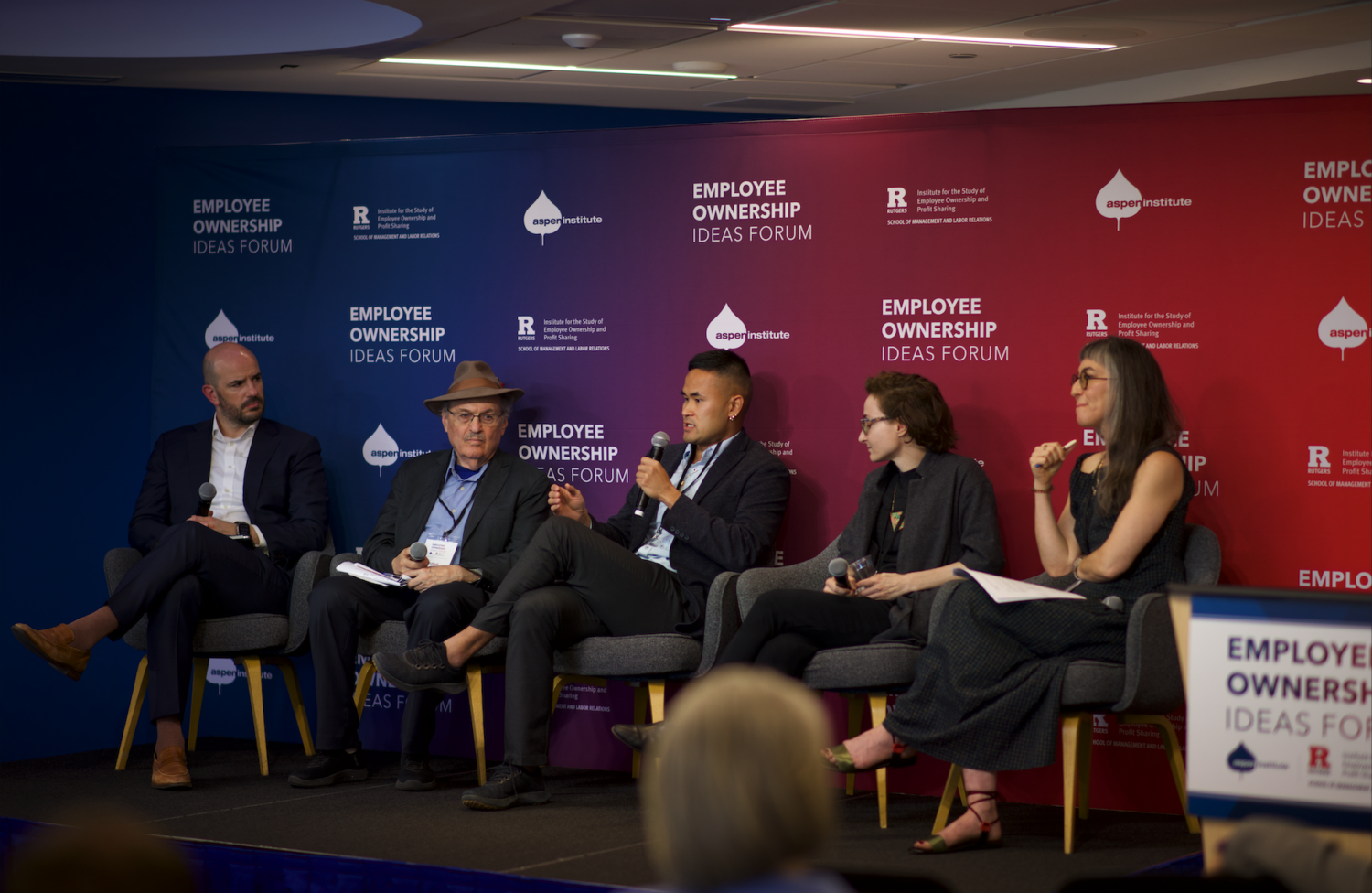
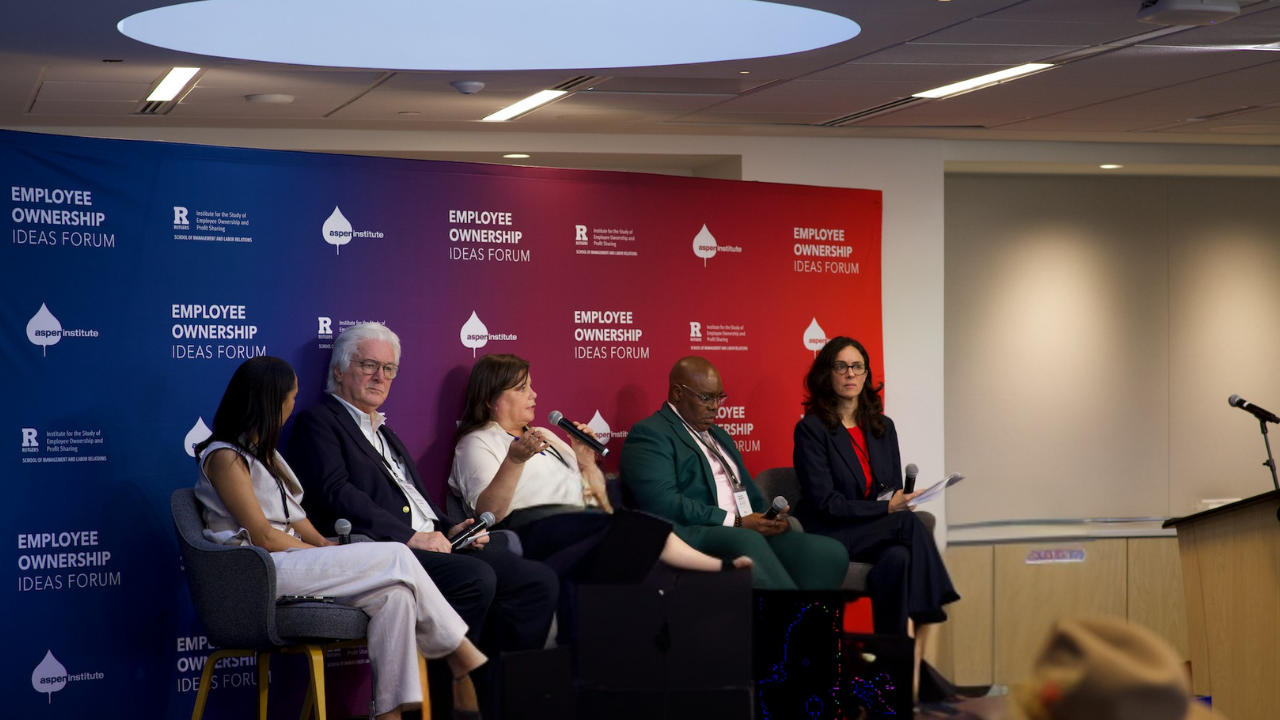
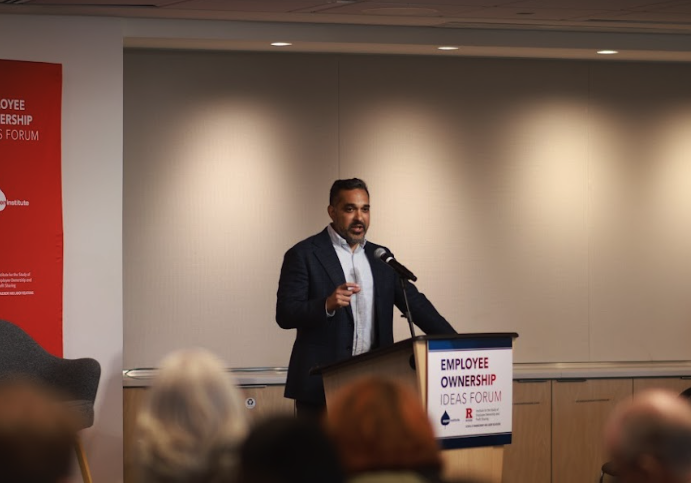
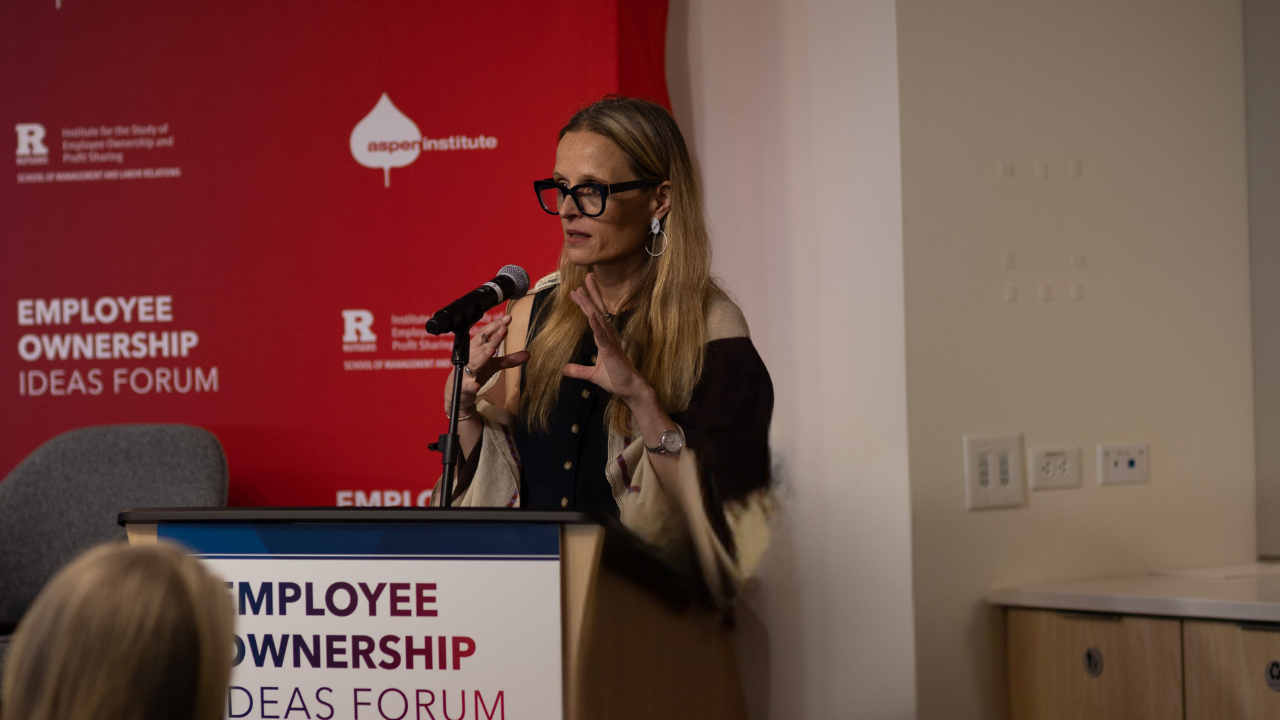
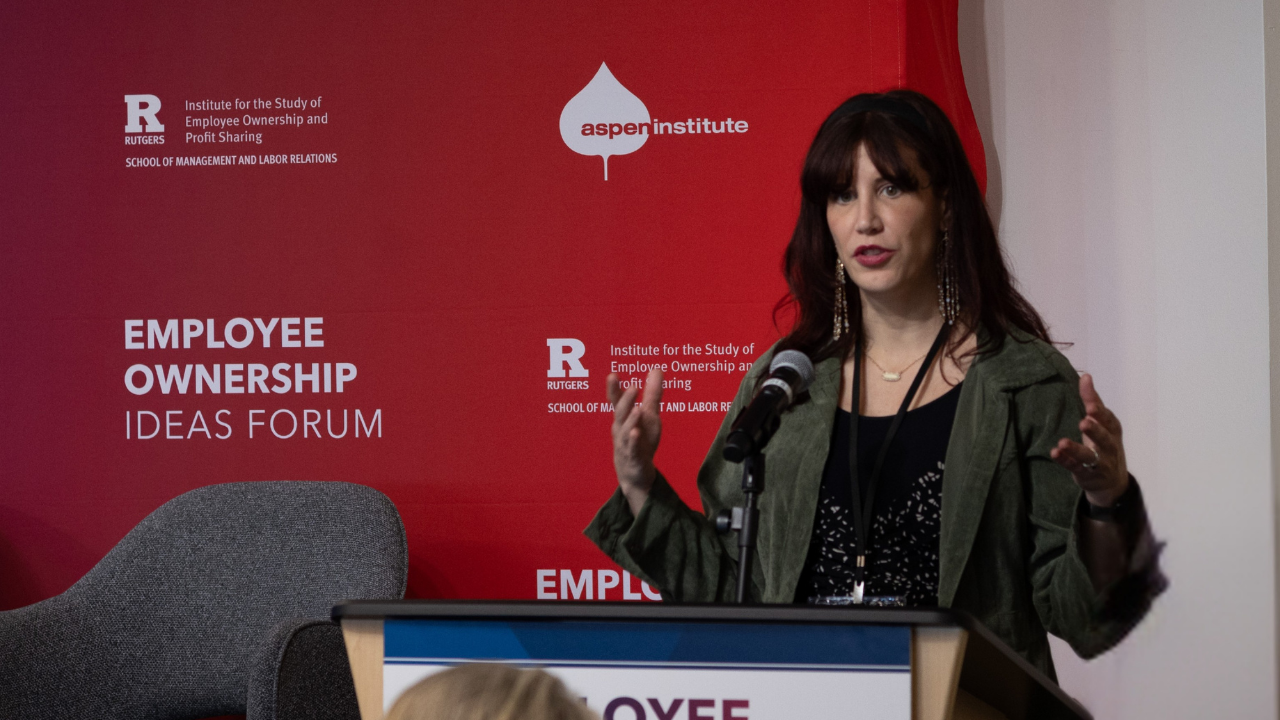
In this video, Margot Brandenburg — senior program officer for mission investments at The Ford Foundation — speaks at the 2026 Employee Ownership Ideas Forum, which took place on June 2-3, 2026, in Washington DC and online.
For more videos from the Forum, visit our event page or subscribe to our YouTube channel.
And subscribe to our podcast to listen on the go.
Resources
[00:00:05] Maureen Conway: It is now my great pleasure to get to introduce our next speaker, who often has also powerful ideas. Our next speaker has spent her career exploring how capital can be used not just to generate financial returns, but also to expand opportunity and create positive social impact.
Over the past two decades, Margot Brandenburg has worked at the intersection of philanthropy, finance, entrepreneurship, and social justice. Today, she’s a Senior Program Officer on the Ford Foundation’s Mission Investment team, where she focuses on strengthening the infrastructure of the impact investing market and helping to shape a financial system that works for more people.
Before joining Ford, Margot founded and led My Strong Home, a benefit corporation or B-Corp that helped homeowners across the Southeast and Gulf Coast invest in resilience and recovery. She also helped design and lead the Rockefeller’s Impact Investing Initiative and co-authored the book on Impact Investing, The Power of Impact Investing, with former Rockefeller Foundation President Judith Rodin.
Throughout her career, from international microfinance to community development investing to impact investing, Margot has brought both a practitioner’s perspective and a deep commitment to economic opportunity and inclusion. For those of us working to advance employee ownership, Margot has also been an invaluable thought partner, trusted advisor, and champion. Yes, “Been.”
[chuckles]
She’s looking doubtfully at me, but she truly has helped many of us think more deeply about how ownership can create wealth, strengthen businesses, and build a more inclusive economy. Her support and leadership have helped build momentum for this field and for many of the efforts represented in this room today. We are delighted to have her with us. Please join me in welcoming Margot Brandenburg.
[applause]
[00:02:15] Margot Brandenburg: That was an embarrassingly generous but very kind introduction, Maureen. Thank you. Ford has been pleased to sponsor this forum for a couple of years now. Every year, I see this really palpable increase in energy and activity, but this year, maybe for the first time, I see what Lauren, you described yesterday, as the essence of a beloved community, and Sarah, I think you talked about it as a crew. Felipe, you were calling us to be inspired by sisters that have made leaps of faith that most of us won’t have to, and just to say, it feels really exciting to be part of something that’s larger than ourselves.
For my little part of this crew, I sit at a team at the Ford Foundation that we call Mission Investments. It’s a little unusual for philanthropy in that we make actual debt and equity investments, as well as grants, to advance our social justice mission of a strong and healthy democracy and an equitable society. As you might imagine, there are any number of reasons why employee ownership connects to that mission, but I’ll name three, and the last one, I think, is a good segue into our next conversation.
First, and as we were just talking about, Ford has a really large program focused on worker rights. We know the importance of a living wage and of family-sustaining benefits and mobility, but obviously, ownership layers in critical wealth-building and worker-voice components. Picking up on Gwyneth’s framing yesterday at the close, I notice how much and how often we in this room talk about workers, and I also wonder why this room doesn’t have more overlap with unions, with worker centers.
Why are our fields so united in cause but siloed in conferences and in conversations? To be candid, I had to work hard at Ford to get my colleagues in our Future of Work(ers) program to center ownership as they’re thinking about workers and what workers are demanding, and I think that’s probably a microcosm for a bit of a disjunct or a missing link that we could all probably work harder to close. Second, we at Ford care a great deal about democracy. We talk a lot in these communities about workplace democracy, which is great, but at Ford right now, we’re talking a lot about the big ‘D’ democracy, like our democratic institutions in this country and the rule of law.
We know there are spillover effects from ownership, right? I think there’s research from Dowie that documents that people who work for worker-owned companies or co-ops are more likely to be civically engaged. We know that homeowners are more likely to vote than renters, and at a meta level, we know that economic inequality results in backsliding, even in mature democracies, like we can’t feed our children their democratic rights for dinner.
We who care deeply and passionately about the health and strength of our democracy, I think, need to care about ownership and about the outcomes that our economy distributes. Then, finally, as I mentioned, we at Ford, we make investments. We try to mobilize our corpus in service of our mission, but we also need these investments to generate the income and returns that we need to make grants. That is our core purpose in the world. Important research was published by a group of leading academics, including some luminaries in this room, Doug Cruz, Richard Freeman, and others, that examined data from tens of thousands of manufacturing companies.
It confirmed what I think most of us know anecdotally, that ESOP adoption increases labor productivity at the workplace by somewhere between 5% to 7%, even while controlling for a number of other firm characteristics. Academics in the room, please jump in and correct me and edit. I know I’m probably massacring what is much more nuanced data, but that 5% to 7% is a material alpha, if you will, as an investor, and so, wearing not just our mission hat, but our investment hat, this is an incredibly attractive proposition.
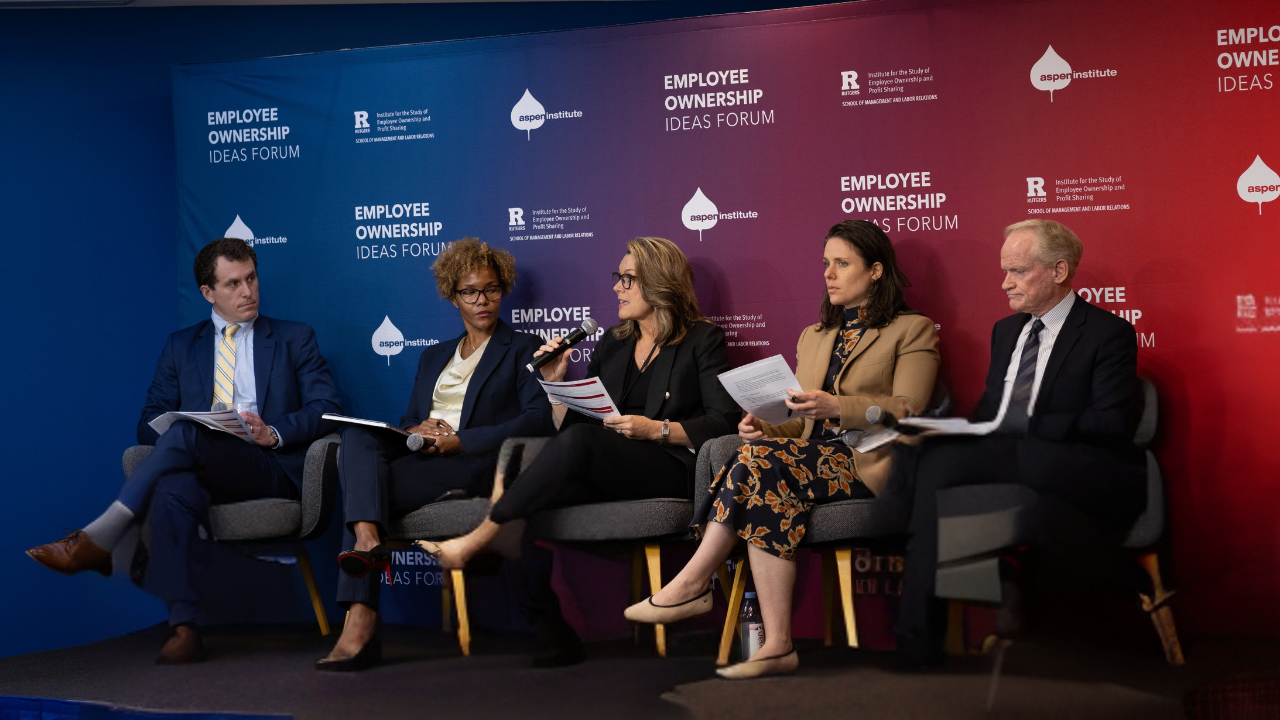
We heard yesterday really inspiring stories from workers and companies who are reaping the benefits of employee ownership, both culture benefits, productivity benefits, all the benefits, but a large asset owner like Ford generally doesn’t invest directly into companies. We’re too big. We have too much capital to deploy. We depend on a universe of fund managers and intermediaries to take our capital and to invest it into companies, which is why I’m so excited about the next panel, about moving institutional capital into employee ownership, because that ecosystem and that piping is really the conduits that are going to allow Ford, Catholic pension funds, and all the rest of our capital be part of the solution.
We are in for a treat. There are some brilliant thinkers and doers who I feel lucky to call co-conspirators, and I can’t wait to hear what they have to say. We couldn’t be in better hands than with Jack Moriarty, who is somewhere, hopefully near the stage. There he is. Jack, please come up. Without further ado, we are in your capable hands.
[applause]
About the Employee Ownership Ideas Forum
The Employee Ownership Ideas Forum brings together leading policymakers, practitioners, experts, and the media for a robust discussion on how we can grow employee ownership for the shared benefit of American workers and businesses. It is hosted by the Aspen Institute Economic Opportunities Program and Rutgers Institute for the Study of Employee Ownership and Profit Sharing.
About the Rutgers Institute for the Study of Employee Ownership and Profit Sharing
The purpose of the Institute for the Study of Employee Ownership and Profit Sharing is to study the various models that have emerged and will emerge of employee ownership shares and profit shares in the corporation and society of the United States and around the world.
About the Economic Opportunities Program
The Aspen Institute Economic Opportunities Program advances strategies, policies, and ideas to help low- and moderate-income people thrive in a changing economy.
Join Our Mailing List
To receive occasional emails about our work — including new publications, commentary, events, fellowships, and more — join our mailing list.
Connect on Social Media
For news and updates every day, connect with us on the social media platform of your choice.