Moving Institutional Capital into Employee Ownership
Description
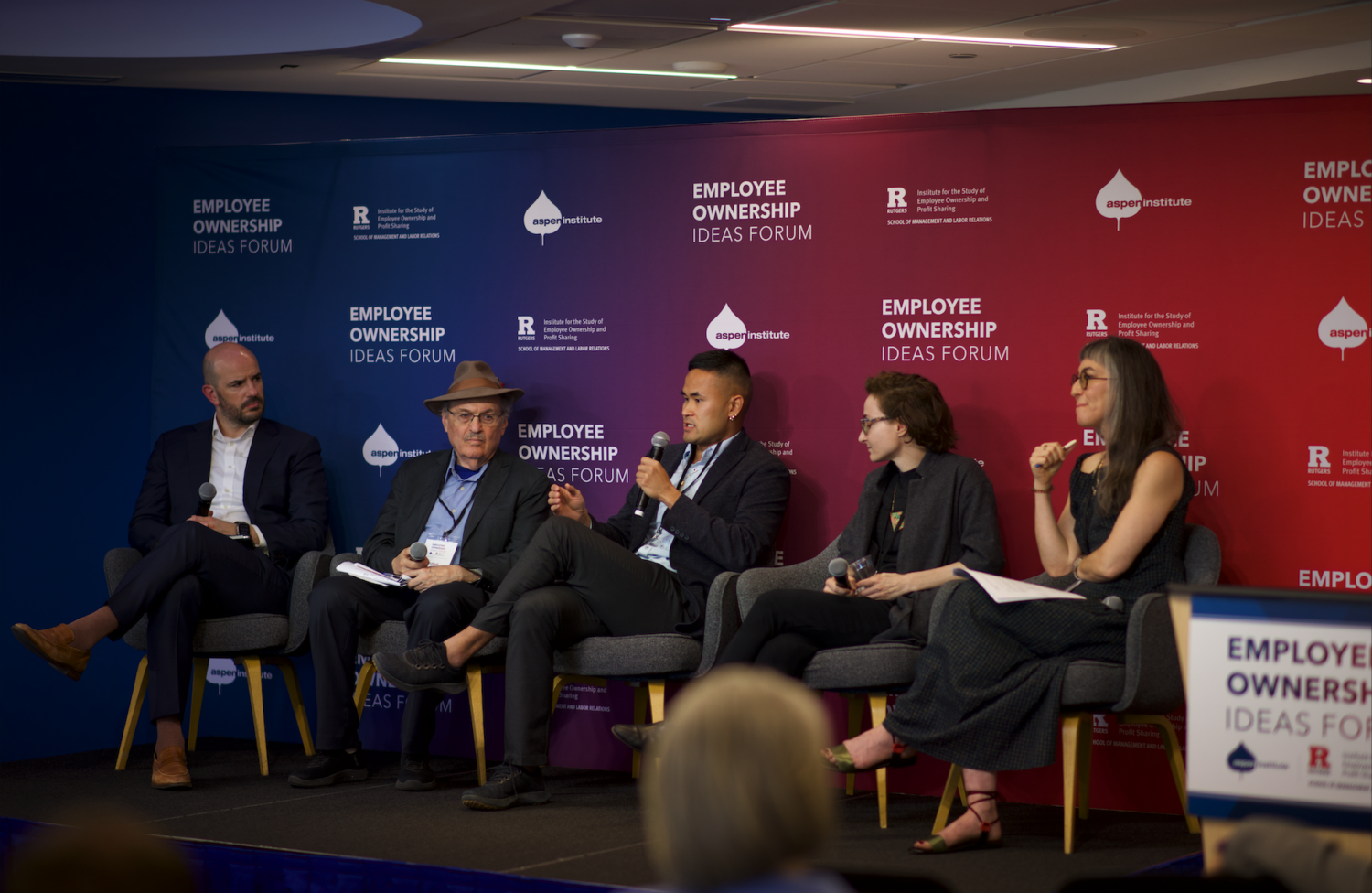
Employee ownership has a compelling track record, but the model has yet to attract capital at the scale required to address the silver tsunami. That is beginning to change. This panel brings together investors and intermediaries from across the institutional landscape to explore what it would take to make employee ownership a mainstream investment strategy — and what a future looks like in which financial institutions are active partners in expanding ownership across the American economy.
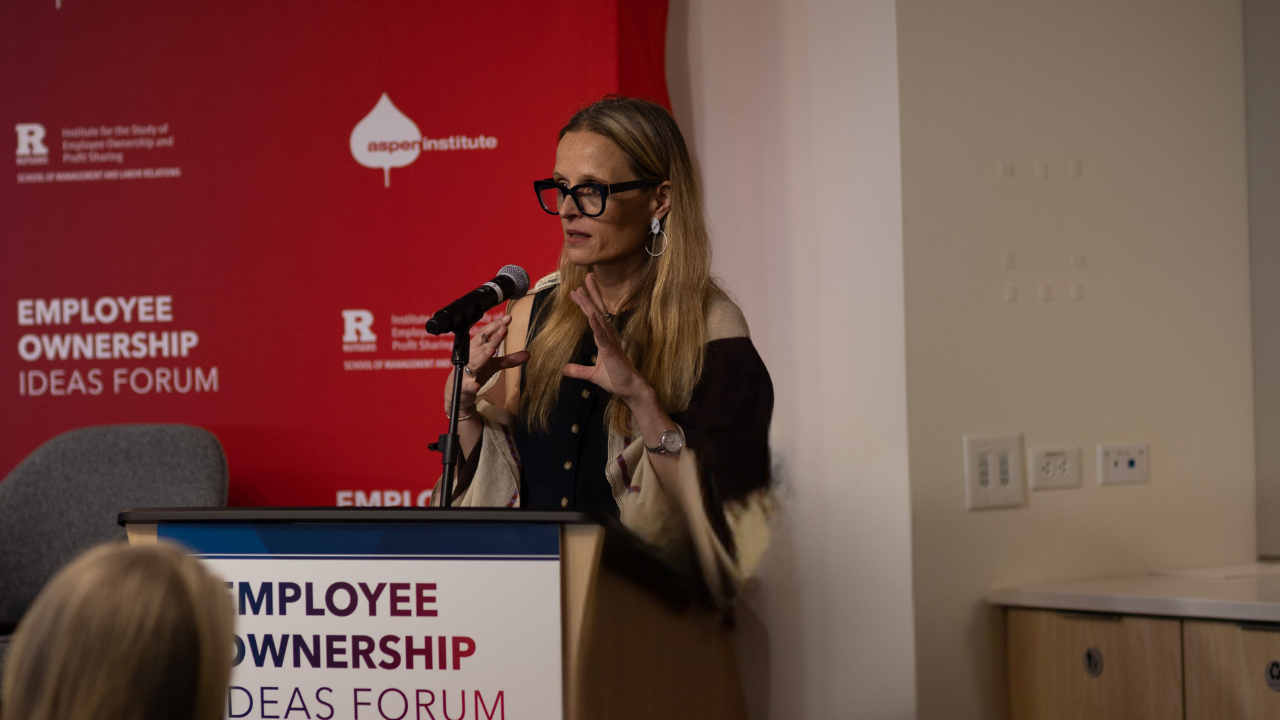
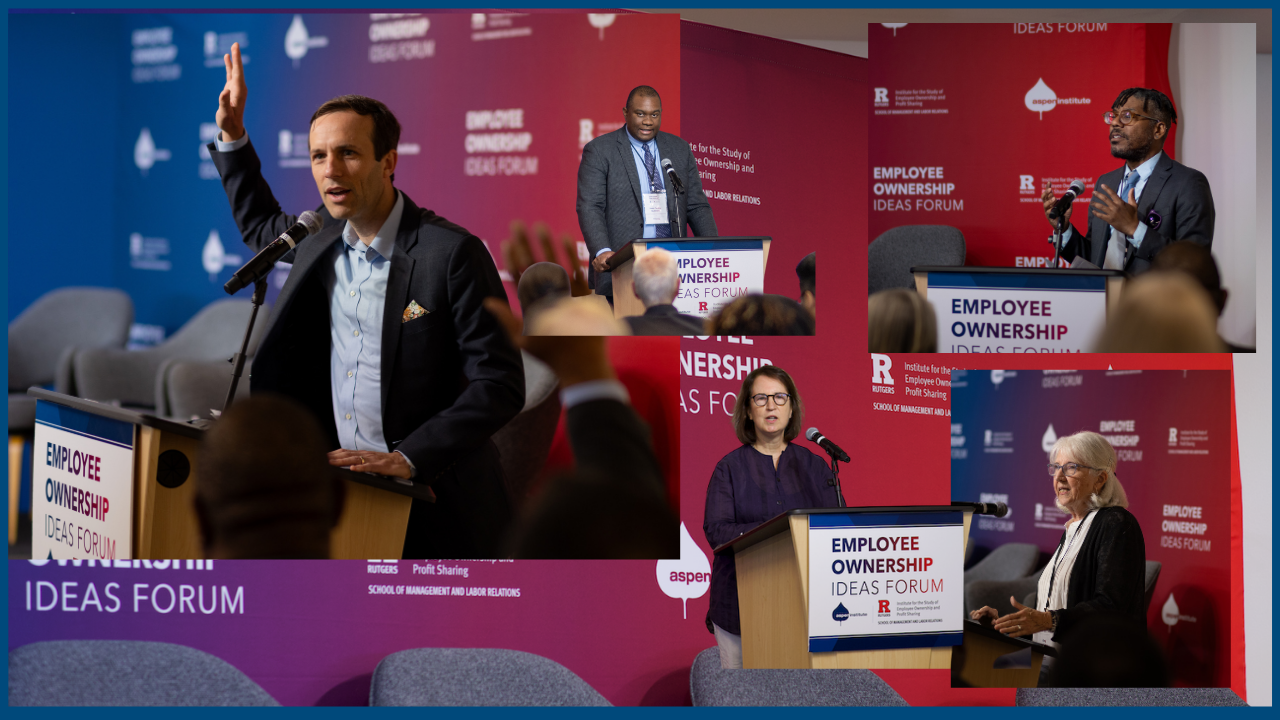
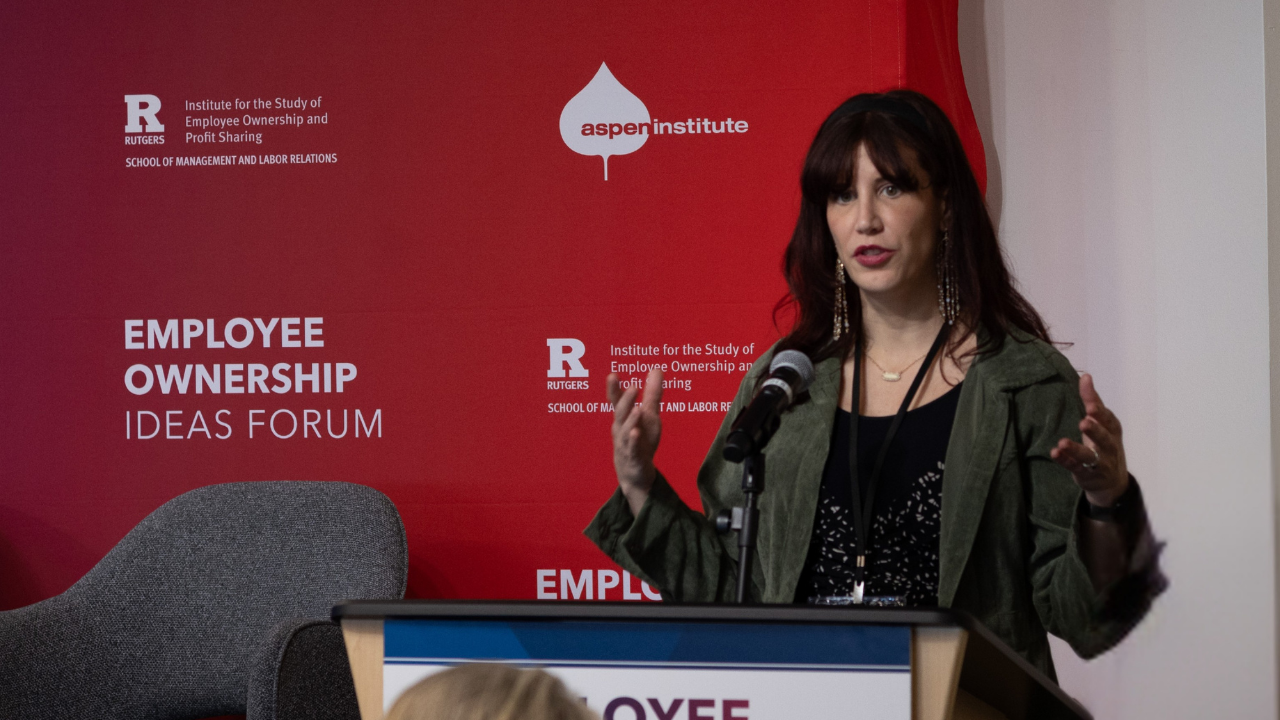
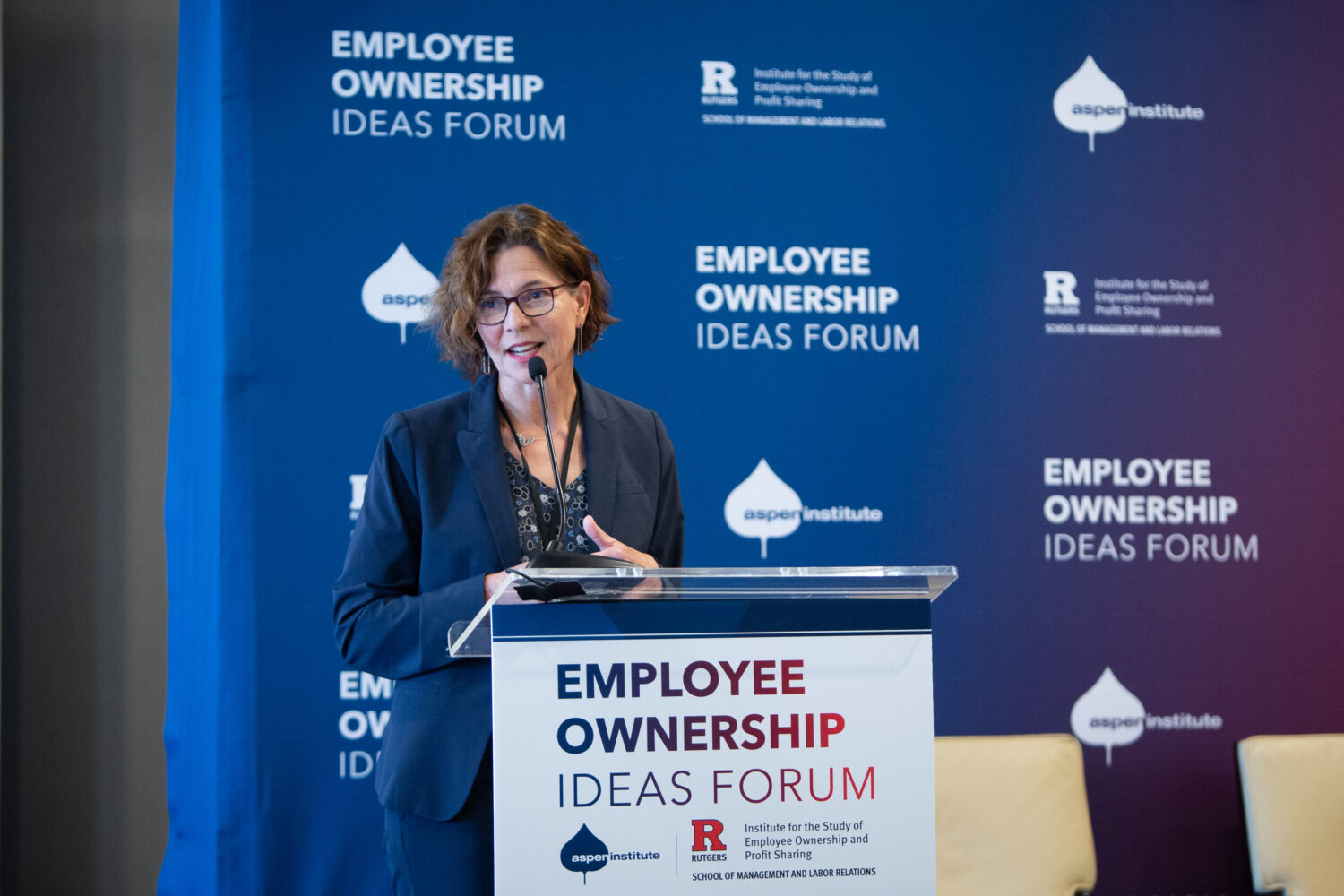
This video comes from the 2026 Employee Ownership Ideas Forum, which took place on June 2-3, 2026, in Washington DC and online.
For more videos from the Forum, visit our event page or subscribe to our YouTube channel.
And subscribe to our podcast to listen on the go.
Speakers
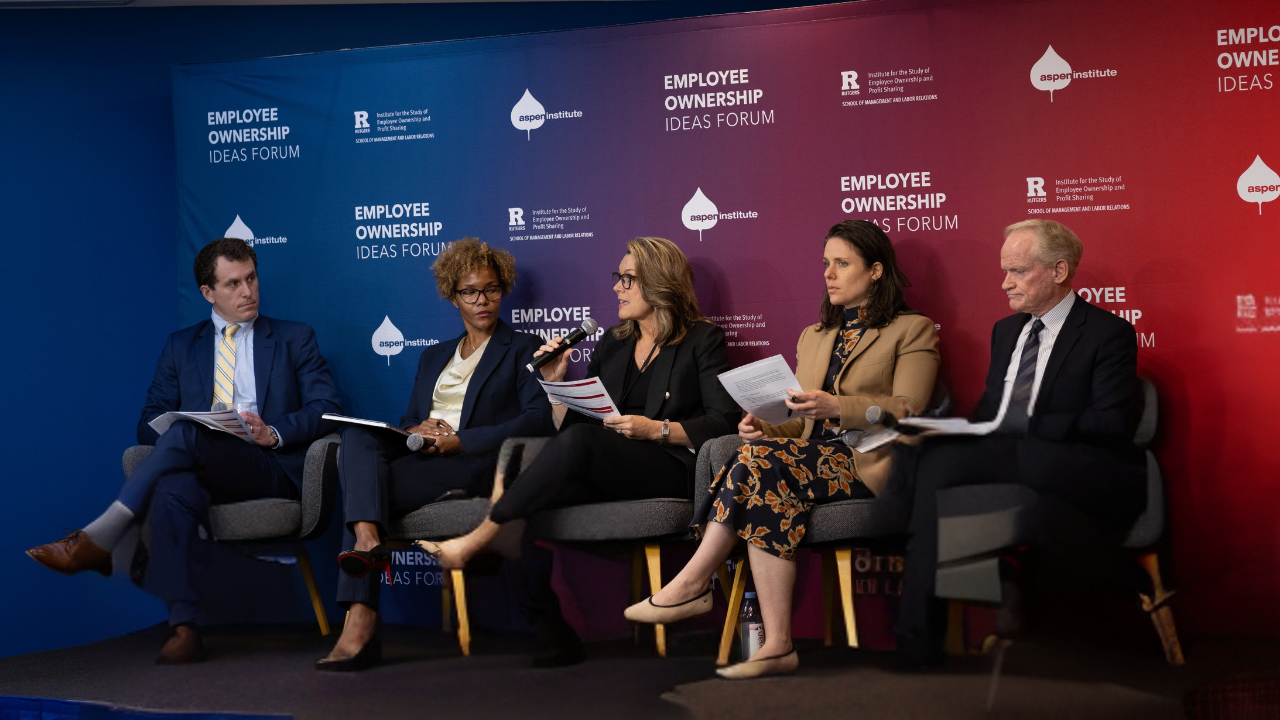
- Regina Carls, Managing Director and Head of ESOP Advisory, JPMorganChase
- Jim Sorenson, Founder and CEO, Sorenson Impact Foundation
- Chavon Sutton, Managing Director, Sustainable and Impact Investing, Cambridge Associates, LLC
- Emily Thomas, Executive Director and the Head of Investing with Impact, Morgan Stanley Wealth Management
- Moderator: Jack Moriarty, Executive Director, Lafayette Square Institute
Resources
- Article: ESOP planning: our checklist to save you time
- Website: Cambridge Associates
- Website: Morgan Stanley — Institute for Sustainable Investing
- Website: Sorensen Impact Foundation
[silence]
[00:00:05] Jack Moriarty: This panel, as Margot very graciously alluded to, is focused on what comes next for the growth of employee ownership, and in particular, how do we mobilize institutional private capital to take us to the next phase of growth in this market? I am absolutely delighted to have an absolute all-star panel of principals and folks that are really sitting at very important vantage points in the capital markets and have unique perspectives to share with us about what comes next, and both challenges and opportunities for employee ownership.
With that, I will start all the way from Jim and come closer to me. First, we have Jim Sorenson, who’s the founder and CEO of the Sorenson Impact Foundation. Emily Thomas, the Executive Director and Head of Investing with Impact at Morgan Stanley Wealth Management. Chavon Sutton, who is Managing Director of Sustainable Impact Investing at Cambridge Associates. Regina Carls, I went out of order, who’s Managing Director and Head of ESOP Advisory. [laughs] Peripheral vision only, so good. At JPMorgan Chase.
With that, Regina, I’d love to start with you. I think we heard, certainly yesterday, access to capital is a big challenge. We heard from some of our manufacturers during our panel conversation. As somebody that’s been active in this market, wearing a lender hat for a long time, if you could just share with us a bit of a bird’s-eye view, what’s the state of the market right now? I know you’re focused in particular on ESOP transactions. I imagine some of these insights will apply more broadly as well. What’s the state of the market?
[00:01:44] Regina Carls: Great. Thanks for having us. I would say that the markets are very strong, as you’ve heard. That we’re coming off of some very active markets, and the highest S&P market in a number of years. As it relates to ESOPs specifically, we’re seeing, really, growth in ESOP awareness year over year, because we’re continuing to see new entrants come into the space, which is terrific. It’s really shifting the narrative for ESOPs, which were once being known as the least understood corporate finance tool, as now being one of many of the strategic solutions available to business owners.
This is being done because these advisors are now able to position the ESOP, speak to the narrative of the ESOP, dispel, I think, what we’ve talked about yesterday. There’s a lot of misinformation, a lot of myths out in the marketplace regarding ESOP structures, and that’s important. I think there’s a number of factors contributing to this increased awareness in our space. Historically, I’ll speak to a few of them, one of them being size of these transactions. Historically, I think they were viewed as really the buyer of last resort, that these are small transactions, small middle-market transactions, that would sell to an ESOP when they couldn’t sell to a strategic or private equity.
I think we talked this morning a little bit in a session about the BDO transaction that took place in 2023, where the company sold 42% stake for $1.3 billion. That was pretty noteworthy for a number of reasons. One, obviously, the size and scale of the transaction. Clearly, they were looking to this as not only a liquidity event for the owners, but also a retention tool for their employees, but also because, and no offense to any of the accountants in the room.
Historically, accountants have not been the ones promoting the ESOP structure by reason of, I think, what’s simply known in the marketplace as it’s not, back to the least understood corp finance tool, not as many accountants were familiar with it if they hadn’t worked with any ESOP company. The BDO transaction really transitioned this as, not only are they having accountants who are now positioning the ESOP as opposed to selling away from the ESOP as a potential solution, but you’re also seeing accounting firms who are now looking to follow BDO’s lead and really convert to an ESOP-owned entity themselves. It’s created this nice flywheel effect.
Second is capital. There is a ton of capital in the marketplace that’s looking to be deployed. Increasingly, you’re seeing private equity firms and family offices, as well as private credit, coming to the table, beginning to invest in this space, which is terrific. I think we need to normalize that form of investment. The industries, while ESOPs have been available to all industries, we tend to see a concentration of ESOPs in firms like architectural and engineering contractors. Now, as I just mentioned, the accounting firms are coming to the forefront. We’re seeing law firms. We’re seeing healthcare companies. We’re seeing real estate development companies.
It’s really normalizing the structure for any and all industries to pursue ownership transition and liquidity for their employees. I think some other positive impacts have been the media. We’ve talked about expanding ESOPs, positioning stories out in the market that highlights the success of these companies, as well as what we’ve seen with Rutgers and the performance metrics they’ve put out there, which I think is very important and has been needed to show that above and beyond giving ownership and getting full value for your business, you’re also seeing productivity gains in your company.
Finally, near and dear to our heart is the national enforcement project that DOL had that targeted ESOPs for 20 years has announced that they are removing them from that project, which really has helped open the door for people considering investment in this space, as well as taking away the risk that there’s potential litigation.
[00:05:23] Jack: Thank you, Regina. I think that’s an important grounding of where we are in the market today. I want to go over to Jim next. Jim, you’ve been active for several years now in our field, and certainly have a robust background in your own right as an impact investor, as somebody that’s also leveraged public policy to mobilize impact with your work with Opportunity Zones. I’d love for you to share with the audience what brought you into this thesis. How has your thinking evolved as an investor that’s deploying capital, but also using policy and other tools in your toolkit to advance the field? How do you think about employee ownership as an investment thesis?
[00:06:01] Jim Sorenson: Yes, thank you. Great to be here. What a wonderful conference. Really enjoyed the speakers and other presentations today. My life really is that of a serial entrepreneur. I’ve been able to be involved in many businesses and had a really remarkable experience in one of them that led me to the field of impact investing. As I’ve looked at, really, the many challenges that are faced in the world today that can be addressed through impact investing, this area of ownership touches so many outcomes. I have been increasingly interested in the broader context of ownership.
I define that in three major areas. Owning the home that you live in, owning a piece of the business that you work for, and owning appreciating assets that grow in the marketplace. Seeing that this is really an important aspect of the work that I’m doing in impact investing, I very much wanted to focus on helping to create an ecosystem to facilitate these three areas of ownership. I’ve been working on that over the last few years. Great to work with you, Jack.
Essentially, just about every organization in this room that is funding the research, building the case studies, creating awareness, building the intermediaries that are needed for the on-ramps to ownership, and also participating with investments that have had great results in terms of financial returns, but tremendous impact on the workers. I think we may have been the first institutional investor in Apis & Heritage. We’ve invested in funds that focus on ownership, and have had, really, some great examples in those companies of not only financial returns, but great outcomes for owners that were made as a result of the investments.
[00:09:11] Jack: Thanks, Jim. You mentioned, I think, importantly, the concept of a robust ecosystem, and for private financing in particular, I think we’ve had lenders like Regina and JPMorgan that have been active for a long time in the market. Jim coming in, being a catalytic investor in a fund like A&H, and we heard from Phil Reeves yesterday and their exciting work. As we’re leveling up as a field, I think we’ve reached a new threshold, which is some of the institutional investment consultancies and wealth management platforms that are real gatekeepers, as many of us know, in terms of accessing large-scale institutional checks that can actually move markets, move private fundraising, and really take the strategy to the next level.
I want to go to Chavon. You had an article that was quoted that caught my eye. It’s at PEI, I believe, and it said that employee ownership is the next frontier of private markets, which I was at standing ovation when I read it. It’s important, but we need to move it beyond a niche strategy, which, of course, it is, and we do. I would love you to share more about your thinking behind that statement.
[00:10:21] Chavon Sutton: My mouth is going to get me in trouble one of these days.
[00:10:23] Jack: That’s why you’re here.
[00:10:25] Chavon: Yes. It’s a pleasure. I have to echo Jim’s sentiment. This has been a really cool event. It’s my first year, so I’m really excited to be a part of this ecosystem now. Just for context, Cambridge Associates is a global investment advisory firm, and we serve endowments and foundations, pensions, and private clients around the world. We have about $600 billion in assets under advisory. I sit at a unique position where I am an investor on our manager research team, but also have influence over client portfolio allocation decisions. That gives me a strong view of both the supply side from a fund manager standpoint and demand.
I did put on record that this is the next frontier, so everybody in this room has a job to not make me look crazy 5, 10 years from now. We move from niche to mainstream, I think, when we move beyond the values-based conversation into one where we’re talking about a really financeable transition market. We have seen the scale. We know all the numbers. We know about the 3 million founder-owned companies that exist. We know the $10 trillion in assets currently covered. We know the growing demographic of aging Americans who own these businesses. We also know that it is a highly under-penetrated market.
Anywhere else in investing, we love that type of dislocation. That’s why this opportunity is so exciting for investors. That said, what needs to happen to move beyond niche is pretty practical but very, very hard. From my view, we obviously need better capital stack design and policy, but more education of these clients I serve, more institutional quality fund managers, and more consistency around how allocators actually evaluate these opportunities. The ways that Cambridge Associates and my team and I are adding value and wading through the noise for our clients is through that education.
I’ve spent the better part of two years helping to frame employee ownership within the context of economic and financial inclusion. I bucket those things in three ways. Poverty alleviation strategies, which are different. Capital access strategies, which are different, and pure wealth generation categories, which EO falls distinctly within, and landscaping those managers to give clients a better sense of where are you investing and how can we help you achieve your goals. The second way we’re adding value is around discipline and due diligence. We are well known for this, and the managers that we work with know this.
It’s critical not just because that’s what I do full-time, but in a market this nascent, we have to look at these managers with the same rigor as any other manager. I’m very clear-eyed about the managers I personally support through my work, because a sexy story can really outrun the actual infrastructure in place and get us in a lot of trouble. Because I believe in this theme so much, I think we need to do it right. If we get the due diligence wrong, we get the support wrong. We end up at square one. The last thing we’re doing to add value is really placing these strategies within the context of portfolios.
We customize our portfolios for clients, so we have a lot of flexibility around how we can allocate to these investment strategies, but clients still need that clarity and context around where are you actually investing? Is it private credit? Is it private equity? Are we doing something else grant-oriented? That helps to frame risk-return profiles so that we can adequately find a home for the managers. In short, I would say moving from niche to mainstream, we have to understand the opportunity set, understand the manager universe, and then know how to underwrite it, and then put our money to work.
[00:14:21] Jack: Easy as that.
[laughter]
[00:14:23] Chavon: Very hard, but practical.
[00:14:25] Jack: Absolutely. I appreciate the pragmatism and the clear path forward. Emily, I want to go over to you because, like Chavon, you’re also sitting alongside of asset allocators that have recently taken an interest in this market. We heard from Chavon how she and her team have come into this market. I’d love for you to share the same. What was the motivation? Was it from the client’s side? I know you’ve talked about the K-shaped economy as part of the social value proposition, but where are your clients on this, and how have you approached this opportunity?
[00:14:59] Emily Thomas: Yes. Thanks, Jack. I’ll echo Jim and Chavon, and others. This is my first Aspen Ideas Employee Ownership event, and very excited to be here. It’s been just really incredible meeting so many of you out there. I’m actually going to start with a story. Yesterday, for those of you who were there, apologies for repeating, but Phil Reeves shared a story about– He works at Apis & Heritage, and somebody reaching out to their inbox saying, “Oh, I’m interested in employee ownership.” He’d been thinking about it for 10 years, but he hadn’t acted on it. He didn’t know what to do.
I think one of the other things that Phil shared was this idea that we need policy. We talked a lot about that yesterday because we have this– This is a bespoke, really high-touch complex, and I know, Regina, you touched on that a bit, structure right now. How do you scale that? Yes, we definitely need policy, and all of the work being done there needs to continue. I think we’ve also touched on the fact that we need more founders to know that employee ownership exists. We need them to know who to go to to help think about structuring employee ownership, and then we need them to see this as a real opportunity.
Beyond that, we need capital. We need people to be able to come in and support the funds, support the investments that are then helping these funds or companies transition to be employee-owned. That’s where my role comes in. To your question, Jack, yes, the work that I’m doing is driven 100% by client demand, but those are just the clients that know this exists. As I think about– Who am I? I lead the Investing with Impact platform at Morgan Stanley, so I sit within our wealth management division. I work with thousands of financial advisors, and even more clients. I help them, at the end of the day, think about aligning their portfolios to their values.
As I think about the role that Morgan Stanley plays, it is scale, it is democratization. Nothing is successful at Morgan Stanley if they can’t scale, but that’s a really important place to play as we think about employee ownership growing and continuing to expand. The good news, Investing with Impact broadly is scaled already at Morgan Stanley. We have over 100 billion in assets. We saw our strongest growth on the platform last year. Despite what you may read in headlines, we’re continuing to see strong demand. It is driven by clients. It’s driven by the demand that we see clients.
However, they’re not coming and saying, “I want an ESG strategy.” In fact, if I go into a client meeting, I’ve lost them if I say that 99% of the time. They’re looking for outcomes. They’re looking for solutions to some of the world’s biggest problems. I think you touched on, Jack, the K economy. We clearly see the haves and the have-nots. Everyone can see that. That is increasingly an issue, not just from a microcosm or micro perspective of the social inequality that we see, but also from a macroeconomic perspective. It’s not good for our economy.
I’ll bring that to life through a story. I was actually back in DC. I live in New York, but I was back in DC last week, going to a Bruce Springsteen concert with my dad. I stopped by our Morgan Stanley offices while I was here. I sat down with an advisor who is what we call our impact director. He is one of the biggest proponents of investing with impact, has lots of clients focused on it. He’s a managing director, pretty senior, been in the business for decades. His son has started this really cool company that’s creating more efficient trucks or something for the military that are more climate-friendly. This is an area he cares about a lot.
I said, “Steve, would your clients be interested in more private market impact strategies? It’s something we’re doing more of. How can I get you and your clients to invest more?” He said, “Emily, you’ve got to tell me the story. Why is this good for business? Why is this going to help with performance? That’s what my clients care about.” I started telling him about employee ownership. I started talking to him about the silver tsunami. This is a big opportunity as we think about companies transitioning, the impact that he had. He said, “Emily, that’s an amazing story. I had no idea.”
I think one of the things, and I’ve heard this repeated a couple of times throughout the sessions, but it’s telling the story. People need to know it exists. Hopefully, the fact that clients at Morgan Stanley are asking about it, but then we’re able to use that to use our megaphone in a way to continue to get the word out and share more information about employee ownership, is positive. I also think that’s all of our jobs. I’m inspired. I will be even more so at the end of today to go back and continue to tell the story, but I think we can all continue to do that more.
[00:20:30] Jack: Let’s go a level deeper on performance because I think that is how we get from where we are to where we need to go. Regina, picking up on where Emily left off, and even Chavon’s recommendation, that we need to, at some point, move beyond a values-based conversation and make the financial case on the merits. As we’ve gotten to know each other over the years, you’ve been eloquent about how you’ve been able to build support internally because of the quality of your book relative to defaults. There’s been good research from NCEO on this as well, but from a lender’s standpoint, if you could speak to performance and the underwriting benefits of ESOPs and broad-based ownership more broadly?
[00:21:09] Regina: Sure. Thanks for the credit given. We are actually going to put together some more information on default rate studies, but I was really excited when I was asked by the NCEO a number of years ago to contribute some of our portfolio statistics to the NCEO to determine how do ESOP companies perform relative to their non-ESOP peers. We could tell it within our portfolio. We work with these companies every day. We saw how they operated through different cycles, but to actually be able to contribute and pull the information together and then have other banks do the same was really rewarding.
I think, internally, it shocked our committees, especially our credit committees, as it relates to how do ESOP companies perform relative to their non-ESOP peers during cycles, and where the traditional corporate investment portfolio may see a default rate of 7% and 10%, in ESOP portfolios, we’re well under 2%. I will tell you that as banks risk-rate their portfolios, we have continued with that strategy, watching that portfolio statistic year over year, and it’s only improved. The argument we’ve been making to our credit partners is that we need to be leaning in more to these transactions. We need to be taking more risks. We are in the business of risk.
When you have an almost non-existent default rate, it tells you there’s something different in how those businesses operate. Truthfully, we’ve seen that through cycles where companies have needed additional capital to be put in, where I think the attitude has historically been if you’ve got a sponsor backing the company, you’ve got deep pockets that can put additional capital in. With an ESOP, you don’t have that.
The reality is, we’ve seen during cycles that we do have seller financing that has put money back in the company because they believe in the continued existence of the ESOP. They’d rather reduce hours as opposed to laying off workers, but they’ve also seen the performance of these companies over many cycles compared to their peers. I think that’s been a big differentiator.
[00:23:07] Jack: Maybe we’ll stick with you for a moment, Regina. Notwithstanding these performance benefits, these certainly underwriting benefits, there are still, naturally, challenges for this market, and let’s be honest about that. Where are the headwinds?
[00:23:24] Regina: As far as institutional investing in the space, yes. I think you definitely have seen that capital is the constant theme that’s thrown out there is that we don’t have enough capital in the space to compete with strategic and private equity. I think the reality is one of the situations that’s played into this is the passage of the S-corp legislation back in the late ’90s, where companies converted to 100% S-corp structure, which is the most prevalent structure we see today.
In that structure, to get to a 100% tax exempt, sellers have been willing to step into the capital structure and take a deeply subordinated note with warrants, which is playing into that mezzanine equity layer in the capital structure that historically third parties would play. We definitely have seen private equity come in. They’ve done it through the use of this drop-down LLC structure. What that’s done, though, is it’s created a tax leakage, and so it’s not as tax efficient as the 100% structure.
While we do see capital willing to come in and play, it sometimes is at the direction of the selling shareholder who has realized that I’m willing to take back a note deeply subordinated from a company I understand, and I’m able to get an investment return similar to the market, I’m willing to step into that layered capital, so it hasn’t driven the need as much historically.
[00:24:43] Jack: Regina, you mentioned that the very existence of S-corp ESOPs was an essential, and this is, of course, exactly right. An essential milestone that has allowed us to build the market as it exists today. Jim, as I mentioned earlier in the conversation, you’ve, I think, from early on, taken an approach as an investor to not just use the investment portion of your toolkit, but to also use policy to create the market incentives that we need to deliver the kind of value, in this case, to workers and families. I’d be curious how you approach policy.
I know we’ve worked together on legislation like the American Ownership and Resilience Act, and we can chat about that, but as somebody that has been experienced with policy sitting alongside the deployment of institutional capital, I would love to dial into how you think about those tools working collaboratively.
[00:25:33] Jim: Yes. I think it’s certainly an important part of the playbook policy. We’ve been involved really in the grant-making and deployment of capital, and then in supporting policy that we think creates the right on-ramp incentives for capital to be able to– and these structures to be able to be employed. Jack, the American Ownership and Resilience Act certainly is one that comes to mind. You’re very much involved in that. Ultimately, the goal of that is to create, really, a zero-cost subsidy to be able to deploy in through funds to help finance these ESOP structures.
I think a policy like that and other policies that focused on ownership, and I’m thinking of one that was recently enacted in an executive order, essentially, the Retirement Savings for All Americans Act, that was signed in as an executive order, created a retirement plan option for the 40% of American households that don’t have access to a managed 401K-type program and a government match of up to $1,000 a year for low-to-moderate income participants utilizes the federal Thrift Savings Plan.
I believe that these collaborations between thoughtful policy investors and often de-risked by grant-making, or grant-making really taking a very important role in supporting the research, the building of intermediaries, and the education that’s needed to be able to enable more ownership, all three of these are really important. We try to balance, so to speak, what we do and how we employ our time and efforts. I’ll be spending the rest of today with various meetings on the Hill with senators and congressmen on policies that promote ownership.
[00:28:28] Jack: It’s such an important reminder, Jim, that we’ve got our own robust field here, but we’re part of, I think, a larger ownership economy and asset ownership movement. That takes various forms, whether it’s employee ownership, whether it’s general retirement assets, home ownership, renter wealth strategies, we are part of a broader mosaic, if you will. I want to come back to a point Regina made earlier on the regulatory side. Before we do, maybe going back to Chavon and then you, Emily.
You’ve mentioned, Chavon, we need to have a clear sense of the opportunity set. We need to have institutional quality managers. We need rigorous underwriting that makes no compromises. If you could give us a report card. Where are we? You’ve been, a few years, taking a look at the market, kicking the tires, advising clients, deploying capital. What is this field doing well in terms of its market readiness for institutional scale? Where, if you could go a level deeper, is there a real need, and how can we be transparent about that?
[00:29:31] Chavon: Yes, absolutely. I whooped and hollered when the journalist got on the stage because I’m a trained journalist. I think of the field as doing well. Two really big things somewhat surrounding writing, research, and narratives. The established and continuation of research around this field and showing the effectiveness has been critical, especially to my work in due diligence. Anything we look at, especially with an impact lens, when it’s research-backed and research-supported by credible institutions like many of you in this room, it counts so much. The ecosystem has done a fabulous job of showing the improvement to retirement balances, the improvement to training and job security, and more stable communities.
That’s been credible to dispelling those longstanding critiques around employee ownership. The second is around narrative, really expanding the conversation beyond just the technical nature of what ESOPs in particular do, but ownership more broadly around many wealth-sharing models. That’s helpful from a narrative standpoint because people understand what owning a car is, or what owning a home is. If you can bridge that gap between what they know to this more nascent area, it lessens the hurdle there. I want to shout out Alison Lingane from Ownership Capital Lab. She’s done a fantastic job of raising awareness–
[applause]
Please, yes. She deserves it. Just raising the visibility around the funds in market. I wouldn’t be here without her partnership and just really understanding the nearly 30 specialized employee ownership firms that exist today. The hundreds of millions that are being raised are already committed. Then, also the PE-style broad equity sharing. They’re not doing 100% ownership, but they’re getting the word out. They’re bringing eyes and capital to this space. That said, there are still very real pain points. Whether they’re real or illusion of pain points, they still exist. We know that sellers want their money. There’s the illusion that ESOPs can’t get you there in the same way.
The transaction complexity is still a hurdle. Then the advisor and lender ecosystem is still maturing. Advisors need more incentives to sell the idea. The biggest issues from my seat in manager research and looking for funds is that there just aren’t enough funds out there to underwrite. Because these track records are so limited, it’s just a hard sell to scale. Numerous Fund 1s come through my door, and I’m talking to them about EOT strategies, ESOP transition strategies, and hybrid strategies. There’s a rare fund, too, and I’m looking at Apis & Heritage.
We still need to see performance from these managers. That’s a heavy burden to bear, but it is one that we need to see as institutional investors to have true buy-in. The last thing I would say from an allocator perspective is that category confusion that Jim Bonham talked about yesterday is very real, just from a strategy perspective, where there’s conflation around what the different strategies are meant to do, their risk-return profiles, et cetera. There’s danger there because that leads to mismanaged expectations and mismanaged outcomes.
Lastly, asset class confusion. There are questions around what’s private equity? Is it private capital? What do we do? These are challenges that need to be met head-on, because if we can’t figure out what’s what and be very clear on that, we misallocate from a portfolio perspective and can’t find a home for these managers. A lot being done quite well, but we need these proof points from scaled managers and portfolio exits for it to be sticky.
[00:33:37] Jack: On that last point, Delilah Rothenberg is here, and she’s made the point that employee ownership is not an asset class.
[00:33:45] Chavon: It is not.
[00:33:45] Jack: That is a diversified capital structure with different participants playing in different places. To your point, Chavon, that clarity is essential so that when we are talking to investors and others, we are not conflating concepts. We’re being very clear about what the value proposition is, what segment of the market we’re talking about. We had that conversation over breakfast this morning as well, and different strategies we’re going to play in different parts of the market. Emily, I want to go over to you. The same question. What’s the report card?
[00:34:11] Emily: Yes. The way we think about employee ownership, and I think just echoing the points that were just made, that it’s not one asset class. The framework we have at Morgan Stanley is– we like to call it our three eyes of impact. Intentionality, that intentional investment approach, looking to have that positive outcome. Influence how asset managers are engaging with companies in their portfolio, and inclusion, looking at bringing diverse perspectives to the table, which I think probably all of us in this room recognize, can lead to better performance.
Putting employee ownership within that framework. On the intentionality side, that’s looking at private credit funds that are helping to structure and give the credit and the dollars needed for companies to transition to be employee-owned. It’s also, to Chavon’s point, it’s the private equity funds that may have a portion of employee ownership that they’re doing through an employee ownership works type program. Influence how asset managers then are engaging and working with companies. I think the last speaker, or one of the earlier speakers this morning, echoed what was shared yesterday, this idea that there’s a need for both the capital, but also the culture at the company to make sure you’re bringing those two things together.
Finally, inclusion. Recently, we updated our definition of inclusion and included employee-owned asset managers. That’s a way, going back to my point earlier around democratization, and to Chavon’s point, that there are, unfortunately, but hopefully, early days still, not a lot of dedicated employee-owned funds. A way for more people to learn about it at Morgan Stanley, but also then take action and put it into their portfolio. There are actually a number of employee-owned asset managers that are 100% ESOP owned, which I had no idea before we started the research.
Many of them also have diverse perspectives in terms of diverse ownership beyond just employee ownership and have intentional approaches to their investment philosophy around impact. That’s how we think about it. I don’t know if that gets directly to your question, but I think Chavon just did a phenomenal job answering the report card. The last thing I’ll mention, just maybe somewhat related to the report card question, is the K-shaped economy question you asked earlier. This is a real issue that we have.
I think, Jim, the work you’re doing around ownership more broadly, and I think what we’re all talking about, this is so important to our economy, as well as the societal impacts that we’re having. I think more people recognizing that is really important to continue to grow.
[00:37:23] Jack: Well put. Regina, I do want to come back to you. We heard from Sean-Tamba in his remarks about seller liquidity being important. Chavon, you said as much as well. I think, certainly, there’s a segment of policy opportunities around mobilizing capital, both at the federal and the state levels, that we’ve talked about today and yesterday. There’s also a regulatory component of this, too. Regina, you mentioned some of the headwinds historically at the Labor Department around some of the enforcement processes and so forth, and not having clarity for fiduciaries, for sellers, for investors right down the road.
It’s always struck me that, at the end of the day, our job to be done as a field is to make this an attractive value proposition for sellers who voluntarily will opt to do this or not. On the regulatory side, I think you could imagine some acquire coming in and having it be the worst outcome for the workers. You could imagine, if you’re a seller, I think you could make an argument, at least historically, that you’ve got a more regulatory risk to sell to the employees, certainly to an ESOP, than you do the worst actor in the market. That’s always struck me as a fundamentally irrational equilibrium in terms of how we structure regulation. If you could dial in a little bit more on the regulatory side, Regina, that would be great.
[00:38:45] Regina: Sure. I’ve always looked at the regulatory aspect of it as having a pro and a con. We do have guardrails. We’re part of a qualified plan under ERISA, so making sure that there aren’t abuses has always been important. However, when you’ve got DOL litigation that’s facing you as you’re positioning this as a potential solution for business owners, it has limited the opportunity for those to really pursue, because of, obviously, negative media has sold. The negative media would only speak to the abuses that took place, the situations that failed, when the reality is that for all of us in this room that work in this space and worked in it for a long time, and what I shared with our firm’s ESOP portfolio, the exact opposite has been playing out.
There’s been a very select number of abuse situations that are driving and overshadowing our space. It’s the primary risk that we face in going into an ESOP transaction. Quite frankly, I looked at the regulatory aspect of it for many years, and I would say, as long as you’re putting the right advisors in place, you’re going to stay out of trouble with the DOL. Having it being on a national enforcement project for 20 years, and knowing that it’s a target, and that the litigation that followed with many of those cases, and ultimately were settled, did create a big headwind for our space because, while investment is there, they’re not going to make the investment with a risk of future litigation facing them. When they have an alternative investment, they can place the capital and make a return without the same form of risk.
[00:40:19] Jack: In that counterfactual, no ownership, right?
[00:40:21] Regina: Exactly.
[00:40:21] Jack: We should be biased towards the growth and formation of employee-owned companies. I think that’s important to note. I wanted to go around the horn for some closing thoughts. In our field, we are not known always for simplicity. I think we have to work on that, particularly as we take this next step and try to really be a mainstream player in the institutional capital market.
Jim, I’d like to ask the same question of all the panelists, but starting with you. As you engage with fellow investors, whether it’s clients, in the case of Emily and Chavon, what would you tell them? For folks that are coming into this market for the first time, getting ready to roll up their sleeves and do some underwriting, what should they know at the outset?
[00:41:06] Jim: I’d like them to know that we have made, and are experiencing, investments around ownership, better financial returns, better performance, better metrics as it relates to safety. Investments are improved, and the data is showing it when you integrate ownership into them. I think as an investor, as someone that is interested in the capital markets, that should be a big headline, and clearly, something that should be promoted alongside building the infrastructure that we’ve talked about.
[00:42:08] Emily: I would just echo what you said. I think, and I don’t remember who the study is from, so Phil, I’m going to point to you because you shared it with me. Employee-owned firms have outperformed the S&P 500. There is data that this is a performance-driving opportunity investors should be aware. I think you were the one that shared it earlier, that most of the time, when there’s a big market disruption or opportunity, investors dive in, more investors should be diving in. The fact that they’re not actually means more of an opportunity for those that do.
[00:42:44] Jack: I think it was Stout that had a really interesting index analysis, if Aziz is here.
[00:42:48] Emily: Thank you. Thank you, Jack.
[laughter]
[00:42:53] Regina: I think we’re at a very exciting time. Everyone keeps talking about us being in this movement. Because of the increasing wealth gap in America, and what we’re seeing with great studies that are coming out from Rutgers and stories coming out from expanding ESOPs, and the awareness growing to where it is today, I think working with business owners, as I’ve done for 34 years, more business owners are coming to us asking about ESOPs as an alternative. I’ve seen that as a big shift even within our own corporation. It’s no longer us trying to explain what it is.
It’s that they’re hearing about, they’re seeing about, they know companies that are employee-owned, and they’re bringing it to the forefront. The more we can speak to it and speak to the data around the success of these companies and the performance of these companies, I think it’s only going to continue to attract more capital and more interest. I think it’s really going to bridge that wealth gap and allow us to help fulfill the American dream for many owners.
[00:43:49] Chavon: This is a closing thought?
[00:43:50] Jack: Closing thought. Then I think we might have time for a question or two.
[00:43:56] Chavon: I think what makes me good at my job is I’m a bit more of a wet blanket than people around me.
[laughter]
[00:44:01] Jack: Blankets are welcome.
[00:44:03] Chavon: Thank you. I think we need to become as obsessed with solving real-world problems for human beings as we are with innovation. I am especially passionate about saying that for this opportunity because this is not the time to go fast and break things. We’ll end up at square one. We won’t solve any of the problems that we’ve talked about in the last two days around the people who are bound to benefit from this movement. I would say for any institutional investors considering this journey, start narrow, stay disciplined, and learn and scale from there.
From my seat, I’m helping our clients to do that through the education, through the due diligence, through the portfolio context that I’ve talked about earlier, and I will continue to do so.
[00:44:53] Jack: Excellent. Let’s give a round of applause for the panel first. Thank you.
[applause]
If anyone has any questions, I think we have a few minutes.
[00:45:08] Brian Kulas: Oh, thank you. My name is Brian Kulas. I’m just going to focus on employee ownership, not as much ESOPs or worker cooperatives. My question, and I’m going to entitle this question red flags, because me and my coworkers, teammates, we’re trying to put together become employee owners. When I say red flags, I’m going to use myself as an example. I got evicted from my apartment. I live in my car and motels, have no credit, so I’m just one person in part of this effort to become employee owners.
From the investor standpoint, when that proposal comes before them, and they see that some of these people working towards this employee ownership are in such a bad financial state, where exactly do they pick up on that and say, “Is this worth the chance that we’re taking?” To understand a little bit of what I’m saying. Last night, I had a long conversation with a lot of my teammates and my coworkers. I don’t want to get into the how-to point, but the fear that we had is what if it doesn’t work out? What if we’re just stranded after we get started, and we’re all going to be in this horrible situation?
I think that angle has to be looked at, too, because data and research shows a lot its numbers, but it doesn’t actually show the fear and things. We want to do this. We’re very excited. The possibilities are endless, and I’m going to end my question here. Basically, how will investors look at those proposals or applications? Will they be willing to take those risks, or are they going to draw back and play it safe? Thank you.
[00:47:11] Chavon: I want to take a stab at this. I probably won’t be able to answer your question directly because I work specifically with funds who invest in companies with ESOPs. From an impact perspective, we look very deeply at a fund manager’s impact framework and how they think about executing the community element and the employee element of their strategies. In fact, when I was doing my underwriting work for a Fund 2 manager, we spent hours asking that question of how they plan to execute for the human being behind the strategy.
Where those managers fell short on that community element, we’ll see you in six months. We’ll continue the conversation, continue to work on that element. As equally important as your ability to drive returns, we want to understand, based on the research, that when the community element and the employee element fails, the whole strategy fails. We want to give extra credit to that aspect of any strategy that we’re personally looking at in fund managers and continue to engage with them over time to make sure they are making that even stronger with real stories like yours that they can tell us, so that we can continue to invest with them. If that’s not the case, then we can’t move forward.
[00:48:30] Jack: Other questions? Chris?
[00:48:33] Chris Mackin: Thank you for this panel. It’s great to see everybody. My name is Chris Mackin. Seeing our friend Jim Sorenson on stage brings to mind the very important help that he brought to the early American Ownership and Resilience Act conversation by introducing us to several Republican political leaders. I’m wondering, everybody knows that these ideas are possible in part because of a political balance that is almost unique and incredible, where you could get Republicans and Democrats to agree that something is a good idea. I wonder, Jim, if you could share a little bit about your conversations with your Republican friends and just how you think about this bipartisan stuff.
[00:49:19] Jim: Well, I have Democratic friends, too.
[laughter]
I’ve selected them a bit. Now, my experience is that ownership in general is bipartisan. It’s utilizing the tools of a free market and capitalism to address inequalities around us. That generally will engage both sides of the aisle. I’ve never really come across a situation where someone on either side of the aisle has said, “Well, that doesn’t resonate with me. I don’t really believe in that, or I don’t want to support it.” That’s one of the great things about ownership and the work that we’re trying to do from a policy perspective.
[00:50:20] Jack: I think that’ll be the last word. Thanks so much, everyone. Appreciate it.
[applause]
[00:50:31] [END OF AUDIO]
About the Employee Ownership Ideas Forum
The Employee Ownership Ideas Forum brings together leading policymakers, practitioners, experts, and the media for a robust discussion on how we can grow employee ownership for the shared benefit of American workers and businesses. It is hosted by the Aspen Institute Economic Opportunities Program and Rutgers Institute for the Study of Employee Ownership and Profit Sharing.
About the Rutgers Institute for the Study of Employee Ownership and Profit Sharing
The purpose of the Institute for the Study of Employee Ownership and Profit Sharing is to study the various models that have emerged and will emerge of employee ownership shares and profit shares in the corporation and society of the United States and around the world.
About the Economic Opportunities Program
The Aspen Institute Economic Opportunities Program advances strategies, policies, and ideas to help low- and moderate-income people thrive in a changing economy.
Join Our Mailing List
To receive occasional emails about our work — including new publications, commentary, events, fellowships, and more — join our mailing list.
Connect on Social Media
For news and updates every day, connect with us on the social media platform of your choice.