JPMorganChase’s Gwyneth Galbraith Closes Day One of the 2026 Employee Ownership Ideas Forum
Description
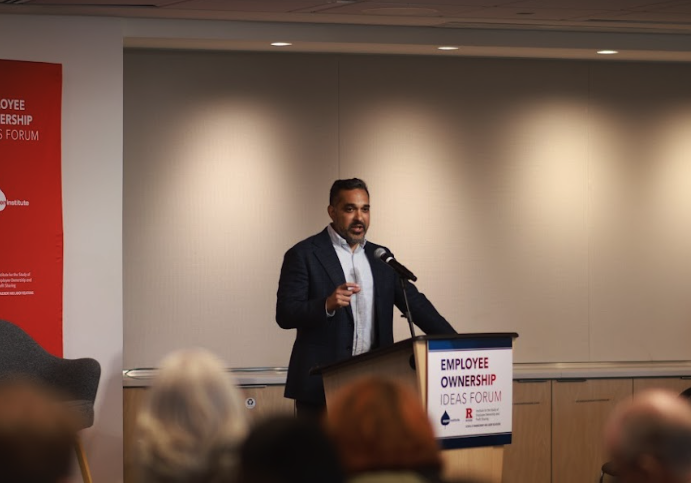
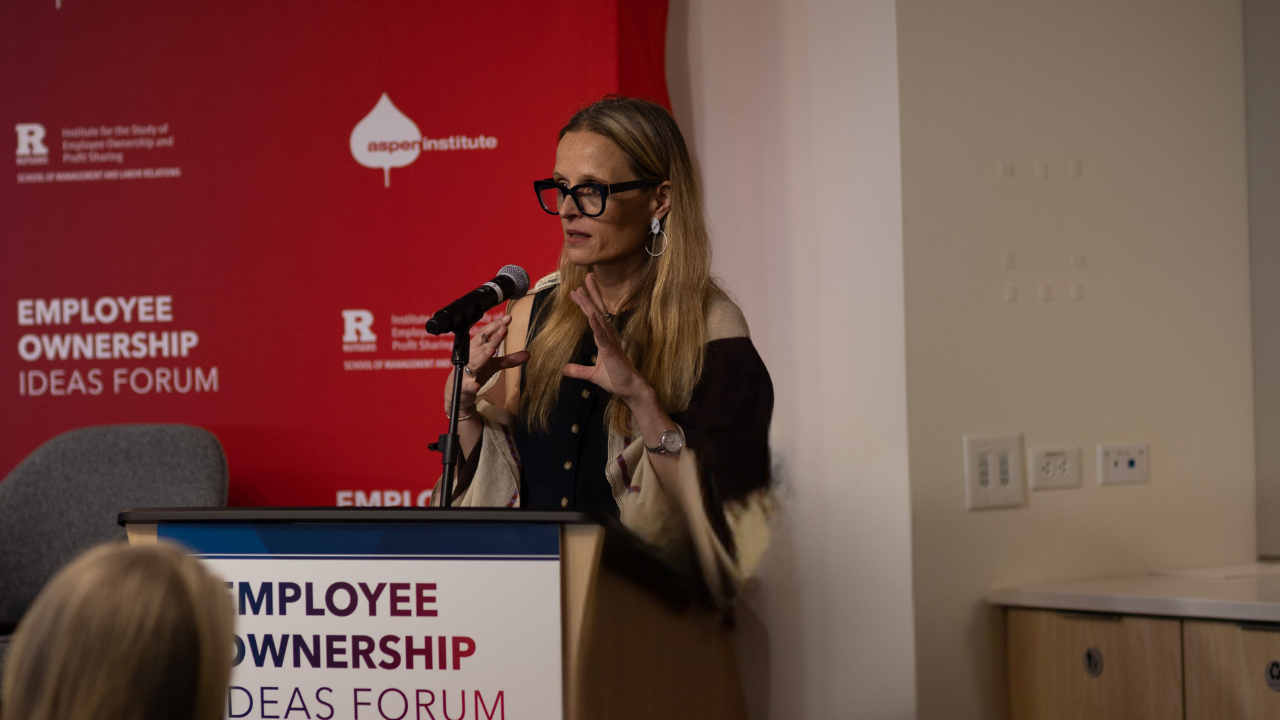
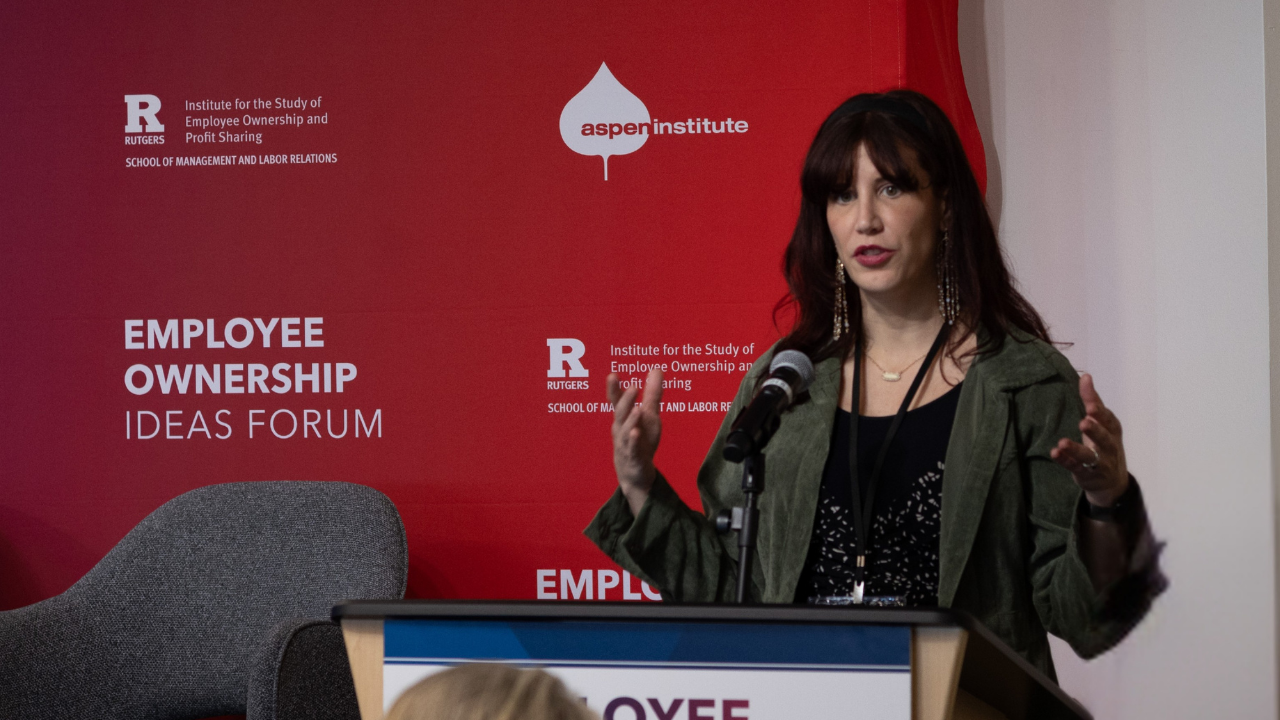
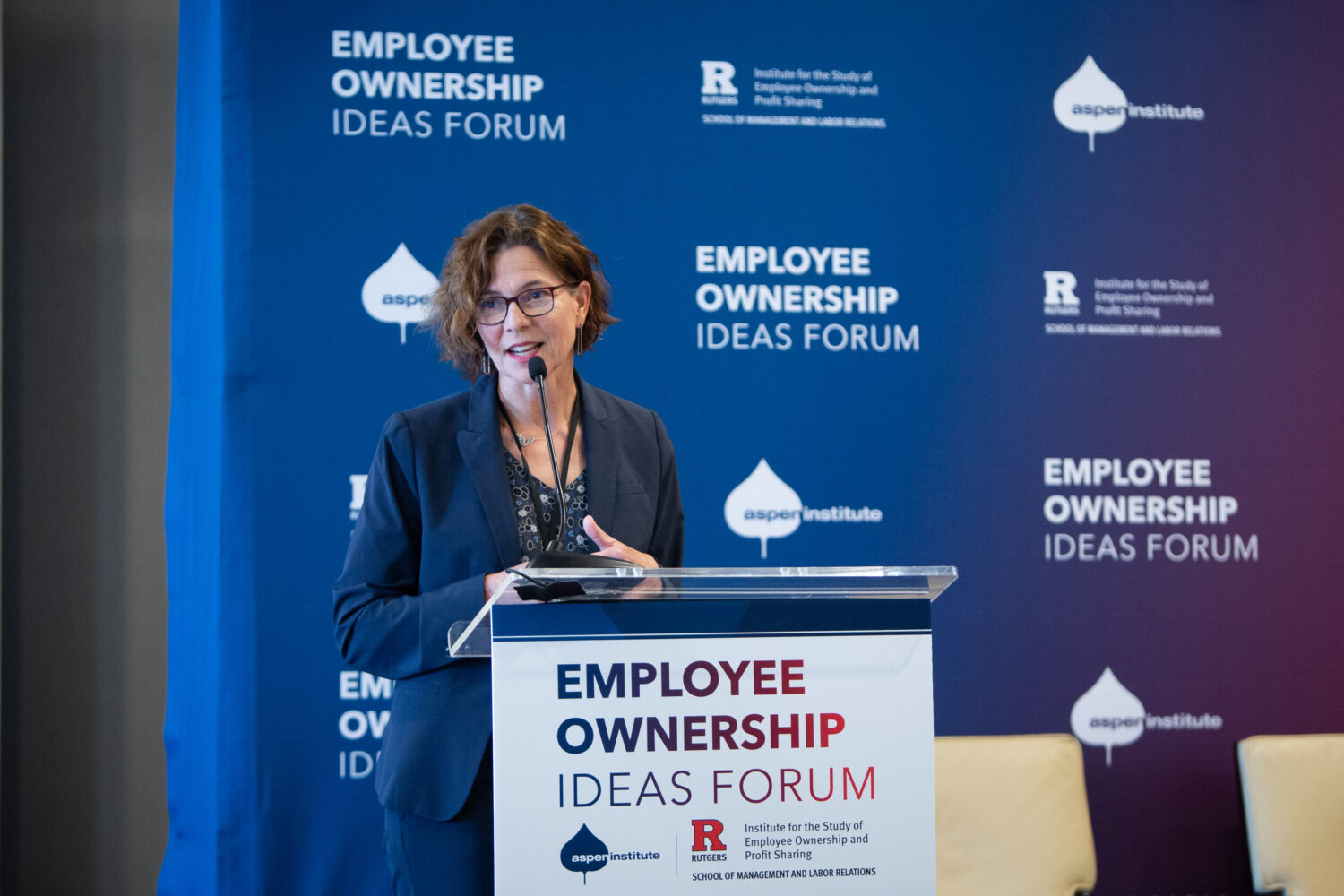
In this video, Gwyneth Galbraith — vice president and philanthropy program officer at JPMorganChase — delivers closing remarks at day one of the 2026 Employee Ownership Ideas Forum, which took place on June 2-3, 2026, in Washington DC and online.
For more videos from the Forum, visit our event page or subscribe to our YouTube channel.
And subscribe to our podcast to listen on the go.
[00:00:05] Maureen Conway: Well, our final speaker today is someone many of us have come to know not only as a leader in philanthropy, but also as a valued partner in advancing employee ownership. At JPMorgan Chase, Gwyneth Galbraith helps lead philanthropy and grant-making efforts that sit at the intersection of capital, community, and entrepreneurship. Her work focuses on expanding opportunity for underserved business owners and strengthening the organizations that support them.
Before joining JPMorgan Chase, Gwyneth ran her own social impact consulting practice and served as chief development officer at Accion Opportunity Fund, where she built and led a national development and communications team. Throughout her career, she has been committed to creating pathways to economic opportunity and helping communities thrive. That commitment extends beyond her professional role. She serves as board chair of Berkeley Community Scholars, a college success program that helps young people achieve their educational goals and reach their full potential.
For those of us in the employee ownership field, Gwyneth has been an especially important champion. She’s been at the forefront of JPMorgan Chase’s support for employee ownership, has been a strong advocate for the employee ownership ideas forum since the beginning. We appreciate that. She’s helped make all four years of this gathering possible.
She frequently uses the opportunity also to bring her grantees together. I appreciate how she encourages communication and collaboration across all of us who have the privilege of working with her. We are so grateful for her partnership, her leadership, her friendship, her belief in the power of ownership to expand opportunity and a more inclusive economy. Please join me in welcoming Gwyneth Galbraith.
[applause]
[00:02:01] Gwyneth Galbraith: I’m going to get a little teary-eyed. [laughs] Thank you so much, Maureen. Thank you, all. It’s always tough to be the last speaker at the end of a very rich and full and mentally stimulating and slightly exhausting day. I’m going to be quick. I just want to start by saying thank you to Aspen and the Rutgers Institute for bringing this amazing group together, convening us again, the partners, practitioners, investors, everybody in this universe.
We often talk about how employee ownership is sometimes a bit of an echo chamber. We need to expand the echo chamber. Also, this community is so strong and so robust. It’s amazing to be able to come together and share because there’s so much that’s happening from year to year, month to month, day to day, new programs, new states, and all of that.
At JPMorgan Chase, we’re here because we believe small businesses are the backbone of the economy and essential to strong communities. We also know, as we keep hearing, that millions of businesses are already and are going to transition. Our business bank did a survey of clients recently, including around business succession.
What we found was, not surprisingly, about two-thirds of business owners, among their top goals for an ownership transition, two-thirds wanted to maximize the dollar value of their transaction. Two-thirds also want to preserve their employees’ jobs. Almost two-thirds want to find an owner who aligns with their vision and the mission of their company.
JPMorgan Chase recently launched what we’re calling the American Dream Initiative, which is focused on expanding opportunity by scaling what we know works. That means bringing together business, philanthropy, and policymakers to figure out how to build on what we know works, particularly in communities, at the local level and the national level.
Employee ownership, we’ve heard it several times today, is really well aligned with the American Dream. We know it works. What do we do to help build it more? We know it works for a couple reasons. One of is, JPMorgan Chase has a really wonderful and robust ESOP advisory team, or ESOP advisory practice led by Regina Carls is over there, and my colleague Eric is over here as well. They’ve built a $6.5 billion portfolio of ESOP companies.
We also know it through the community partners that we support, through my grant portfolio, through our foundation, many of whom are in the room here today, who are doing amazing work to raise awareness, provide access to advising resources, capital, and keep building and driving the momentum of this movement. That’s exactly why convenings like today are so important, because they give us a chance to come together and imagine together, but then also sharpen the conversation about how to do it. What comes next? What can we do next?
I want to take a moment to reflect on what we heard today related to both what we can imagine and how we’re going to do it. My husband’s a fifth-grade teacher. As an educator, he asks his students often to notice what they notice and what they wonder. I’m going to share a little bit what I noticed today.
There were several themes that came up again and again. It keeps coming back to talent. Employee ownership is about the talent that exists within companies. I loved what I think it was Senator Kaine said about putting talent at the top of the pyramid. I also loved what I think, Billy, you were the one who quoted Studs Terkel about a job being about astonishment, not torpor, and I want that job. [chuckles]
Employee ownership helps put the talent at the top of the pyramid. If the talent is valued at the top of the pyramid, that really drives innovation. We heard a bunch of comments in various different panels about the ties between employee ownership and continuous improvement. I was particularly struck by the data point about the number of patents being more at employee-owned companies. That’s a great stand-in for innovation. Innovation takes risk, and employee-owned companies are sharing that risk collectively. Think what that enables in companies where you have this collective sharing of the risk.
Here’s what I wonder. What if, when we talk about all the AI gains, because we talked a lot about AI today, what if all those AI gains that were flowing to owners were flowing to employee owners? What if we could expand models for worker ownership of public companies to more of those 100 million employees of public companies? Most importantly, what if many more business owners and policymakers could, as Phil said, could see employee ownership and not unsee it? What would that look like?
Thank you for being part of this community. Thank you for sharing your ideas, your knowledge, and your determination and dedication around this work. I look forward to what we’ll learn tomorrow, and I look forward to how we will all continue to work together to keep driving this work forward. Thank you very much.
[applause]
[00:07:46] [END OF AUDIO]
About the Employee Ownership Ideas Forum
The Employee Ownership Ideas Forum brings together leading policymakers, practitioners, experts, and the media for a robust discussion on how we can grow employee ownership for the shared benefit of American workers and businesses. It is hosted by the Aspen Institute Economic Opportunities Program and Rutgers Institute for the Study of Employee Ownership and Profit Sharing.
About the Rutgers Institute for the Study of Employee Ownership and Profit Sharing
The purpose of the Institute for the Study of Employee Ownership and Profit Sharing is to study the various models that have emerged and will emerge of employee ownership shares and profit shares in the corporation and society of the United States and around the world.
About the Economic Opportunities Program
The Aspen Institute Economic Opportunities Program advances strategies, policies, and ideas to help low- and moderate-income people thrive in a changing economy.
Join Our Mailing List
To receive occasional emails about our work — including new publications, commentary, events, fellowships, and more — join our mailing list.
Connect on Social Media
For news and updates every day, connect with us on the social media platform of your choice.