ESOP Association’s Jim Bonham Keynotes the 2026 Employee Ownership Ideas Forum
Description
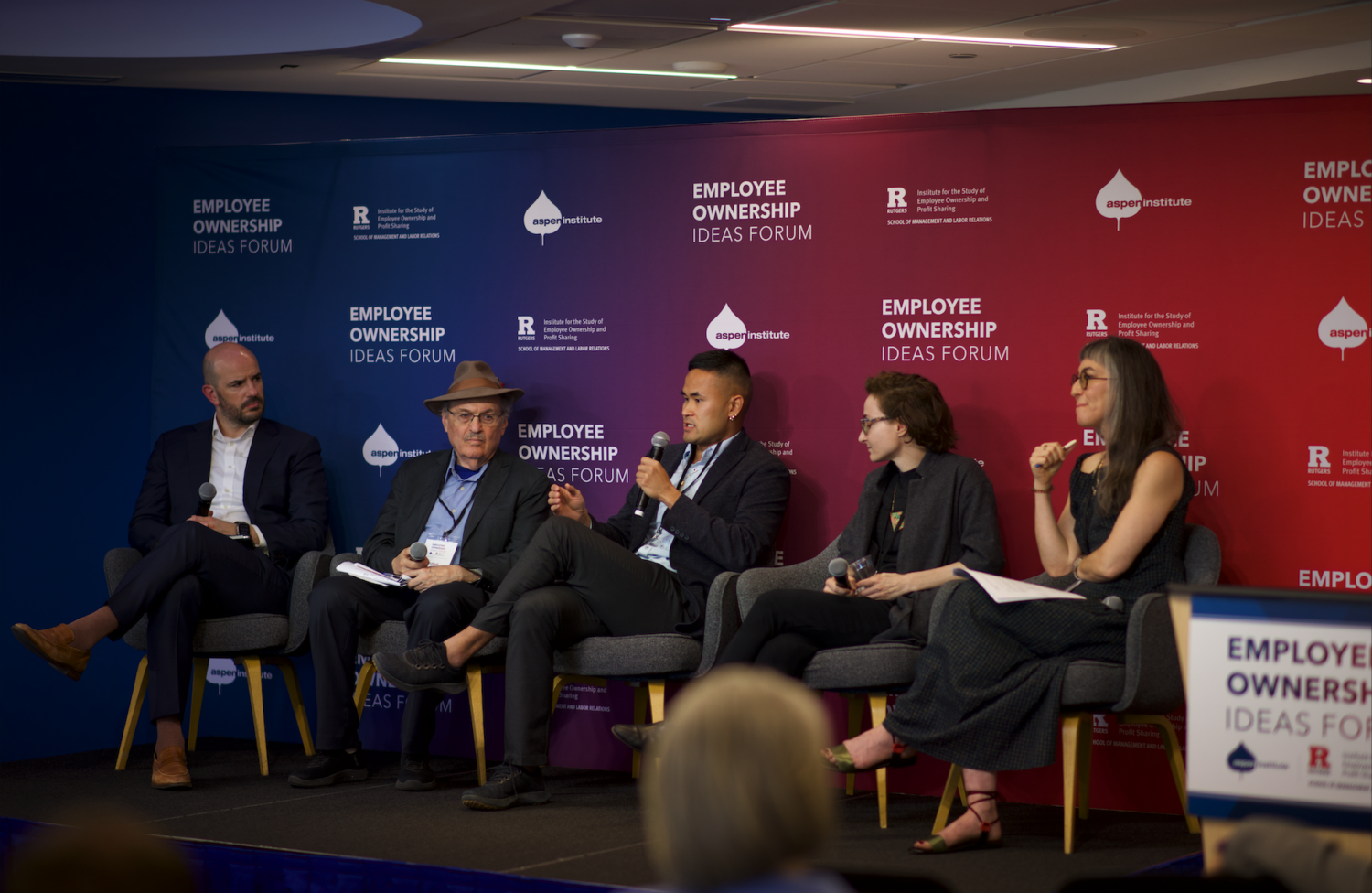
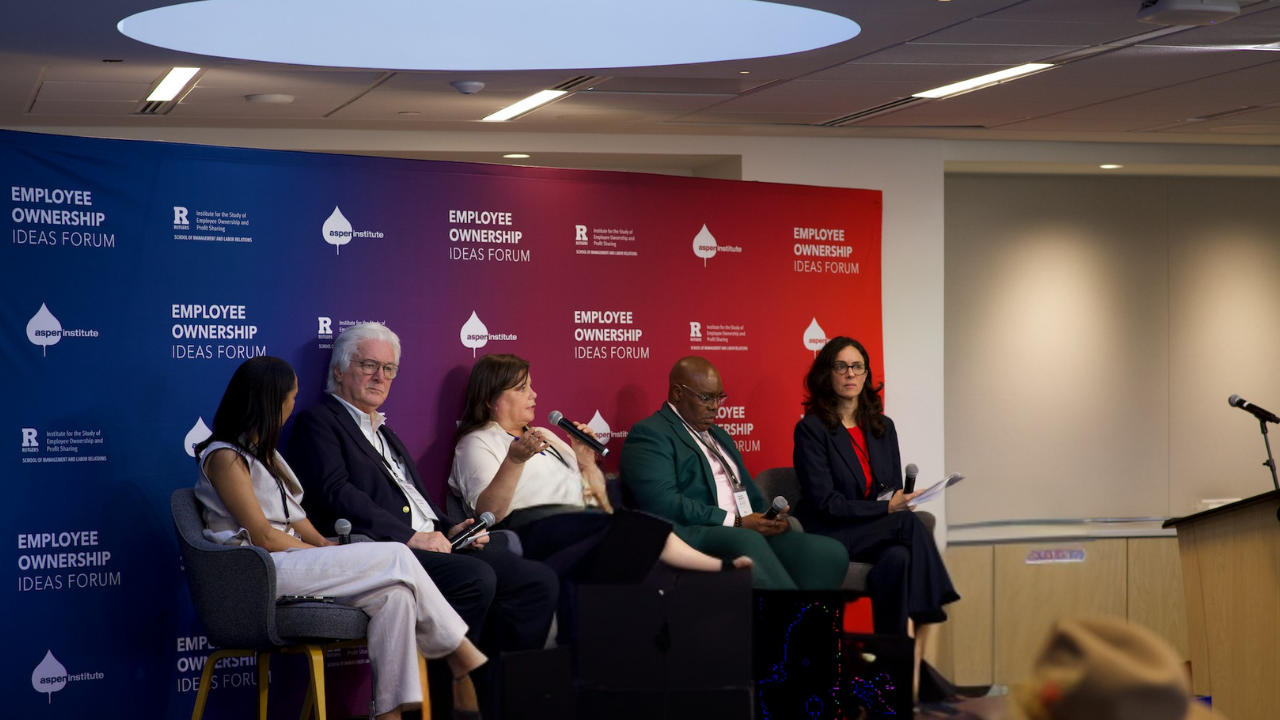
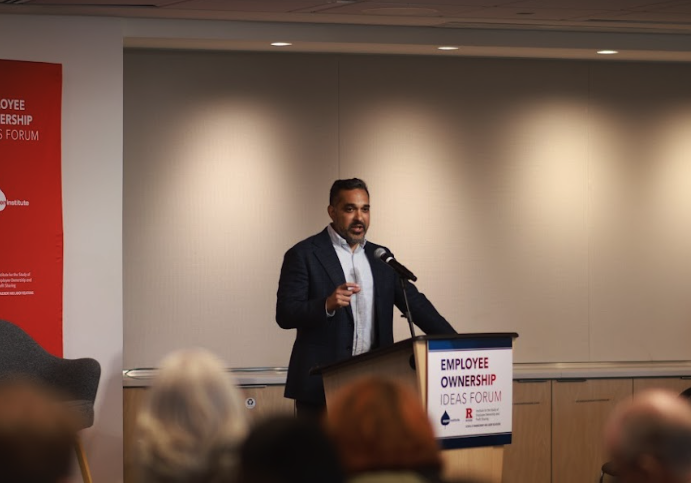
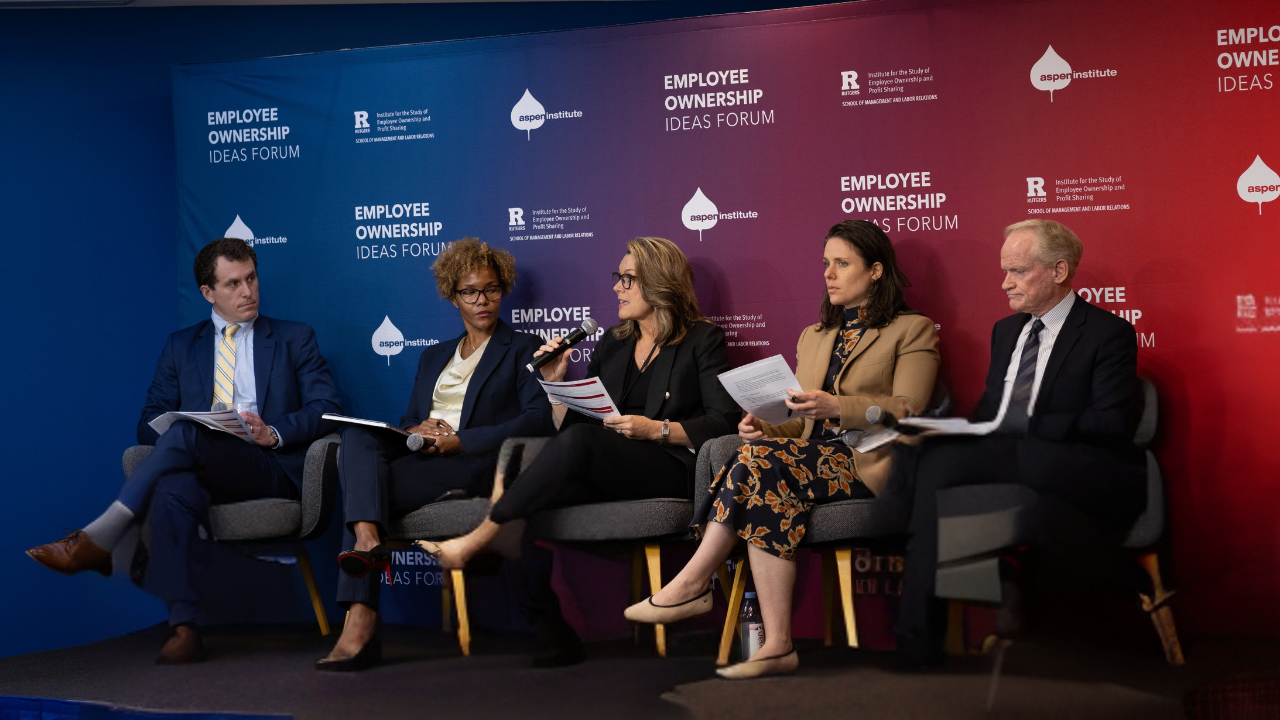
In this video, Jim Bonham, president and CEO of The ESOP Association, speaks at the 2026 Employee Ownership Ideas Forum, which took place on June 2-3, 2026, in Washington DC and online.
For more videos from the Forum, visit our event page or subscribe to our YouTube channel.
And subscribe to our podcast to listen on the go.
Resources
- Website: The ESOP Association
[00:00:05] Maureen Conway: I am delighted to welcome our next speaker. Our next speaker comes from a family with deep roots in employee ownership. His grandfather had a personal and professional relationship with James Cash, i.e., JCPenney, built in part around a shared belief that employees should have the opportunity to share in the success of the businesses they helped build. That idea left a lasting impression, and Jim Bonham has spent much of his career advancing it.
Before leading the ESOP Association, Jim spent nearly a decade as a senior congressional staffer, including serving as chief of staff in both the House and Senate. He was regularly recognized as one of the most influential aides in Washington. He later led the public policy practice at one of the nation’s premier law and business consulting firms. For many in this room, Jim is best known for his unwavering commitment to employee ownership and his dedication to ESOP companies. He has been a steadfast advocate, working tirelessly to build the policy and regulatory environment that allows employee-owned businesses to grow and thrive.
Whether on Capitol Hill with regulators or in statehouses across the country, Jim has been a leading voice for employee-owned companies and for the workers whose retirement security, wealth-building opportunities, and economic futures are strengthened through ownership. Today, as president and CEO of the ESOP Association and the Employee Ownership Foundation, he continues to advocate for employee-owned companies through all 18 state and regional chapters, and to make the case that employee ownership is good for workers, good for businesses, and good for our economy. Please join me in welcoming Jim Bonham.
[applause]
[00:02:06] Jim Bonham: Thank you, Maureen, and Matt and Jack for having me here again this morning. I always joke that I don’t expect the invitation to last forever, as I tend to speak a little more directly that makes some people comfortable. I’m glad to be following Ron, because he and I are of a similar temperament in those areas. Nevertheless, it’s a privilege to be back at the Aspen Institute Ideas Forum.
This annual gathering has become a welcome opportunity to explore the wide range of different approaches to reducing the wealth and income gap through employee ownership, through employee equity, or profit-sharing systems. It is also a good opportunity to explore the different public benefits that may or may not flow from each. Whether your particular interests may be cooperatives, ESOPs, employee beneficial trusts, restricted stock grants such as short-term equity plans, it is a healthy thing to understand the trade-offs that each model may or may not provide.
As much as I would like to spend my time this morning comparing and contrasting different approaches, I think my time would be better put to use this morning to talk about a window, a policy window that is opening for employee ownership in a way that we have not seen in decades. I want to talk about how we keep that window from closing on us before we’ve had the opportunity to walk through it.
I recently spoke about the seven forces that I believe will shape the future of employee ownership at the ESOP Association’s national conference a few weeks ago. I would encourage any of you to take a look at that speech. You can find it on the Association’s YouTube channel. Today, I’m only going to have enough time to touch on two of those areas. As the leader of the ESOP Association, I’m going to focus most of my discussion, surprise, on ESOPs, which constitute the vast majority of what we would all call employee ownership in America.
Let’s start with what has changed in just the last few years. For over 50 years since ERISA was enacted in 1974, ESOP transactions have operated under a fog of regulatory ambiguity. Capped in the last two decades by an enforcement posture of the Department of Labor that treated ESOP transactions as a problem that they had to police rather than a policy that needed to be promoted. That special enforcement project targeting ESOPs is now officially over. That is a real and meaningful shift.
Further, the Retire Through Ownership Act is on the verge of final passage. It cleared the Senate HELP Committee unanimously last summer. It cleared the full Senate unanimously last fall. It cleared the House Education and Workforce Committee last fall, again, unanimously, and is now only awaiting a floor vote in the full House of Representatives, which we are promised will happen imminently.
Now, for the first time in five decades, Congress is poised to adopt a clear statutory definition for ESOP valuations. That gives trustees, sellers, and advisors the certainty that this market has been starved of since the Carter administration. It looks like Jack is waving at me, and Senator Kaine has arrived. I can either continue for the next eight minutes and allow the Senator to enjoy a cup of coffee, or I’m happy to have you come up, and I’ll finish my comments afterwards.
[00:05:34] Senator Kaine: Why don’t you continue?
[00:05:36] Jim: Terrific, because I want you to hear these comments.
[laughter]
I did just mention your bill, that we need to get it through the House. On the regulatory side, adequate consideration is back on the DOL’s agenda, this time with the goal of clarifying and simplifying rules for business owners who want to sell to their employees rather than weaponizing those rules against them. Now the combination, a workable rule resting on a statutory foundation, thank you, Senator, would remove the single biggest structural impediment to ESOP formation that has caused them to remain in the economic periphery.
Now, once established, the benefit of that clarity permeates the system, and begins to resolve many of the other issues that have cascaded from that lack of clarity. Without it, everything that we would be building would be based on a foundation of sand. Now that is the inheritance we are working with right now. It did not happen by accident. It happened because thousands of employee owners and their professional advisors have come to Washington and made the case. They have used decades of quality research about ESOPs specifically, and lawmakers have recognized the role that ESOPs can play in the future economic security of millions of Americans. The bigger opportunity is not behind us. It still remains in front of us.
Congress in the next few years is going to write policy on two enormous questions. The first is what to do about the workforce impact as well as the productivity gains of artificial intelligence. The second is what to do about a tax code that has become tilted too far in favor of wealth accumulation and concentration in the hands of a very small number of individuals and too far away from the working people who fuel our enterprise and contribute immensely to the value they help to build.
Americans are understandably angry about the gap that has emerged between their economic success and the concentration of wealth that is incentivized by current tax system. Both of those debates are coming. Senator Johnson already alluded to it today, but will involve hundreds of billions of dollars in redirected tax expenditures into new economic priorities, and both go directly at the question employee ownership was built to answer.
Who was going to capture the gains when the rewards given to capital compared to labor have fallen so far out of balance? This is perhaps the core issue confronting all of us as Americans. When automation driven by AI and advanced robotics raise productivity at a company, the gains flow to whoever owns that company. In a conventional structure, that means shareholders and executives. In an ESOP, it means the workers.
When the tax code subsidizes private equity investors to extract value from mainstream businesses all across the nation, those communities not only lose their businesses, but workers lose their economic vitality, and before long, the vibrant local economies that once fueled America become reduced to a shadow of what they once were. By contrast, with an ESOP as an exit strategy for owners, the company stays, and the wealth distributes to all the people who built it. The community retains its economic vitality because the profits recycle in the community rather than being exported to an investment account owned by a billionaire somewhere else.
When Congress sits down to write AI adjustment policy, ESOPs need to be in that bill. When Congress sits down to rewrite the carried interest loophole or the broader architecture of how capital is going to be taxed, ESOPs need to be in that conversation, too, not as a footnote, but as an affirmative answer to the question, to what purpose should those revenues go?
If we are not in that room with data, with legislative text, with company owners and employee owners ready to testify, someone else will fill that space. Now we have a real shot at making employee ownership a pillar of the next generation of American economic policy, but only if we show up, which brings me to the part of the speech I want you to hear most. As this policy window opens, the words employee ownership are going to become even more valuable. When a label gets more valuable in Washington, things start being called by that label that frankly shouldn’t be. I’ve said this before in other rooms, and I want to say it again here, because this audience, more than any other, needs to appreciate and acknowledge the reality behind claims that might be made.
Forty-plus years of peer-reviewed research on the public benefits of employee ownership, the retirement outcomes, the job stability, the resilience through recessions, the productivity effects, that body of evidence was built almost entirely on ESOPs where a meaningful share of the company is owned by the ESOP trust. It cannot and should not be indiscriminately transferred onto every arrangement that someone might decide to brand as employee ownership.
[applause]
A profit-sharing bonus is not an ESOP and won’t produce the same benefits. A phantom equity plan is not an ESOP and won’t produce the same benefits. A minority stock purchase program with no governance rights and no retirement structure is not an ESOP. Now, don’t get me wrong. Some of those things may very well be good. Some of them may be worth public support on their own merit. They do not carry the evidence base that ESOPs carry, and Congress shouldn’t be told otherwise.
When we go into these policy debates on AI, on tax, on retirement security, on business succession, we need to be specific. The ESOP is a specific legal instrument with specific design features. Those features are the reason the public benefit exists in the first place. There’s a trustee, an independent fiduciary whose legal duty runs to the employees, not to the seller, not to the company, not to the executives, to the employees. This is employee voice and governance.
There is transparency. Every plan participant gets an annual statement, showing what they own and what it is worth. Every plan participant gets to see the plan document that describes allocations and rights. There’s no black boxes. It is transparent and known. There are irrevocable ownership rights in those individual accounts. Once it is allocated to our participant, the company cannot claw it back. The employee owns it. There are constraints on distributions. To a degree, those constraints exist because the employees have not had to contribute any of their own wages into the system. ESOPs are fully funded by the company. You can’t raid an ESOP account the way that Americans are increasingly being forced to raid their 401ks. It’s that discipline against withdrawals that allows the compounding effect.
The average ESOP account balance now exceeds $230,000. For career employees of mature ESOPs, multiples of that. It’s what turns this from a bonus into a genuine pathway to working-class wealth and economic security. Those four features–fiduciary protection, transparency, irrevocable rights, and protected compounding, are not just bureaucratic detail. They are structural design. They are the engine. If you strip them out, slap on the employee ownership label on what is left, you don’t get the same public benefit. You just get a marketing claim.
Here’s my ask of this room. Press the advantage we have. Push the retire through ownership act across the finish line in the House. Engage seriously in the adequate consideration rulemaking with an eye toward promoting ESOP formation rather than prosecuting them. Engage with candidates who are running for office on both sides of the aisle and with the 2028 presidential field on both sides, so that when the AI debate and the next major tax debate arrives, the ESOP answer is already on the page.
In every one of those conversations, defend the substance and structure of the ideas that you’re championing. Be specific about what your idea may be and why its design, not its label, is what delivers the public benefit. We are not at the end of something. We are at the beginning of a Renaissance if we are disciplined enough to protect what got us here and bold enough to write the next chapter ourselves.
Maureen, thank you again for having me here. Thank all of you for your commitment to employee ownership and your contribution to the discussion. Thank you.
[applause]
[00:14:16] [END OF AUDIO]
About the Employee Ownership Ideas Forum
The Employee Ownership Ideas Forum brings together leading policymakers, practitioners, experts, and the media for a robust discussion on how we can grow employee ownership for the shared benefit of American workers and businesses. It is hosted by the Aspen Institute Economic Opportunities Program and Rutgers Institute for the Study of Employee Ownership and Profit Sharing.
About the Rutgers Institute for the Study of Employee Ownership and Profit Sharing
The purpose of the Institute for the Study of Employee Ownership and Profit Sharing is to study the various models that have emerged and will emerge of employee ownership shares and profit shares in the corporation and society of the United States and around the world.
About the Economic Opportunities Program
The Aspen Institute Economic Opportunities Program advances strategies, policies, and ideas to help low- and moderate-income people thrive in a changing economy.
Join Our Mailing List
To receive occasional emails about our work — including new publications, commentary, events, fellowships, and more — join our mailing list.
Connect on Social Media
For news and updates every day, connect with us on the social media platform of your choice.