Maureen Conway and William Castellano Open the 2026 Employee Ownership Ideas Forum
Description
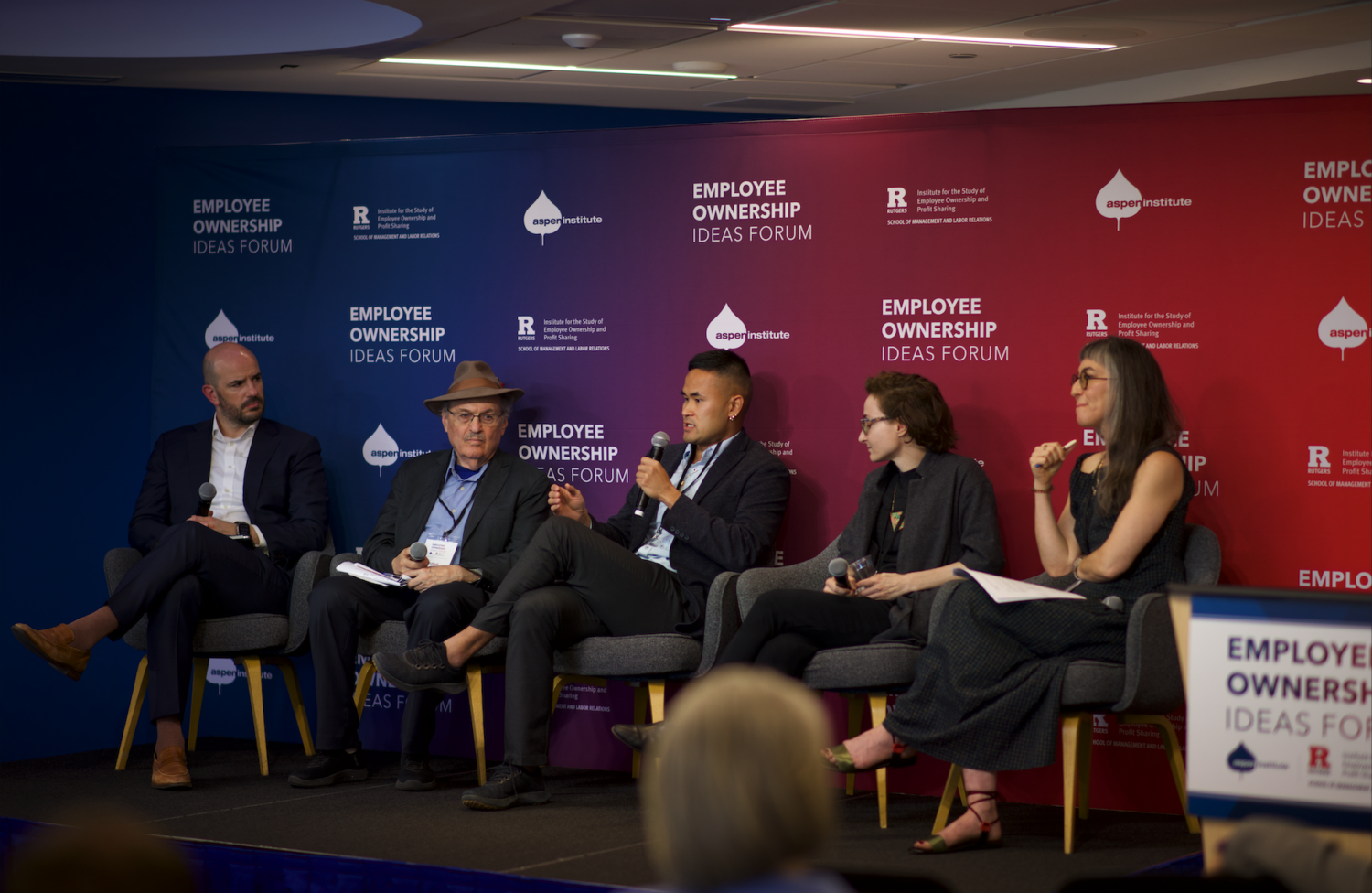
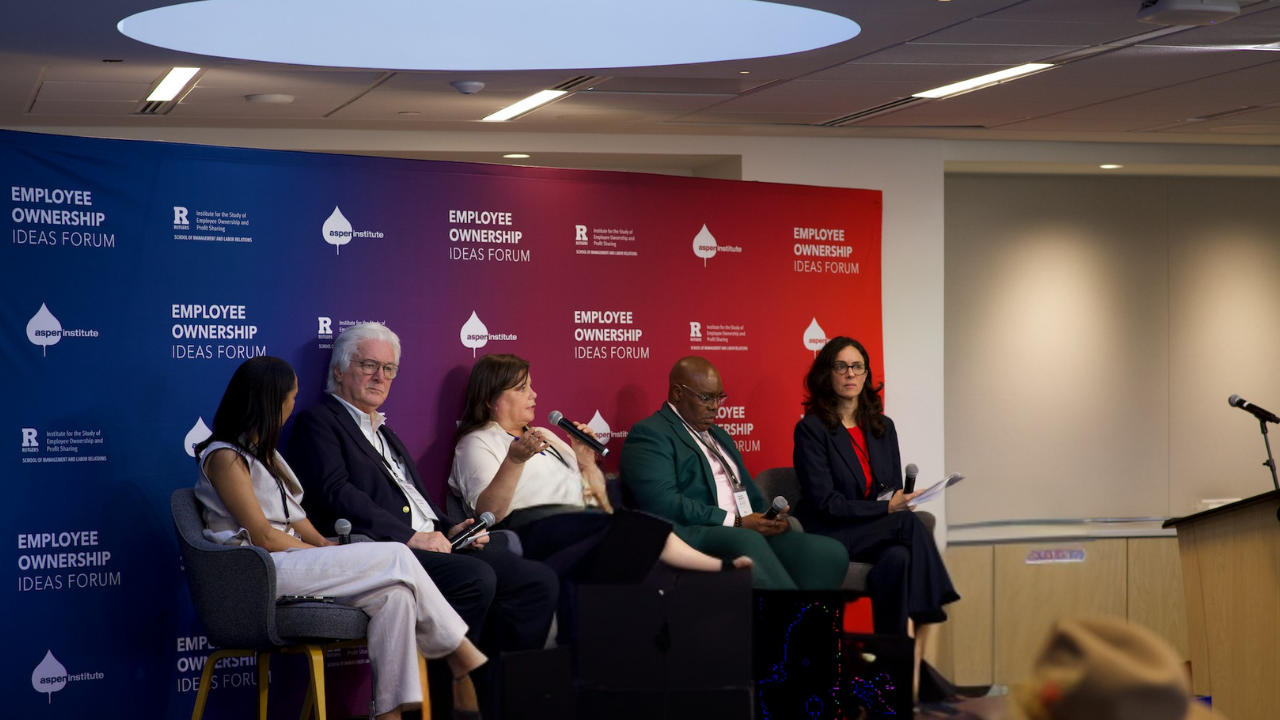
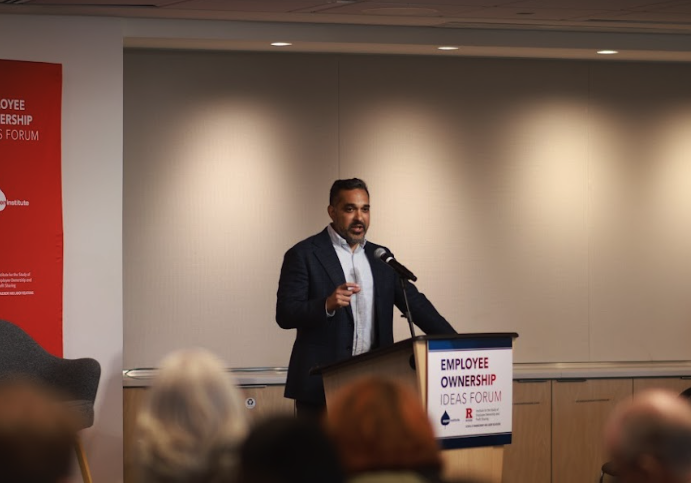
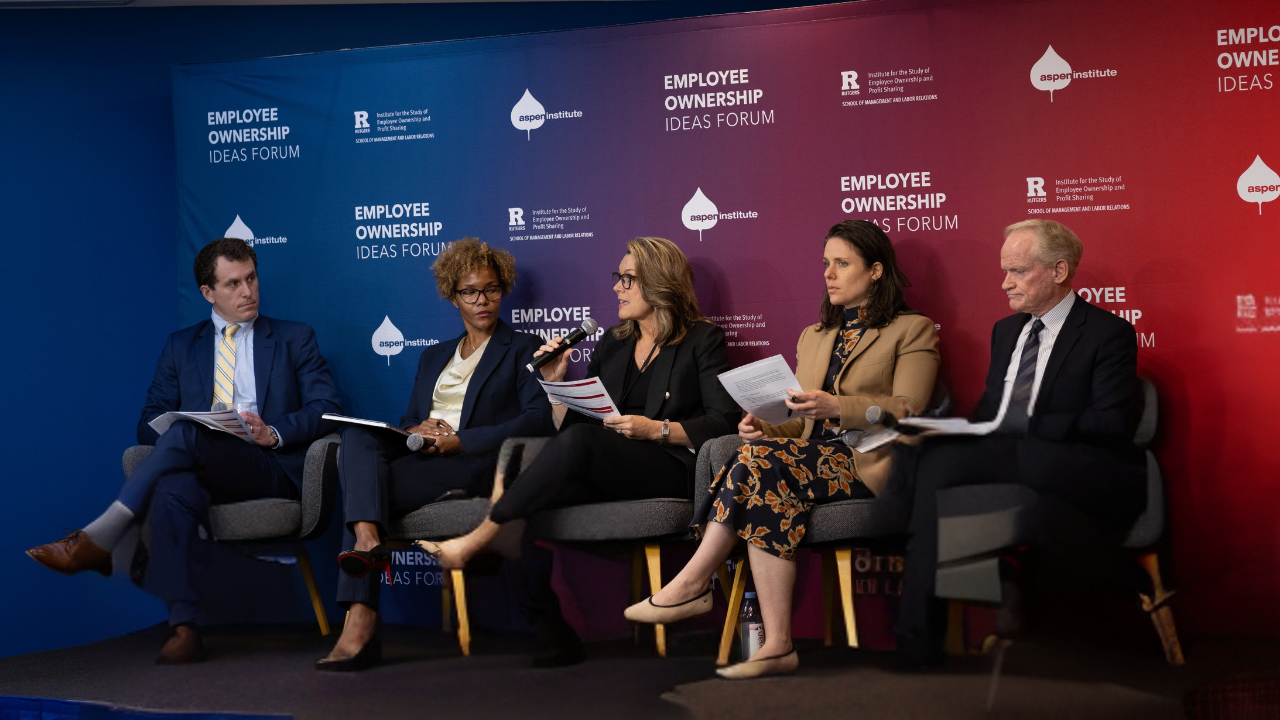
In this video, the Aspen Institute’s Maureen Conway and Rutgers University’s William Castellano give opening remarks at the 2026 Employee Ownership Ideas Forum, which took place on June 2-3, 2026, in Washington DC and online.
For more videos from the Forum, visit our event page or subscribe to our YouTube channel.
And subscribe to our podcast to listen on the go.
Speakers
- Maureen Conway, Vice President, The Aspen Institute; Executive Director, Economic Opportunities Program
- Dr. William Castellano, Director, The Institute for the Program Study of Employee Ownership and Profit Sharing, Rutgers University
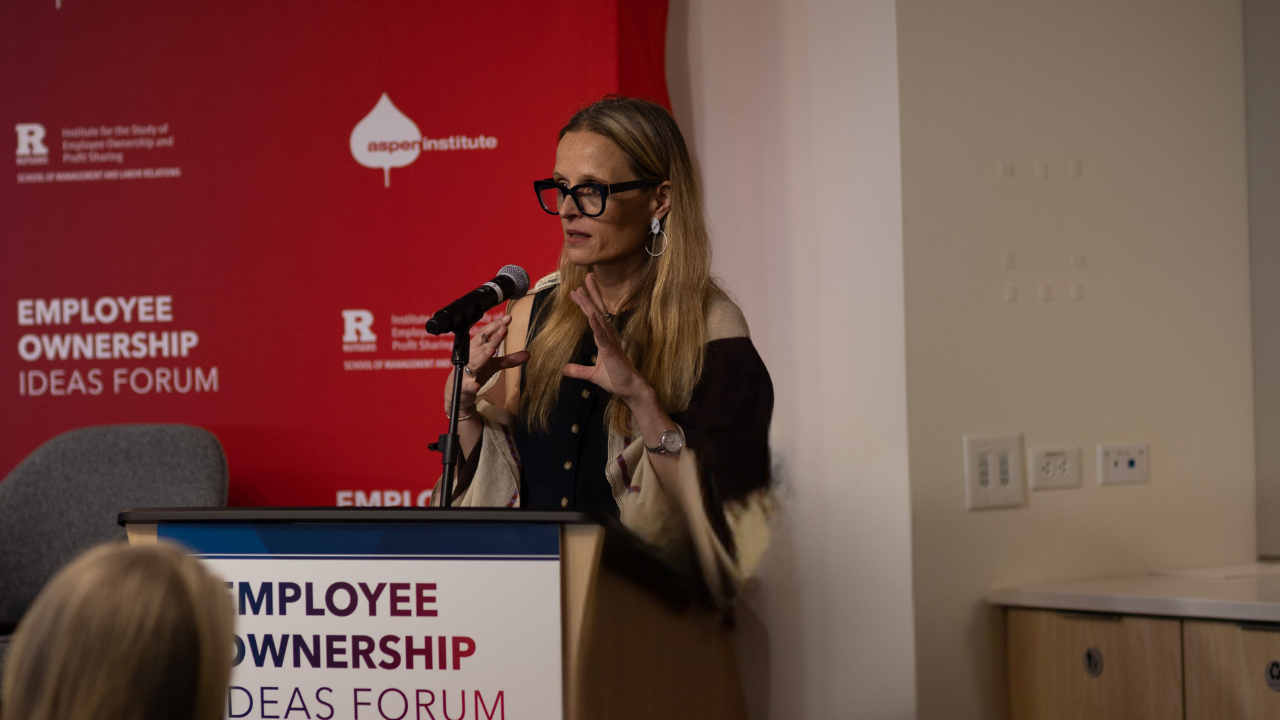
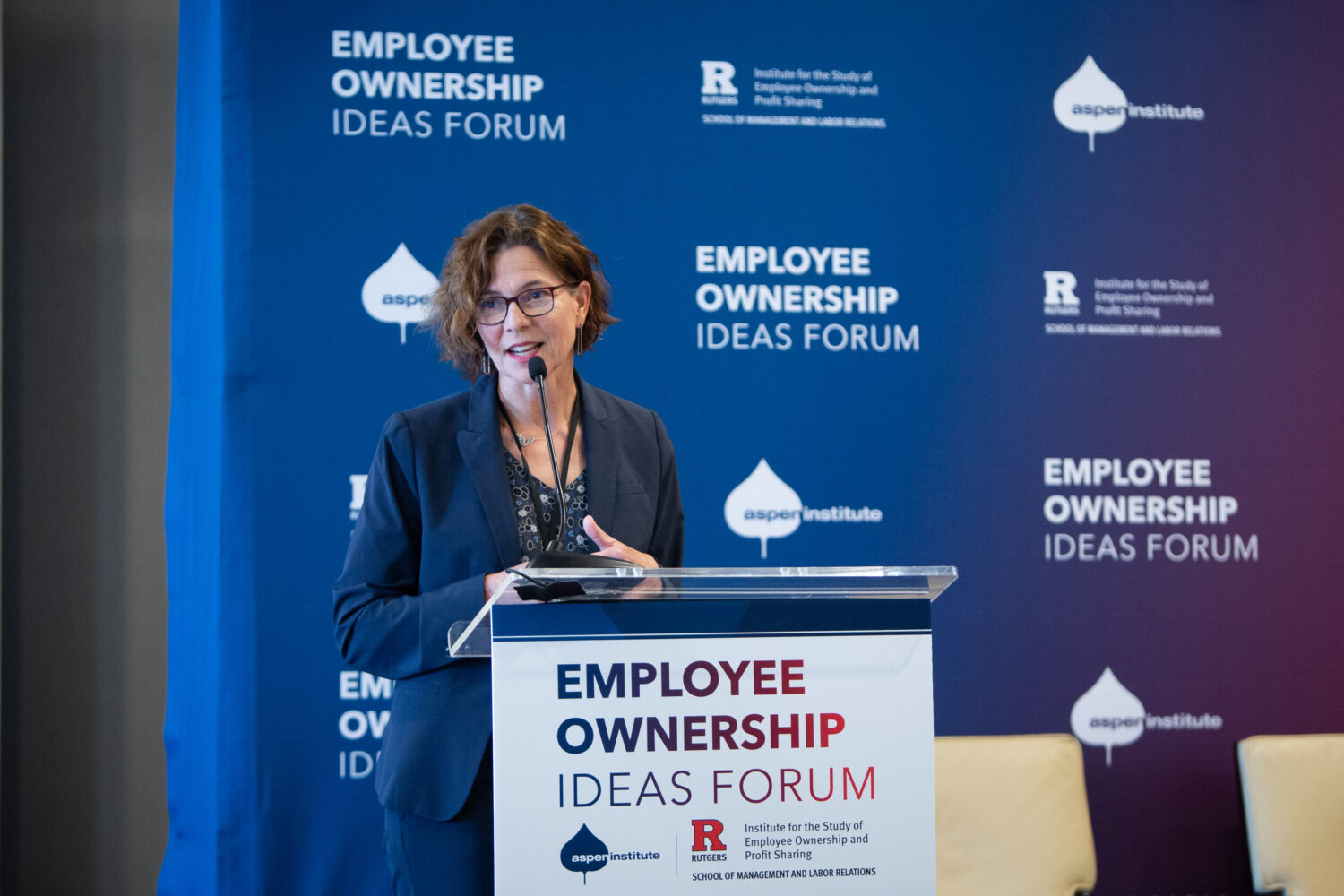
[00:00:05] Maureen Conway: So great to see everybody here. So great to be here. So wonderful to welcome many old friends, see many new faces. Welcome, welcome, everyone, to our fourth annual Employee Ownership Ideas Forum. My name’s Maureen Conway. I’m a vice president at the Aspen Institute and executive director of the Economic Opportunities Program. I am so delighted to welcome you all to this new space for us and to this event.
Just to start, this has been a lot of planning by a lot of folks. I just do want to take a moment to thank all the folks on the Aspen Institute team that have been working on this for a long time, and their contributions have been really important to putting this together. Some of them you know, many of them you never get to meet, but they all contributed in important ways. Please let me thank Matt Helmer, Merrit Stüven, Tony Mastria, Nora Heffernan, Frances Almodovar, Maxwell Johnson, Colleen Cunningham, Sinin Young, Joy Moore, Eric Baker, Jon Purves, and Isabel Aldunate for all that they’ve done to help us put this together.
[applause]
On behalf of the Aspen Institute Economic Opportunities Program and the Rutgers Institute for the Study of Employee Ownership and Profit Sharing, I want to thank our principal supporters, the Ford Foundation, Prudential Financial, Sorenson Impact Foundation, JPMorgan Chase, and EO Equals. We’d also like to thank McKinsey & Company for their support. Give them a hand.
[applause]
I want to thank all of you here in the room and all of the people joining us on livestream for being here today for these conversations. At a time when conversations about our economic future are often dominated by concerns about inequality, economic insecurity, and technological disruption, it’s important to remember that we also have solutions, and employee ownership is one of them.
Employee ownership is often discussed as a matter of fairness, and it is, and it is often discussed as a way to build wealth, and it does that, too. What has always interested me most about employee ownership is that it encourages a different way of thinking about work itself. Employee-owned companies often embrace principles of job design that recognize employees as sources of knowledge, creativity, and value. They create opportunities for workers to contribute ideas, develop skills, solve problems, and participate meaningfully in the life of the enterprise.
In other words, employee-owned companies create good jobs. Good jobs are good business. When employees are owners, they are not simply working for a company, they are helping to build it. The success of the enterprise becomes their success. Ownership creates alignment, commitment, and engagement in ways that are difficult to replicate through traditional organizational structures. That matters for business performance. Companies are stronger when employees are engaged, more innovative when employees are empowered, and more resilient when employees are invested in their success.
These ideas are especially important at this moment. We are in a period of profound technological change. Artificial intelligence and other emerging technologies have the potential to create tremendous value. They may improve productivity and advance incredible new developments and innovations, and generate whole new opportunities. Many people are looking at these developments and wondering, who will benefit?
History teaches us that technological progress does not automatically lead to broadly shared prosperity. Without intentional choices, innovation can concentrate wealth and widen economic inequality. Employee ownership offers a practical response to that challenge. It creates a mechanism through which gains from growth and innovation can be shared more broadly. It helps ensure that when companies become more productive and more successful, the people whose work contributes to that success participate in the rewards.
Employee ownership certainly is not a complete answer to every challenge we face, but it is an important arrow in our quiver. It is a proven way to ensure that more people have a stake in the future they are helping to create. It is deeply aligned with American values. At its core, employee ownership reflects ideals that resonate across political perspectives, opportunity, responsibility, entrepreneurship, hard work, shared prosperity. It reflects the belief that people should have the opportunity not only to earn a living, but to build wealth, and that those who help create value should be able to share in it. That is one reason that employee ownership has enjoyed bipartisan support for decades.
Employee ownership, of course, takes many forms. It includes ESOPs, worker cooperatives, employee ownership trusts, and a variety of structured equity and profit-sharing models. These approaches differ in important ways, but despite their diversity, they share a common principle. When the business does well, the people who run the business do well, too, meaning the workers who run the business. That is a powerful idea. It’s a practical idea. It’s deeply rooted in our country’s history and values, and it’s an idea well-suited to the challenges and opportunities of the economy we’re trying to build today.
Thank you all so much for being here. Thank you all for the work that you do. Thank you for your commitment to building a more inclusive, innovative, and broadly prosperous economy. I’m very much looking forward to the conversations ahead.
Now, I have a good news, bad news introduction. I’ll start with the bad news first. The bad news is, unfortunately, our beloved colleague, Dr. Joseph Blasi, is not able to be with us in person today, but the very good news is that Bill Castellano, executive director, Rutgers Institute for the Study of Employee Ownership and Profit Sharing, is here with us today, and I’m delighted to invite him to the stage now to give opening remarks.
[applause]
[pause 00:06:47]
[00:06:59] William Castellano: Thank you, and welcome, everybody. It’s a real pleasure to be here with you, and we’re so grateful of the partnership we have with the Aspen Institute. It’s been a long partnership. Certainly, Dr. Joseph Blasi, who Maureen mentioned, is not able to be here. He had some shoulder surgery. It’s my pleasure, to the best of my ability, to fill in for Joseph Blasi, who has been a trailblazer in the research and employee ownership and all the things we’ll be focusing on throughout this entire conference.
Really do like to thank Maureen Conway and Matt Helmer, as well as the Rutgers leadership team that’s also helped put together this forum. In particular, Adria Scharf, Jack Moriarty, Doug Kruse, and also Bethany Dennis. Thank you, guys, for working with Aspen for putting this together. I can’t think of a more important time to have a forum, an ideas forum like this.
After about three years of research, I’m publishing my next book, coming out in the fall, Practices for Managing the Future of Work. I really highlight the trends that are really transforming and disrupting the economy, the workplace, the exponential advances in artificial intelligence and robotics, the challenging demographic trends, totally transforming how we work.
Companies are desperately looking for advice, looking for help. I think the research that we do at the institute certainly plays a big role in helping organizations, helping employees navigate these pending and disruptive challenges. Our research shows broad-based equity-type programs helps to engage employees. They’re more committed to the organization. They’re involved in more innovative-type behaviors. Those are the kinds of behaviors that organizations will need to manage changing objectives.
We also expect significant increases in productivity with the advances of these technologies. Critically important will be for organizations to then share that productivity with employees. The best way to do that is through broad-based equity participation. What’s commonly mentioned in other research, rather than being replaced by the robots or the AI, workers should own the robots and AI. That can be accomplished through sharing equity-type programs.
Then, of course, the role of government. We really do need innovative regulations, putting guardrails around AI, incentivizing companies to promote employee ownership through financial support, through tax incentives, certainly get involved with the necessary up-skilling and re-skilling of the workforce. There’s a lot to be done.
This ideas forum has been at the forefront of all of these challenges for many, many years. I think it’s been really leading the way. I think I really look forward to hearing from some of the thought leaders that you’ll be hearing throughout these next two days that are offering their advice, their research, and hopefully, through our collaborative efforts can come up with some solutions to face these challenges. Thank you all for being here. Again, thank you, Aspen, for inviting me. Thank you.
[applause]
[00:11:05] [END OF AUDIO]
About the Employee Ownership Ideas Forum
The Employee Ownership Ideas Forum brings together leading policymakers, practitioners, experts, and the media for a robust discussion on how we can grow employee ownership for the shared benefit of American workers and businesses. It is hosted by the Aspen Institute Economic Opportunities Program and Rutgers Institute for the Study of Employee Ownership and Profit Sharing.
About the Rutgers Institute for the Study of Employee Ownership and Profit Sharing
The purpose of the Institute for the Study of Employee Ownership and Profit Sharing is to study the various models that have emerged and will emerge of employee ownership shares and profit shares in the corporation and society of the United States and around the world.
About the Economic Opportunities Program
The Aspen Institute Economic Opportunities Program advances strategies, policies, and ideas to help low- and moderate-income people thrive in a changing economy.
Join Our Mailing List
To receive occasional emails about our work — including new publications, commentary, events, fellowships, and more — join our mailing list.
Connect on Social Media
For news and updates every day, connect with us on the social media platform of your choice.