Sen. Ron Johnson Keynotes the 2026 Employee Ownership Ideas Forum
Description
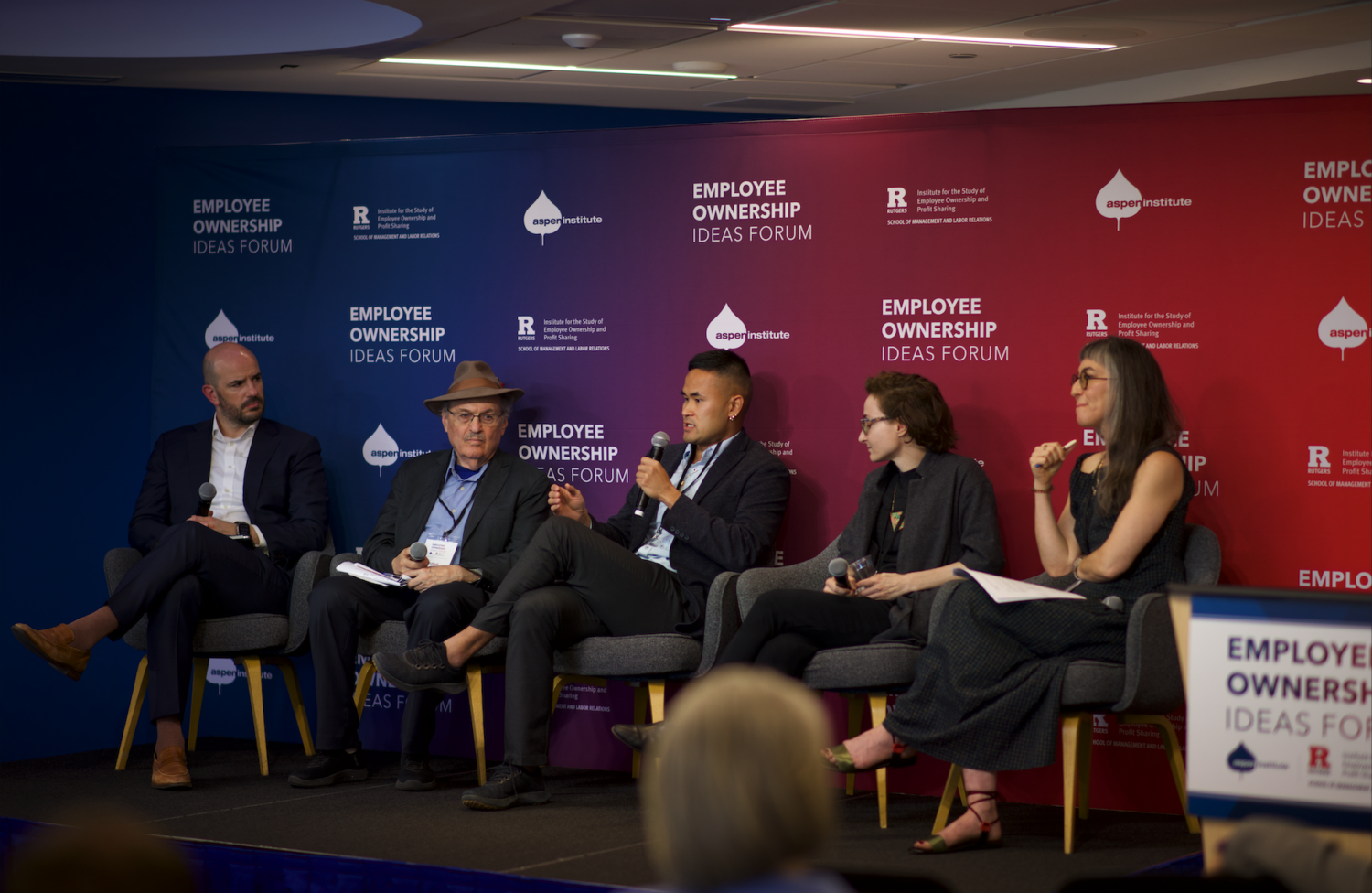
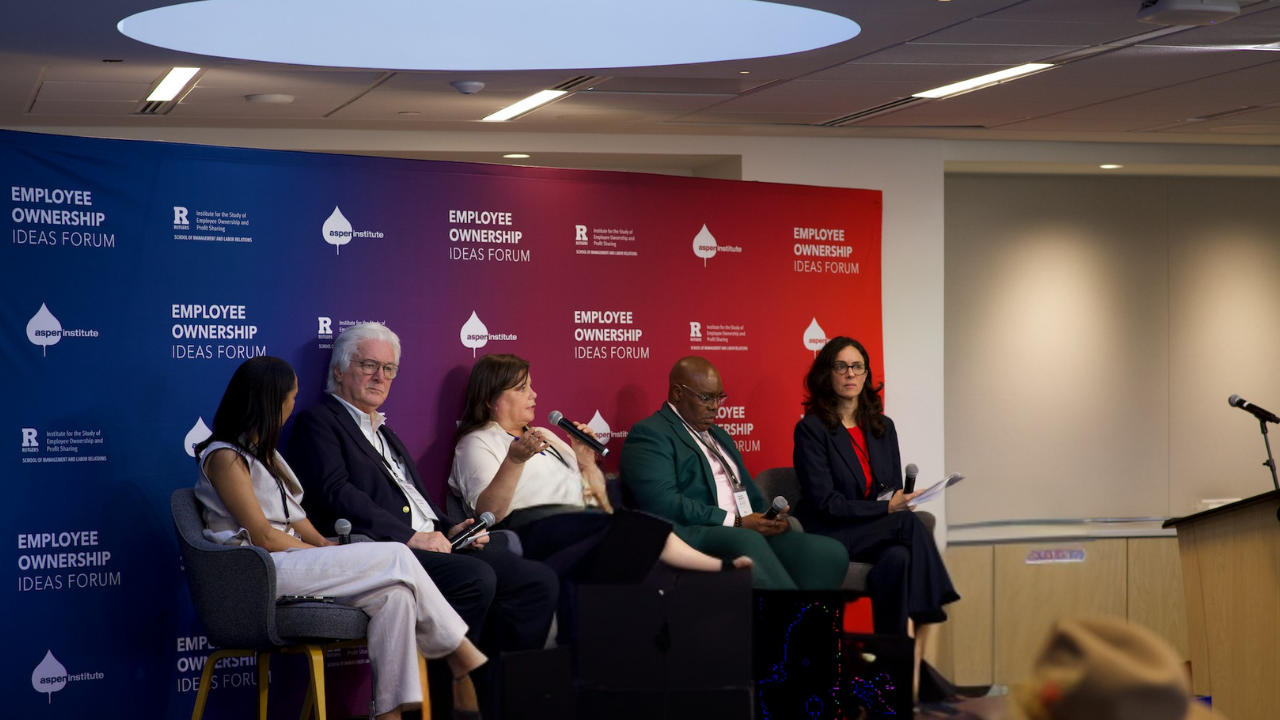
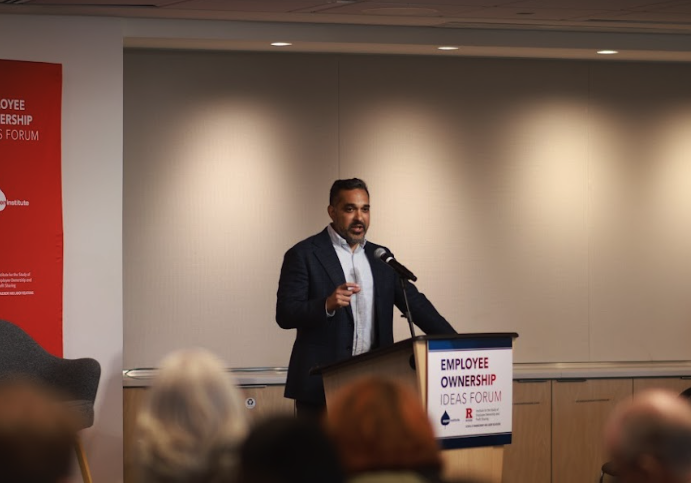
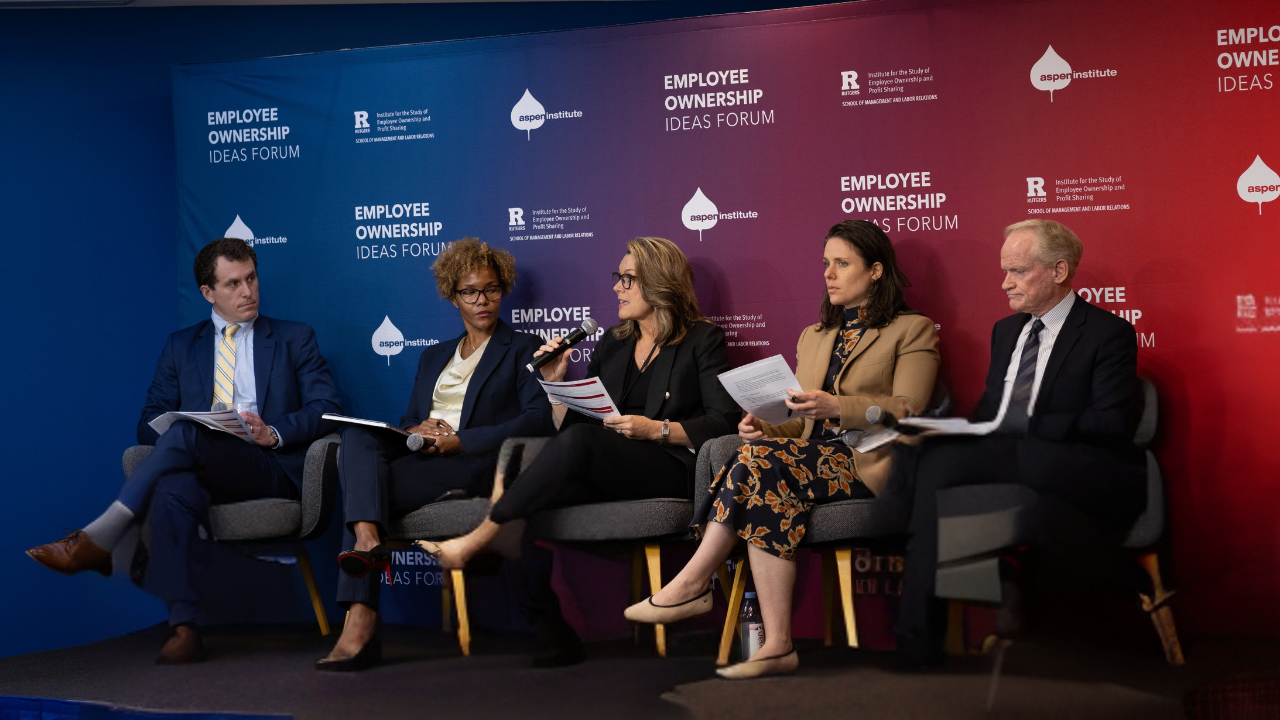
In this video, US Senator from Wisconsin Ron Johnson speaks at the 2026 Employee Ownership Ideas Forum, which took place on June 2-3, 2026, in Washington DC and online.
For more videos from the Forum, visit our event page or subscribe to our YouTube channel.
And subscribe to our podcast to listen on the go.
[00:00:05] Jack Moriarty: Good morning, everybody. My name is Jack Moriarty. I’m the Executive Director of the Lafayette Square Institute and proud to support Rutgers and Aspen on the event. It’s my distinguished pleasure to introduce our next speaker. Senator Ron Johnson was elected to the US Senate in 2010 after running a successful manufacturing business in Oshkosh, Wisconsin, for 30 years. From 2015 to 2021, he was Chairman of the Senate Committee on Homeland Security and Governmental Affairs and remains a member of that committee. He currently serves as Chair of the Permanent Subcommittee on Investigations and is also a member of the Budget, Finance, and Aging Committees.
Ron was re-elected– Senator Johnson, I should say, was re-elected to his third term in the US Senate in 2022 and resides in Oshkosh with his wife, Jane. They have three children and four grandchildren. I’ll add that in 2020, during COVID, Senator Johnson introduced the Temporary Federal Grant Program in an effort to help recapitalize businesses as they resumed operations by helping them establish or expand an ESOP. The law wasn’t enacted, but it was nonetheless an innovative and bipartisan example of an effort to integrate employee ownership with broader industrial policy objectives. With that, I will welcome Senator Johnson. Thanks so much.
[applause]
[00:01:11] Senator Ron Johnson: Thank you. Let me first apologize to the panel. I wasn’t trying to interrupt anything here. I know in some of the announcements for this thing, it said as a CEO of an ESOP. I own my own business, but I was the employee that owned it, so not exact same things as an ESOP. As I was going through college, I worked at a company called National School Studios, then became Lifetouch. The reason I worked there is because my mom had been working there as a printer for years. That company, the Rothgebs, I think was the name of the owner, had no heirs, and so set the thing up really for the benefit of the companies.
I think oftentimes ESOPs, I think we need to be a little concerned about that, where the owners will take the tax benefit and drive up debt and, all of a sudden, put that small, little, wonderful company into really financial distress. I’m always a little concerned about that. When set up properly for the benefit of the people who have been contributing to a business for decades, I think it’s a wonderful thing. I think we ought to encourage employee ownership of business as much as possible. I think one of the things I’m concerned about is really the growing gap between the uber-wealthy and normal Americans. I think we need to pay attention to that.
In general, and this may run counter to the whole ESOP thing, we have a special treatment in terms of delay of capital gains. What I tried to do during the One Big Beautiful Bill, the reconciliation, I was trying to talk to the Finance Committee. Let’s use this opportunity to simplify and rationalize our tax code. Not reform. I always say all change is not progress, all movement is not forward. All reform is not good. Simplify and rationalize it. Income is income. We have such an incredibly complex tax code.
One of, I think, the pillars of what I’d want to do, and I think this actually ties into employee ownership, because we have a different structure in business between C corps and pass-throughs. My colleagues, trust me, did not understand this in 2017 when they passed a bill, or originally proposed a bill, that would have only cut taxes for the top 5% of American businesses, the C corps. 95% of businesses would have been completely left out of that. I’d have to dig my heels in, make sure that every pass-through entity would also get a tax break.
A better way of handling all business taxation would be to tax the profits at the ownership level. I just want that synced in. 95% of American businesses are taxed exactly that way. Income is taxed every year. All incomes is taxed. It’s not deferred. You don’t have different income taxed at different levels. Here’s pass-throughs, but C corps gets a special rate, and then they can build up all this retained earnings, which never gets cashed in, which allows the uber-wealthy to just amass literally trillions of dollars of wealth locked up in these C corps, really reduces the allocation of capital.
I know this is a little bit off the ESOP topic, but to me, it ties in exactly. Simplify, rationalize their tax code. The last time I saw an estimate of something like $400 billion in compliance costs, that’s probably low. Again, just the economic distortions of treating different income differently and capital gains. If you’re going to tax a capital, and I don’t have a problem in taxing a gain on the ownership of an asset. I got a real problem taxing the inflationary gain, which is what the whole beneficial tax rate is for in capital gains, but just pick a number out of the air. Wouldn’t a more rational approach be, okay, index that gain to inflation, wipe the inflationary point out, and then tax it at the same rate you tax income?
I don’t think we should have different tax rates. I don’t have a problem with progressive tax. I really don’t. I think people who are wealthy can afford to pay a somewhat larger percent share of their income. By the way, most Americans, when polled, do not think any taxes should be more than 30%. That’s probably a pretty reason. Don’t discourage the creation of wealth. Don’t take away the capital that entrepreneurs use to build businesses and create jobs.
Anyway, I know I’m off topic on these steps, and I’ll answer any questions you have until you give me the hook, but I try and get people to start thinking about the economic benefits of a far simpler and more rational tax code. Income is income. There shouldn’t be different types. It shouldn’t be different. Just income is income. Figure out how to structure your tax code so that you basically lay out your income or report your income as income, and then tax it simply, and get rid of all the junk, all the complexity. Again, that would be so economically beneficial. Oh, by the way, I think tax rates would be quite a bit lower, and we’d raise the same amount of revenue.
By the way, if you needed to raise a little bit more income revenue, a 1% or 2% increase wouldn’t really hurt people that much, not economically, and you could also fill those gaps because the other big problem we have is we can’t keep running $2 trillion-plus deficits. That’s the projection over the next 10 years, $2.6 trillion deficits, going from about $39 trillion in debt to about $62 trillion as the Social Security Trust Fund runs out, and we need to replenish that with the general fund.
This place is insane. You are, by the way, in an alternate universe, in case you haven’t noticed it. In an alternate universe, not only the policymakers here are whistling by the graveyard, but unfortunately, most of our fellow citizens are just whistling by the graveyard. It hasn’t blown up in our face yet, so we just keep barely going down that same path, doing the same thing. Again, I’m not the most uplifting character to talk to. I’m actually better during cocktail hour. With that, I’ll take any questions you have. Sir.
[00:07:26] Audience Member 1: Good morning. Thank you for being here. At what point do you define income? Is it when an individual takes a portion of the income that they can’t afford?
[00:07:36] Senator Johnson: Very simple concept. Wherewithal to pay. If you haven’t received something that you have a pile of cash where somebody can take 30% and leave you with 70%, or take 20% and leave you with 80%, you don’t have income yet. I did get an accounting degree, did take a tax course, one of my best professors, but you just have those basic principles. Again, income is income. Wherewithal to pay.
Again, I think it’s grotesque, quite honestly, that you cannot just deduct, for example, capital expenditure. Don’t force a small business to borrow money because they just bought a $2 million piece of equipment. They don’t have the cash around to pay tax on. That $2 million is out their pocket. Don’t make them borrow money to pay a freaking fictional tax. Again, I would really do it based on cash income. Again, you need the accrual method for accounting to figure out are we making money, are we losing money, but from a tax basis, it should literally be cash income. Wherewithal to pay should be the principle that should guide any kind of tax simplification rationalization. Anybody else? Sir.
[00:08:58] Audience Member 2: Thank you for being here, Senator. I think one of the things that we love in the cooperative community is that we get a sense that there’s bipartisan support for cooperative policies or cooperative initiatives. I’d just like to know what that looks like from your perspective in an environment that I think we feel isn’t so bipartisan these days. You have one place where it really is. I’d just like to know what that looks like and how you enjoy that sort of camaraderie, and also what sort of policy stuff appeals widely to legislators up here on Capitol Hill.
[00:09:42] Senator Johnson: I come from the private sector. I was never involved in politics. I ran for US Senate in 2010. I’m a Tea Party guy. I’m not that fond of Republicans in many cases as well. I’m a rabble-rouser. Coming from the private sector, one thing I learned is you don’t accomplish much in the private sector arguing all the time. You try and find areas of agreement, right? Okay, you got a product. I want to buy it. Now we can haggle over the price. You focus on areas of agreement. Same thing’s true here in Congress.
By the way, it’s a very collegial place. We’re not fighting like cats and dogs. We even like each other sometimes. An example in terms of taxes are Ron Wyden, Chairman of Finance, now he’s a ranking member. I’ve approached him a number of times because Ron Wyden wants to, or Senator Wyden. By the way, Ron was fine. He wants to tax unrealized capital gains. Completely violates the wherewithal to pay. I personally think it’s insane, but I understand what he’s talking about, which is why I said, “Ron, I’ve got a better idea, and that is to turn all businesses into pasture entities.” Don’t have differentiation.
By the way, we’ve had this scored. It could raise $100 to $400 billion additional revenue by converting C corps into pass-throughs. It would certainly reduce that differential between the uber-wealthy and most Americans. You don’t have all this income not fully taxed. I mean, C corps pay a tax, but it’s a partial tax versus what pass-throughs do. Equalize that treatment, and then you’re not going to have this big buildup that people like Ron Wyden want to tax before it’s realized.
Again, every year, you’re paying tax on the income. By the way, the way you pay the tax is the same way you pay payroll taxes. It’s withheld. The business actually makes the tax payment on the benefit of the shareholders to the IRS. Think of this advantage. If you’re a little old lady in Oshkosh, where I live, and you’ve only got a 10% marginal tax rate, but the back of the holding, you can pick any number out of the air, but let’s say 25%. You’ll get some kind of form, like a K-1 or whatever you want to call the form, saying, “Okay, you’ve been allocated this $100 of income. We’ve paid $25 in tax on your behalf.” Unless you have a higher tax rate, 25%, no harm, no fault, you actually get a refund of that 15% differential.
Now, wealthy people who are maybe at the 37% rate, they’re going to be putting a fair amount of pressure on these C corps to pay dividends, which would be a good thing. These large corporations completely distort the M&A market. I’ll give you an example. I hate to personalize it, but my son literally had an opportunity to buy into a business that had a four-ingredient energy bar. Could have bought a quarter of the company for like $1 million, but all the family tasted the energy bars and said, “No, it doesn’t taste very good, forget it.” Didn’t invest in it. Not that many years later, Kellogg’s bought that same business for $600 million.
Now, don’t tell me that Kellogg’s can’t come up with a four-ingredient energy bar that probably would taste better than that without having to spend $600 million, but that’s how this lock-up of capital inside a C corp completely distorts the M&A market. Again, we want the free flow of capital. You want a flourishing of ideas. You want Anna Smith’s invisible hand operating at the billions of transaction levels rather than at the few power brokers, large corporations, or big private equity firms and stuff making all the decisions. You want to democratize this. The way you do that is, with ESOPs, you encourage people. In small business, you encourage ownership from normal Americans. That’s the way to do it.
Everything that I’ve been seeing in my business career, everything here in government, everything keeps consolidating up. Whether it’s health care, everything is consolidating, getting bigger and bigger and bigger. All these small companies, and I mourn it, they’re all selling out. Small farms are all selling out to the big ag interests. It’s not good for America. We’ve got to figure out a way to redemocratize our economy and get more ownership in the hands of ordinary Americans, and make it possible for them to dream a dream and start a business and succeed.
Not necessarily start a business that, oh, the game plan here is to run for five years and sell it out to private equity, but literally start a business, maybe pass it on to your kids, maybe pass it on to your employees, but have a bunch of small ideas flourishing, all kinds of different ideas. That’s how an economy grows. That’s how our economy remains vibrant. It doesn’t remain vibrant when you’ve got half a dozen big players making all decisions. Anybody else?
[00:14:47] Jack: Time for one more question.
[00:14:48] Senator Johnson: Yes, way in the back.
[00:14:50] Audience Member 3: First off, my matters. Second, I’m curious, just building off of that, do you have lots of policy ideas that can expand or encourage [inaudible 00:14:59] ownership that have both the political agreement and political will to get to that?
[00:15:06] Senator Johnson: Again, what I don’t want to do is come up with another little carve-out complexity. I literally want to just scrape it all away. One of the analogies I use, if you consider America, our government is the ship of state. What we’ve done over the years, from the vision of our founding fathers, where federal government is supposed to be very limited, most governing is supposed to be occurring at the state levels where it’s more accountable, again, it’s more efficient, it’s more effective, but now we’ve grown up to this enormous federal government.
What we have is we’ve got this ship of state that just has decades, centuries’ worth of barnacles building up on that ship of state, just slowing it all down. Now, the solution is obvious. You scrape the barnacles off, right? Not the solution here. They say, “I’ve got a new barnacle.” Stick that in front. I don’t want to add a barnacle to the ship of state. I want to scrape the hull and start with a clean piece of paper and go, “Okay, if you really want to design a fair and economically efficient tax system, what would it look like?” It’d be simple as hell. That also would be fair.
The problem you have in doing any of that, whether we’re talking about healthcare, which, by the way, every incentive of every player in the healthcare market is to increase costs. There’s not one player in the healthcare market that has any incentive to decrease costs. Quick example, Senator Scott had a great hearing with a surgeon from Oklahoma. Started a four-cash surgical center. The doctor was just sick of the system, so they decided to figure out what they’re going to charge. They’ve been doing it for about 10 years. They’re charged for their surgery. The price for their surgery is 10% the cost of hospital surgeries.
Now, do you think any player wants to move to that model? Nobody would want to compete that way. That is the benefit of small and competition, and keeping it simple. Again, I don’t want to over-complicate this at all. I want to just simplify the heck out of it. Low tax rates, low regulation. Nobody argues for no regulation. I mean, UCC code. You have to establish the rules of the road so people have certainty. We’ve created such complexity, we have no certainty. The beauty of simplicity is it’s a certain environment.
Coming from business, I was especially in a niche business, so I didn’t have fluctuating commodity pricing. I had steady pricing. I could charge more to my customers who would accept a higher price for certain pricing. To me, the lesson I learned in 30-some years of manufacturing is stability is everything, and government is the exact opposite of stability.
Again, I would just dramatically simplify the tax code. Again, there’s not a whole lot of takers for it because you’ve got all the rent seekers here. You’ve got everybody with their little carve-out, and they don’t look at the bigger picture. They just want to preserve their carve-out. Again, I’m not saying we’re going to do this. I tried doing it in the debate of One Big Beautiful Bill. It didn’t stand a chance. It’s going to take, I don’t know, some debt bomb calamity to maybe rethink this. It’s difficult. Again, that’s why I’m not the most uplifting character. Thank you very much. Appreciate it.
[00:18:24] Jack: Well, thank you, Senator. Appreciate it.
[applause]
[00:18:33] [END OF AUDIO]
About the Employee Ownership Ideas Forum
The Employee Ownership Ideas Forum brings together leading policymakers, practitioners, experts, and the media for a robust discussion on how we can grow employee ownership for the shared benefit of American workers and businesses. It is hosted by the Aspen Institute Economic Opportunities Program and Rutgers Institute for the Study of Employee Ownership and Profit Sharing.
About the Rutgers Institute for the Study of Employee Ownership and Profit Sharing
The purpose of the Institute for the Study of Employee Ownership and Profit Sharing is to study the various models that have emerged and will emerge of employee ownership shares and profit shares in the corporation and society of the United States and around the world.
About the Economic Opportunities Program
The Aspen Institute Economic Opportunities Program advances strategies, policies, and ideas to help low- and moderate-income people thrive in a changing economy.
Join Our Mailing List
To receive occasional emails about our work — including new publications, commentary, events, fellowships, and more — join our mailing list.
Connect on Social Media
For news and updates every day, connect with us on the social media platform of your choice.