Sen. Tim Kaine Keynotes the 2026 Employee Ownership Ideas Forum
Description
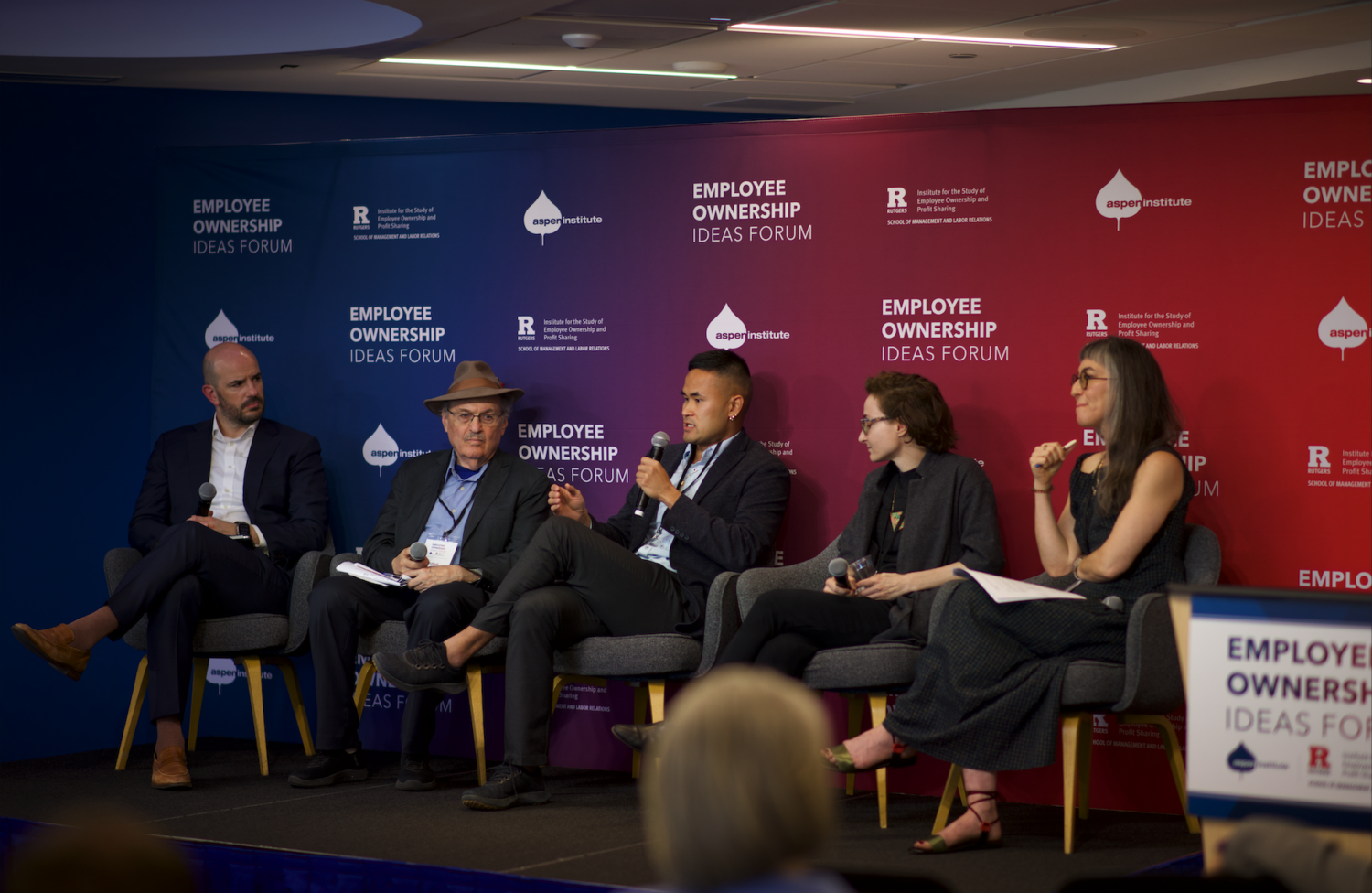
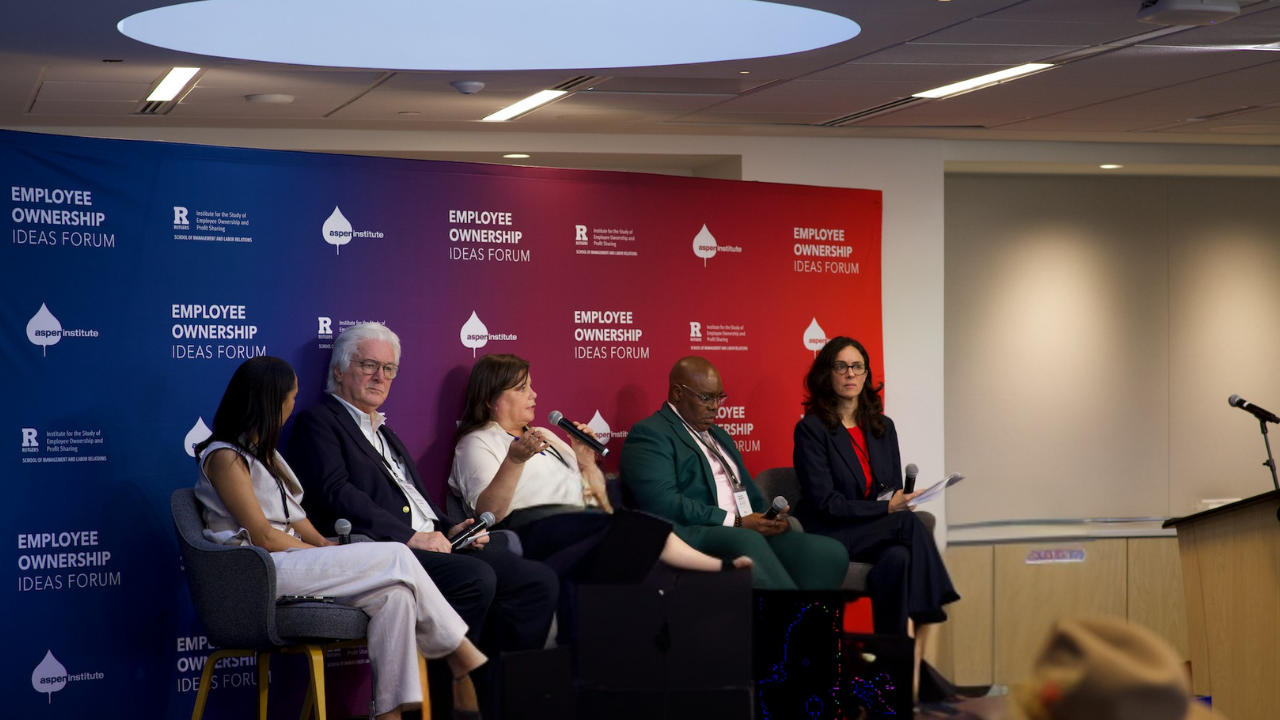
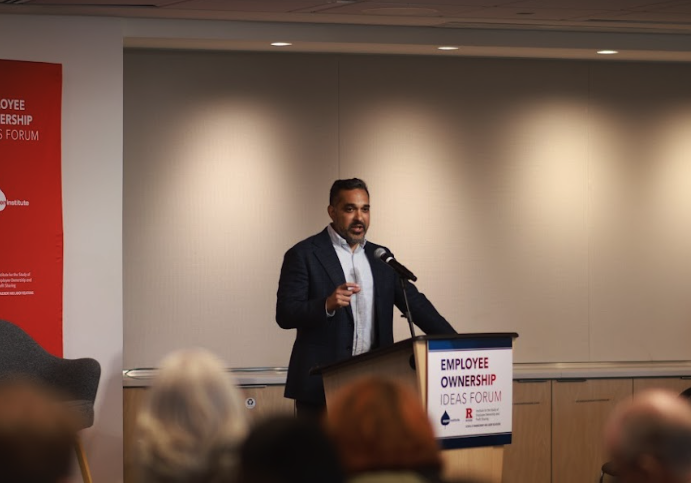
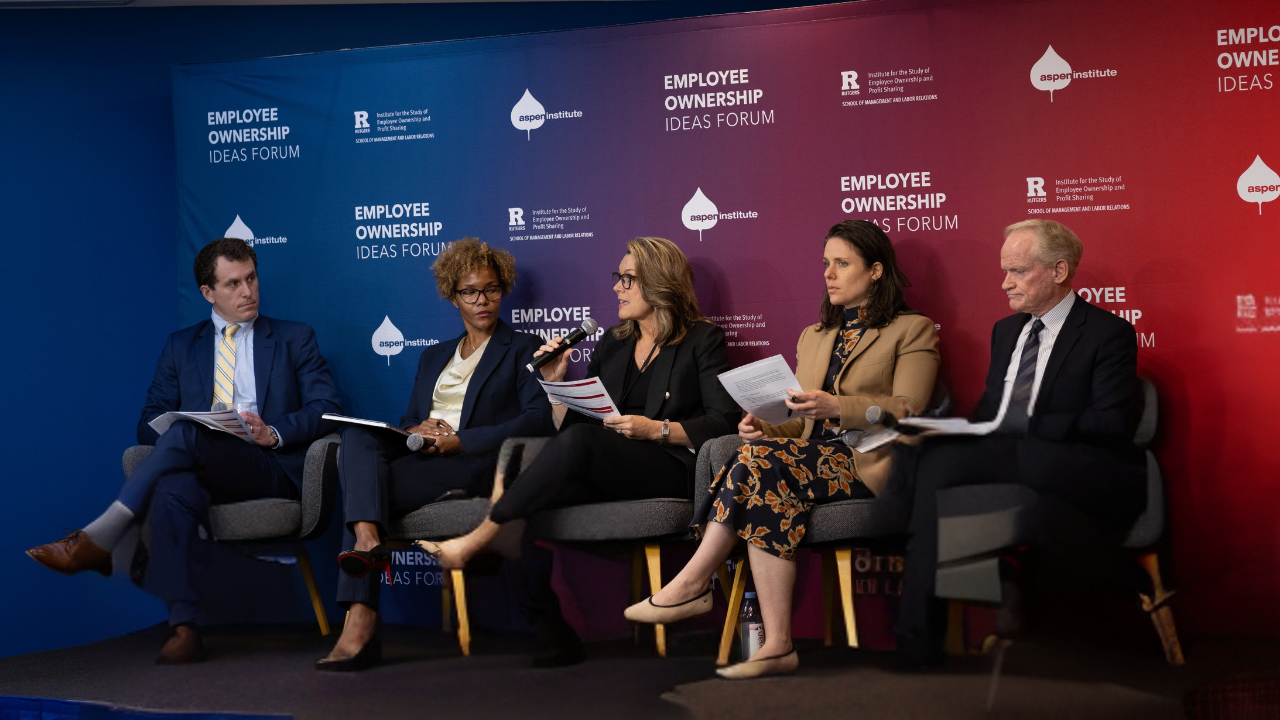
In this video, US Senator from Virginia Tim Kaine speaks at the 2026 Employee Ownership Ideas Forum, which took place on June 2-3, 2026, in Washington DC and online.
For more videos from the Forum, visit our event page or subscribe to our YouTube channel.
And subscribe to our podcast to listen on the go.
[00:00:05] Adria Scharf: Good afternoon, everyone. I’m Adria Scharf at the Rutgers Institute for the Study of Employee Ownership and Profit Sharing, and it’s wonderful to be here at this fourth annual Employee Ownership Ideas Forum. It’s incredible to see this gathering growing and becoming ever more powerful.
I have the real honor of introducing our next speaker, Senator Tim Kaine of Virginia. Senator Kaine was first elected to the Senate in 2012. He serves on the Armed Services, Foreign Relations, and Budget Committees, and on the Committee on Health, Education, Labor, and Pensions. He has a background that is maybe not so typical of the US Senate. He’s a former missionary, civil rights lawyer, mayor of Richmond, Virginia.
In the Senate, he has led some of the most serious bipartisan efforts to strengthen employee ownership. Last year, he was co-sponsor together with Senator Marshall of the Retire Through Ownership Act that Jim Bonham just spoke of, designed to reduce regulatory uncertainty around ESOP valuations. The bill passed the full Senate by unanimous consent and awaits action in the House. Please join me in welcoming Senator Tim Kaine.
[applause]
[00:01:28] Tim Kaine: I want to thank Adria, and thank you all. It’s great to be together with you. Jim, it was good to hear you as we work on a whole series of efforts. I do believe that ESOPs are just a unique opportunity. I’ve sometimes been accused of being a capitalist, and I’ve said, “Actually, I’ve never been a capitalist.”
I say that because I don’t think capital should be at the top of the pyramid. I don’t think everything should serve capital. I think talent should be at the top of the pyramid, and that capital and everything else should serve talent. The cool thing about ESOPs is it accomplishes what I view as a right structure of the economy, where you take the worker on the first day and tell them that your labor, which is your talent, together with your innovation and intuition, that that will be rewarded over the course of your life, and you’ll have a stake in this entity.
It’s such an exciting form of business formation that I first became aware of working in my dad’s union-organized ironworking shop when I was a kid, and working in the stockyards of Kansas City. For those of you who might be here from the Midwest, Kansas City is a bit of a hub of ESOPs. There’s a lot of construction and engineering firms in Kansas City that have long used the ESOP model, and I don’t know whether it’s so common in other parts of the country. It’s increasingly common in Virginia.
In Virginia, about 240 companies are organized in an ESOP structure, and there are over 550,000 participants. In a state whose population is about 8.5 million from birth to death, 550,000 participants in ESOPs is a very, very significant portion of our employed population. The Retire Through Ownership Act, and I’m just here really to talk about this and to thank my colleague, Senator Marshall. He and I work very closely on this together, and I want to thank my HELP Committee Chair, Bill Cassidy of Louisiana, and my ranking member, Bernie Sanders of Vermont, for greenlighting this in such an unusual way.
You do not know how unusual it is to get any bill through the HELP Committee unanimously and through the US Senate floor unanimously and through the House Education and Labor Committee unanimously. We still have the House floor, but so far, three pretty challenging bunches that usually have a lot of questions and thoughts and objections about how they can do this better have, with unanimity, embraced the Retire Through Ownership Act.
Now, you know what this act does. There was a challenge that we had to solve about the valuation of ESOPs. An owner would build up the value of a company and would decide, “I really want my employees to have an ownership stake.” That owner that’s built up the company, just like my dad built up the value of his company, which was not an ESOP, but when he gets ready to sell, he or she gets ready to sell, the owner should get fair market value for what the company is worth, obviously.
There would be a danger the owner should not get, especially if there’s a sale to the employees. If there’s a sale to somebody else, I guess it’s caveat emptor, but if there’s a sale to employees, the owner should not get a huge premium, thereby putting excess debt on the shoulder of the employees that would jeopardize their wealth and even jeopardize the success of the ongoing concern.
The question is, what is that fair value? When the ESOP statutes passed, the expectation was the Department of Labor would do regulations that would clarify what fair market valuation has been, and that has never happened. I think, Jim, you said, we’ve been waiting for an answer since the Carter administration. There have been tentative efforts that never really went anywhere in the DOL to do the regs establishing with clarity what valuation is.
With no prospect of action by the DOL anytime soon, Senator Marshall and I, together with others in a bipartisan way, said, “Look, this is not a problem that doesn’t have an answer. The IRS has long had rules about what fair market value of small or closely held businesses are. How about this? We’ll give you a safe haven. If you, in making the sale, will follow those IRS rules in the valuation of the company, no one can come back against you later and say, ‘Wait a minute, you overvalued this, and you put too much debt on the shoulders of the employees to whom you transferred the business.’”
That then gives the owner confidence that they can make the sale, realize the value of what they have built, and then let that company go forward without the worry of 2, 5, 10 years later, some kind of lawsuit against the owner for an unfair valuation. Interestingly enough, the proposal we have does not forbid the Department of Labor, should it want to, to go ahead and eventually do valuation regulations. There’s a real issue of, would they really even need to, given that the IRS has done this for so long and has clear rules about it?
Anyway, the ask I have of you is, we’re through the Senate and we’re through the Committee of Jurisdiction in the House. As you’re talking to House members, just say to them, “Please pass the Retirement Through Ownership Act.” It would be a great accomplishment for both houses. I think it would be a bill that President Trump would be thrilled to sign, great for the economy. This is one where if you’re talking to candidates, you can talk with excitement to candidates of either party because this is not a partisan issue.
If you heard in the committee hearing, both Senators Cassidy and Senator Sanders talking about the value of ESOPs, you couldn’t have told which one was a representative of which party. That’s why it got the unanimous vote. I think you just need to tell the House members, “If I could suggest, please get this done.”
What has been the holdup in the House? It’s a quirky procedural rule. Certain things in the House can be brought to the floor, essentially like we brought it to the floor in the Senate for unanimous consent. It’s called put on the suspension calendar in the House. Things can’t go on the suspension calendar in the House if there is a price tag to the bill that’s over a certain threshold.
I’m not sure whether the price tag that was put on this is accurate or not. That certainly shouldn’t be a bar to it being passed, but it’s a bar to the simple passage by unanimous consent like we did in the Senate. They have to actually do a little bit more work on the floor to get this over the goal line.
The upside is great for the American economy, for workers, for business owners to show that, “Hey, while we differ on a whole lot of things up here, there’s actually good bipartisan work that’s still to be done between Democrats and Republicans, even in a challenging time.” I think that would be a confidence boost, generally, if you could see us acting progressive and reasonable policy of this kind.
Thanks so much for your good work to promote ESOPs in this country, to promote the success of this bill. Let’s get this one over the line, and then we can talk about the next ones we need to get over the line. Thanks so much for having me today.
[applause]
[00:08:47] [END OF AUDIO]
About the Employee Ownership Ideas Forum
The Employee Ownership Ideas Forum brings together leading policymakers, practitioners, experts, and the media for a robust discussion on how we can grow employee ownership for the shared benefit of American workers and businesses. It is hosted by the Aspen Institute Economic Opportunities Program and Rutgers Institute for the Study of Employee Ownership and Profit Sharing.
About the Rutgers Institute for the Study of Employee Ownership and Profit Sharing
The purpose of the Institute for the Study of Employee Ownership and Profit Sharing is to study the various models that have emerged and will emerge of employee ownership shares and profit shares in the corporation and society of the United States and around the world.
About the Economic Opportunities Program
The Aspen Institute Economic Opportunities Program advances strategies, policies, and ideas to help low- and moderate-income people thrive in a changing economy.
Join Our Mailing List
To receive occasional emails about our work — including new publications, commentary, events, fellowships, and more — join our mailing list.
Connect on Social Media
For news and updates every day, connect with us on the social media platform of your choice.