Aspen is a place for leaders to lift their sights above the possessions which possess them. To confront their own nature as human beings, to regain control over their own humanity by becoming more self-aware, more self-correcting, and hence more self-fulfilling.
Roberta Glenn never imagined working at a bank. In fact, she disliked her college accounting class so much that she switched her major from business to psychology.
But after years working in Tribal administration, Glenn, a member of the Crow Nation, wanted to do something different to support her community. She took a job at Plenty Doors Community Development Corporation, a Community Development Financial Institution (CDFI) serving the Crow Reservation.
“Finance and business was not where I thought I would be,” Glenn says. “Now after four, going on five, years, I’m definitely where I need to be.”
Last fall, she helped her first client take out a loan to fund his small business. Since then, she’s watched the business flourish, even attending many of the events the business hosts.
“It’s really a good feeling to help our community members,” Glenn says. “That part is what I didn’t expect—the good things that happen in your community, for your people, and for the small businesses. I think that’s the best part.”
Over the last several years, the Aspen Institute Financial Security Program has worked with Wells Fargo and local partners to grow Indigenous representation and leadership in financial services. Because when financial service providers—at all institutional levels—reflect the diversity of the communities they serve, they are better positioned to create products and systems that respond to the needs of that community.
Strengthening career pathways
Genevieve Simermeyer, a director at the Mountain Plains Community Development Corporation, stresses the need for representation in banking and lending. For many Indigenous people, she says, it’s important to have “someone across the desk from them who looks like them. You feel like things are more within your reach because you have that relationship and that trust in front of you.”
That insight is what drove one coalition of Native CDFIs to develop the Yellowbird Fellowship, a workforce and professional training program for people working at or interested in Native CDFIs and financial services.
The fellowship was born in 2022, when the coalition—composed of eight CDFIs across Montana, South Dakota, and Wyoming—received federal funding for a series of economic development projects, including a workforce training component led by NACDC, a coalition member CDFI on the Blackfeet Reservation. Working with consultants to conduct an assessment of regional CDFIs, NACDC found that most needed more staff trained to serve in lending positions, particularly with expertise in underwriting and documenting community-based loans.
To fill this gap in training, NACDC launched the Yellowbird Fellowship with federal and private funding in 2025, starting with a pilot cohort of staff from member CDFIs. Now in its second year, the fellowship has expanded to any Native professional looking to work in CDFIs.
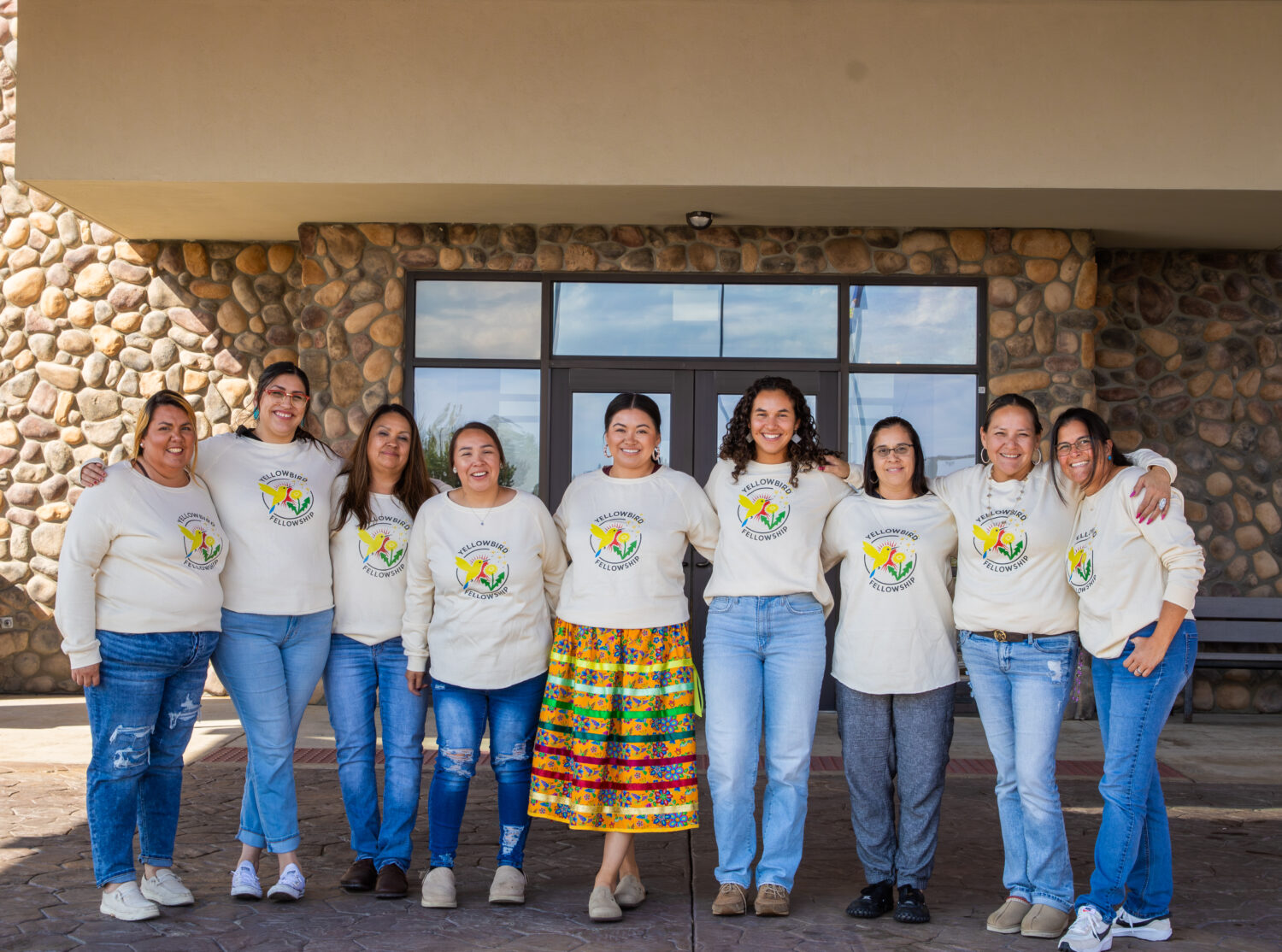
The Yellowbird Fellowship pilot cohort gathered at an in-person convening in Browning, MT, earlier this year (Courtesy of NACDC).
Shortening the CDFI learning curve
Developed and led by Native professionals, the program runs over the course of a year, with three in-person convenings, weekly virtual learning and community-building sessions, course modules on topics like CDFI lending and accounting, as well as mentoring and coaching from more seasoned financial services professionals.
There was really not a Native-based program that pulled in all of the cultural and human components of working in Tribal communities.
Lanalle Smith
According to fellowship co-instructor Ben Sanders, Yellowbird’s curriculum is designed to “shorten the learning curve” for early career professionals or people who are new to financial services, ultimately creating “high quality staff members that [will] provide great services to the community.”
“I think it’s going to open up the whole labor force of individuals that are prepared and ready,” adds Angie Main, who heads up the fellowship and serves as Executive Director of NACDC.
Members of the pilot cohort—who include Glenn and Simermeyer—say that Yellowbird programming is different from other professional training because it emphasizes the unique lens that Native CDFI staff bring to their work as lenders in Tribal areas.
The first cohort of Fellows graduated in May of 2026 (Courtesy of NACDC).
Yellowbird instructor Lanalle Smith has been working in financial services for 30 years, most recently as the owner of Blacksheep Insight and Consulting. Until now, she says, “there was not a Native-based program that pulled in all of the cultural and human components of working in Tribal communities. I learned a more westernized approach to delivering financial services and underwriting, and quickly realized that that is not the best way to work with our Tribal members.
“Bringing all the pieces together within this fellowship has really been meaningful,” she adds.
Simermeyer agrees: One of the most valuable parts of the Fellowship for her has been its focus on alternative approaches to and understandings of lending. “The idea of cooperation and helping your community and your family—that is a really important part of Indigenous values,” she explains. “It’s not about just supporting one person through a loan, but looking at it as how it’s benefiting the whole community.”
They emphasize building trust with clients, often providing financial education to help them build credit or prepare for a loan application. Where the same clients might be denied at a national bank, Native CDFIs help people work toward their goals of buying a home or small business.
“Senior officers [at Native CDFIs] have an intricate and intimate knowledge of how best to serve those communities,” says Sanders, who also works with NACDC’s subsidiary, Indigenuity Clinical Lab. “And so when we’re looking at money that is provided to CDFIs in an unrestricted manner, that allows maximum flexibility for the CDFIs to move that money into the communities in the very best possible way.”
It’s not about just supporting one person through a loan, but looking at it as how it’s benefiting the whole community.
Genevieve Simermeyer
The impact is profound: According to Main, NACDC has injected $30 million into Montana Indigenous communities since its founding. More than providers of flexible capital, Native CDFIs are trusted partners in their communities, and they play a critical role in supporting Tribal economic thriving and sovereignty.
“For a lot of Native communities, it’s important that we have families that stay,” says Simermeyer. “And building generational wealth through businesses can help keep that sense of ‘I can stay here,’ so you’re not losing that community.”
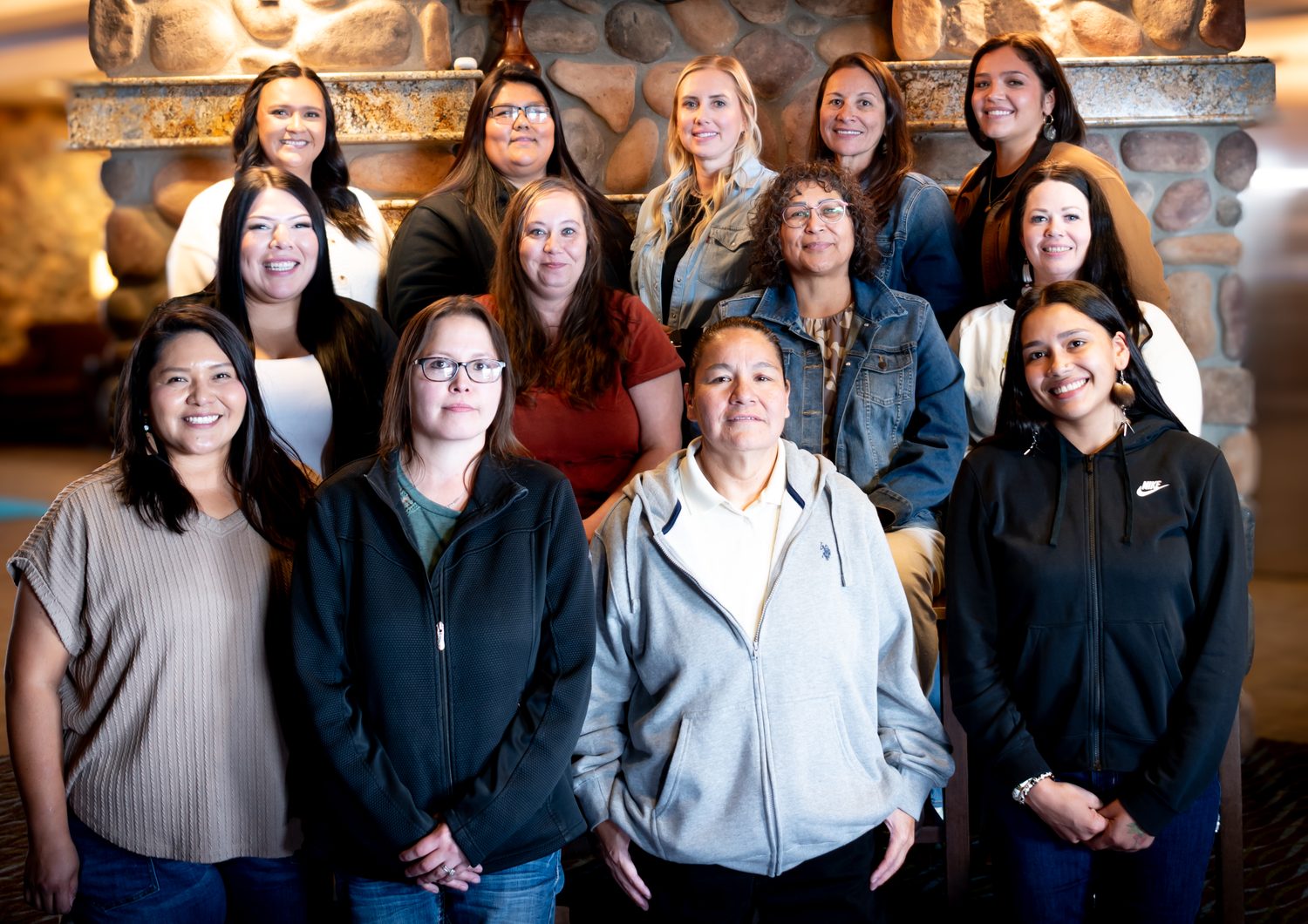
The 2026-7 Yellowbird Fellows gathered for their first in-person convening in September (Courtesy of Leona Antoine).
What’s next for Yellowbird
With the new cohort onboard, NACDC is now refining the curriculum based on the learnings from the pilot. They also hope to expand this training to Tribal colleges in the coming years, providing young people with the technical knowledge they need for a career in financial services.
The NACDC team has also begun fundraising to make Yellowbird sustainable for the long-run, Main says. “We need to fundraise in order to keep this fellowship program moving so that more individuals in our communities have access to and know that they can have a career in the finance world.”
If you’re interested in learning more or supporting the Yellowbird Fellowship, contactAngie Main.
Native CDFIs play a critical role in the financial security of local communities and Native reservations. To learn more, we interviewed the leaders of a financial services training fellowship for Native professionals.
This case study takes lessons from the legal field’s efforts to empower Native youth to learn how we can build a financial sector that better serves diverse communities.
Shared language is a key starting point for organizations looking to adopt person-centered practices. This resource offers a set of common terms to guide how we talk person-centered work.
This resource outlines four phases of person-centered work, illuminating key features of each phase. Designed to be used by a wide range of leaders, this tool can support internal assessment, knowledge building, and strategic planning.
There are more financial products available than ever to help households weather financial shocks. But are they actually delivering the resilience people need?
A new White House Executive Order (March 6, 2026) is an important milestone in America’s fight against fraud and scams. Here, we outline several priorities that could help shape a strong federal action plan.
Since 2021, Aspen FSP and our Community Advisory Group have worked to forefront lived experience of financial insecurity across our research and convenings. Learn how in this reflection by Riani Carr.