NCEO’s Loren Rodgers Keynotes the 2026 Employee Ownership Ideas Forum
Description
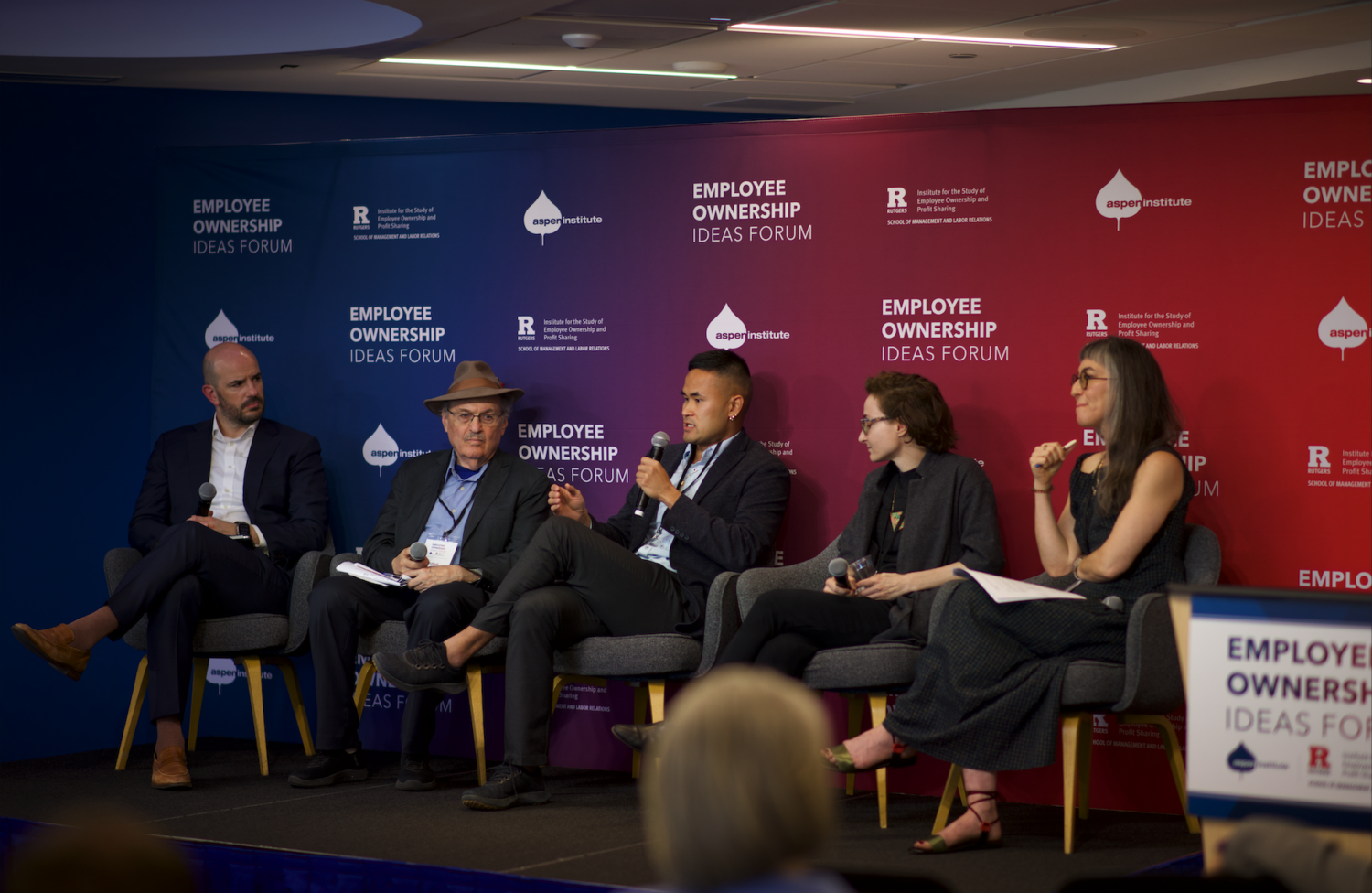
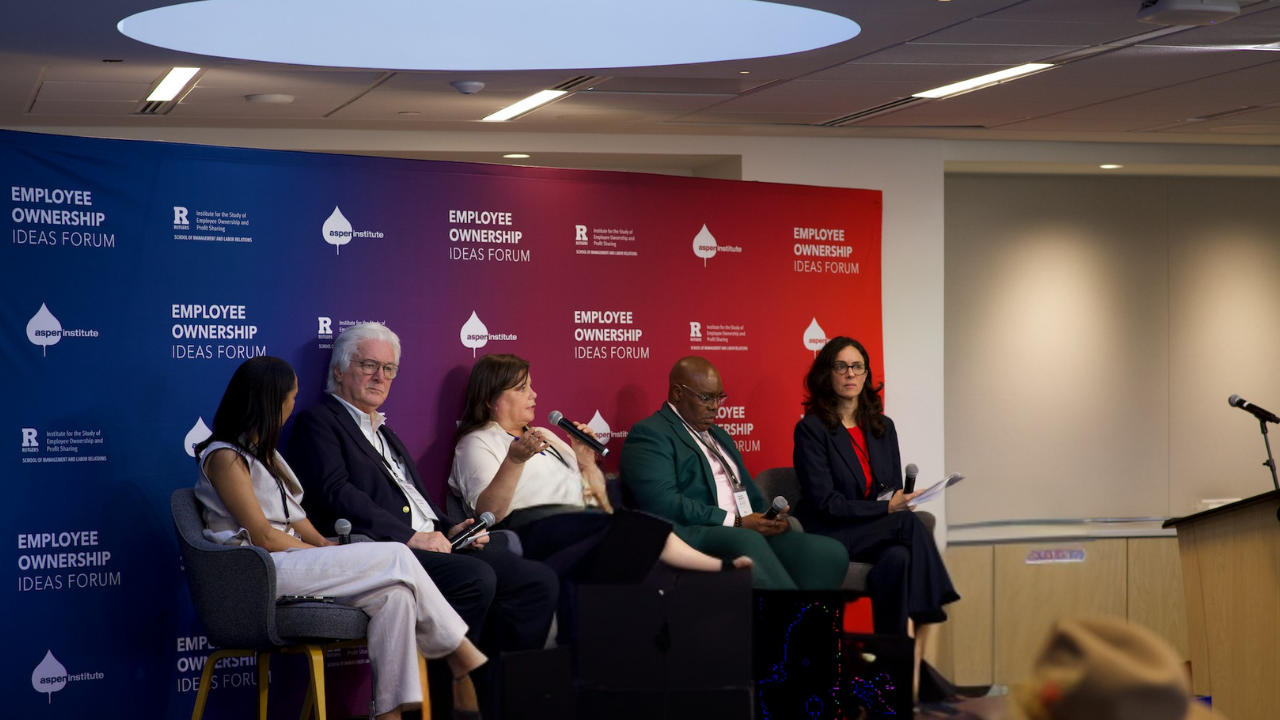
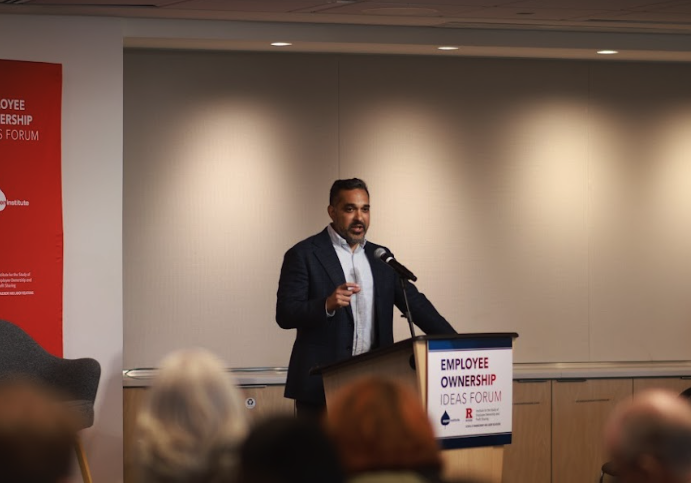
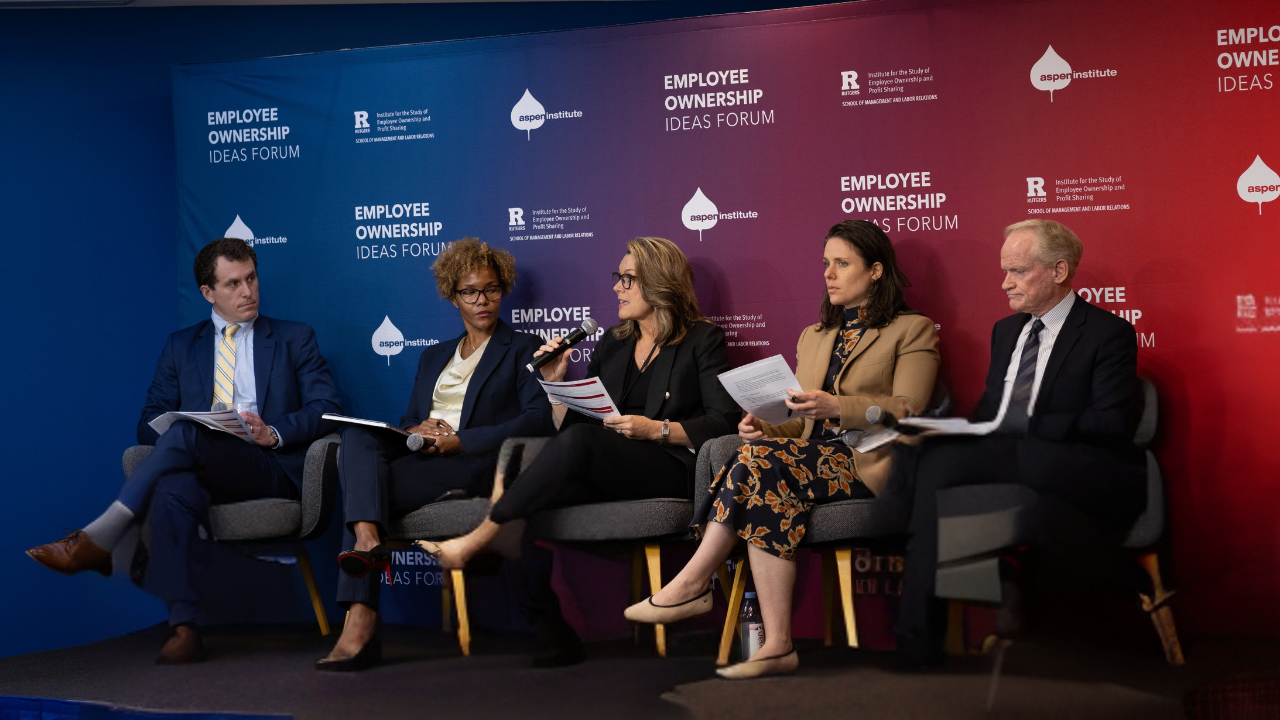
In this video, Loren Rodgers — executive director of the National Center for Employee Ownership — speaks at the 2026 Employee Ownership Ideas Forum, which took place on June 2-3, 2026, in Washington DC and online.
For more videos from the Forum, visit our event page or subscribe to our YouTube channel.
And subscribe to our podcast to listen on the go.
Resources
[00:00:05] Merrit Stüven: Our next speaker doesn’t really need an introduction in this room, but I will introduce him anyways. Loren Rodgers joined the National Center for Employee Ownership in 2005 and has been its senior executive since 2011. Since entering the employee ownership field in 1995, he has helped hundreds of companies navigate this field. He is an expert in all forms of employee ownership and equity compensation, best practices for employee ownership companies, research, effective communications, employee motivation, corporate governance, ESOP transactions and operations, and business literacy. We are so glad to have Loren at the forum once again. Please welcome Loren Rodgers.
[applause]
[00:00:52] Loren Rodgers: All right. Thank you. I just want to say thank you for having me here. I am thrilled to be here and have a chance to yak at you for a little while. I’m also really happy to be right after Phil because I think it makes me look kind of tall, right? [laughter] All right, bad joke. Actually, as it turns out, you set this up perfectly. Thank you, Phil. I’ve got a concrete proposal I’d like to share with all of you here, and I hope you’ll take me up on it because it builds on that demand-side idea that Phil was talking about.
When I was thinking about setting this up, I was– I love stats. I joined the NCO as a research director, and I was thinking I would share a bunch of stats, but Doug Kruse. Then I was thinking maybe I’ll tell some stories, but then you got Gina, and you’ve got that whole panel earlier on, so strike that one. What I really want to do is just focus on this one idea, a proposal I’ve got for all of you. I’m not going to tell you anything, any facts, any stories. You already know all this just as well as I do. I don’t think anybody here needs to be persuaded.
Instead, I’m going to share this proposal with you and ask you to kick the tires, and if you like it, to join me in helping make it a reality. Before I do that, indulge me in three minutes of a tangent. I’ve got a poster in my office. It celebrates the 10,000 employee-owned companies that the United States had in 1992. The trend line on employee ownership goes up most of the time. Sometimes it goes down, but right now we don’t need a trend.
I don’t think anybody in here would be happy with a 3% year-on-year increase in employee ownership for the next gazillion years. I think we need to do better than that. One problem is we’re not reaching our potential as a movement. We here in this room are the stewards of employee ownership. Many of us are on our paychecks trying to grow and thrive, and yet as organizations, we don’t always work as well together as we could.
At best, we support each other haphazardly. At best, we sometimes duplicate each other’s efforts, and I guarantee you, if anybody Googles employee ownership, they’re going to find a whole bunch of different organizations that don’t seem to know the others exist. That’s at best. At worst, we tussle. When I started planning these thoughts, I thought I’ll give you my diagnosis of why we’re in this state, but really let’s not do that. Maybe your thoughts are already going there, but let’s not go there. Let’s not figure out the why. Let’s talk about what to do instead.
To make it simple, I think what we want here in this room is a paradigm shift. I think we want an employee ownership economy. We’re not there now. I think we want a paradigm shift to the employee ownership economy. I’m not talking about ESOPs in particular. I’m talking about employee ownership. Employee ownership is varied. It has many different forms. Jim Bonham earlier made an excellent point about the danger of conflating other forms of employee ownership when you’re making a policy pitch on Capitol Hill and confusing people.
Hat tip to Jim, by the way. I think he’s gone now, isn’t he? Okay. For the amazing work he’s been doing on regulation and helping make the world safer for employee ownership. I’m not a public policy lobbyist. The NCEO is a 501(c)(3). We don’t lobby. I’m happy to leave the lobbying and how we frame all this to the ESOP Association, DAWI, ESCA, and Lafayette Square. They’re really good at it. I’m not.
Policy, as Phil just said, is not our only challenge. We need to do a better job of getting business owners into the pipeline that leads them to employee ownership. We need to do a better job of nurturing them once they get into that pipeline. Employee ownership includes worker cooperatives. It includes employee ownership trusts. It includes direct employee ownership. The ESOP community cannot impose their definition of employee ownership on the other forms of employee ownership. That’s the end of my three-minute tangent. Now let me get to the proposal.
I’ve had a lot of private conversations with many of you in this room. They’ve actually been really inspiring. I wanted to call one out in particular. I won’t share the person who had this thought without her permission, and I don’t have it yet, but one person suggested that the ambition and the passion of what we all feel in employee ownership is best captured by the phrase that we need to build a beloved community of employee ownership. That’s a big phrase with a lot of history in our country. Martin Luther King used it. Josiah Royce used it over 100 years ago.
I think it’s an ambitious way to phrase what we need. I think it’s probably the wrong thing to say in public, outside of rooms like this one. I’m going to start just calling it the employee ownership community. Inside my head, that word beloved is going to be there. If you want to insert it when you’re thinking about this, please do. My proposal to you is that to build that beloved employee ownership community, we need a framework, need a structure.
Let’s just call it a consortium for now. I think we need to build that to facilitate our work together and to be the hub of the employee ownership community. Let’s launch it this summer. We don’t need a new entity. We’ve got plenty of entities already in the field, maybe too many, and we could deal with some consolidation, but we do need a place for the existing entities to play nicely with each other, to be enough aware of what they’re doing that they can support each other.
Let me tell you what I’m thinking of by the employee ownership consortium. I welcome other people here to give me better ideas. I hope we can all join together in a call later this month to put some more meat on these bones. Oh, sorry. One of my staff members always tries to get us to use vegan-friendly metaphors, and I just messed that up. [laughter] I think the consortium ought to first identify common ground, and it ought to draw the boundaries around that common ground very broadly, so it includes all people of goodwill who want to be part of this employee ownership conversation.
I’d say there are three principles. The first is everybody in the consortium should agree to some simple golden rule principles. We all support each other, we all say nice things about each other, no disparagement, and we all work to send traffic to each other. We see each other’s success as the success of the movement to which we’re all dedicated. Second, it’s voluntary. The consortium would not nix anybody’s plans, not constrain anybody’s entrepreneurial thinking, because right now one of the greatest strengths we have as a field, and I’m looking at several people in this room, is that we’re creating bold, new entrepreneurial ideas to make more employee ownership.
Third, we need an outer limits definition for what employee ownership is. I think a really simple way to do that, and this is based on a summit that we hosted at our conference in Milwaukee just over a month ago, poof, time flies, is something deserves to be in the employee ownership conversation if it involves actual ownership of shares by employees or a legally defensible right to ownership rights, if it’s broad-based, and if the intent is to create employee economic well-being. I think those three things are enough of a definition to define what deserves to be in the employee ownership conversation.
Many of you have been in the field long enough to know that we have tried this before. We’ve tried to build organizations, we’ve tried to build collaboration among all of the organizations in the field, and it didn’t work so well. I think we’ve learned three lessons, and I think we can overcome what hasn’t worked in the past by learning those three lessons. One, in the past we’ve started by blue sky thinking from scratch with a huge group, the whole massive whiteboards and sticky notes. Let’s not do that. I think we’re past that point. I think modestly that the points I proposed above or some variation of them are a good enough starting point for us to have a productive conversation.
Second, I think in the past we’ve taken way too long to get to a concrete, productive output. Talking about vision statements and organizing things into general themes doesn’t translate into action very quickly. I think there are some things we can do really quickly if we just get a group to meet periodically and have it sufficiently staff-supported. I think we could create a calendar for all the events in the field so anybody can see where they all are all at once. We could probably even coordinate among the timing of some of those events. Even more than that, maybe we could have some of these events feed other events. Part one of a session is at an ESCA event, and part two is at a DAWI event.
I think we could also look at research. There’s a lot of research going on here, and I think people could both make better use of it and make sure that the research projects are more compatible than they have been. I think we should specifically explore some industry-wide statements, like about artificial intelligence, because artificial intelligence could transform the role of service providers in this field, and I think we need to get ahead of that. I think we need to have somebody who’s thinking about doing employee ownership understand what the potential and the risks of using artificial intelligence are.
I think another great example of a place we could collaborate is Governor Newsom’s recent executive order about artificial intelligence and employee ownership. That would be a great thing to have a field-wide response on. More broadly, I think maybe the medium or longer term, after we’ve had a little bit of experience with this, we could potentially build a single common web destination where we would all send any employee ownership curious person. It could go to one place and then be sent out to other places afterward.
I think we could also look at consolidating, pairing, or jointly sponsoring events. I think we’ve got too many events in this field, and they don’t always coordinate very well. Maybe we should take five small events and turn them into one big event with a whole bunch of joint sponsors. Doing that is a risk and an investment. It won’t be cheap, and it’ll take money, time, and a bunch of staff resources, but those are concrete things that a consortium could do. That was a long tangent.
The third thing I think we can learn from the past is that we need to have a single person or an entity with sufficient staff support dedicated to the consortium. I think it’ll work best with a single entity serving as the host of the consortium. It doesn’t need to be the NCEO. Did I say who I am? Yes. I’m Loren. I’m at the NCEO. It could be. We can’t do this on our own, and we’re dedicated to the access of the entire field, including every organization in here. We are prepared now to invest deep staff support and organizational resources to make the consortium happen.
We’ve already changed our organizational structure. Don’t tell anybody this is not public yet. My colleague, Tim Garbinsky, whom some of you may know, is going to be shifting roles, and he’s going to be dedicated to partnerships. If we find momentum to this proposal here, he has the staff power and the relationships in the field to invest in making this happen. We’re also willing to invest some of the cash we have on hand to support the community. I’m optimistic that we can raise some outside support to be able to invest sufficiently in this over the long term. In fact, in the couple weeks I’ve been loosely kicking this idea around, I’ve got over $100,000 in commitments or near commitments to support this idea.
What am I asking of you? I don’t need much. I want to know if you’re interested in investing in this proposal with me, and if you’re interested in exploring whether it’s viable. I’ve got a goal of having a meeting sometime this month so we can move this forward. As long as you’re a nonprofit, a university in this field that is helping to build this field, I’d love to get you involved in that core planning process.
If you’re a service provider, a company, or a foundation, I’d love to get your input into this. I’d love to build you into how we think about how to build this beloved community. If you’ve got some money you can throw at this, I think that would go a long way to making this a long-term, sustainable way to shift the field, to build the paradigm shift, to build an employee ownership economy, help build the demand side of employee ownership, and help us all get to where we want to be, an employee ownership economy.
[applause]
[00:14:33] [END OF AUDIO]
About the Employee Ownership Ideas Forum
The Employee Ownership Ideas Forum brings together leading policymakers, practitioners, experts, and the media for a robust discussion on how we can grow employee ownership for the shared benefit of American workers and businesses. It is hosted by the Aspen Institute Economic Opportunities Program and Rutgers Institute for the Study of Employee Ownership and Profit Sharing.
About the Rutgers Institute for the Study of Employee Ownership and Profit Sharing
The purpose of the Institute for the Study of Employee Ownership and Profit Sharing is to study the various models that have emerged and will emerge of employee ownership shares and profit shares in the corporation and society of the United States and around the world.
About the Economic Opportunities Program
The Aspen Institute Economic Opportunities Program advances strategies, policies, and ideas to help low- and moderate-income people thrive in a changing economy.
Join Our Mailing List
To receive occasional emails about our work — including new publications, commentary, events, fellowships, and more — join our mailing list.
Connect on Social Media
For news and updates every day, connect with us on the social media platform of your choice.