The Necessity of Employee-Centered Strategies: A Book Talk with Steve Dawson and Jerry Rubin
Transcript
[music]
[00:00:11] Maureen Conway:
Welcome, everyone. My name is Maureen Conway. I’m a vice president at the Aspen Institute and executive director of the Economic Opportunities Program, and it’s my pleasure to welcome you to our conversation today, The Necessity of Employee-Centered Strategies: A Book Talk with Steven Dawson and Jerry Rubin. This conversation is part of our Opportunity in America series, in which we discuss the changing economic landscape and bring a variety of leaders and innovators to a conversation on how to build an economy that works for everyone.
Before we start, I want to do a quick review of our technology. All attendees are muted, but please use the Q&A button at the bottom of your screen to submit and upvote questions throughout the discussion today. We know we have a great and experienced audience, so please do share your perspectives, ideas, examples, resources, and experiences related to today’s topic in the chat. We encourage you to also post about this conversation on the social media platform of your choice. Our hashtag is #TalkOpportunity.
If you have any technical issues during this event, please message us in the chat or email us at [email protected]. This event is being recorded and will be shared via email and posted on our website. Closed captions are available for this discussion. Please click the CC button at the bottom of your screen to activate them.
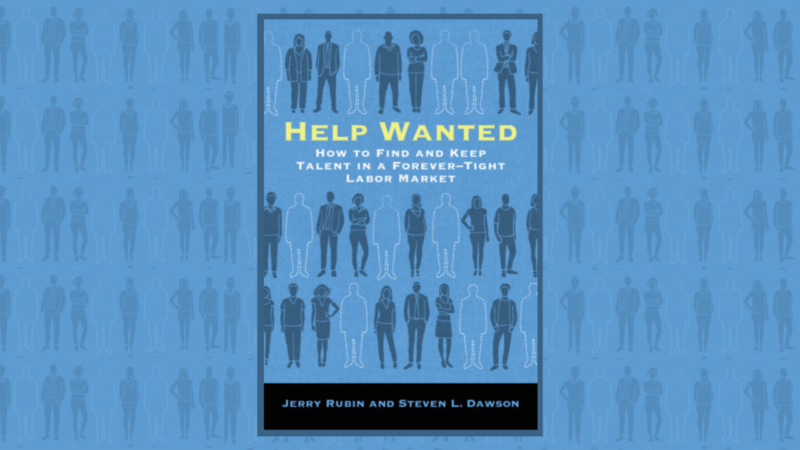
Now to today’s event. I’m so pleased to have Steven Dawson and Jerry Rubin here with me to talk about their new book, Help Wanted: How to Find and Keep Talent in a Forever-Tight Labor Market. This book is available for preorder now and will be out on August 4th. If you’ve joined us for conversations before, you’re likely familiar with the job quality challenges that many workers in the US face: low wages, unstable and unpredictable schedules, limited employment benefits, unsafe working conditions, et cetera.
We explore these issues often and the way they show up in different industries, affect different groups of people or different regions of the country, and we consider various solutions. In general, our focus has been on the challenges faced by the workers, by the job seekers, by the job holders. What I really appreciate about Steve and Jerry’s book is that it looks at these same job quality challenges but starts with an argument about why these challenges are increasingly a problem for employers. What I also appreciate is that they not only lay out the problem, but they do it very succinctly and then quickly move on to a wide variety of ideas and examples about what to do.
That brings me to introductions. Steve and Jerry may be familiar to many of you. They are great friends and longtime collaborators for us here at the Economic Opportunities Program. I usually just do a name-and-faces introduction, and I think I’ll move along rather quickly, but I did just want to say that Steve and Jerry are people that I’ve really admired and learned from throughout my career.
They are people who’ve taught me what it means to do systems change, how to really take aspirational concepts that may seem abstract and daunting and really break them down and turn it into practical action. Their book is full of ideas for how various people can do that, and so I’m really just very excited to talk with them about it today. Let me just jump in. To begin with, why don’t I let each of you say a word of introduction about yourselves, and maybe you can also share a little bit about what inspired you to write this book. Jerry, go ahead.
[00:04:11] Jerry Rubin:
Thanks, Maureen. Thank you for your kind words. First of all, I want to thank you and Aspen Institute for having us, and for all of those who took the time today to join us. I will just say a little bit more about myself. I spent 15 years working as the CEO of Jewish Vocational Service, or JVS, in Boston. About three years or so ago, I retired, or was supposed to have retired. I didn’t quite retire and took up a couple of other projects.
I joined the Project on the Workforce at the Harvard Kennedy School, where I’m now a senior advisor, and began actually writing and researching there on what we call untapped talent, which I’m hoping we’ll get to in a little bit. I also became a Foundation Fellow at the Eastern Bank Foundation, which is part of Eastern Bank, a large regional bank in the Boston area, which generously supported the research and the writing of this book.
I’ll say a few things about why we wrote this book, because it really was a collaboration, and then I’ll throw it to Steve for his introduction. He could fill in what I might have missed. We wrote the book for several reasons. I’d say, first of all, it was our strong sense that the business press and businesses pay most, if not all, their attention to what we call the short-term weather, whether hiring is up or down, whether they’re bringing on people, whether they’re laying off people, but they pay very little attention, if any, to the long-term climate of the labor market. That climate, from everything we could see, all the information, all the data that we had, portends very, very serious labor shortages for the foreseeable future.
We also got tired in our many years of working with many employers, not all, but many employers. We got tired of hearing from them that they just can’t find or keep good employees. It often seems like they’re waiting for the perfect candidates to come to their door, or maybe the next recession that sends a whole bunch of applicants, or maybe for AI to make hiring new people unnecessary. We knew of all kinds of really interesting companies who were creatively building an employee-focused culture to find and keep talent rather than just waiting to see what would happen, and we have a lot of those examples in the book.
Then, of course, once I convinced Steve to come out of real retirement to write this book with me, because I was certainly not going to write it myself, I knew we could do it. That was motivation for the book. Let me turn this over to Steve, and you can do a little bit of your own introduction.
[00:07:13] Steve Dawson:
Thanks, Jerry. Thank you, Maureen. It’s really nice to be back in the loving arms of the Aspen Institute. As you know, we go way back. You and I wrote together the Building Ladders and Raising the Floor book more than 12 years ago that really urged the field to not only look at career ladder strategies, but also to really focus on making frontline jobs, bad jobs, better. Then even 20 years before that, with your predecessor, Peggy Clark, wrote Jobs and the Urban Poor, which was one of the early arguments to really focus on sectoral strategies in the workforce world. I’ve really enjoyed working with the EOP program, and it’s really meant a lot in terms of my learning from you all.
My background quickly: I was with a number of friends who started what is now the ICA Group, a worker cooperative development organization, which focuses on creating and still employee-owned companies, worker cooperatives, particularly. Then 25 years ago or so, began working with several friends to start what is now called PHI, or the Paraprofessional Healthcare Institute, which focuses particularly on the direct care workforce and is a close affiliate with Cooperative Home Care Associates, which, if any of you involved in employee ownership know, is the largest worker cooperative in the country, based in the South Bronx.
My focus has always been on how to figure out how to create better jobs, particularly for frontline workers. As Jerry said, the inspiration for the book was that Jerry asked me to work on the book with him. I was happily retired, but he said, “No, there’s more work to be done.” What really inspired me as we wrote the book is that in the past, I’ve written mostly and worked with workforce practitioners and funders. This book is really addressed directly to employers. This is the first chance to really make arguments directly to employers about what they could be doing to hire from untapped talent, create better jobs that people really want to stay in, and really rethink how they deal with their public policy strategies.
[00:10:02] Maureen Conway:
Great. First, I have to say that Jerry’s no fool. He picked an excellent co-author. Having done various writing projects with [crosstalk].
[00:10:10] Jerry Rubin:
I always knew how to hire well.
[laughter]
[00:10:19] Maureen Conway:
I really also appreciate, as you know, Steve, the issue of trying to make bad jobs better and how do we really think creatively and strategically about that. I appreciate that this book is written for employers, whether they’re for-profit, nonprofit, public sector, to really think about what’s within their power to do to improve the quality of jobs in ways that makes their organizations stronger. Really appreciate that.
I think it’s interesting that you start with this forever tight labor market because we’re kind of in a moment with AI. There is this profound uncertainty about what will happen with work. “Disruption” seems to be the word of the day, and many people are concerned that jobs are going to disappear at a pace that we’re unprepared for. You bring an argument about a forever tight labor market, and so I was hoping you could just outline that argument for us a little bit.
[00:11:18] Steve Dawson:
Sure. The first chapter is really the only chapter that focuses on admiring the problem of how hard the labor market is right now. As you said, Maureen, the rest of the book is really focused on what employers can do very, very practically. That first chapter just simply lays out the argument that if you think, as an employer, you’re having a hard time finding and keeping talent now, we’ve got bad news for you.
It’s only going to get worse and worse because, unfortunately, the mainstream economics and the mainstream business press is really always focused on the demand side of the labor market of whether we have a recession, whether employers are needing workers or not. The labor market is just that, a marketplace, and we forget that there’s a supply side of the market as well. The chapter really focuses on the fact that the supply of workers in the United States has been slowly but surely constricting over the last 20 years, and that’s for three reasons.
One is that the native-born population in the US has been slowly getting smaller and smaller in terms of how quickly it’s growing. Contrary to when we were growing up, we were told we had a population bomb, Paul Ehrlich’s book in the ’60s saying that our biggest problem was that we were going to have too many people in the world. Turns out that’s not the problem. Worldwide, not just in the United States, with the exception of Africa, the population growth curve is beginning to drop, and that’s certainly true in the US. That’s the cause number one of the shortage.
The second is that the participation rate in the workforce is beginning to also slow down dramatically. That means participation rate is how many people among the adult population of 16 to 65 are available for work and willing to work. That participation rate has been dropping steadily over the last decade. Around the turn of the century, around 2000, the participation rate was around 68%. Now it’s about 61.5%, dropping even faster. That’s primarily because the baby boom generation, of which we are a part, now the tail end is slowly exiting, as we are trying to do, from the labor market, so the participation rates are dropping there.
The third major factor is immigration policy. If it were not for the immigrant increase since the pandemic, because of those other two factors, our labor market would not have grown at all except for the immigrant population’s growth. Now, with the draconian change and dramatic rapid reversal in immigration policy, foreign-born workers are just no longer available in the workforce. We’ve literally lost about 700,000 net foreign-born workers in the last 12 months. Now, without the supply of foreign-born workers, we are absolutely flattening out.
We last were able to touch the book in terms of input writing in the fall. Even since we finished writing the book, those three trends have grown even more dramatic, particularly immigration. That’s why, even though we recognize there are many populations, communities of color, women, people living with disabilities, younger workers, older workers, many of those have much higher unemployment rates than the 4.2% we’re dealing with overall nationally.
Those folks may be saying, “What do you mean the tight labor market and I’m having trouble finding jobs?” It’s precisely those populations that we are turning to the employers and saying, “That’s where your future source of labor is.” Those are the communities you need to develop deeper organic relationships with in order to find the future talent for your organization. That’s the argument.
[00:15:57] Jerry Rubin:
I do want to just comment on one thing because if you don’t raise the question, I’m sure somebody else will, which is, “What about AI?” When we were working on the book, there were really two demand-side issues that we were paying a lot of attention to. One, Steve mentioned, which is immigration, which turned out to be a bigger issue than even we had predicted. The other is AI.
It’s funny, I remember we looked at, I don’t know, maybe half a dozen or 10 labor market economists who have looked at and written about this issue. We lined them up, and they kind of form a perfect bell curve, starting on one end with, “There’s going to be no more jobs left,” and then on the other end, “There’s going to be a lot more jobs.”
I think our sense was that the net of this particular technology change, although we obviously don’t know for sure, the net of the change will probably be largely neutral, but it will have an enormous impact. There’s no question. There are entire swaths of jobs, particularly in certain industries, that will be enormously impacted. I think the impact, as with other technology changes, are going to be very significant and really need to be dealt with. Our sense is that the overall result will really be relatively neutral in terms of the challenge that Steve laid out relative to labor shortage.
The one thing that we have said, and we do say this in the book, is that employers would be really smart to think about AI as a tool to allow and enhance their employees’ ability to be, A, more productive, but also to have better quality jobs, to focus on those tasks that are more interesting. In fact, there was actually a great program on this the other day that Steve and I both were listening to about just exactly that issue, which is that you’ve got a chance to improve job quality here if employers utilize the tool well.
The one other thing I would say about the AI issues, [chuckles] and I guess it’s a little bit of a smart-alecky thing, and this has come up. Actually, it was on the front page of The New York Times today. I saw something. A couple months ago, I saw a couple things put out by the construction trades, basically arguing that the biggest impediment to AI, of course, they need the data centers to be constructed, the biggest impediment was a shortage of construction workers. That’s not really the issue we’re talking about, but it does shed a light on some of the topics that we’re talking about today.
[00:19:05] Maureen Conway:
Yes, I appreciate that. I think there’s a lot of predictions around AI. Like 10 years ago or so, there were a lot of predictions around automation and driverless cars, and we still have truck drivers. It’s hard to predict the future of what technology will bring, but demographics, I think, are a little bit more predictable. I think the argument you lay out about declining population, that just is going to mean declining workers and how do we manage that, I think, is compelling.
In this mix, Jerry, I think, and where you guys are going, is employers need to think a little bit differently about how and who they hire. Maybe you could share a little bit about that first strategy that you outlined for where people should think about taking action in terms of rethinking their hiring strategy.
[00:20:07] Jerry Rubin:
I think I’m going to come back a bit to the technology question in the how you hire, and then I’ll talk a little bit about the whom you hire. It’s ironic that what are now called applicant tracking systems, which is the class or family of technology for hiring, actually grew up, in a sense, as a preventative measure to deal with the enormous explosion of online applications that started, I don’t know, 20, 25 years ago. It made sense. Companies were getting just a deluge of applications in the last big growth wave of hiring, and they were overwhelmed, so technology companies said, “Hey, we can help you with this.”
The irony is that, and I suppose in a total boom job market there’s some credibility to the argument, but the applicant tracking systems have grown up to be systems that too often screen out rather than screen in talent. I saw a statistic from Society for Human Resource Management who estimates that more than 50% of qualified applicants can’t make it past online ATS screening algorithms. That may be because caregivers have had interrupted work, or young people have had not long-term consistent work, or even go back further into the system: somebody who’s not a native English speaker actually can’t even access the technology or can’t game the technology algorithms.
What you end up having too often is not necessarily talent, but those who can game the ATS system. I think that’s one problem that we identify. What we suggest is, you can actually change that technology, so you can change the algorithms, you can make alterations, and we make some specific suggestions about that, but you might want to think about other tools for how you hire.
Steve mentioned earlier untapped talent, and I’ll come back to the how in a minute. When we talk about untapped talent, really what we’re talking about is individuals who would like to work, or work more, or work at a higher level than they’re working. It has been estimated that these individuals, what we might call underemployed or untapped talent, are more than five times larger than the unemployed talent pool. This is an enormous pool of untapped talent. They’re not necessarily always easy to find and always easy to pull in and to immediately get up to the level of performance that companies may be looking for.
If you think about hiring a little bit differently than just using an applicant tracking system, this is a really rich pool of talent. For example, if you’re thinking about reaching into communities of English language learners, you might want to think about partnering with organizations who have deep roots in those communities, where, as we know, in different communities relationships are above all how people get connected to work. You tap into those relationships, and all of a sudden, you’re thinking about a really different pool of talent.
We’ll talk about public policy a little bit later, but if you’re interested in caregivers, you might need to think about, you’re going to have to solve that problem perhaps at work. It’s interesting: when I worked for the mayor of Boston, this was a long time ago, so it was Mayor Flynn, for those of you who may remember that far back in your political history, but one of the very, very first things that we did was we built a childcare center at City Hall. In fact, my older daughter, who is now a mother herself, she was in that first class of kids at that childcare center.
It was amazing because caregivers, including my wife and I, we could drop our daughter off downtown. I could drop her off for our work. The mayor had great photo opportunities with little children. Of course, mayors always appreciate that. It’s interesting because the Commonwealth of Massachusetts did the same thing. In fact, my two nephews went to the childcare center. Massachusetts is the largest employer, the state of Massachusetts, so they did the same thing.
There’s a lot of ways for employers to think about reaching into pockets of talent, of working with organizations to rethink how you reach them. There are going to have to be adjustments. For example, reaching into an incredibly rich pool of talent in a disability community may require making adjustments and accommodations, but the return is enormous. We talk in great detail about those opportunities.
[00:25:32] Maureen Conway:
Great. That was like your first area was think about how you hire, and I really appreciate that focusing on how technology creates a barrier sometimes that we really want to rethink how to make technology work with us rather than against us. The next area you call focus on retention. You spend all this effort trying to find people and bring them on. How do you keep them? It sounds very straightforward, but of course, not really. That’s where a lot of the work of, how do you think about job design? How do you think about making some of those accommodations for people who are maybe a new population? How does that relate to your business strategy?
There’s a lot of really great material in this chapter, and I think it was really interesting. I was hoping you could, and I think, Jerry, you’re going to start here because I really thought the Little Sprouts Daycare example was really interesting. What I also really liked about it is it highlighted the role that community partners can also play working with employers as they figure out some of these challenges. Maybe you could talk a little bit about that and about, in general, what focus on retention means.
[00:26:48] Jerry Rubin:
I’m happy to. Actually, before I do that, there was one I just remembered as you were talking that there are a couple of examples on the hiring side in the book that I think are worth looking at. I’ll just mention one because I think one of the representatives of the company is maybe on the call. That’s Optimax, which is a precision lens company in Rochester, New York. What’s really interesting about that company, and they focus on job quality and retention as well, is that they’ve created this virtuous cycle, particularly with the educational institutions. I know there are quite a few educational institutions on this call, so I want to just focus a little bit on this.
This virtuous cycle where they’ve got relationships with high schools, with two-year institutions, with four-year institutions, and their own individuals, their own staff, are actually faculty. They’re working on curricula, and then of course, they hire students into internships and then into permanent positions. It’s just this cycle that creates really a talent pipeline, and we’ve got a number of those examples.
To the job redesign question, and I’ll tell the story because I think Little Sprouts is such an interesting one, and we were talking about childcare, and then I’m going to just ask Steve to say a little bit more about this issue of job redesign. It’s a fabulous story, and one I’m a little biased about because I was involved with this when I was at JVS. This question of retention, once you’ve gone through the hard work of finding and hiring talent in a tight job market, you don’t want to lose people. That’s where job redesign comes in.
Little Sprouts, Maureen, that you asked about, it’s a 1,200-employee childcare company throughout New England. I think they’re in Massachusetts and they’re in Connecticut and maybe New Hampshire as well. It was founded in 1982, and then a bunch of years later was actually purchased by a French private equity company that specializes in childcare. During COVID, and immediately after, they, like many other childcare companies, faced really severe recruitment and retention challenges. They had all shut down, and they had to reopen. People were very nervous about coming. It’s an underpaid and overexpected profession. We expect a lot but don’t value it in terms of financial remuneration.
Interestingly, Little Sprouts partnered with my former organization, JVS Boston, and utilized something that they call the Job Quality Benchmarking Index, which allows companies, through self-reporting, to be able to compare themselves on, I think, five or six major areas of job quality and then compare themselves to other companies within their industry.
As a result of this effort, they made major job redesign efforts. They, not surprisingly, raised wages, but they also expanded benefits significantly. They built staff leadership programming, and this helped lead to, I think it was something in the range of a 70% reduction in open positions and a 20% improvement in employee retention. It’s a great story, big impact, because as I said, it’s got many, many daycare centers. Again, I think maybe, Steve, if you wouldn’t mind just saying a little bit more about this focus on job redesign and job quality.
[00:30:50] Maureen Conway:
Jerry, I just want to comment on that first before we go to that, just because I think childcare, as you mentioned, it is such an important industry and has so many struggles. So often, and maybe, Steve, you’ll also comment on this, I think people assume that these businesses where there’s poor job quality, that they just can’t do anything differently. I think it’s a really great example about how, “No, they actually could do something differently and still make it work, and maybe even make it work better for their business.”
[00:31:23] Jerry Rubin:
I think you’re absolutely right. In fact, the Job Quality Index really does help people like low-hanging fruit all the way up to very expensive changes. One of the things they did was, of course, make it less expensive or with a significant discount for people to bring their own children to their childcare centers. That’s an advantage that childcare centers have. We’ll talk about it a little bit later, I think, if we talk about public policy, but that’s an area where you can actually improve the quality of the work in the service industries like childcare. Go ahead, Steve.
[00:32:02] Steve Dawson:
Sure. The chapter that really focuses on job quality is called Focusing on Retention. A couple things about the book that I think is really important to stress that this chapter focuses on particularly is that we’re not suggesting any one particular model of change. A lot of books that are written about, for employers, how to create a more employee-centered business organization, usually, they’re written by an organization or an individual that has a particular model in mind.
There are many very good models, but they have a particular model in mind, so their book tends to become a 200-page brochure for their services or their model. We, because of our experience, know that depending on what industry you’re in, what part of the country you’re in, what business you’re in, who you are, every business is different, and no one model, by any means, fits all strategies for all organizations.
What we try to lay out is, for one thing, a number of case studies. Maureen mentioned one of them in terms of Little Sprouts. Jerry just mentioned Optimax, but there’s over 20 different short 2, 3-page case studies of different organizations, different parts of the country, different industries, different sizes, each of which has really organically decided, “Okay, we’ve got a problem in terms of hiring and keeping people. What can we do differently?” Because it’s our problem, it’s our challenge. We tell those 20 different stories.
I think it’s really helpful for other employers who read the book to understand that, hey, I don’t have to look at any particular model or go off and hire someone right away. What I have to figure out first is what is my own business? What are my own employees thinking? What do they see as the problems of finding and keeping staff? What ideas do they have?
Throughout the book, we constantly urge the reader, the employer, whether they’re in a for-profit or a nonprofit or an agency, to very first just get out from behind your desk and go talk to your own employees and learn from them. That should be just the beginning of a constant set of conversations and ongoing relationships. Then from there, once you maybe get a few ideas, try them. It’s a very small thing. It could be having your own childcare center, but it could be just having a $2,000 fund for putting a down payment on a car. There’s just innumerable, whatever that word is, different ways in which, if you really are serious about this, you can just start trying to do things.
Then once you have some more experience, then, as we lay in the book, we lay out all sorts of different resources of people who do have models that may be very attractive to you because now you know more about what you’re dealing with and what your own employees are looking for. The book ends with a range of resources, including the EOP program at Aspen, of employee ownership being one of the obvious methods of improving retention, improving buy-in, and relationships between the workers and employers.
What we say throughout the book, and particularly in that chapter, is that the book is kind of a map. It doesn’t tell you where you are. It doesn’t tell you where you have to go. It just lays out a whole region of different activities and different models and different case studies. You get to decide where you are on that map, you get to decide where you want to head, and then we lay out resources where you can go to get more help.
That’s, I think, one of the particular ways in which the book is different from other types in the genre, is that it really is sort of a kick in the pants to our employer colleagues to say, “Look, just get out from behind your desk. Develop a relationship where you understand where communication is not just you doing better in telling your employees what’s going on. Communication is a two-way street. What you need to do is have both informal and then eventually more formal ways in which communication and information comes from the front lines and from middle management up to you, up to management, to figure out what’s going on and what your opportunities are.”
[00:36:56] Maureen Conway:
Great. I’m going to go to a couple questions from the audience. One is on whether you could elaborate a little bit more on the problem of untapped talent, and in particular, can you talk about the challenges faced by higher ed in terms of creating the talent that’s required by industry, and what might be short-term solutions? I’d just be interested in your thoughts on that role of higher ed in this whole mix.
[00:37:24] Jerry Rubin:
As far as the question of untapped talent, we talk about, I don’t know, five or six major pools of untapped talent: individuals of color, non-native English speakers, caregivers, young people, older workers, individuals with disabilities. I think those are the primary. There’s others, but those I think are the big ones.
[00:37:50] Maureen Conway:
I think formerly incarcerated as well.
[00:37:52] Jerry Rubin:
There you go, yes. The one other thing I want to say about untapped talent is untapped talent can also be your own employees. It’s really interesting, but in doing the research for the book, I learned, and I was really surprised, that internal hiring for open positions has plummeted in the United States. It’s about half of what it was if you look back about two decades ago, the rate of internal filling of open positions.
It’s like, A, your internal talent is your best source of talent, and it’s often where what I would call your untapped talent sits and is often stuck. Also, if people are happy with the organization, if they’re happy with the company, they’re also a great recruitment source. In fact, they may actually be your best recruitment source because they’ve got relationships in their family, in their community, and of course, they have to like the company. This gets to this question of, are you a good company with good jobs? Because if you’re not, then don’t rely on your employees for that.
I don’t know if I answered the question about untapped talent. I don’t know exactly what the person had in mind. In terms of higher ed or education in general, it seems to me that the ability to develop, and this is true for any– We’ve said that this book is really aimed at the employer community, and primarily it is. Our secondary audience is those who provide services to the employer community, and that would be educational institutions, training institutions, I think many of the people that are on this call, and I would say a couple of things about that.
There are so many examples of great partnerships between educational institutions and employers. I mentioned one with Optimax. I think where they run into challenges, or any provider of services to employers run into challenges, is where the selling of the services is preeminent over the understanding of the problem. My advice to educational institutions or training institutions is: listen a whole lot more than you talk, and under-promise and over-deliver. Listen more than you talk because you really want to understand the business and what it’s about and what’s keeping them up at night. Under-promise and over-deliver is always a good idea because employers have choices, and they can choose alternatives to you.
Look, that Optimax example is a particularly good one because Optimax also understands that they can’t just expect their higher educational partners to deliver exactly what they need when they need it unless they are deeply involved in identifying what their needs are, in helping to develop curricula, in helping even to raise money for training facilities, which is exactly what they did in their region.
It is a two-way street, and it happens. We see it all the time. I saw it in my own work with community colleges. Some were rigid, and this is the way we operate, and others were like, “What do you need us to do?” A lot of it is the culture, and that’s true on both ends. Look, for companies, it’s work, it’s a lot of work, and having dedicated people to work on it is really important. Likewise, on the educational side.
[00:41:55] Steve Dawson:
Can I just add really quickly on the Optimax example? What’s fascinating to me about them, and I’ve been out there in their company, is that when working with the community colleges, they’ve flipped the model on its head. The typical model, community colleges, the college will set up classes, individuals will matriculate into those classes, get trained for a particular industry, and then go out and try to find a job.
Optimax actually hires the employees first, designs the training programs with the community college. Actually, as faculty to many of those programs, their own employees then go through that training and know that they have a job with Optimax. It’s such a much closer relationship than the arm’s-length, I go to the community college hoping I get the right training, hoping to get a job.
[00:42:53] Jerry Rubin:
That actually was true in my experience with Jewish Vocational Service. We had the exact same model. People got hired first, then they got trained, and it was all paid for by the employer. It flipped workforce development on its head, which was like demand-pull as opposed to supply-push. It makes a huge difference. People get paid. Obviously, that’s going to make a big difference, but also the employer gets what they really need, and the worker gets the benefit of a job and pay through the whole training period.
[00:43:30] Maureen Conway:
Yes. I have a few questions here, and they’re kind of all on a similar theme about persuading companies to make the change. Is it through making the business case? Can you have a basic financial argument? Can you measure the cost of hiring and training versus the cost of job design to make a financial case? What is the way to persuade companies to rethink their labor cost minimization strategy and move in a different direction?
There’s a bunch of questions on that, but I also think you could bring in some comments about this because I think this is something that you think about a lot in the book. Good jobs are good business, but why is it so hard to get companies to see that? What are the barriers to change, and what are the ways to encourage change? Maybe you could comment on the business case specifically, and then, in general, how to encourage change.
[00:44:53] Steve Dawson:
Because of this very question, we have a chapter dedicated to facing resistance to change, because both Jerry and my experience, over the decades, has been, yes, when we work with employers, many employers, we have laid out very specific business cases showing, within their types of industry, et cetera, what the ROI is if you pay people more or if you do more investment in training, et cetera, or if you are employee-owned, here are all the evidence to prove that your productivity will increase, your profit will increase.. It’s a very rational argument, very true, very necessary, and totally insufficient in our experience.
It’s just amazing how employers will look at those reports and say, “Yes, I know, but we tried some of this before, but that didn’t–” or, “We’re different,” or “We got genuinely other challenges before us.” We recognize that rational arguments are necessary but not sufficient. Why don’t employers do the obvious? Why don’t I, even though I know for sure that if I eat less and exercise more and drink less beer, I will be a healthier person? I know that. You can show me all the statistics. That does not mean I’m going to do it because I resist change, and I particularly don’t like being told that I should change.
The chapter on resistance talks very specifically about really appreciating that that is hard. It’s very hard for people. It’s very hard for organizations to change. There’s lots of very realistic reasons why. They’ve got all sorts of other challenges going on. Even though talent may be a top priority, they’ve got lots of other priorities going on.
It’s also there are structural barriers to change. Like in long-term care, and I know, Maureen, you know this, the paraprofessional role, the direct care workforce roles, there are scope of practice regulations by state that says, even if you’re a trained home care aide, in some states, you cannot even put eye drops into the eyes of your clients. That’s the nurse’s job. If you have those types of regulatory constraints, then you’ve got to deal with those external issues.
Internally, very famously, you’re told when you’re going into an organization, make sure you get buy-in from the CEO. The leadership is really important, and that’s true. You work with the CEO, and then you work with the frontline workers, and you forget who’s also impacted by those changes? It’s middle management, the managers who are supposedly responsible for supervision and quality control, et cetera. If you don’t include the middle management staff in your change strategy, including finding out what the problems are, then you’re going to have absolute, at least passive resistance, if not active resistance.
Then also, even more internally, particularly when you’re dealing with changes from the frontline workforce and having the frontline workforce have more responsibility and more autonomy, there’s just plain prejudice throughout our society, whether it’s gender bias or racial bias. One of the things that is often not really focused on is just plain class bias. The people who are at the top of the employment chain there, the CEO, the C-suite, they come from a different class of people, typically, from the people who are on the front line, and there’s just a gulf of understanding of relationships.
We are told many times in writing the book of managers who are just afraid, literally afraid, to go out on the shop floor, literally don’t know how to talk with their frontline workers. If you’re a manager thinking about how to change the culture of your organization, you really have to be prepared for that resistance and understand it and be appreciative of it and respectful of it. If you’re the manager yourself, you have to recognize your own resistance to change and the hesitations there.
If the practitioner is asking these questions, the answer is you cannot just lay the employee ownership results survey on the manager’s desk and say, “See, here’s the proof. You do this, you’re going to be better.” You have to develop a relationship with that employer or the manager to understand what is their situation. What are they dealing with? Are they getting out from behind their desk? Do they really have relationships with their own workforce? What are the dynamics, both structural, external?
Another structural one that’s very typical in larger corporate systems is managers are very often fiscally rewarded for keeping their labor costs low, and usually on a quarterly basis. If their ratio of labor costs to sales, if they keep that low, they get literally financially rewarded in their bonus systems for that. That means that they’re going to make very short-term decisions, quarterly by quarterly decisions.
Real fundamental change usually takes much longer than that, but the internal reward systems within companies, very often, are short-term, very financially oriented, often designed by people who are very far from the company, let alone the front line. They’re in some distant office. You have to understand the structural, the environmental, and the personal resistance to change. You really get to understand the company and have enough of a relationship so you can have a respectful relationship with the manager you’re trying to help change, not just a deferential one where you’re asking them to please change because here’s the proof.
[00:51:25] Jerry Rubin:
I just was going to add one thing from that Little Sprouts example really quickly. There were two things about that story that struck me at the time and stayed with me. One is that the change came from the company. JVS was a partner that provided an interesting tool, but if the leadership at the company was not motivated to do this, it simply wasn’t going to happen. That’s not the role of the provider. You can be helpful.
The other thing is that the benchmarking tool allowed the company to compare themselves to other companies in their industry, specific companies, so they could see relative pay and benefits, et cetera. There’s nothing like shame and embarrassment. I don’t know about shame, but embarrassment, or like, “Oh my gosh, we’re getting killed here.” That is, I have found, a lot more effective than some return-on-investment study, which is like, “What does that even mean?”
I think that’s a lesson. When you’re structuring these kinds of things, let people see something that actually means something to them the way it would for you. You’re an employer. People here are employers as well. What would matter to you? What would make you change? That’s a practical way of thinking about it.
[00:52:52] Maureen Conway:
I thought that this was really interesting how you were talking about larger companies, but we did have a good question from somebody in the office saying, it’s not just large companies and for-profit companies, but it’s also nonprofits and talking about–
[00:53:09] Jerry Rubin:
And public.
[00:53:12] Maureen Conway:
Right. They had a question about, for small nonprofits, they also have problems finding people and have high turnover. What are ideas that they should be considering, given their limited budgets and limited resources?
[00:53:28] Jerry Rubin:
I would just say that when we say employers, we mean anyone who employs people. That would be not-for-profit organizations, public employees. By the way, the largest private employer in Massachusetts is a not-for-profit hospital system. When you say not-for-profits, it doesn’t necessarily mean small, but of course, there are many. Steve, you just told me something about employment and the size of companies yesterday. I thought that was pretty interesting. Am I putting you on the spot here?
[00:54:03] Steve Dawson:
No. It’s an understanding that small companies– All we read about in the press are mostly the big corporations and what’s going on with Meta and what’s going on with Anthropic and AI and all that. Actually, 40% of employees in the United States are employed by companies that are 50 workers or smaller. That means that that’s like 55 million workers.
It’s very likely that the people who can most take advantage of this book are managers of companies that are relatively small, proprietors, but nonprofits, agencies that might be 50 workers or 100 workers. Jerry’s JVS in Boston is quite sizable in nonprofits, like 250 workers. All the lessons in the book are absolutely appropriate to a nonprofit agency. There’s no difference. You are competing for talent. You may have to be looking for and really rethinking what your hiring pools are. You have to really get out from behind your desk and talk to your staff. Every single lesson is completely consistent.
[00:55:26] Jerry Rubin:
When we developed the Job Quality Index tool, the first thing we did was use it on ourselves. In fact, that’s how we developed it. We had all of our staff utilize the tool, which, of course, was like, “Oh my God, now what?” Then use it for their clients or their students, because my definition of a good job is very different than your definition of a good job. No, we actually did use it, and we ranked ourselves against other nonprofits.
We learned a lot, and we did a lot of things, many of which were not expensive. In fact, they cost nothing. Talking and listening to your people cost nothing except in time. It’s really about attitude and culture. I agree. Look, small nonprofits can’t pay as much as larger companies, so they’ve got to look for other ways to do this. As we talked about, even in childcare, in the human service area, which is underpaid, there are other ways to improve the quality of the jobs. There’s no question about it.
[00:56:32] Maureen Conway:
Okay. We had so many questions, and I had so many more questions, and I see we only have two minutes left.
[00:56:37] Jerry Rubin:
Oh. We’ll have to do another one. [laughs]
[00:56:41] Maureen Conway:
Right. One, I just want to encourage everybody to get the book. I think there’s a lot in there. Two, I just want to give each of you a chance to say one quick last piece of advice for the audience, whether it’s something that they can do in their organization or some tools that you want to refer to. Jerry, one or two sentences.
[00:57:04] Jerry Rubin:
It’s really what I was saying earlier. Almost everyone on this call is probably an employer of some kind. If you haven’t started on a path to an employee-focused organization, get started now. Our book can be helpful. There’s a lot of resources in the book because we don’t want to be consultants. It’s the last thing we want to do. There’s a lot of people you can talk to, organizations to reach out, but just get started. As we’ve said many times, talk to your employees, listen to them, and then do something about it.
[00:57:44] Steve Dawson:
Similarly, I would say that if you are a practitioner or someone or an organization who works with other employers, I would say get this book into their hands. This is really a useful tool, I think. It’s pretty accessible. It doesn’t preach. It doesn’t say you’ve got to, you should. We try explicitly to take as many shoulds out of the book as possible. It just simply said, “Hey, here’s a whole range of options for you.” There’s a whole lot of resources.
As Jerry said, we want the reader to look at these, get inspired, and then once they figure things out a little bit, then reach out to resources. We don’t want them to call us. We want them to call you. We want them to call Aspen, and we want them to call the different models that we lay out in the book.
[00:58:33] Maureen Conway:
Great. Thank you both so much. This is a great [crosstalk].
[00:58:36] Jerry Rubin:
Thank you.
[00:58:36] Maureen Conway:
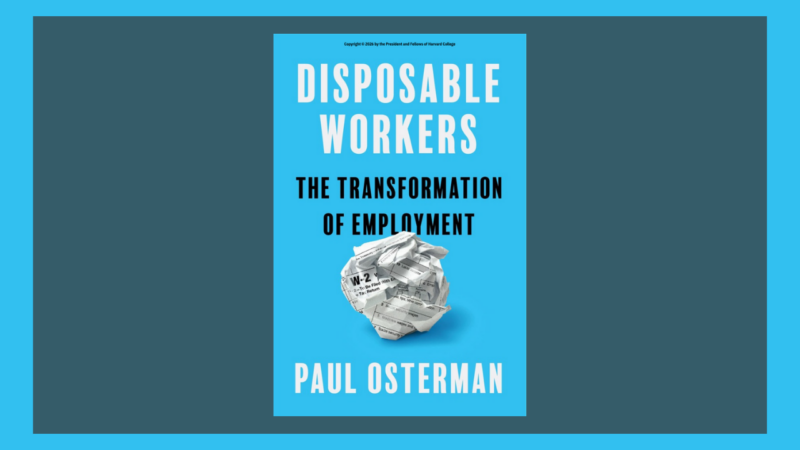
I wish we had more time. Thank you all for joining us today. It’s been great having you here. Please join us for our next conversation on September 9th. We’ll be talking with Paul Osterman about his book, Disposable Workers. A huge thank to our team at the Economic Opportunities Program at the Aspen Institute. Thanks to Tony Mastria, Frances Almodovar, Nora Heffernan, Matt Helmer, Sinin Young, and Colleen Cunningham for their support and work and always just tireless partnership on all of our events. We’ll see you next time.
[music]
Resources
Books and Publications
- Conway, Maureen, and Steven L. Dawson.“Restore the Promise of Work: Reducing Inequality by Raising the Floor and Building Ladders.” Aspen Institute. 2016.
- Rubin, Jerry, and Steven L. Dawson.“Help Wanted: How to Find and Keep Talent in a Forever-Tight Labor Market.” The MIT Press. August 4, 2026.
Websites
Additional Resources
Improve Job Quality | JVS Boston’s Benchmarking Index
Highlights
For highlights from this discussion, subscribe to our YouTube channel or subscribe to our podcast to listen on the go. Check out our playlist or click below to watch.
About this event
We are living through a moment of profound uncertainty about the future of work. Rapid advances in artificial intelligence are raising urgent questions about which jobs will survive, which will be transformed, and which will disappear entirely. Yet amid all the speculation, one thing is already clear: millions of Americans are working jobs that do not pay enough, do not offer stability, and do not provide a real path forward. And businesses — in health care, child care, hospitality, food service and other large employment sectors — seek to hire even more people into such jobs.
In their new book, “Help Wanted: How To Find and Keep Talent in a Forever-Tight Labor Market,” authors Steve Dawson and Jerry Rubin argue that demographic realities, including an aging population, slowing growth, and declining workforce participation, mean the competition for workers is structural and long-term, not a temporary blip. Rather than treating workers as a cost to be minimized, they argue that investing in people is now a competitive necessity, and they introduce readers to business leaders who are redesigning jobs, recruiting differently, and partnering with workforce organizations to attract and retain the talent their businesses depend on.
This conversation — hosted by the Aspen Institute Economic Opportunities Program on July 29, 2026 — goes beyond the employer-competitiveness frame to ask harder questions: How can we redesign work to maximize the value of all workers? How can businesses organize and advocate on behalf of their workforces? What barriers keep businesses from changing practice? And what role can policy, philanthropy, and workforce intermediaries play in redesigning work at scale?
Our speakers include Dawson, Rubin, and moderator Maureen Conway, a vice president at the Aspen Institute and executive director of the Economic Opportunities Program.
This event is part of our Opportunity in America series.
For highlights from this discussion, subscribe to our YouTube channel. Or subscribe to our podcast to listen on the go.
About Opportunity in America
Opportunity in America, an event series hosted by the Economic Opportunities Program, considers the changing landscape of economic opportunity in the US and implications for individuals, families, and communities across the country.
About the Economic Opportunities Program
The Aspen Institute Economic Opportunities Program advances strategies, policies, and ideas to help low- and moderate-income people thrive in a changing economy.
Join Our Mailing List
To receive occasional emails about our work — including new publications, commentary, events, fellowships, and more — join our mailing list.
Connect on Social Media
For news and updates every day, connect with us on the social media platform of your choice.
More Events by the Economic Opportunities Program

What Employee Ownership Means to Workers
View Event