Expanding ESOPs’ Danny Massey Keynotes the 2026 Employee Ownership Ideas Forum
Description
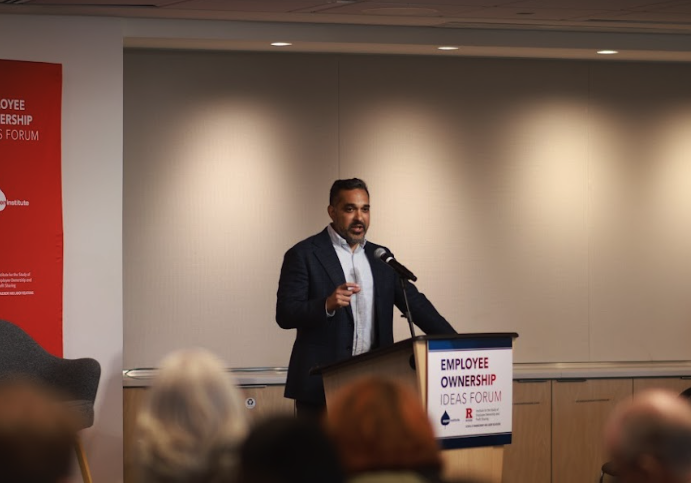
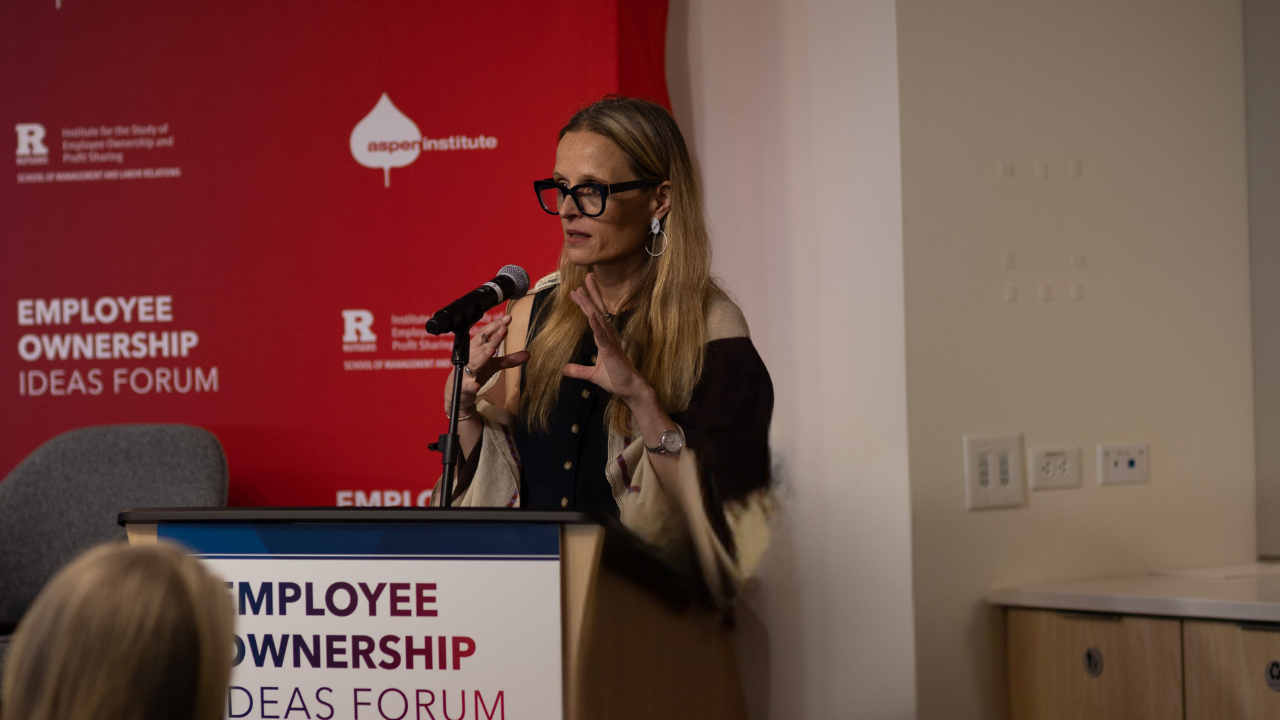
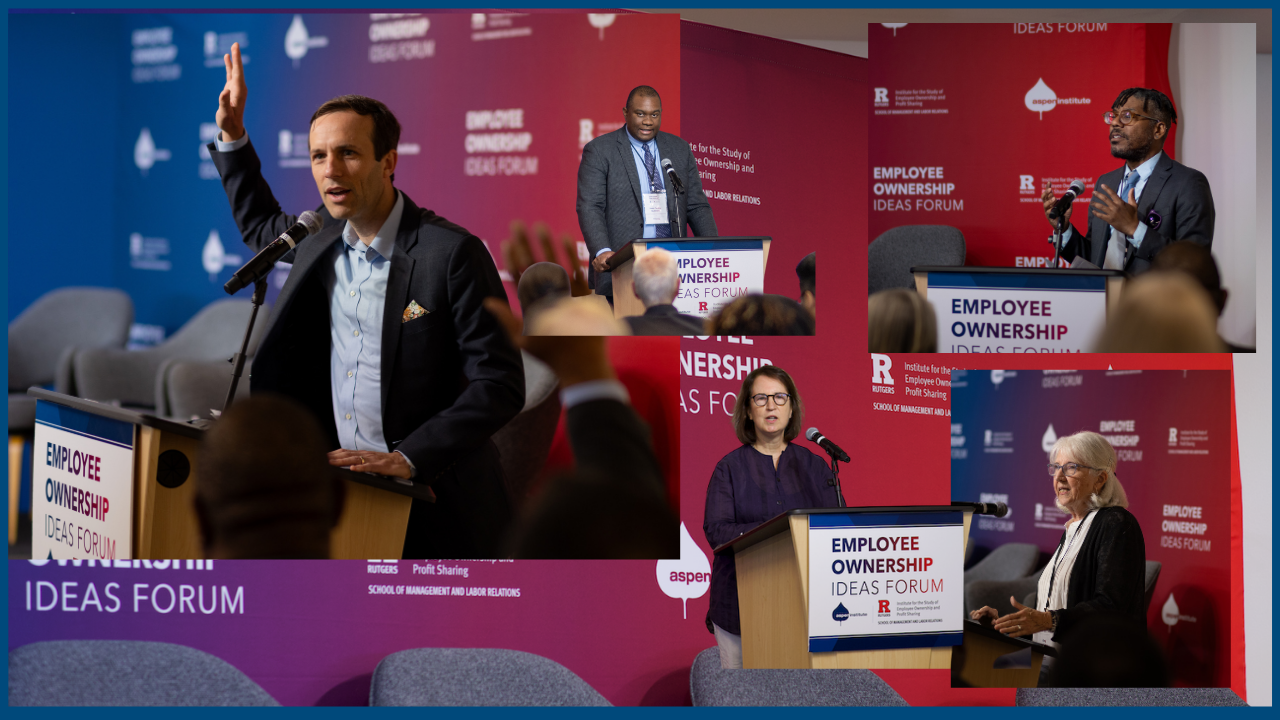
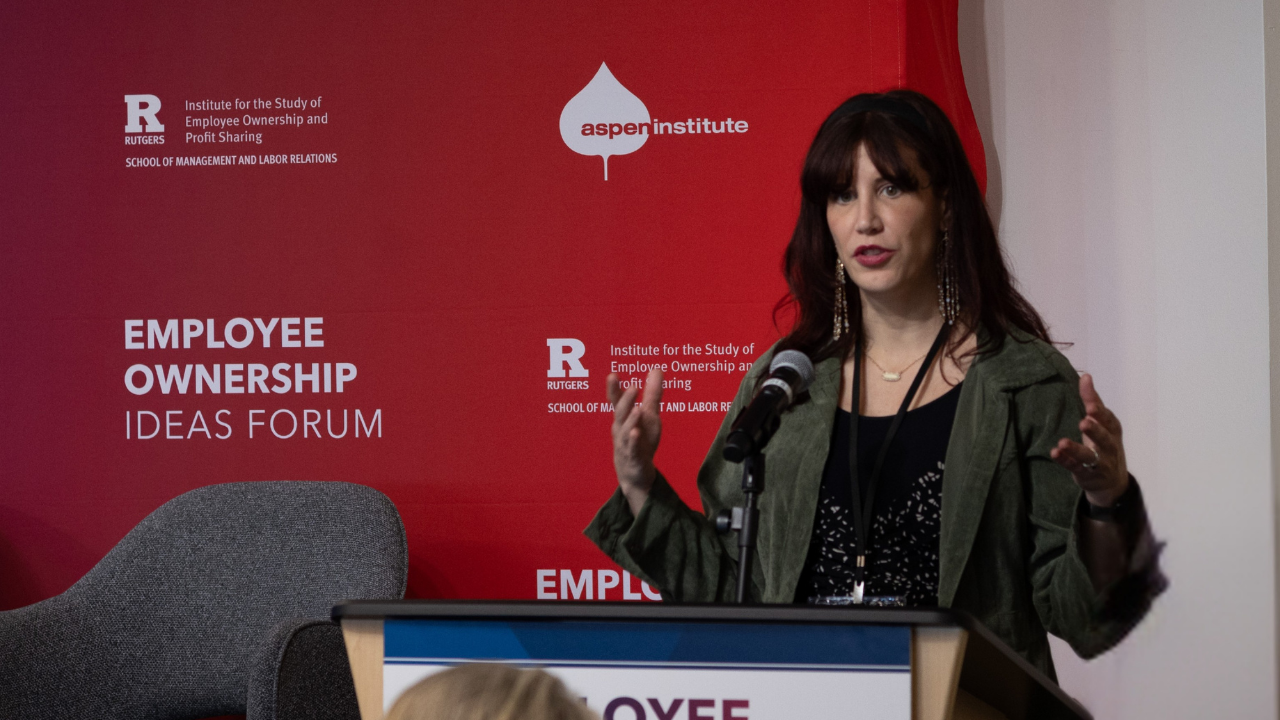
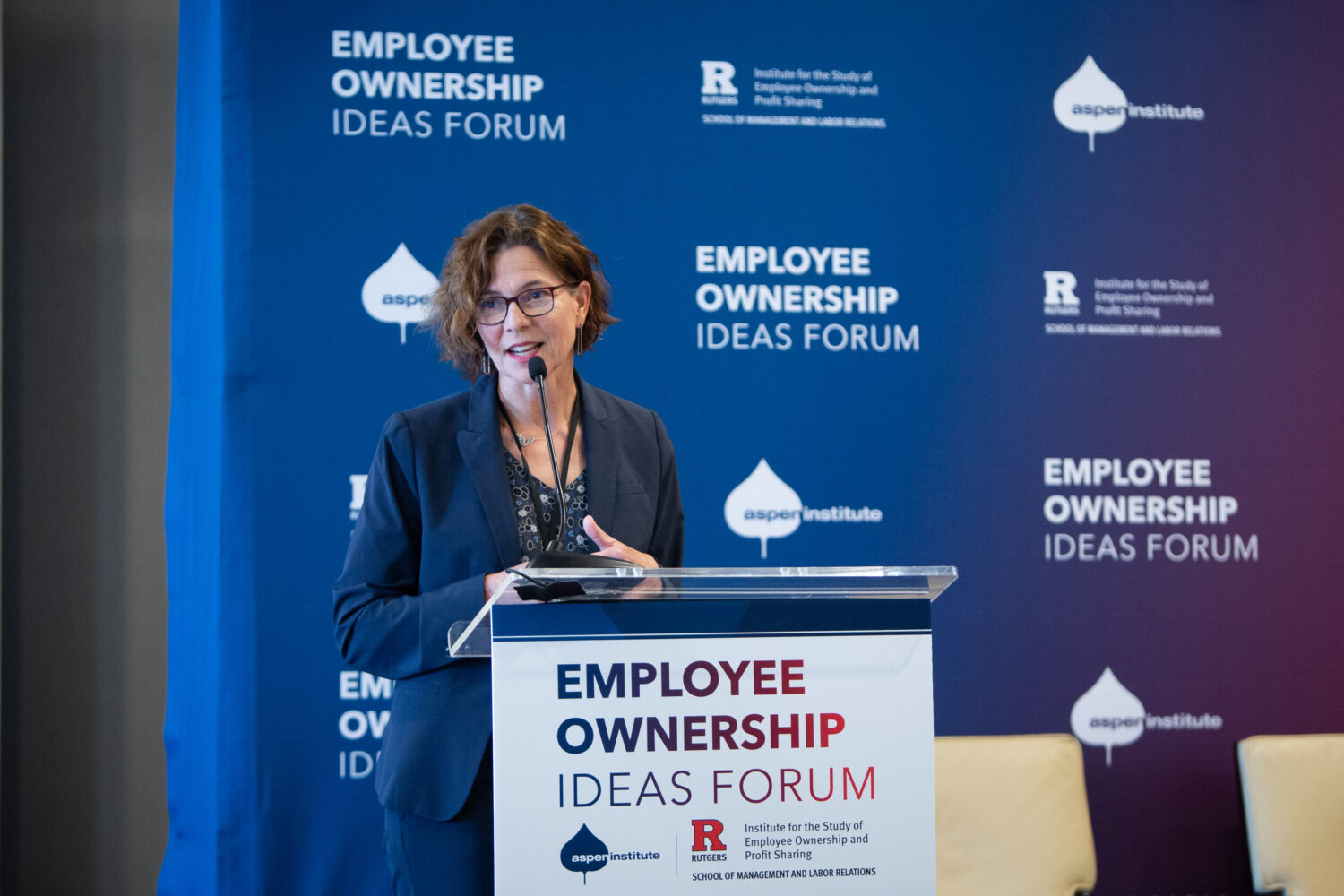
In this video, Danny Massey — head of strategy and communications for Expanding ESOPs — speaks at the 2026 Employee Ownership Ideas Forum, which took place on June 2-3, 2026, in Washington DC and online.
For more videos from the Forum, visit our event page or subscribe to our YouTube channel.
And subscribe to our podcast to listen on the go.
[00:00:05] Matt Helmer: We have one more speaker before we take a break, an extended networking break. It’s my pleasure to introduce this next person, Danny Massey. Danny’s the head of strategy and communications for Expanding ESOPs. I think many of you know Danny. He’s super passionate, super hard-working, just a wonderful collaborator and person to be around. If you’ve been following Danny’s work, I think over the last year, I don’t know how many op-eds this guy has written highlighting the power of employee ownership around the country. He’s a one-man machine for narrative change, for sure. What I appreciate and love about Danny is that he comes out of the Fight for 15 and worker and labor organizing, and he brings that passion and that care for workers to work every day. It’s always a pleasure to see him and run into him and talk about that. Danny, I’ll turn it over to you, wherever you are. There you are. [laughs]
[applause]
[00:01:08] Danny Massey: Good afternoon, everybody. I was also a crime reporter, Ethan, in New York City. If there’s one more, we have a trend. I don’t know, [laughter] but we’re pretty close. Hey, all right. Who knew? The crime reporting to employee ownership pipeline. I wanted to thank you, Matt, for that intro, and thank Maureen and Joseph, who I can’t imagine is not watching online, for inviting me. I’m still a relative newcomer to the employee ownership community. As Matt mentioned, I spent more than a dozen years on the Fight for 15.
We’ll start there for a second. When 200 New York City fast food cooks and cashiers walked off their jobs in 2012, demanding $15 an hour in a union, nobody gave them a shot. I remember spending the entire day on the phone with reporters. What are you talking about? Fast food workers, $15? No way. Good luck. See you later. They stuck together. They inspired tens of thousands of more across the country to join them. They won $200 billion in raises and completely rewired the politics of wages in the country.
That’s how I got here. I started at Expanding ESOPs a year and a half ago. I was lured by the possibility of making similar change for working people by growing broad-based employee ownership. In that year and a half, I heard somebody– anybody asked about the weather. The weather, yes, I’m going to share another worker story. Anyway, I know Loren said that we’ve had enough of them, but I think never enough worker stories. It’s been the most inspiring thing for me since I started.
I’ll start with one of those, which gets at the power of employee ownership, particularly in this moment when so many have given up on an idea that once was not so radical. A simple one, if you work hard, you can get ahead. I’ll start with the story of Ronnie Kleinjans, who grew up in Grand Rapids, Michigan. His grandparents, his parents, aunts, and uncles all had good jobs with union pensions. They worked for companies like General Motors. They looked at the future. They saw hope and security.
By the time Ronnie entered the workforce, his relatives had either been laid off or bought out. He found a job as a roofer before moving on to a manufacturer that rebuilt transmissions for trucks. “I didn’t have the same choices as those who came before me,” he wrote in a recent op-ed in the Detroit News. Ronnie was part of a disturbing trend, a dramatic decline in the belief in the American dream, which last year hit a record low, according to the Wall Street Journal.
Ronnie got a lifeline and a renewed belief in the American dream when the company he was working at was bought by Indiana-based Jasper Engines and Transmissions, one of the country’s largest ESOPs. Overnight, Ronnie became an owner, “Transforming my job into something closer to one my grandparents might have had,” he wrote. For the first time, he was able to imagine the kind of future he once thought would be out of reach. “Our annual ESOP statements were modest to start,” he wrote, “But the balance kept going up each year. Soon, it became clear that ESOP was a giant of a benefit that was helping me build generational wealth for my family.”
Our mission at Expanding ESOPs is to produce millions more Ronnie Kleinjans. We’re working to unlock the untapped potential of ESOPs to create trillions of dollars of wealth for frontline workers by, number one, addressing the federal policy and regulatory factors that limit widespread ESOP adoption, and, number two, growing the movement of companies, advocates, and workers speaking out for broad-based employee ownership as a key strategy to build share of prosperity across the economy.
Our coalition brings together nearly 100 organizations representing a broad cross-section of the employee ownership community, including ESOP companies, service providers, financial advisory firms, academic institutions, foundations, advocacy groups, and more. It’s a community that is energized and united to build worker wealth and stronger companies and restore our collective faith in the American dream. As we gather here on Capitol Hill, I’m excited to announce our second hire, our new head of policy and government affairs, Michael Sinacore, who’s sitting in the back right there.
[applause]
Many of you know Michael. He’s a longtime leader in economic policy and retirement security. He played a key role building bipartisan support for the SECURE 2.0 Act and his role as economic policy advisor to former US Senator Rob Portman. Here’s what Senator Portman had to say about Michael today. “He was instrumental in passing some of the most significant ESOP legislation in years. His combination of policy expertise, legislative skill, and passion for expanding ownership opportunities will serve the organization well.”
I think the power and expertise of our incredible coalition, combined with Michael’s experience getting things done in a bipartisan fashion in Washington, will make us an unstoppable force building worker wealth and stronger companies and a brighter future for all. We’ve heard, and I’m sure we’ll hear more over the next two days, about how ESOPs are an incredible wealth creation and job quality tool.
We all know the years of academic research proving ESOPs lift workers’ assets, provide for secure retirements, and improve company performance. Yet if ESOPs are such a win-win, why aren’t there more of them? ESOP formation is stagnant, and too few companies have explored or adopted them despite existing tax incentives. Each year, about 250 new ESOPs are formed. That’s only 1% of the roughly 25,000 companies bought and sold. 71% of new ESOPs have fewer than 100 employees, and the vast majority are in the industrial and service industries, leaving out huge chunks of the economy.
While ESOP structures work well for closely held companies, there are notable challenges in achieving similar success with partial ESOPs at scale companies, as we heard in the last panel. More highly valued businesses and companies with a greater number of shareholders. We’ve spent a year hearing from leadership at large companies across the nation. We’ve done a bit of a listening tour. From these conversations, it’s clear the economics of ESOPs don’t work for large companies structured as C corporations.
The corporate tax incentive is not robust enough to outweigh the cost and risk associated with the formation of a partial ESOP. Expanding ESOPs is developing a policy to alleviate that risk and share the cost with companies. We must protect the existing 100% ESOP model, but since there are limited situations where it’s feasible for workers to become 100% owners of a business, we need to do everything we can to unlock ESOPs at companies willing to explore sharing partial ownership broadly across their workforce.
There’s plenty of precedent for our focus on partial ESOPs. Joseph Blasi sent me a list of about six different pieces of legislation beginning in 1974, when ERISA passed with policymakers working to encourage partial ESOP adoption at publicly traded companies. Over time, ESOP activity became most prominent at smaller firms that benefited from favorable tax treatment for sharing 100% ownership with employees. Those laws sunsetted and went out of style, and over time, the 100% model predominated.
At a time when workers at large employers comprise an increasing share of our nation’s workforce, it’s the perfect moment right now to return to the original focus of lawmakers by addressing the federal policy and regulatory factors that limit widespread adoption of partial ESOPs. Imagine if instead of hundreds of ESOPs formed each year, we had many thousands across a range of industries and company sizes. Over time, this could lead to literally tens of millions of working Americans having an ownership stake at work and building trillions of dollars in wealth.
Our mission is an urgent one. Our economy is greatly out of balance, leaving too many Americans behind. Economists like to point their fingers at wages, which haven’t kept up with productivity in the last 40-plus years. The bigger gap, and it isn’t even close, is wages versus ownership. Since 1984, the S&P 500 has exploded by nearly 8,600%. Even if wages had kept pace with productivity, we’d still have a massive problem on our hands because who owns stock determines who wins in the economy.
Federal reserve data shows that stock ownership is far and away the largest driver of inequality. The bottom 50% of households hold only about 1% of the country’s equities. Without access to equity ownership, most of our fellow citizens are going to fall further behind, especially workers of color who are much less likely to own stock than white workers. It’s no wonder that fewer than half of Americans born after 1965 expect a better life than their parents had. We can turn this around. Our best shot at tackling this unsustainable inequality is expanding worker ownership.
I’ll end with another story that proves it. Dylan Aiken’s resume included four years at Burger King in Omaha, Nebraska, where he only got a raise when the minimum wage went up. He left after those four years, making $7.50 an hour. He went to a pizzeria and a meat-packing plant, hourly jobs, where he “punched in and punched out, and my labor helped make someone else rich,” he wrote recently in the Minnehaha Messenger in South Dakota.
Like Ronnie Kleinjans, Dylan had begun to give up hope that he’d ever get ahead. Near the end of his rope, he moved in with his mom in Sioux Falls, South Dakota, and landed a temp job for a company that manufactures metal roofs and siding in nearby Hartford. The company, Central States, is employee-owned and a member of our growing coalition. Central States’ mission, and it’s really a spectacular one, is to create “financial freedom” for their employees across 13 states. That’s actually in their company founding documents, to create financial freedom.
They taught Dylan to use a shear to cut metal, and something just clicked for him. The temp job turned into a permanent one. He quickly assumed a leadership role. They sent him to Texas to train workers at a plant that needed extra support. “When I got my first ESOP statement, the number was modest, but the impact on me was monumental,” he wrote. “Yes, there were a few thousand bucks in there, and that was nice money I got just for showing up and doing my job.
To know that as long as I stuck around and worked hard, it was going to keep building was an awesome feeling. I’d been struggling for years, for so many years. I didn’t finish college, I didn’t have any direction, but now I realize this is a career. I can build on this. These guys believe in me.” Join us as we strive to give every worker in the country the financial freedom and belief in the American dream that Dylan has experienced by becoming an owner. Thank you.
[applause]
[00:12:09] [END OF AUDIO]
About the Employee Ownership Ideas Forum
The Employee Ownership Ideas Forum brings together leading policymakers, practitioners, experts, and the media for a robust discussion on how we can grow employee ownership for the shared benefit of American workers and businesses. It is hosted by the Aspen Institute Economic Opportunities Program and Rutgers Institute for the Study of Employee Ownership and Profit Sharing.
About the Rutgers Institute for the Study of Employee Ownership and Profit Sharing
The purpose of the Institute for the Study of Employee Ownership and Profit Sharing is to study the various models that have emerged and will emerge of employee ownership shares and profit shares in the corporation and society of the United States and around the world.
About the Economic Opportunities Program
The Aspen Institute Economic Opportunities Program advances strategies, policies, and ideas to help low- and moderate-income people thrive in a changing economy.
Join Our Mailing List
To receive occasional emails about our work — including new publications, commentary, events, fellowships, and more — join our mailing list.
Connect on Social Media
For news and updates every day, connect with us on the social media platform of your choice.