State Innovations in Employee Ownership
Description
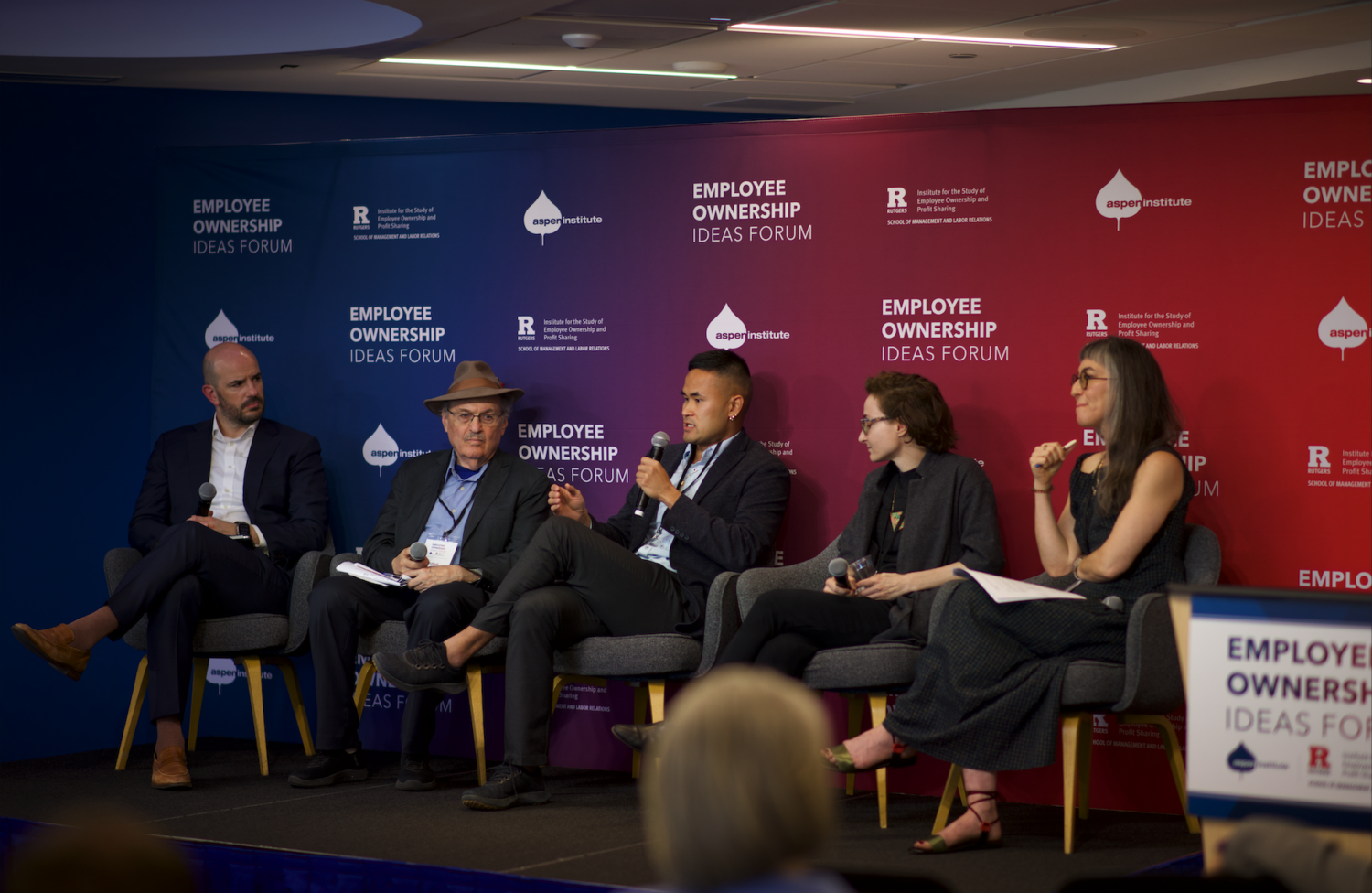
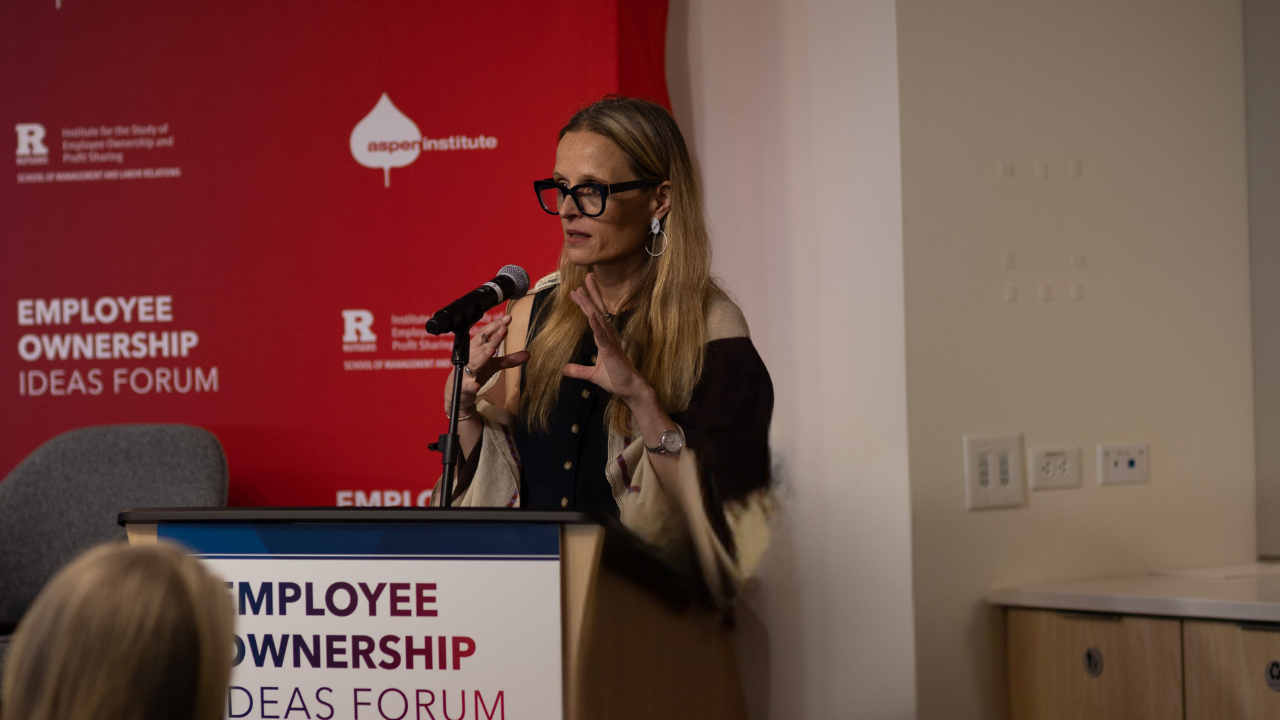
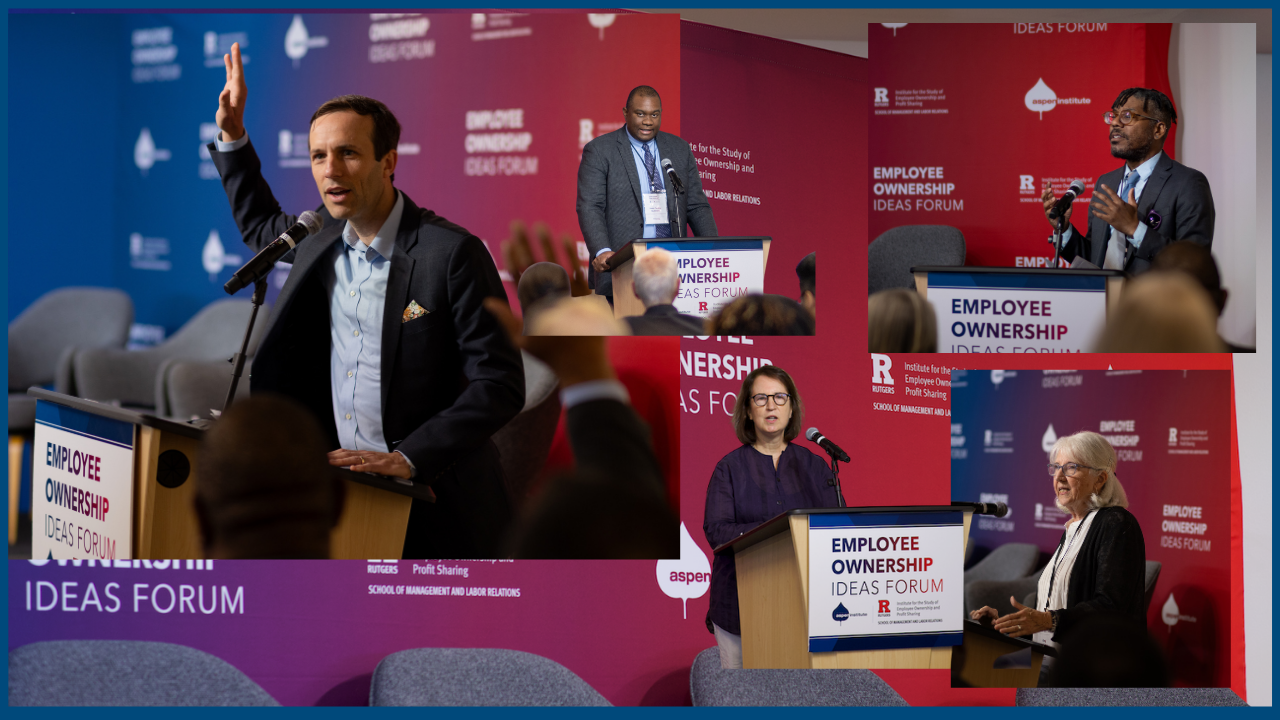
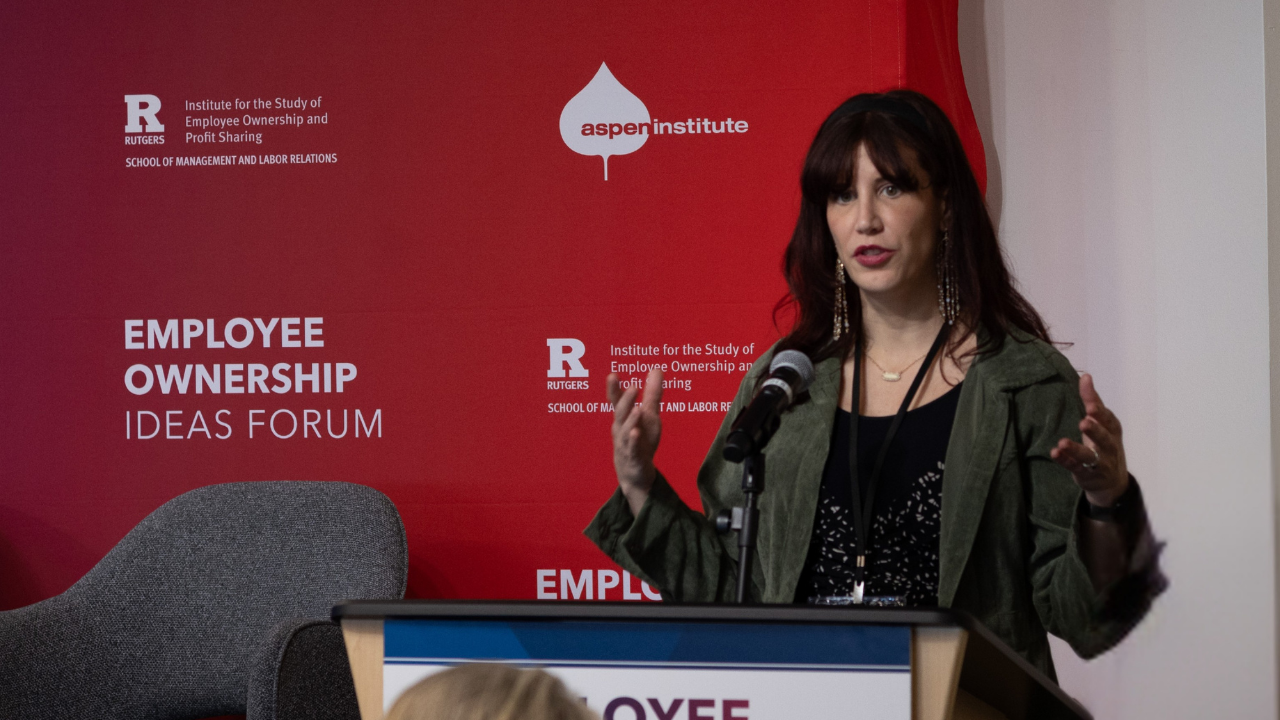
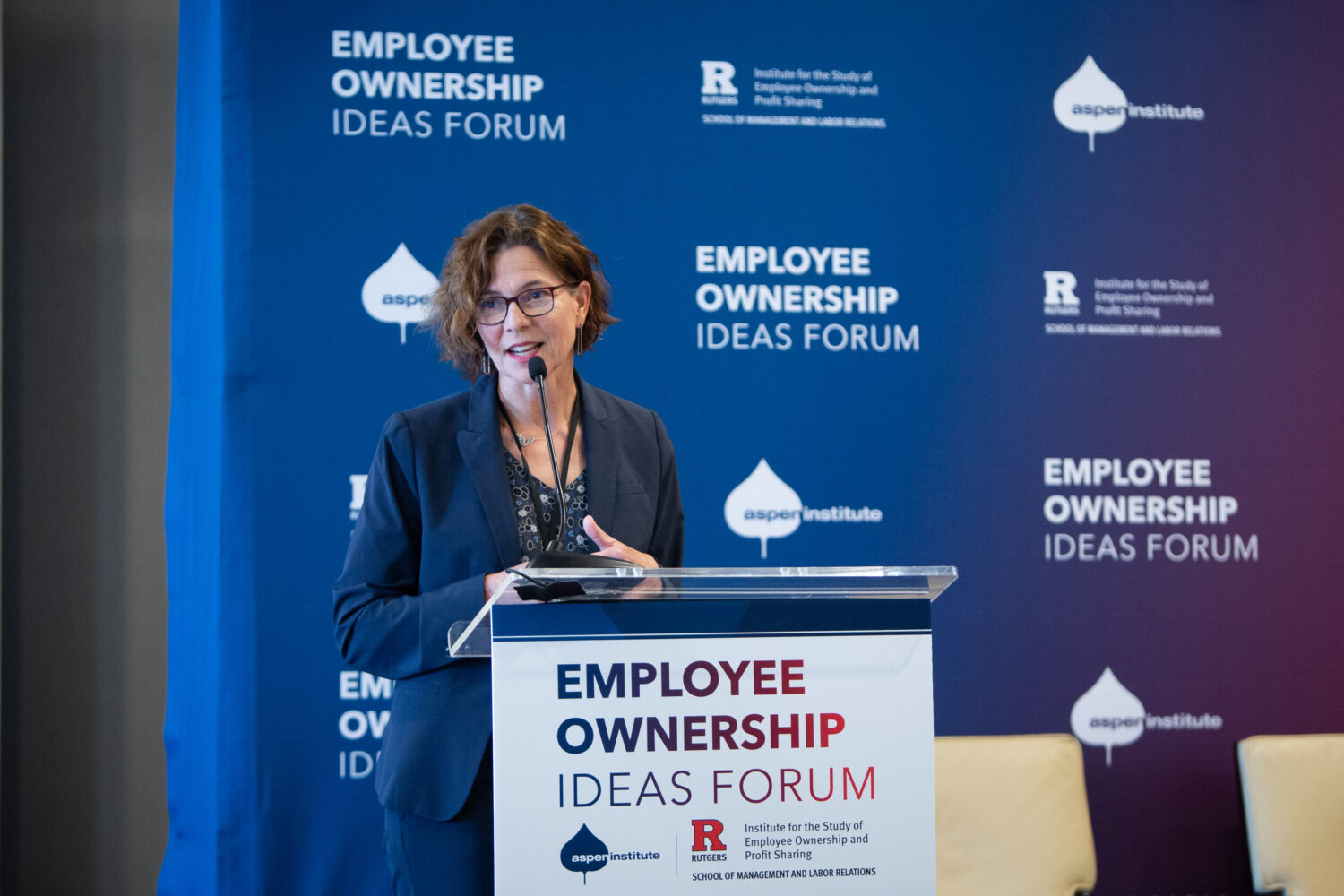
States are emerging as important laboratories for expanding employee ownership. From experimenting with new financing and investment tools to technical assistance and outreach programs, states are increasingly on the frontlines of helping more businesses transition to employee ownership. This session highlights some of the newest and most promising state-level innovations, the leaders driving them, and what other states and federal policymakers can learn from what’s emerging.
This video comes from the 2026 Employee Ownership Ideas Forum, which took place on June 2-3, 2026, in Washington DC and online.
For more videos from the Forum, visit our event page or subscribe to our YouTube channel.
And subscribe to our podcast to listen on the go.
Speakers
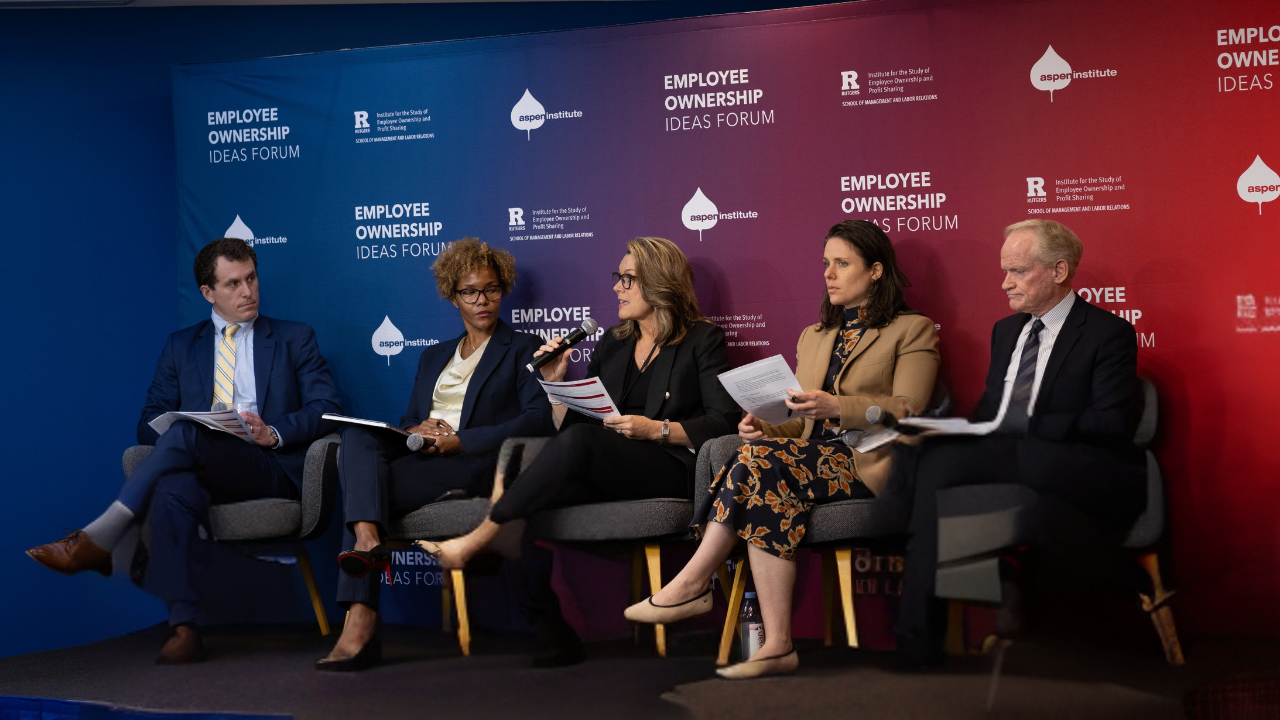
- Shannon Lundgren, State Representative, Iowa
- Andrew Zwicker, State Senator, New Jersey
- Hilary Abell, Chief of the Employee Ownership Division, US Department of Labor
- Moderator: Julien Rosenbloom, Senior Associate, Lafayette Square Institute
Resources
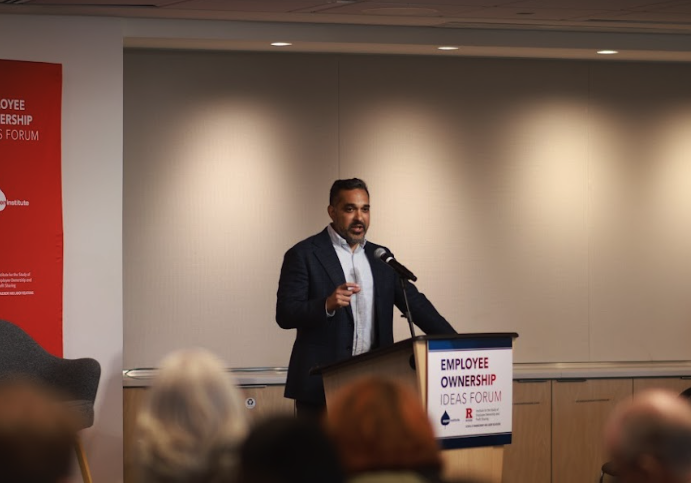
[00:00:05] Dr. William Castellano: Next we have a panel discussion on some of the innovations that are taking place at the state level regarding promoting more employee ownership. A lot of that is being done through state centers in support of state legislators. Typically these kinds of programs provide support for building awareness, educational-type offerings, various financial assistance and, in some cases, even technical assistance.
We’re very fortunate in New Jersey, where we do have a partnership with the New Jersey Economic Development Authority, and that program is designed to promote more awareness of employee ownership strategies. We’ve been developing online programs and webinars. We’ve been partnering with chambers of commerce and professional associations, having business conferences with business owners, and on the financing side, they’re willing to provide some financial assistance to qualified businesses that are looking to sell to their employees using an ESOP transaction.
What they’re offering is to pay 90% of the feasibility study upwards to $35,000. It’s already getting traction. These kinds of programs at the state level, typically that’s where a lot of the innovative policies and regulations stem from, and we’re very hopeful that the positive lessons we see at the state level will maybe ultimately turn into more like federal policies and federal regulations, which is not an uncommon process.
States have always been the incubators of innovative policies and regulations. It’s really my pleasure to introduce this next panel. We have the Honorable Shannon Lundgren from the state representative of Iowa. The Honorable Andrew Zwicker, my state senator from New Jersey. Hilary Abell, the Chief of the Employee Ownership Division of the US Department of Labor, and the moderator is Julien Rosenbloom, Senior Associate at the Lafayette Square Institute. Thank you.
[applause]
[pause 00:02:40]
[00:02:54] Julien Rosenbloom: Well, thanks, Bill, for teeing us up in such a wonderful way. I agree with you about the role of states as laboratories of democracy, and I can’t think of a better panel than the folks that we have with us. I just want to say I know we started the day by talking about what being an employee owner means to the owners themselves, and I really want today’s conversation with elected officials and with Hilary from the US Department of Labor to focus on what states can do to make that experience more tangible for tens of thousands, if not hundreds of thousands or millions more Americans in this country.
Without further ado, I just want to introduce our panelists and jump right into it. At the end, we have Representative Shannon Lundgren, who is a representative of Iowa’s 65th District, a very rural area of Iowa. We have Hilary Abell, who is the co-founder of Project Equity and right now the Chief of the Division of Employee Ownership at the US Department of Labor. To my immediate left, we have Senator Andrew Zwicker from New Jersey’s 16th District, represents my hometown.
All of these distinguished guests are leading on employee ownership in very unique ways. So excited to get into it. I would like to start with you, Representative Lundgren. I know you represent a district that, as I said, is very rural in northeast Iowa. You’re also a small business owner and so would love to understand how employee ownership came onto your radar and your experiences as a small business owner, how that informed it.
[00:04:34] Shannon Lundgren: Sure. I’m very happy to be here today. I actually have to give credit, really, to our Iowa Economic Development Authority and UNI back in the corner because they really make our ESOP program in the state of Iowa work. I live in a pretty rural district with a lot of manufacturing. One of the key components that has recently come on our radar was an ESOP of a manufacturing company called Mi-T-M. They make pressure washers. They make them for John Deere, for Husqvarna, for all different kinds of companies in the world, but they also still market their own product.
Large company. The owner was about 80 years old, wanted to retire. He could have easily sold it to a large equity firm and probably made a lot more money, which I think we’ll get into a little bit. He chose to actually sell his company to the employees and keep that employee-based. I think what the challenge has been is that the employees don’t understand the ESOP program and the benefit that they have.
Now, in our community, over the last few years, they have seen a big surge in their stock price. Last year, they did a stock option reveal, and it increased by about 134%. They’ve got great leadership doing great things and great employees that have invested and bought into this. Then this year, it was still 47%. They were lucky enough to have the governor send them a message to try to encourage them to continue with their line of work at Mi-T-M and make sure that they are being proactive, knowing that in Iowa, when you retire, that retirement income is tax-free. Big incentive.
We also have companies that haven’t chosen to go into an ESOP format. We see, especially in rural Iowa, a lot of turnover, a lot of disgruntled employees, a lot of people that are unhappy. Benefits are going down. Morale is going down. I think, especially for rural communities in rural Iowa, this is a great program because it keeps that morale up. It keeps people happy and willing to go to work and do what they do so that they can see that investment grow. Knowing that if they stick with it for a long enough time, they’re going to see a really big return on their investment, especially in the fact that they’re not going to have that tax on retirement income.
[00:06:52] Julien: Thank you, Representative. Importantly, those workers never pony up a cent of their own income to be earners. That is a return on something they never put money into, which is fantastic. Senator, I failed to mention you were a plasma physicist by training, which to me is not the most obvious path to employee ownership. I would love to understand what brought you to this space.
[00:07:12] Andrew Zwicker: I’m a member of the ESOP plasma physicist caucus. I’m looking for other members. If anybody here knows, please let me know. My case was inevitable and nothing to do with my scientific background. It’s literally a kitchen table issue. You heard I’ve got a former constituent to my right, a constituent over here. My partner at home is an expert on employee displacement. We had talked about this multiple years ago.
Bill wrote an op-ed in one of the local New Jersey newspapers. To be honest, it’s not something in the plasma physics committee we talk much about. It was the first time I had heard about it. It was one of those things where you go, well, duh, of course. That was the beginning. For New Jersey, Bill alluded to some of it. There is an MOU in place with the New Jersey Economic Development Authority. With lots of help, Bill’s help, Julian’s help, and many other’s people, we written up a piece of legislation to both codify that and go much further. I’m sure we’ll talk about that.
It’s gotten tremendous momentum. It’ll be up in front of the General Assembly and Committee on Thursday and in the Senate on Monday. Momentum, this is the exact moment to get this done. As they say, it takes a village.
[00:08:40] Julien: There we go. I know we’ll hear a bit more about that legislation in a bit. Hilary, I want to turn to you. As I mentioned, you co-founded Project Equity. Now you lead the employee ownership initiative over at DOL. I would just love to hear what brought you in and what keeps you in this work, especially from your approach, where you see how states continue to innovate here.
[00:08:59] Hilary Abell: Sure. What brought me in was being an employee owner myself at Equal Exchange more than 30 years ago. That was a very empowering and exciting experience. I did other work for a while and then came back into developing worker-owned businesses through one nonprofit. Then through Project Equity, we moved to transitioning small businesses to employee ownership in various forms.
It’s been a real privilege and a very interesting journey. To become a federal government employee, very different from the roles I’ve had in the past. The driver for me, though, is the same. It’s really always been seeing workers’ lives improve. That’s what gets me excited and what I go back to, even though I’m many steps removed from that in my day-to-day work these days. I often think of the 30 pizza shop employees in Silicon Valley that we helped transition their company to a worker cooperative.
That was in 2017. They have now shared $1 million of profits with 30-some employee owners there. That means that these workers are doing things they never thought they’d be able to do, like saving for retirement or taking a vacation that none of us would begrudge them, or working a little less so they can pursue their music.
Then I loved hearing about the guy named Doug on the factory floor this morning who finally found the courage to share a really great idea at a company meeting when for years he’d felt like the engineers didn’t want to hear his idea, but he spoke up because that ownership culture had come alive. Those are the things that get me really excited. I love that the WORK Act, which I’ll tell you more about in a bit, which is why the initiative I’m leading exists, talks about employee involvement and participation in addition to employee ownership.
The other thing that keeps me going is the challenge. We’ve heard all day today about how wonderful employee ownership can be. How many great things it can do for our society. We haven’t talked a lot about, over the past 20-some years that I’ve been closely involved, and there are many people in this room who’ve been involved much longer, but it has grown in many ways. We talked about that in the report we submitted to Congress in January of this year, over the last 10 years, the growth trends and different types of employee ownership. It hasn’t grown as much as I think many of us expected as we were involved in this work over the past few decades.
I do feel, as Bill mentioned in his opening remarks, that often government can come in and help to scale great ideas that have been proven out by the private sector, the nonprofit sector, or local or state efforts. I’m a division of one right now, so definitely small. I don’t know that our division is mighty yet, but we’re still getting going. I am really excited by the challenge of working with state employee ownership programs and supporting them, which is our mandate, and seeing how state involvement can help to move this work forward and also leveraging some of the tools of the federal government to do that.
[00:11:50] Julien: Thanks, Hilary. Let’s jump into what states are building. Representative Lundgren, I want to start with you. My understanding is Iowa has one of the more established state-level employee ownership ecosystems in the country. You’ve got a state center in partnership with the University of Northern Iowa, a feasibility study reimbursement program, to name a few. Could you walk us through what that infrastructure actually does, both for a business owner but also for worker owners at employee-owned firms in Iowa?
[00:12:18] Shannon: I think one of the biggest benefits that we have, again, is going back to University of Iowa and their program. I really got involved and probably was invited today because my daughter was a graduate from the University of Northern Iowa and actually worked for this division for a time before she moved back home closer to Grandma because I got babies I got to help take care of.
In the end, having her there really built some really great relationships with the University of Northern Iowa and what they do for business development, both succession planning and ESOP work. Then, of course, my role in the state of Iowa working very closely with Debbie Durham and the Iowa Economic Development Authority. Then my third leg of that stool really comes with my daughter now and her husband working for Mi-T-M, the ESOP company that I just referenced.
We have not had to do a lot of work. I think Stacy told me today the last time we really passed legislation was in 2011 in the state of Iowa when we developed our program. We continually fund that $25,000 feasibility study program in the state so that they can go out and do the work that they need to do to try to help these organizations, again, rather than sell to a private equity firm, sell the company to their employees and keep that locally owned and operated. Which, again, as a rural representative, I do have an anchor city in my community. It’s called Dubuque. I don’t know if you’ve heard of it. It’s right on the Mississippi River between Iowa, Illinois, and Wisconsin.
On the other end of my district, you might have heard of the Field of Dreams. That’s in my backyard by about 10 miles. It’s very diverse. We go from a lot of factories and manufacturing, farms, tourism, all sorts of things, and my neck of the woods. All of these organizations can benefit from being employee-owned and operated. I think the tools and the toolbox have been established in Iowa.
I am of the background of the scariest thing you can hear is “I’m here from the government, and I’m here to help.” We don’t get involved unless they ask us to get involved with policy changes or funding mechanisms that we could change to make it better. We let them do their job. Todd and Stacy do a great job of taking care of those things for us. I think it’s six or seven businesses a year that they work with in the state of Iowa that they’re trying to convert into these ESOPs.
We’re here really as a mechanism to keep what we have in place running successfully, and then turning around when they need us, we are happy to step in and help. Again, my philosophy is always the state can do what they can, but we’ve got to give that division off and let them do their work and then just continue to be supportive any way that we can.
[00:15:07] Julien: Thanks for that. I want to stay on this for one more moment because one of the things that we talked about in one of our earlier conversations, Representative, is Iowa’s program, to your point, has been very successful, but one of the gaps that continues to concern you is this education gap with actual worker owners in terms of their understanding of what it means to be an owner and your belief that there is an education gap that states could address, especially from your perch as someone who engages with employee-owned businesses. A small business owner would love to hear your thinking on that a bit more.
[00:15:41] Shannon: What’s really interesting is that we don’t legislatively have to get involved for the University of Northern Iowa to already start working on trying to fill that education gap, and they already are. We will be here, again, as a backup to them if they need us to do something policy-wise as a state. Other than that, we’re going to let them take the lead on it. That is something that when we first did the employee stock option reveal for Mi-T-M in my hometown, we realized that people were just grumbling. They didn’t know what it meant. They didn’t know the value to them.
Again, as I mentioned, their stock went up exponentially that first year, and then again just recently. They’re starting to grasp because we’re trying to make sure, both as their state legislators, as our governor, we’re telling them what a benefit that they have. If they continue to invest their time and their talent in the company that they are an owner of, they’re going to see results at retirement that are going to be beyond what they could have done just gathering that wage from their paycheck.
Again, we think that the education component is going to come. I don’t think it’ll take very long. I think University of Northern Iowa already recognizes that we need to have that conversation. They also need to come in really from a standpoint of just being regular people. Mi-T-M. had their financier there. They had their insurance company there. They had the guy that manages their stocks there. All in suits. My restaurant, that’s what I do for a living. We were catering, so I was in a pair of jeans and a trackside hat.
They asked me more questions than they would have asked their financial advisors. Coming in to a roundtable in a business like that, just as normal people saying, hey, we’re not part of your organization. We’re just here to answer your questions so that you get the best return on your investment. Knowing what you have here in front of you is really, I think, what’s going to be important, and they’re going to already do that.
[00:17:33] Julien: Thank you, Representative, and certainly some takeaways that are transferable to other states regardless of their own context. Senator, I want to turn to you for a bit because New Jersey’s building something similar but a bit different from what Iowa has. You’ve introduced legislation this spring, earlier in May actually, that would codify the state’s employee ownership pilot that Adrienne and Bill helped with the New Jersey Economic Development Authority. It would create a director of employee ownership at the EDA and an advisory commission. Notably, it would establish a revolving loan fund to directly finance employee ownership transitions, which is something of a novel innovation in public finance. I’d love for you to tell us about the revolving loan fund. What problem is it trying to solve that technical assistance, outreach, educational loan can’t?
[00:18:25] Andrew: Sure. First, I can’t help myself and say what we learned from Iowa is for ESOPs, if you build it, they will come. I was just waiting for you to do that one, right? As you said, Julien, it gets at education, it gets at feasibility, and it codifies the feasibility work that’s already going on, but it’s that last piece. Last week, I was at a New Jersey Chamber of Commerce event talking about the state budget.
In New Jersey, we are in the final stages of finalizing our budget for the next fiscal year by June 30th. Oh, by the way, it’s Election Day in New Jersey. Who’s from New Jersey? Iowa too? Iowa or New Jersey? Whoa. Did you vote? ESOP is the foundation of democracy. At that budget event, I brought up ESOPs and talked to some folks. The number one thing for those who knew about it, of course, that’s the first part, but those who knew about it was financing and was how do you bridge that gap?
That leads to then, New Jersey, like so many other states, most other states right now, the fiscal constraints are pretty significant. The idea of appropriating from our general fund, $5 million, $10 million, $20 million, whatever number it might be, is just politically very difficult, even if the argument is, yes, but if you look at all the benefits. of ESOPs, that net ROI is 2, 5, 10, whatever the multiplier might be, but politically, that’s just a problem because we need to balance our budget now. We can’t think about future revenue or increases in future revenue.
Because of that, you start thinking about other mechanisms and a revolving loan, low interest, where you go, okay, fine, we’re going to have to seed that at first just to get it going, but after that, as it picks up, it just means more and more income is going to come in, and it will become self-sufficient. That’s, I think, both politically the right way to do it, but it’s also, I think, just practically from a public policy perspective, the right way, because anything that’s self-sustaining means that I don’t have to go and fight for a budget appropriation year after year after year. I’ve just got to get this off the ground. If I’ve got all of the other pieces in place, the education, the feasibility, it’s remarkable what you’re doing because we only are proposing one person at the state level to do this. You’re doing it for the country. We need to get you some help. Also, having someone in our economic development authority focused on all of these different pieces so it doesn’t get lost, it seems like that’s all of the different parts of this puzzle.
[00:21:27] Julien: Thank you. Importantly, one of the ways that you try to thread this needle, given New Jersey’s fiscal challenges right now, is you say the way to capitalize this fund could be state appropriations. It could also be program revenue from EDA. It could be philanthropic contributions. It could be federal funding. It has this capacious design elements that it could be funded however possible.
[00:21:50] Andrew: It’s always the trick in doing any legislative proposal. If you’re too prescriptive, it can become obsolete very quickly. If you’re too vague, then it can be interpreted in ways you never intended. Julien, to your point right now, to rely on one single source of funding is putting anything at risk. At least saying upfront that this fund will be eligible for all the various ones you talked about, I think, is very critical.
The reality is that, ideally, then there may be some that comes from philanthropic. There may be some coming out of the federal government. There may be a piece coming out of our state funds, along with the revolving loans, to get to the total. That just seems like the right approach to get this off the ground.
[00:22:39] Julien: Great. By this point, we’ve heard from two very different state contacts about two quite different approaches to increase the number of worker owners and employee-owned firms in their states. Hilary, I want to turn to you because the Employee Ownership Initiative’s report to Congress profiles a range of different policies and programs, importantly, that states are pursuing to invest in employee ownership. I would love for you to speak to your key takeaways and how the models that Senator Zwicker and Representative Lundgren have talked to differentiate themselves.
[00:23:19] Hilary: My first key takeaway is that every state is different. That’s something I’m learning now, working with different states. People say that all the time, and it’s clearly true, whether it’s how their legislatures work, whether how their employee ownership program came about, through legislation, through some other way that a program got started. There’s lots of differences. At the same time, we can see common patterns across the states that currently have what we are calling state employee ownership programs. I do want to apologize for yet another acronym with EO in it. We needed to create a term for programs that are funded in some way by the state, even if that is simply infrastructure support from a public university, which is very important.
Currently, as of today, there are nine states that have such programs. We do see some common themes in how they’re structured and also the types of programming that they do. We also see a lot of diversity in how they’re combining those different elements, as we’ve already heard from Representative Lundgren and Senator Zwicker. The three structures that we see are having an office with a state employee, working in it on employee ownership, having a university-based center, or having state funding for a third-party nonprofit, usually.
Many states are doing more than one of those things. As I think Bill mentioned in his introductory remarks, there are a set of common activities that most of these programs are doing. Also, I want to acknowledge the important work of what are commonly known as state employee ownership centers, which are nonprofit organizations. There’s 25 of those now around the country. They also do a lot of these things. Some of them are state employee ownership programs if they have some formal support from the state.
The program areas are really the ones that are laid out in the WORK Act, which is the– well, it’s actually formally the work provisions of the Secure 2.0 Act of 2022, which was major retirement legislation. The WORK Act had been proposed many times, I think, and was first written, as I understand it, in the 1980s and probably didn’t change that much until it got passed in 2022. It talks about these key components.
Our mission is to support new and existing programs in the states that promote employee ownership through outreach and education, which I believe is a common component of all of these programs, through technical assistance of helping companies, either through those early-stage consultations or moving into feasibility studies. Some states have gone as far as Colorado, in particular, as supporting post-transaction support, so tax credits that can help companies finance ownership culture-building or financial education or open-book management.
The WORK Act also talks about training for employee owners, which, as you commented, is so incredibly important. That is one of the things that I think very few state programs are actually working at that level at this point. Most are working at the front end of trying to get more companies to become employee-owned, but that is an important additional part of the work.
Yes, I would say that there are common patterns. All states are doing some outreach and education. Some are doing technical assistance directly, and some are funding technical assistance, and there’s three ways that’s being done. Through tax credits, grants, or reimbursements. I love hearing about the New Jersey proposal where there’s this engagement of the Economic Development Department and the giving of grants or reimbursements. I think it is in New Jersey, to the service providers for the technical assistance, and then possibly a commission as well. A few states have a commissioner and advisory committee. Most of them don’t.
Yes, I could say more, but I will just say that the report to Congress does talk about all of this. It is on the Department of Labor’s website, so if you Google Employee Ownership Report to Congress, you’ll find it. A lot of the same content is also on our Employee Ownership Initiative webpage. If you go there, make sure that you click on Resources on the left because you’ll get the landing page, which has just very basic stuff, and then on the left, you get a drop-down, which goes to all the good content that I hope we’ll add to over time.
[00:27:27] Julien: Thanks, Hilary. Conveniently, both the University of Northern Iowa program and the NJEDA program are mentioned in the EOI report, which is a feather in a few caps here.
[00:27:36] Hilary: Of course.
[00:27:37] Julien: I would love to throw a question out to this panel because we’ve heard about an approach to state employee ownership program and policy that focuses on technical assistance, outreach education. We’ve heard about, Hilary, you mentioned tax credits, and then, Senator Zwicker, you’re very interested on financing. Do you have thoughts on what the right mix is here? What does a comprehensive statewide employee ownership strategy look like? Is there a single answer?
[00:28:06] Hilary: Are you asking that of me or all of us?
[00:28:08] Julien: Anyone who wants to jump in on that.
[00:28:09] Andrew: You see it nationally.
[00:28:10] Hilary: Yes, I’ve been looking at it nationally, which has been very interesting. I will say I sit within the Employee Benefits Security Administration. One thing I’ve learned now being a government employee, especially a civil servant, not a political employee or an appointee, is that we’re here to implement laws. We’re not here necessarily to have big opinions and bold ambitions like I used to in my nonprofit days.
We do, of course, have important ambitions as well. I say that to say that I think EBSA, and I am speaking, of course, for the Department of Labor and my agency. Really what I’m hearing from the folks I’m working with is they feel like we don’t know very much yet. EBSA has been doing enforcement on ESOPs because it’s the agency that oversees health and retirement plans. If you’ve ever had COBRA, if you have retirement or a health plan through a private employer, our agency is the one that has hundreds of benefits advisors who you can call if you’re having a problem and has investigators and folks who will often find problems that are happening and help to fix them.
To have an initiative that is promoting employee ownership is a very new thing for EBSA, very different. I sit within the office, EBSA’s Office of Outreach, Education, and Assistance, which is completely separate from the enforcement office. I’m not at all involved in enforcement or regulation, which is important that people know that. Our official position, which I think I agree with, is that we don’t know what the best mix is.
One of the things I’m excited about is the fact that states are doing this in so many different ways. I hope that part of what our initiative can do is bring states together for more learning from each other and more analysis and evaluation. Learning for the field about what is working well and what doesn’t work as well and the different ways you can combine strategies.
[00:29:52] Andrew: I’ll jump in and say that I just learned something that I think could be missing from New Jersey’s proposal, something you said. New Jersey has education. It has reimbursement for feasibility studies. It has a person in the Economic Development Authority to oversee all this. It does have a commission that we didn’t mention before, and it has financing. What it doesn’t have is, after it’s done, that next step of support. You mentioned things like tax credits or other mechanisms to build up a culture to ensure that you don’t just walk away and say, fine, you’re financed, you’re in ESOP, see you later.
Also, how the next company in New Jersey that becomes an ESOP can maybe be incentivized to teach others as well. I think we might have missed something on that last little piece, but that seems to be the framework that would be successful in any state.
[00:30:57] Shannon: I will just add, Hilary, you’ve got 50 children with 50 states. We’re all very territorial. We all think that we tend to do it the right way. You have your elected officials, we have 100 representatives and 50 senators in the state. I do love the idea of bringing our states together to have these conversations on how we can learn from each other. There’s things that Iowa isn’t doing, and we’ve obviously done this for quite a while, that we could certainly learn from new things that New Jersey is considering and the Department of Labor is considering.
The state autonomy is always going to be important because, as Hilary mentioned, we are all very different. Our districts are different, our cities are different, our states are different. A one-size-fits-all from the Department of Labor isn’t going to work successfully. If they can bring all of our states together so we can talk best practices and how we can do our job better, that’s going to be very beneficial. Then again, going back to being the watchdog, making sure that the T’s are crossed, the I’s are dotted, and that we’re doing everything that we’re supposed to be doing from the employee’s standpoint. It’s really about making sure we’re protecting their investment and that they understand what that investment is and how we move forward.
[00:32:20] Julien: Now, Hilary, as you mentioned, the Employee Ownership Initiative is tasked with standing up a grant program under the WORK Act to really make possible for many states what we’re hearing from Representative Lundgren and Senator Zwicker. You’ve talked a little bit about this already, but can you walk us through what the federal government is trying to do here and, to the extent you’re able, where you are in that process?
[00:32:44] Hilary: Sure. The WORK Act charges the Department of Labor with establishing an Employee Ownership Initiative, and we have done that. There is this division that I’m heading, one-person division within EBSA. Another part of the WORK Act is to do a regulation around adequate consideration evaluation of ESOP stock, and that’s been mentioned already today. Again, that’s not my division, so I don’t know when that might be coming. The third part that is really talked about a lot in some very interesting detail that’s fairly prescriptive but also leaves a lot of flexibility to your point about how to write good legislation, which is to have a grant program that is authorized to be a five-year program with $50 million.
We haven’t had an appropriation until a few months ago. For my first year and a half on the job, we didn’t know if we’d be able to start a grant program because there hadn’t been an appropriation yet, but there was one made in February for $2 million. It’s a small start, but we’re very excited to be developing that. I’ll just say that we’re partnering with the Employment and Training Administration, which is one of the largest agencies within DOL, does a lot of grant programs and a lot of training programs, workforce development programs. Even developing that working relationship, the agencies have collaborated before on education for dislocated workers and things like that, but to develop a program together is going great so far. It takes some time. We’re a few months into developing that and hoping to release the request for proposals.
We’re hoping for the fall. Timelines are very hard to control. The money doesn’t have to be obligated until the end of fiscal ’27, which I know is a little disappointing to some people because they were hoping maybe it would be fiscal ’26 and it would get out really quickly. I’ll say that I’m grateful for that time because agencies are pretty stretched right now, so it’s going to take some time to not only formulate a good program but also get through all the hurdles that we need to go through.
That’s our big project right now. For the first year and a half, it was really mostly about articulating what our mission was, which we’re articulating as promoting employee ownership to create financial security for workers and promoting employee participation in the workplace. We’re really taking seriously those two parts. From the Employee Benefit Security Administration, this aspect of financial security is really important to us. ESOPs or co-ops or other types of employee ownership that are going to have a strong financial foundation for the employee owners. Then developing the website and the report to Congress and getting to know these great state programs.
Our mandate in the law is to support existing programs and help foster new programs. Right now, there’s only nine. There were nine before. Washington, unfortunately, discontinued theirs after a brief startup run. There is a new one coming on, which I’ll mention at the end. They’ve given me permission to share that a new state is getting involved. I would love to have 50 someday. I’m certainly hoping for that.
[00:35:40] Julien: I’m excited to hear about this new state. We’ll get to the next question because I’m very curious about this. Without turning this into a listening session for Hilary, I do want to hear from the legislators on the panel about what would be most helpful from the federal government as you think about these programs that you all steward. Is it funding? Is it technical assistance? What would accelerate the work you’re doing, both as a proven case of what works and then what you’re starting?
[00:36:06] Shannon: Number one, we have to remember that these are employee-owned companies. That’s got to always be the first. That employee that owns stock in that company comes first. Everything else we do should be designed to bolster them, help them, move them along, and make sure that they’re successful. In the end, it’s their stock, their company. They have to actually put in the work. It doesn’t just come because we’re going to give them grant money or seed money and all of those things. It has to be a team effort.
I think that’s where we go back to that education component. How important it’s going to be as we’re trying to drive these ESOPs throughout the nation that those employees, those employee owners, understand the commitment that they have to make in order to be a successful ESOP so that when it is time for them to retire, they are successful and they can say, “I built that.” Because that’s the American dream. We all want to have that ownership of something, whether it’s a house or whether it’s a business or it’s a car. That’s what we were built on. I think our job is to make sure, again, that we are supporting that. Giving them every tool that they need, but it’s still their company. They have to put in the work in order to be successful and to move forward.
[00:37:14] Andrew: I would say it is predominantly going to be money. You have 50 children. Whether that is direct grants, matching grants, whatever form it might be, but across that whole spectrum. Whether it is targeted towards education or feasibility, whether it is targeted towards the gap financing necessary. It seems to me like filling in those areas to a state that is trying to get something off the ground. Any sort of gap piece of that would be critical.
[00:37:47] Julien: Hilary, turning it back to you.
[00:37:50] Andrew: You’re on the hot seat.
[00:37:52] Julien: You will stay there. I’m curious. As you look across the state landscape, what is most exciting about what you’re seeing? You occupy a very special perch that none of us do. We’d love to hear about that.
[00:38:14] Hilary: I was thinking as we were planning for this session about what I’m excited about for where this is headed. You just asked me what I’m seeing that’s exciting now. I feel like I’ll speak to the former because there’s a lot of exciting stuff happening. I talked to Stacy in Iowa about what they’re doing at UNI, and that’s really exciting. I actually haven’t had a chance to catch up with the pilot project in New Jersey recently, but I can only imagine that that’s going very well if you’re looking to ensconce it. I did learn recently that the Michigan pilot project, which just started in 2025 and is a nice collaboration between the state’s Department of Labor and Economic Opportunity and the Michigan Center for Employee Ownership. It’s $500,000, which isn’t that much money in any state’s budget, but it’s also a nice chunk of change, if you will.
They’re moving quite quickly, and they put out $350,000 to help pay for technical assistance, and they got 61 businesses applying for some of those funds. They chose 12, and they’re expecting four to six of those to complete their transitions to any one of the common three forms of employee ownership that we talk about a lot in this room. They’re seeing all of those represented.
I’ve seen companies transition. I know that it can slow down more than one expects, so I’m not holding my breath that they’ll necessarily hit all those marks right within the calendar year, but I thought that was very exciting to hear how that was going. I’m just loving the innovation of how different states are approaching this, and what excites me moving forward is seeing more states get involved. I will say that I certainly hope that we’re appropriated for $50 million, and I certainly know we can do a lot more with 50 than just with two, so I’m certainly hopeful for more. Appropriations for the grant program.
[00:39:58] Andrew: New Jersey’s happy to take any of that if you’d like.
[laughter]
[00:40:01] Hilary: Registered.
[00:40:02] Andrew: I just want to quickly jump in and say, I mentioned early in the introduction that this is literally a kitchen table issue for me at home. One of the things that I will give her a big plug, Maria Heitkamp from the New Jersey Council of Community Colleges, who’s an expert on all this stuff, talked about, which I don’t know if excited is the right word, but you have a session on it tomorrow, which is the massive unknown disruption of AI and how ESOPs or CSOPs or any other one could possibly help smooth that out a little bit, given all the studies that Rutgers and others have done when it comes to what an ESOP does for the employees themselves, and this idea, there’s already, we know, greater retention in ESOPs. Does that mean as AI disrupts in ways that we’re just trying to figure out that there’s a chance that there will be greater retention in this AI transformation if it’s an employee-owned company? It seems like that’s a logical thing, but we’re going to find out.
In my mind, it’s, okay, this is the perfect time to start to push, whether it’s in New Jersey or Iowa or anywhere else, or to get Washington State going again or whatever it might be, because something’s coming. We all read the papers, and it’s either the sky is falling or, oh, we always adapt and don’t worry about it, we’ll figure it out. Nobody really knows. I get really excited about whether or not this is one piece of the puzzle when it comes to where we’re going over the next couple of years.
[00:41:50] Julien: I think all of us in the room agree it needs to be a piece of that puzzle. I just want to wrap with one final question that, Hilary, I want you to have the last word because I know you have so much to share, which is we have a motley crew of employee owners, academics, funders, think tanks, and others in the mix here and would love to hear from you all about what makes an effective advocate, what can they do to advance employee ownership policies and programs in their states.
[00:42:20] Shannon: I’d say, for you employee-owned organizations, get to know your legislators. I’m not a physi– What’s your title? I own a restaurant, not the same. We all have our different careers, and we look at things through different camera lens. I think reaching out and knowing your state legislators are extremely important. Most of us will meet you anywhere, anytime. We’ll tour your businesses. We love to learn about what’s going on in our districts. Iowa, like I said, there’s 100 state representatives. There’s 50 senators. We all represent 30,000 to 60,000 people. Lots of business and innovation going on. We’re going to learn best and know what you need when you invite us into your home and you talk to us about what we can do to help you at a state level.
Contrary to belief, we don’t sit around at the Capitol and think about things that we can do to make your life harder and policies we can write just because we, on a whim, want to change them. All of those ideas come from our districts. Maybe sometimes what’s in the national politics scope of things. Sometimes that goes crazy, like the AI data center discussion right now, which I know nobody really wanted to talk about.
Overall, that’s really what you should do is get to know your legislators, reach out to them, invite them to your business, and talk to us about what you need for us to support you because that’s why we’re there. Then the other thing too is I think we’ve all had to work a little bit on, and I think Hilary, you might have brought it up. Our job is to write the policy and the laws, but we have to be very clear. Senator, you said the same thing. We could be too descriptive, or we can be too vague. Then that leaves a lot open for interpretation, where sometimes we have to come back and fix things because we maybe allowed a bureaucratic department to make changes or decide how we wanted things to be guided in our state.
I think it’s just really having those conversations and inviting us in. Telling us what you need because that’s really where the innovation starts. Then any of the organizations, like we have our IEDA, we have UNI in the state of Iowa, all of those are open in order to have your questions answered. If you’ve got that going on in your state, take advantage of. If you don’t, talk to your legislators and ask them to start building something because I really think this is going to be the future of capitalism and that we all own something. Whether it’s just a little piece of a pie or it’s our land or it’s our car or it’s part of our company. That’s how we’re going to continue to make America grow and be successful.
[00:44:54] Andrew: There’s nothing to say after that.
[00:44:58] Julien: Hilary, last word. Any?
[00:45:00] Hilary: Sure. I’ll just say that I really agree with that, and I really wanted to encourage people to do exactly what Representative Lundgren said of inviting legislators and government officials to come visit your employee-owned businesses because there’s nothing like exposure, seeing it up front, hearing from employee owners. I do want to encourage people to think not only about policy but also about government programs as distinct from policy because as we look across those programs, I believe that the work in Iowa has happened largely without legislation. The last legislation was 2011, you said. It’s really grown since then without additional legislation.
In New Jersey, it’s grown a lot without legislation. I think that the work for the pilot program was done outside of a legislative process. Think about existing government programs. Someone mentioned earlier the State Small Business Credit Initiative. I wouldn’t say it’s been a huge overwhelming swell of employee ownership getting funded through those programs, but it has happened. There was a lot of work done.
The first time that program was done, employee ownership transitions could not be funded. The second time when it was done during the Great Recession, am I remembering this correctly? 2008, 2009, SSBCI 2.0. Oh, no. Sorry. After COVID, it was 2.0. During the first one, it was not allowed. After COVID, we had the 2.0. Employee ownership transitions can be funded through these state capital programs that are using federal dollars that came about after COVID. A number of transitions have been funded.
That’s just an example of where something that felt very difficult to make happen, like to get a government-supported capital program to understand and be willing to support employee ownership, it can happen.
The last thing I’ll say, I didn’t mean to make this a big reveal, but I want to appreciate and thank Rachel from the Tennessee Center for Employee Ownership for allowing me to share what’s already been announced, which is that the state of Tennessee has a new employee ownership program, and they’ve put funding towards employee ownership development activities. Recognizing that it is an economic development tool, the Tennessee Center for Employee Ownership is utilizing funds from the Tennessee Department of Economic and Community Development to provide education, resources, and tools needed to successfully convert businesses to employee ownership models that best work for the business. I’m looking forward to welcoming them into the group of current state employee ownership programs.
[00:47:32] Julien: Great note to end on. Thanks to the panelists, and I’ll hand it back to Maureen.
[00:47:42] [END OF AUDIO]
About the Employee Ownership Ideas Forum
The Employee Ownership Ideas Forum brings together leading policymakers, practitioners, experts, and the media for a robust discussion on how we can grow employee ownership for the shared benefit of American workers and businesses. It is hosted by the Aspen Institute Economic Opportunities Program and Rutgers Institute for the Study of Employee Ownership and Profit Sharing.
About the Rutgers Institute for the Study of Employee Ownership and Profit Sharing
The purpose of the Institute for the Study of Employee Ownership and Profit Sharing is to study the various models that have emerged and will emerge of employee ownership shares and profit shares in the corporation and society of the United States and around the world.
About the Economic Opportunities Program
The Aspen Institute Economic Opportunities Program advances strategies, policies, and ideas to help low- and moderate-income people thrive in a changing economy.
Join Our Mailing List
To receive occasional emails about our work — including new publications, commentary, events, fellowships, and more — join our mailing list.
Connect on Social Media
For news and updates every day, connect with us on the social media platform of your choice.