The Economic Opportunities Program advances strategies, policies, and ideas to help low- and moderate-income people thrive in a changing economy.

We recognize that race, gender, and place intersect with and intensify the challenge of economic inequality and we address these dynamics by advancing an inclusive vision of economic justice. For over 25 years, EOP has focused on expanding individuals’ opportunities to connect to quality work, start businesses, and build economic stability that provides the freedom to pursue opportunity.

We collaborate with national and local leaders across the United States – nonprofit leaders, policymakers, labor leaders, business leaders, educators, academics, and more – and we actively seek input and ideas from individuals and communities affected by proposed approaches to address economic opportunity challenges. Through our leadership and fellowship programs; applied research and evaluation; data and analysis; and dialogue with diverse stakeholders, we work at both local and national levels to build understanding and galvanize action to address the challenge of economic opportunity in America.

Join our mailing list and follow us on social media for regular updates on our work.

New Hire Checklist: Supporting your Employees from the Start
Publications

New Hire Checklist: Supporting your Employees from the Start

How good are the jobs in your small business? Use this tool to check what you’re doing well and where you can improve.

Good Job Inventory: Understand and Measure the Quality of Jobs You Offer
Publications

Good Job Inventory: Understand and Measure the Quality of Jobs You Offer

How good are the jobs in your small business? Use this tool to check what you’re doing well and where you can improve.

Upskilling Playbook: Implementation
Publications

Upskilling Playbook: Implementation

Effective change management, communication, and stakeholder engagement are essential for overcoming challenges and ensuring long-term success.

Upskilling Playbook: Metrics
Publications

Upskilling Playbook: Metrics

Measuring the impact of upskilling is crucial for demonstrating its value and driving continuous improvement.

Upskilling Playbook: Program Components
Publications

Upskilling Playbook: Program Components

Designing effective upskilling programs requires a holistic approach that considers various interconnected components.

Upskilling Playbook: Types of Upskilling
Publications

Upskilling Playbook: Types of Upskilling

Upskilling is not one-size-fits-all. Organizations must strategically select the right types to align with business and employee growth.

Upskilling Playbook: Ecosystem
Publications

Upskilling Playbook: Ecosystem

Developing a 21st century workforce requires an intentional ecosystem approach that connects talent development to business priorities.

Upskilling Playbook: Overview
Publications

Upskilling Playbook: Overview

This playbook provides guidance for people leaders, business executives, and decision-makers to design and implement effective upskilling strategies.

Upskilling Playbook for Employers
Publications

Upskilling Playbook for Employers

This playbook is a strategic guide for organizations to build, scale, and integrate skills-based workforce development initiatives that drive business performance and career growth

Improving Job Quality Through Data-Driven Impact Procurement
Publications

Improving Job Quality Through Data-Driven Impact Procurement

The role of private sector procurement and how it can be leveraged to affect economic opportunities for workers has become a critical area for attention.

Shared Success Midpoint Evaluation Overview
Publications

Shared Success Midpoint Evaluation Overview

One third of businesses reported adding employee benefits since baseline. The main employee benefits offered at midline are PTO (69%), paid sick leave (56%), health insurance (54%), and professional development opportunities (50%). These have both financial and opportunity costs to firms.

About the Economic Opportunities Program

The Aspen Institute Economic Opportunities Program advances strategies, policies, and ideas to help low- and moderate-income people thrive in a changing economy.

Join Our Mailing List

To receive occasional emails about our work — including new publications, commentary, events, fellowships, and more — join our mailing list.

Connect on Social Media

For news and updates every day, connect with us on the social media platform of your choice.

More from the Economic Opportunities Program

Foundational Skills: National Survey Findings
Publications

Foundational Skills: National Survey Findings

This publication examines how fragmented skills, credentialing, and workforce data systems limit the potential of skills-based hiring and advancement, and outlines a shared vision for building the interoperable infrastructure needed to create a connected skills ecosystem that benefits workers, employers, educators, and governments.

Placeholder
Podcasts Videos

What Employee Ownership Means to Workers

This conversation is part of our Opportunity in America series, where we take a look at the economy, what’s working, what’s broken, and really how we fix it to make sure that everyone can succeed in today’s economy.

Resource Roundup: Wages and Affordability
Blog Posts
Room for Growth: A Survey of Upskilling Approaches — 2026 Analysis
Publications

Room for Growth: A Survey of Upskilling Approaches — 2026 Analysis

This publication examines how fragmented skills, credentialing, and workforce data systems limit the potential of skills-based hiring and advancement, and outlines a shared vision for building the interoperable infrastructure needed to create a connected skills ecosystem that benefits workers, employers, educators, and governments.

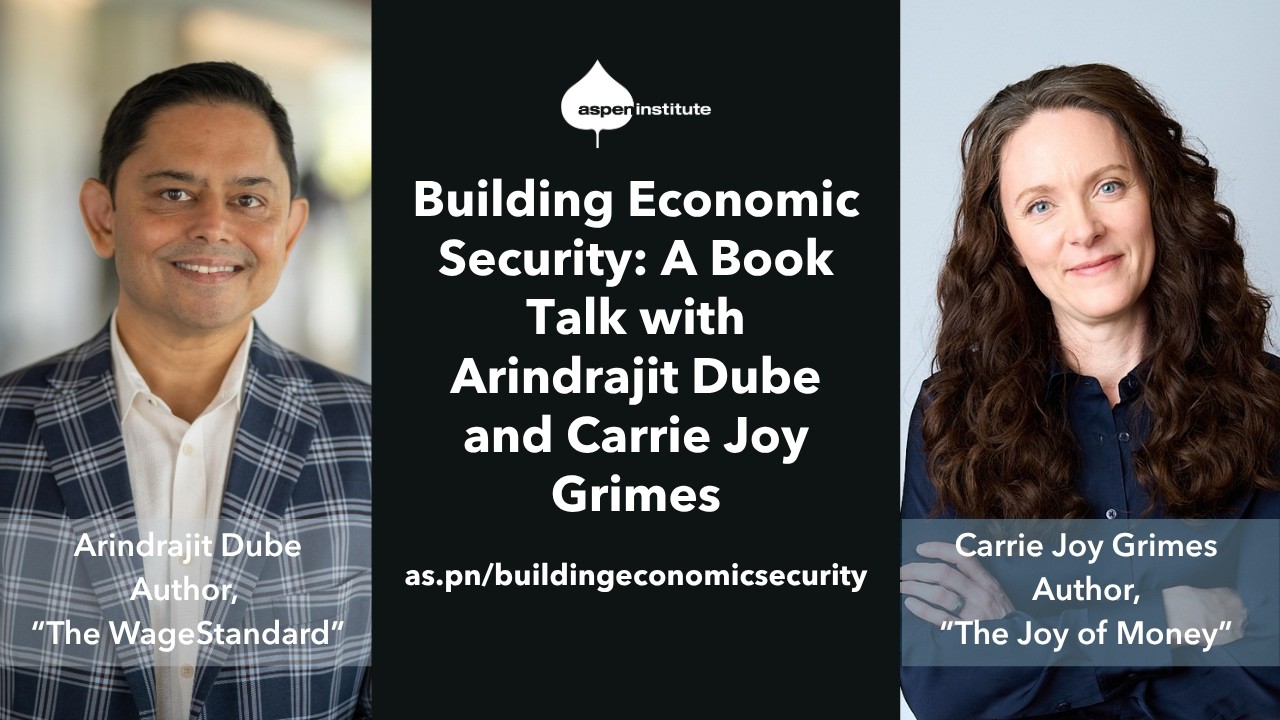
Building Economic Security: A Book Talk with Arindrajit Dube and Carrie Joy Grimes
Podcasts Videos

Building Economic Security: A Book Talk with Arindrajit Dube and Carrie Joy Grimes

Economic security shouldn’t be a lottery. Yet for millions of working families, stagnant wages and precarious jobs collide with the daily grind of managing money on shaky ground — leaving stability feeling less like a plan and more like a gamble. Fixing that takes more than one lever. It takes structural reform and the tools people need to take control of their financial lives, working together.


What Employee Ownership Means to Workers
Publications

What Employee Ownership Means to Workers

Insights from Focus Groups with Employee Owners