Aspen is a place for leaders to lift their sights above the possessions which possess them. To confront their own nature as human beings, to regain control over their own humanity by becoming more self-aware, more self-correcting, and hence more self-fulfilling.
Job Quality in Practice, an event series hosted by the Economic Opportunities Program, presents actionable tools and guidance to help leaders improve jobs and connect to a growing national conversation.

About This Series
In 2019, the Aspen Institute Economic Opportunities Program, with support from Prudential Financial, launched an effort to encourage the development of job quality practices that promote access to economic opportunity. In this webinar series, we provide actionable tools and guidance to support leaders across geographies and fields – including workforce development, economic development, capital deployment, policy, worker advocacy, business, and higher education – to engage in practical action to improve jobs in their local communities and connect to a growing national conversation.
Job quality today is a challenge. Many people who work every day to connect people to economic opportunities that will provide a dignified living can see this. Whether it’s a family sustaining wage, decent benefits, safe working conditions, or simply a schedule that is manageable with their other obligations—finding jobs that meet people’s basic economic needs can be a challenge. But what if we rethought this approach? What if, instead of trying to find the “good jobs” within the sea of inadequate ones, we instead tried to transform jobs so that more of them provide workers with what they need to thrive? We know this approach sounds daunting—but many organizations have started down this road, and are making progress. And that is what this series is all about. What are the practical strategies organizations can use to address the biggest economic opportunity challenge we face—fixing work.
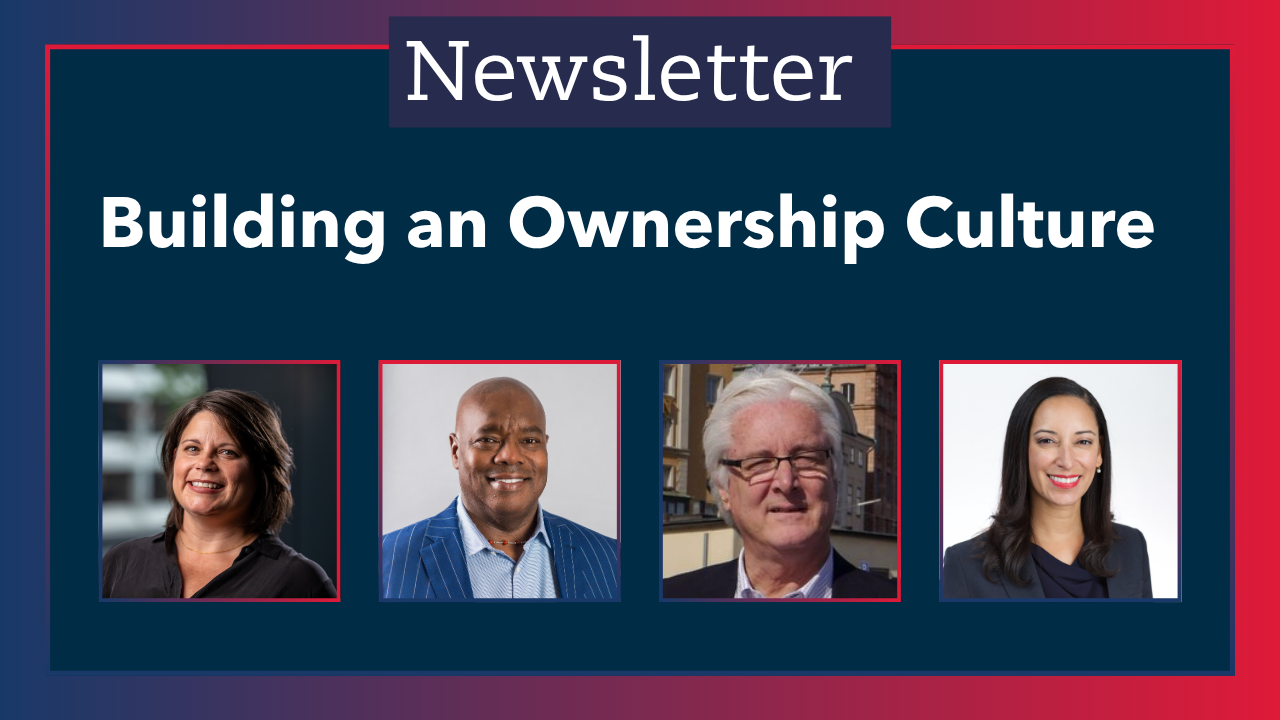
This is the final event in our Job Quality in Practice series. In this conversation, hosted by the Aspen Institute Economic Opportunities Program on May 7, 2026, we hear from the Institute’s Job Quality Fellows who are embedding job quality into their work across a range of contexts and strategies — from employee ownership models that give workers a direct financial stake in their company’s success, to apprenticeship programs that create structured pathways to higher-wage careers, to worker advisory committees that bring employee voice into business decision-making.
In this conversation, hosted by the Aspen Institute Economic Opportunities Program on April 1, 2026, we hear how the Institute’s Job Quality Fellows are embedding job quality into their work across a range of contexts and strategies — from employee ownership models that give workers a direct financial stake in their company’s success, to apprenticeship programs that create structured pathways to higher-wage careers, to worker advisory committees that bring employee voice into business decision-making.
This event — hosted by the Aspen Institute Economic Opportunities Program on Thursday, March 5 — is the second in its four-part event series on Fixing Work in the South. Drawing on the work of EOP’s Job Quality Fellows, this conversation — Worker- and Community-Led Strategies for a Fairer Economy — explores what kind of progress is possible when we lean on the expertise of workers and communities to inform strategy and empower them to shape a labor market that works for everyone.

This event — hosted by the Aspen Institute Economic Opportunities Program on February 19, 2026 — is the first of four conversations with members of the Aspen Institute’s Job Quality Fellowship who are working in the South.
This event is part of our Job Quality in Practice webinar series. For highlights from this discussion, subscribe to our YouTube channel. Or subscribe to our podcast to listen on the go.
This webinar, which EOP hosted on July 22, 2025, offers fresh insights, practical lessons, and inspiration to advance job quality in your own work. It features opening remarks from the Aspen Institute’s Matt Helmer, followed by a panel discussion.
About the Economic Opportunities Program
The Aspen Institute Economic Opportunities Program advances strategies, policies, and ideas to help low- and moderate-income people thrive in a changing economy.
Join Our Mailing List
To receive occasional emails about our work — including new publications, commentary, events, fellowships, and more — join our mailing list.
To create a future-ready workforce system, we must move beyond outdated credentials and analog processes to one that is skills-first, transparent, data-driven, and aligned with the evolving needs of workers, educators, and employers.
This publication examines how fragmented skills, credentialing, and workforce data systems limit the potential of skills-based hiring and advancement, and outlines a shared vision for building the interoperable infrastructure needed to create a connected skills ecosystem that benefits workers, employers, educators, and governments.
In this interview, Chelsea Miller of Upskill America speaks with Nick Greif of InStride about how employers can design education benefits that are more accessible, strategic, and aligned with workforce goals.
The future of America’s economic strength depends on immigration. As the US birth rate declines and the median age goes up, fewer US-born workers will enter the labor force.
This is the final event in our Job Quality in Practice series. In this conversation, hosted by the Aspen Institute Economic Opportunities Program on May 7, 2026, we hear from the Institute’s Job Quality Fellows who are embedding job quality into their work across a range of contexts and strategies — from employee ownership models that give workers a direct financial stake in their company’s success, to apprenticeship programs that create structured pathways to higher-wage careers, to worker advisory committees that bring employee voice into business decision-making.
This brief shares key lessons and takeaways that could be used to implement internal job quality practices to strengthen CDFIs and other small business support organizations.
Putting people at the center of the systems we are building means accepting that career paths are rarely linear. It requires us to build infrastructure that accommodates life transitions, recognizes informal learning, and values a worker’s agency over their own data.