The Economic Opportunities Program publishes all public events and interviews on its YouTube channel @AspenEOP. Click here to watch and subscribe.

Join our mailing list and follow us on social media for regular updates on our work.

Can Inclusive Economic Development Build Better Jobs and a Stronger Regional Economy?

Can inclusive economic development build better jobs and a stronger regional economy? Traditional economic development focused on attracting large companies promising many jobs has left behind many people in communities across the country, including working people, low-income individuals and families, people of color and immigrants. But, some communities have taken a different approach, one that embraces and cultivates local assets and ownership and that empowers traditionally excluded communities.

The Next Big Idea: Portable Benefits for Independent Workers

A series of panel discussions with key voices in the conversation around independent workers, in the on-demand economy and beyond. Sen. Mark Warner, honorary co-chair of the Future of Work Initiative, joins the discussion.

Shop ‘til Who Drops? Exploring Retail Jobs this Holiday Season

The holidays are a critical time for retail companies and workers. The National Retail Federation anticipates that holiday sales this year will make up approximately 19 percent of the retail industry’s annual sales of $3.2 trillion. Holiday spending also impacts the paychecks, schedules, and work-life balance of the 15 million retail workers in the United States, who make up more than 10 percent of total US employment. For these workers, the holidays often amplify year-round job stress they already face, including stress caused by unpredictable and changing work schedules, on-call shifts that may not materialize, and unexpected early dismissals.

Maureen Conway
Videos

Maureen Conway on low-income workers, the on-demand workforce, and behavioral finance

Maureen Conway explains the challenges workers face in the on-demand workforce.

The 1099 Economy: Exploring a New Social Contract for Employers, Employees, & Society

The on-demand or “sharing” economy is exploding. Microenterprises are proliferating. Estimates of the percentage of the workforce that is “contingent” (or freelance, contract or self-employed) range widely from four to 40 percent.

An Introduction to the Small Business Borrowers’ Bill of Rights
Videos

An Introduction to the Small Business Borrowers’ Bill of Rights

The webinar highlights trends in the small business lending market, predatory lending practices that have emerged, and how organizations can sign on to or endorse the BBOR.

Asset Building through Credit – Episode 3: Our “Aha” Moments about Costs
Videos

Asset Building through Credit – Episode 3: Our “Aha” Moments about Costs

We examine the costs that microenterprise organizations took on in the pilot program and how they could reduce costs in the long-term.

Asset Building through Credit – Episode 2: Defining Deep Customer Problems
Videos

Asset Building through Credit – Episode 2: Defining Deep Customer Problems

We explain how microenterprise programs can go from a general idea of how they help their customers to a specific and clear understanding of their secured card customer needs.

The Puzzle of Weak Capital Investment in the United States: Causes and Remedies

Experts explore the causes of slowing capital investment and possible policy options to reverse the trend.

Launch of the Communities that Work Partnership

Penny Pritzker, U.S. Secretary of Commerce, joins Walter Isaacson for the launch of the Communities that Work Partnership, a US Department of Commerce -funded program of the Aspen Institute’s Economic Opportunities Program Workforce Strategies Initiative (AspenWSI).

Joe Biden speaks at the White House Upskilling Summit
Videos

Vice President Biden and Michael Johnson, Chief Human Resources Officer of UPS, on the value of upskilling in America

Vice President Joseph Biden & UPS’ Michael Johnson share the importance of upskilling America’s workforce.

The Future of Worker Voice

Labor unions traditionally have been the voice of workers seeking better pay, benefits, and jobs and have been a critical means for working people to improve their working conditions, incomes, and social standing. The right to form and join a labor union is enshrined in the United Nation’s Universal Declaration of Human Rights. But in the United States, union membership and the commitment to unions is not as strong. Union membership has fallen from a high of 34.8 percent of wage and salary workers in 1954 to 11.1 percent in 2014.

About the Economic Opportunities Program

The Aspen Institute Economic Opportunities Program advances strategies, policies, and ideas to help low- and moderate-income people thrive in a changing economy.

Join Our Mailing List

To receive occasional emails about our work — including new publications, commentary, events, fellowships, and more — join our mailing list.

Connect on Social Media

For news and updates every day, connect with us on the social media platform of your choice.

More from the Economic Opportunities Program

Foundational Skills: National Survey Findings
Publications

Foundational Skills: National Survey Findings

This publication examines how fragmented skills, credentialing, and workforce data systems limit the potential of skills-based hiring and advancement, and outlines a shared vision for building the interoperable infrastructure needed to create a connected skills ecosystem that benefits workers, employers, educators, and governments.

Placeholder
Podcasts Videos

What Employee Ownership Means to Workers

This conversation is part of our Opportunity in America series, where we take a look at the economy, what’s working, what’s broken, and really how we fix it to make sure that everyone can succeed in today’s economy.

Resource Roundup: Wages and Affordability
Blog Posts
Room for Growth: A Survey of Upskilling Approaches — 2026 Analysis
Publications

Room for Growth: A Survey of Upskilling Approaches — 2026 Analysis

This publication examines how fragmented skills, credentialing, and workforce data systems limit the potential of skills-based hiring and advancement, and outlines a shared vision for building the interoperable infrastructure needed to create a connected skills ecosystem that benefits workers, employers, educators, and governments.

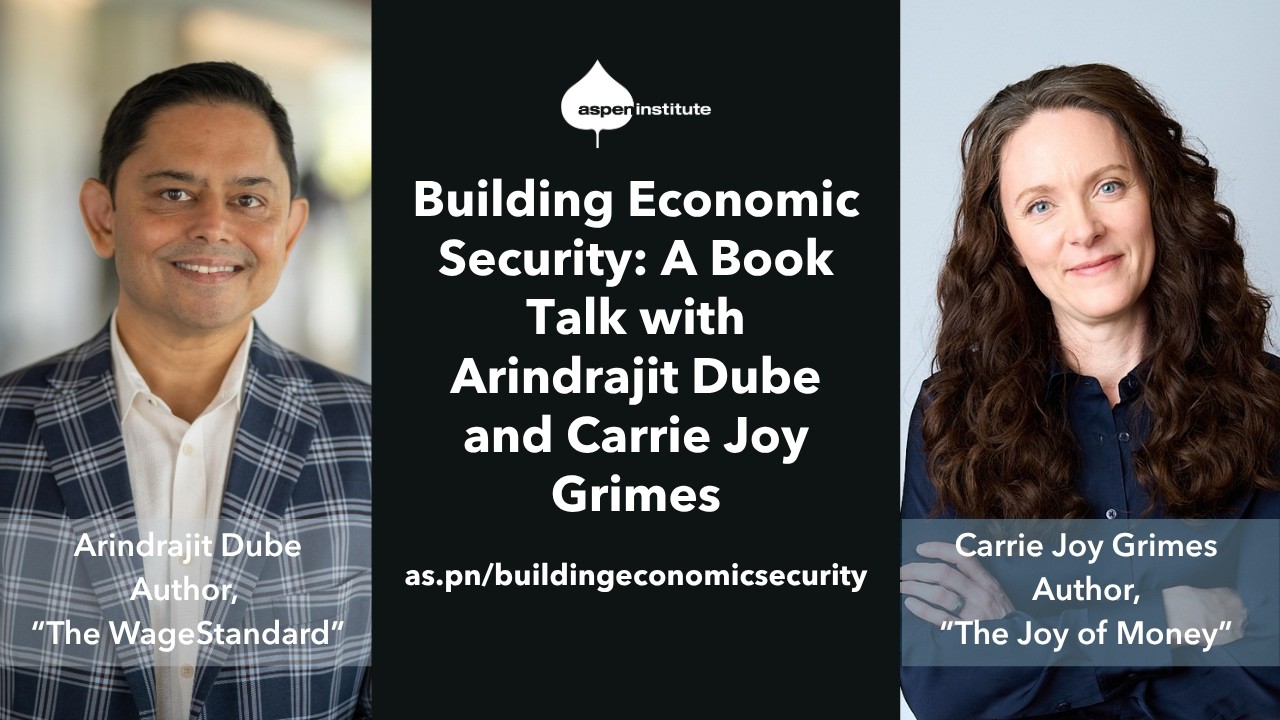
Building Economic Security: A Book Talk with Arindrajit Dube and Carrie Joy Grimes
Podcasts Videos

Building Economic Security: A Book Talk with Arindrajit Dube and Carrie Joy Grimes

Economic security shouldn’t be a lottery. Yet for millions of working families, stagnant wages and precarious jobs collide with the daily grind of managing money on shaky ground — leaving stability feeling less like a plan and more like a gamble. Fixing that takes more than one lever. It takes structural reform and the tools people need to take control of their financial lives, working together.


What Employee Ownership Means to Workers
Publications

What Employee Ownership Means to Workers

Insights from Focus Groups with Employee Owners